Lake Forest's lakefront estates sit on approximately 3.5 miles of Lake Michigan frontage, where a bluff marks the edge of the tableland, and its ravine lots back onto nearly 13 miles of ravines that are almost all privately owned. This guide is for buyers looking at homes for sale in Lake Forest on these estate lots, and it covers how the land is set up and the city, county, and state rules that decide what you can build, cut, and repair.
Quick Facts
- Lake Forest has nearly 13 miles of ravines, divided into 15 separate ravines, and almost all of them are privately owned.
- Both private and public construction in Lake Michigan requires authorization from the Illinois DNR Office of Water Resources.
- Lake Forest has five Local Historic Districts: East Lake Forest, Vine/Oakwood/Green Bay Road, Green Bay Road, Meadowood Dairy, and Grove School.
- The median sale price for single-family homes in Lake Forest was $1,411,937 for July to September 2026, based on 63 sales, according to Redfin.
What defines an estate property in Lake Forest?
Lake Forest's estate properties come from what the city's building scale ordinance calls a suburban estate pattern, in which the landscape is generally dominant over the buildings. That idea still shapes Lake Forest real estate, so on many lots the land matters as much as the house.
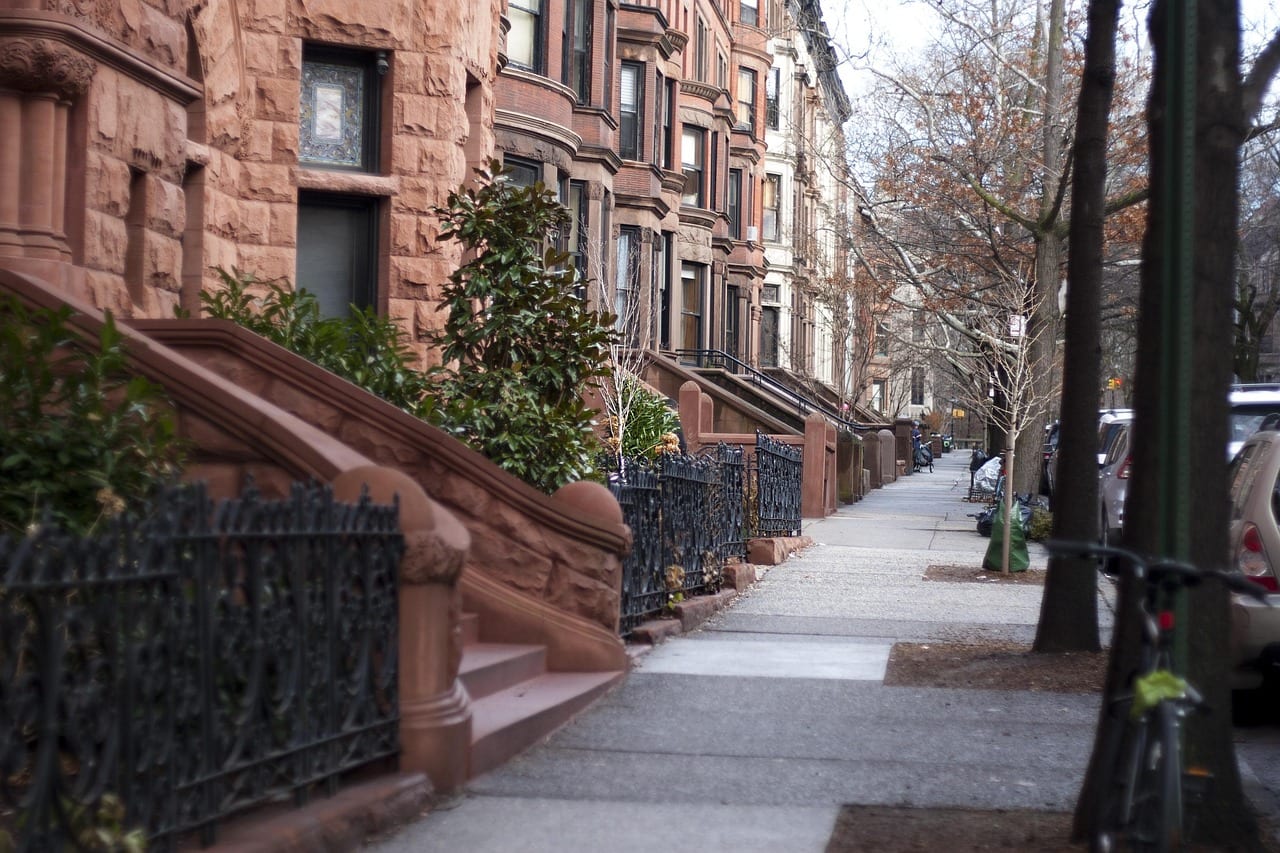
The setting changes across town. The city's residential design guidelines describe eastern Lake Forest as having steep ravines, winding roads, and smaller lots than the generous parcels historically developed west of Green Bay Road. The Lake Forest neighborhood guide covers the broader picture of living there.
Several neighborhoods grew out of old estates. Estate Lane, Foster Place, West Onwentsia Road, and the Meadowood/Inverleith area developed through subdivision of large estates or gentleman farms, and they mix historic estate homes with newer infill housing. Villa Turicum was also subdivided from a large estate, with homes built in the 1970s and 1980s on medium-sized lots. Evergreen came later, developed in the late 1980s and 1990s with large homes, large lots, and mature vegetation.
Zoning sets the minimums. The R-1 district requires at least 9,375 square feet and 75 feet of width for a single-family home, while R-5 requires a minimum lot width of 250 feet. In the R-5, R-4, and R-3 districts, a guest house or detached living quarters for employees may be allowed by special use permit, but only on a zoning lot twice the minimum area its district requires.
What should you check on a Lake Michigan lakefront lot?
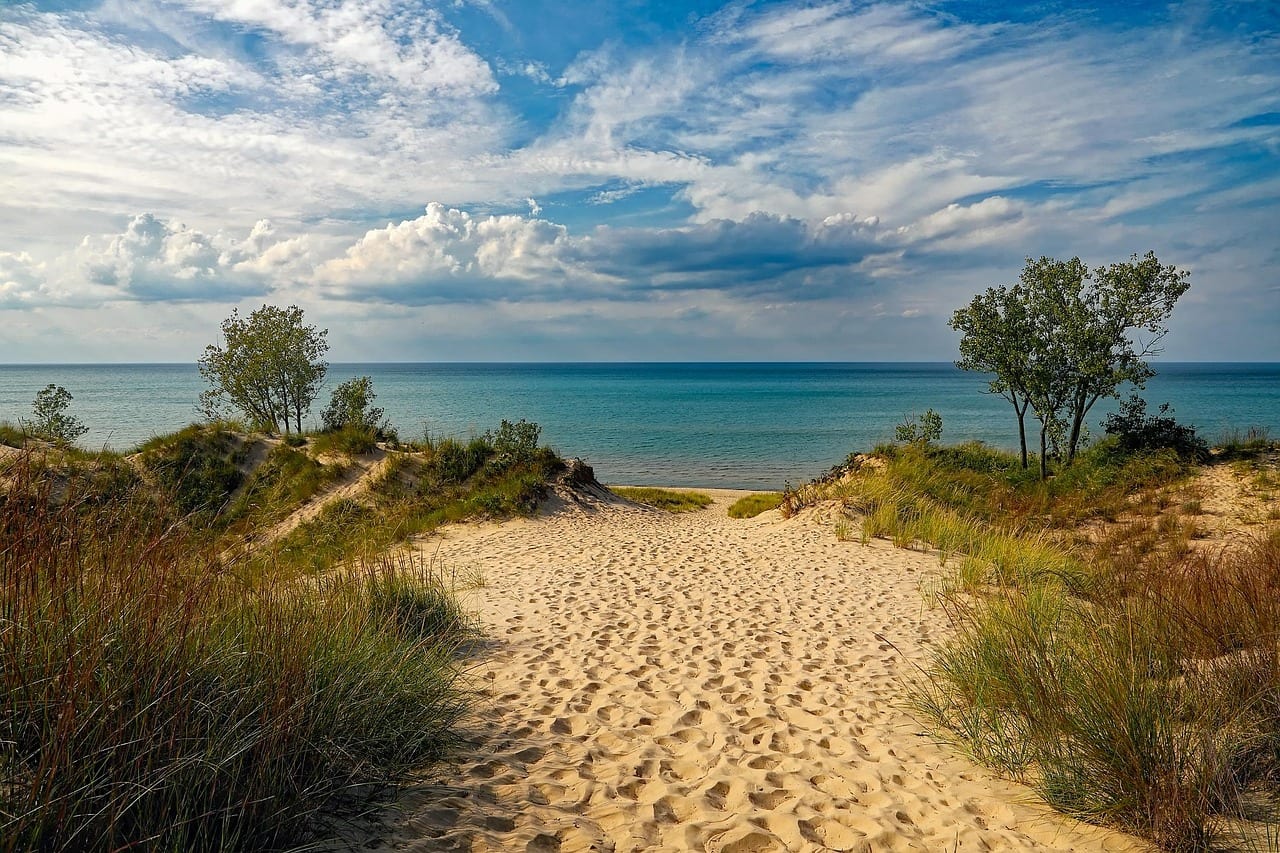
On a Lake Forest lakefront lot, check the shoreline structures and the bluff first, because work in the lake and near the bluff each follow their own permit rules. Both private and public construction in Lake Michigan requires authorization from the Illinois DNR Office of Water Resources under the state's 1911 law on rivers, lakes, and streams.
State guidance lists revetments, seawalls, groins, breakwaters, beach nourishment, piers, and modifications to existing structures as examples of regulated work, and IDNR's water resources FAQ explains the process. For parallel shoreline protection, General Permit No. 1-LM expedites the application, though protection under it may consist only of rock riprap, sand-filled bags, revetments, permeable or impermeable breakwaters, or bulkheads. Construction can't begin until the Office of Water Resources gives written confirmation of compliance.
Lake Michigan projects use a joint application form shared by IDNR, the U.S. Army Corps of Engineers, and Illinois EPA, and it must be submitted separately to each agency. Discharging dredged or fill material into regulated waters may also require a Corps permit.
On the land side, the city's steep slopes ordinance (§ 159.015) applies to all land development construction on properties abutting ravines and bluffs, as delineated on the Appendix F steep slopes map. When you're serious about a lakefront house, ask for the permit records on any existing shoreline structures.
How do ravine lots work in Lake Forest?
A Lake Forest ravine lot usually includes part of the ravine itself, since almost all of the city's ravines are privately owned and property lines most often run down the center, at the bottom. The city has nearly 13 miles of ravines in 15 separate ravines, ranging from approximately a tenth of a mile to just over a mile long.
Ownership comes with upkeep. Per the City's ravine and bluff resident guide, property owners are responsible for erosion control measures and for maintaining them. The steep slopes ordinance applies here too, and the City Engineer may require channel, toe, or slope stabilization measures when instability exists or is likely.
Fences work differently on these lots. The zoning code doesn't permit fences on slopes beyond ravine or bluff edges, and while the Zoning Board of Appeals may consider a variance, it requires evidence such as a slope stability analysis prepared by a licensed engineer.
Before you commit to a Lake Forest, IL house for sale on a ravine, look at the plat of survey to see where the property line falls, then check whether the lot appears on the steep slopes map.
How big a house can you build on an estate lot?
Lake Forest caps house size with a building scale formula tied to lot area, and sloped land counts for less than flat land. For single-family lots larger than 40,000 square feet, the base maximum is the lot area multiplied by 0.08, plus 1,800 square feet, subject to calculation rules and exemptions. For lots of 18,901 to 40,000 square feet, it's the lot area multiplied by 0.05, plus 3,000 square feet.
The city's engineering standards define table land as land where the slope in any direction doesn't exceed 10%, and 50% of non-table land is excluded from the lot area used for building scale. The lot area has to come from an up-to-date official plat of survey prepared or updated by a state-registered land surveyor.
Larger projects can bring in Lake County as well. The county's Watershed Development Ordinance requires a permit for projects in a floodplain or flood-prone area, projects that may impact a wetland, projects that disturb more than 5,000 square feet of soil, or projects that hydrologically modify site drainage. Dividing land within the Historic Residential and Open Space Preservation District is processed as a special-use application for a planned preservation subdivision.
How do Lake Forest's tree rules affect a wooded lot?
Mature trees on a wooded Lake Forest lot are covered by the city's Tree Preservation Ordinance, which preserves trees on public and private property and requires appropriate replacement trees when removal is necessary.
The City's tree removal permit application lists the triggers: a tree 18 inches or larger in diameter at 54 inches above the ground, a tree 10 inches or larger in the front yard or corner side yard, removal of more than six trees 4 inches or larger, or any tree in a Conservation, Tree Preservation, or No Disturbance Area.
Replacement trees must be at least three inches DBH (diameter at breast height) at planting, with location and species approved by the Director. Removing a tree in violation of the chapter is punishable by a fine of up to $750 per violation, with every inch of DBH counted separately. Even removing dead, diseased, or noxious material from a conservation easement requires prior written approval.
When does historic preservation review apply?
Historic preservation review applies to projects inside Lake Forest's Local Historic Districts and to projects affecting individual Landmark properties anywhere in the city. The Historic Preservation Commission was established in 1997, and the city adopted its Historic Preservation Ordinance in 1998.
The city's historic district descriptions give rough boundaries. The Lake Forest Local Historic District covers roughly east Lake Forest, from Lake Forest Cemetery on the north to Ringwood Road on the south and from the Central Business District to Lake Michigan. The Green Bay Road district covers roughly the Green Bay Road corridor from the city limits on the north to Onwentsia Road on the south, plus adjacent properties on intersecting east-west streets and Ahwahnee Road. Meadowood Dairy is the Clifford Milton Leonard Farm, built from 1923 to 1926, with buildings on Hathaway Circle designed by architect Ralph Varney.
Inside a district or on a landmark, a Certificate of Appropriateness is required for specified work, including new construction, exterior alterations, qualifying additions, and demolition. The commission holds public hearings on these, the Community Development Department can't act on the permit until the certificate is issued, and a certificate is valid for one year.
National Register listing is separate. The Green Bay Road Historic District, added to the National Register on November 7, 1995, includes 147 contributing buildings, mainly country estates built in the late nineteenth and early twentieth centuries. A National Register property doesn't need commission review unless it's also a Local Landmark, and the most common financial incentive for these properties is the Property Tax Assessment Freeze Program administered by the Illinois Historic Preservation Agency.
What do homes for sale in Lake Forest cost to buy and own?
Single-family homes in Lake Forest sold for a median of $1,411,937 from July to September 2026, based on 63 sales, according to Redfin, and Zillow puts the typical single-family home value at $1,330,439 in September 2026. Zillow's September 2026 figures show typical values in Lake Forest running from $813,430 for lower-priced homes to $2,114,306 for higher-priced homes.
Property taxes start with assessed value: township assessors set each property's assessed value at one-third of fair market value as of January 1, as Lake County's tax extension process page explains. That means a tax rate isn't the same as a percentage of a home's purchase price, and qualifying homestead exemptions reduce the value subject to tax.
The City of Lake Forest receives 22% of the total tax bill, with other taxing districts receiving the rest, and the City states on its tax rates page that Lake Forest residents enjoy the lowest overall property tax rate in Lake County. Assessment notices, known as blue sheets, give owners only 30 days to appeal to the Board of Review. Taxes, permits, and lot rules all belong in the same conversation when you're planning a home purchase.
Frequently Asked Questions
How far is Lake Forest from downtown Chicago?
The Chicago Loop is approximately 32 miles from Lake Forest by car, about 45 to 55 minutes depending on traffic. O'Hare airport is approximately 24 miles away, about 30 to 35 minutes by car.
Who owns the ravines in Lake Forest?
Almost all of Lake Forest's ravines are privately owned. Property lines most often run down the center of the ravine, at the bottom. Per the City's ravine and bluff resident guide, owners are responsible for erosion control measures and their upkeep.
Do you need a permit to remove a tree in Lake Forest?
Many tree removals in Lake Forest need a permit, including any tree 18 inches or larger in diameter at 54 inches above the ground. A tree 10 inches or larger in the front yard or corner side yard, more than six trees 4 inches or larger, and any tree in a protected area also trigger a permit.
Does a National Register listing mean historic review in Lake Forest?
No, a property on the National Register of Historic Places doesn't require Historic Preservation Commission review unless it's also a Local Landmark. Projects inside Local Historic Districts and on Local Landmarks do go through the commission.
When are Lake County property taxes due?
Lake County property taxes are paid in two installments, due in June and September. For tax year 2025, payable in 2026, the first installment was due June 4, 2026 and the second September 4, 2026. The Treasurer's Office sends bills at the beginning of May.
Estate lots in Lake Forest call for careful homework, from the plat of survey to the shoreline permits. Carrie McCormick Real Estate, in business since 1999, offers one-on-one service to buyers weighing homes for sale in Lake Forest on lakefront, ravine, and wooded lots.