The Gold Coast's mansions and townhomes sit on a handful of low-rise blocks around Astor Street, North Dearborn Parkway, and Lake Shore Drive, and many of them fall inside landmark districts where the city reviews exterior work. Here's where the townhomes in the Gold Coast and its single-family houses are found, the architecture you'll see, how landmark review works, and what taxes, upkeep, and parking look like once you own one.
It's written for buyers who want a house or townhome of their own instead of a unit in a high-rise.
Quick Facts
- The Astor Street District, designated a Chicago Landmark in 1975, covers the 1200 to 1600 blocks of Astor Street and its cross streets, with buildings dating from 1880 to 1940.
- The Gold Coast Historic District, listed in the National Register of Historic Places in 1978, is roughly bounded by North Avenue, Lake Shore Drive, Clark Street, and Oak Street.
- Chicago builds landmark review into its normal building permit process, and most landmark permit reviews are approved in one day.
- Cook County assesses Class 2 residential property, including detached single-family houses, townhomes, and condominiums, at 10 percent of estimated property value.
- A contributing property in a National Register historic district can satisfy the historic-status requirement for Illinois' Property Tax Assessment Freeze program.
Where are the townhomes in the Gold Coast?
The Gold Coast's houses and townhomes cluster in three places: Astor Street and its cross streets, a three-block stretch of North Dearborn Parkway, and a group of surviving mansions on Lake Shore Drive. High-rise residential buildings, generally built from 1960 to 1980, surround the Astor Street District, so these older blocks stand out against a skyline of later towers.
The wider Gold Coast Historic District, listed in the National Register of Historic Places in 1978, is roughly bounded by North Avenue, Lake Shore Drive, Clark Street, and Oak Street. For restaurants, parks, and the rest of daily life around these blocks, the Gold Coast neighborhood guide has the broader picture.
Astor Street
Astor Street is less than a half mile long and runs behind Lake Shore Drive between Division Street and North Avenue. The Astor Street District covers the 1200 to 1600 blocks of Astor Street and its cross streets, with buildings dating from 1880 to 1940.
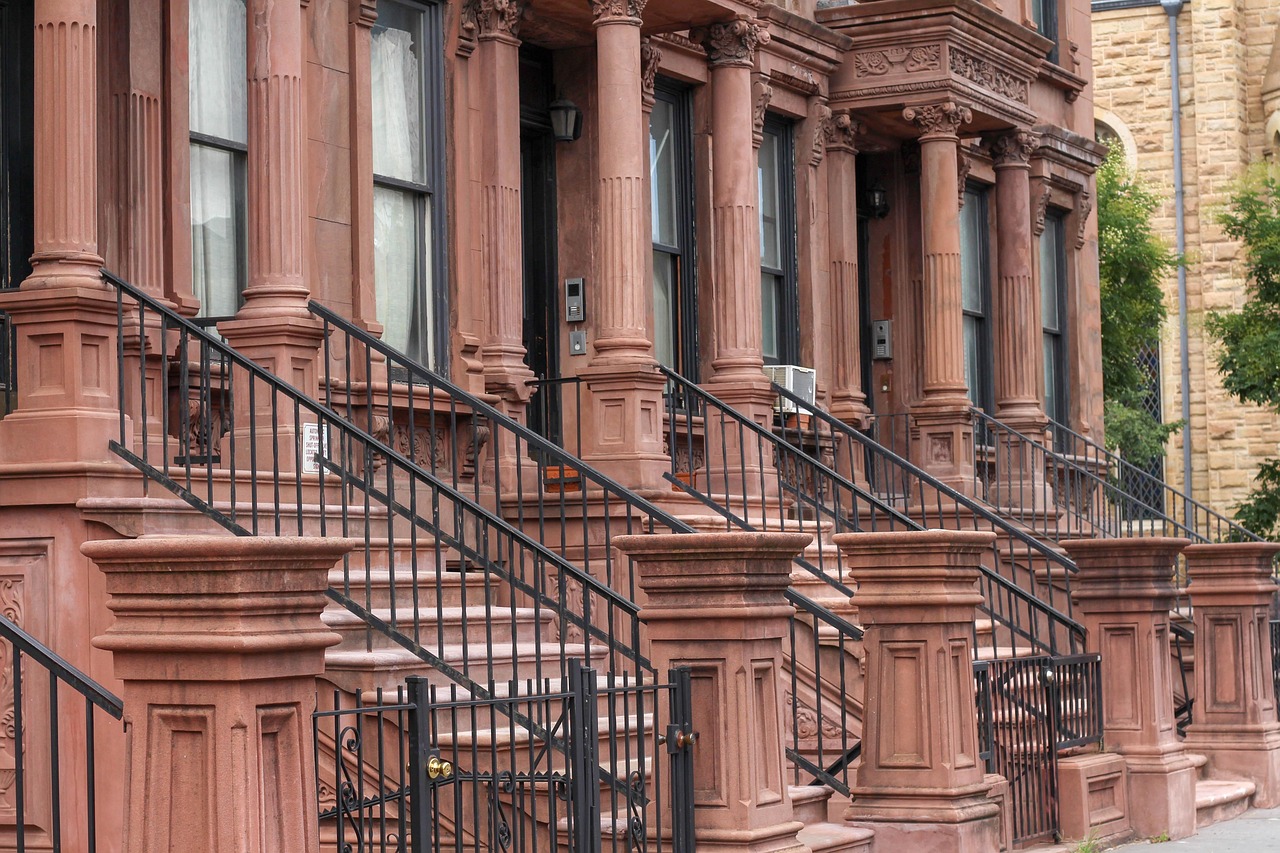
Astor Street homes mix 19th-century houses in historical revival styles with 20th-century townhouses and apartment buildings, so you'll see houses, townhouses, and apartment buildings from different decades side by side. The district also holds the city's last stretch of wooden street, between State and Astor Street behind the Archbishop of Chicago's mansion.
North Dearborn Parkway
North Dearborn Parkway has a concentration of preserved early-1900s homes along three blocks between North Boulevard and Goethe Street. It's a short stretch, but it's one of the few places in the neighborhood where a whole row of homes from that era survives together.
Lake Shore Drive
Seven mansions on Lake Shore Drive remain from the street's late-19th-century residential era: four on the 1200 block and three on the 1500 block. Together they make up the Seven Houses on Lake Shore Drive District, designated a Chicago Landmark in 1989.
The houses were built between 1889 and 1917, and their architects include Holabird & Roche; Benjamin Marshall; McKim, Mead & White; and Howard Van Doren Shaw.
What styles do Gold Coast mansions and townhomes come in?
Gold Coast historic homes were built over more than 60 years, and the styles range from Romanesque and Queen Anne to Art Deco and Modern. The Chicago Architecture Center's Astor Street tour points out Romanesque, Queen Anne, Tudor, Art Deco, and Modern homes. The National Register record for the Gold Coast Historic District adds Italianate and Moderne, and Choose Chicago lists Richardsonian Romanesque and Georgian Revival among the Astor Street District's revival styles.
One landmark shows how much design fits on a city lot. The James Charnley House on Astor Street, built in 1891 by Adler & Sullivan with Frank Lloyd Wright, is described by the city as a compact urban townhouse that takes maximum advantage of its small city lot. It has been an individual Chicago Landmark since 1972.
Style matters for more than looks. In a landmark district, the designation ordinance defines which features are protected, so it pays to know which ones apply to a particular house before you plan any changes.
What do Chicago's landmark rules require for exterior work?
Homes in Chicago Landmark districts, including the Astor Street District and the Seven Houses on Lake Shore Drive District, fall under the Commission on Chicago Landmarks' permit review. No City department may issue a permit for alteration, construction, demolition, or other work on a designated landmark without the Commission's written approval. The Commission is a nine-member board appointed by the Mayor and City Council.
Protections typically concern exterior elevations visible from the public right-of-way, with the protected features defined by each designation ordinance. Rear elevations and coach houses can also be protected significant features, even when they're less visible from public streets. The city's questions and answers for landmark owners explains that permit applications are evaluated for their effects on significant historical and architectural features.
Windows
Chicago's rehabilitation guidelines favor keeping and repairing historic window frames and sashes instead of replacing complete windows. Under the standards the Commission has adopted, deteriorated historic features are repaired rather than replaced. The Commission's guidelines also note that properly weather-stripped single-glazed sash can greatly reduce or eliminate air infiltration at nominal cost compared with replacement windows.
Additions
The Commission's guidelines say fitting new space inside the existing building is always preferable to building an addition. Any new addition or exterior alteration must not destroy historic materials that characterize the property, so expanding a Gold Coast townhome usually starts with a close look at the space you already have.
Masonry, roofs, and routine upkeep
Routine maintenance on a Chicago Landmark, such as painting and minor repairs, doesn't require a building permit. Tuckpointing and masonry repairs are different: the city's landmark permit submissions include mortar specifications and joint profiles.
Roofs deserve attention, too. Chicago's preservation guidelines warn that historic roofing materials can be expensive or difficult to obtain, which makes preventive maintenance important. Under the Chicago Landmarks Ordinance, it's a violation for an owner to perform, authorize, or allow work requiring review without a permit.
Allowances and fee waivers
Landmark status brings some flexibility. Chicago Landmarks are eligible for special allowances from certain building code requirements and for side-yard exceptions from the zoning ordinance, and a special historic preservation provision in the Rehabilitation Code allows greater flexibility in applying the Building Code.
The city also offers a permit fee waiver for Chicago Landmarks and for buildings and new construction in landmark districts, with prior application required. Only fees for permits that need Commission approval can be waived.
How long does landmark permit review take?
Most landmark permit reviews are approved in one day. Chicago builds landmark review into its normal building permit process, so there's no additional landmark permit to apply for. City departments that receive a landmark-related application must forward it to the Commission within seven days, and the Commission reviews some 2,000 permits for landmark properties each year.
Projects with adverse effects on significant features take longer. Those applications can require negotiations, Permit Review Committee review, or full Commission review instead of routine staff approval. The 15-day preliminary review period doesn't begin while an application is incomplete, and after a preliminary disapproval, an applicant may request an informal conference within 10 days of receiving the written decision.
A pre-permit submission can clarify landmark requirements and help speed up the Commission's review. For a buyer planning a renovation, it's a useful step to build into the timeline early.
How do property taxes and upkeep compare with condo assessments?
Gold Coast single-family homes, townhomes, and condos all fall in Cook County's Class 2 residential category, which is assessed at 10 percent of estimated property value. The differences are in how the value is set and what else you pay each month.
For a condo, the Cook County Assessor estimates the whole building's value and applies each unit's percentage of ownership, which comes from the condominium declaration rather than the Assessor. Under the Illinois Condominium Property Act, each owner pays a share of common expenses based on that same percentage. The board must prepare and distribute a detailed proposed annual budget, and that budget generally has to provide reasonable reserves for capital expenditures and deferred maintenance.
A townhome isn't automatically outside that system, because townhouse construction doesn't exclude condominium ownership. It's worth asking whether a particular townhome is held as a condominium before you compare costs. With a house that isn't part of a condominium, there's no association budget, so masonry, windows, and roofs are planned and paid for directly by the owner.
Cook County's Homeowner Exemption subtracts $10,000 of Equalized Assessed Value. The Cook County Treasurer says primary-residence exemptions can save $250 to $2,000 per year, depending on local tax rates and assessment increases.
The historic assessment freeze
Illinois offers a Property Tax Assessment Freeze for historic residences, and a contributing property in a National Register historic district, such as the Gold Coast Historic District, can satisfy its historic-status requirement. The program freezes a qualifying historic, owner-occupied principal residence's assessed value for eight years, followed by a four-year step-up period, for 12 years in total.
To qualify, eligible rehabilitation expenses must reach at least 25 percent of the assessor's pre-rehabilitation fair-cash value, generally within a 24-month period. Illinois reviews both interior and exterior work for the program, separately from the city's landmark review. An existing freeze doesn't transfer automatically to a new owner.
What parking comes with a Gold Coast townhome?
In landmark districts, garage parking comes from the alley. Chicago's landmark guidelines identify alley access to rear lots as a way to fit garages where barns or coach houses traditionally stood, and they reject new street-front curb cuts in historic districts where such cuts weren't part of the original development.
Garages reached from an alley must be set back at least two feet from the rear property line, unless the garage sits at least 10 feet from the alley centerline as shown by survey. Under Chicago's zoning ordinance, coach houses may be established without accessory parking and may not exceed 22 feet in building height.
On the street, Residential Zone Parking limits parking on designated streets to Chicago residents and their guests, at all times or on certain days and hours. A residential zone parking permit requires proof of an address within an eligible zone and is added to your Chicago City Vehicle Sticker. Guest passes cost $15 per sheet of 15, are valid for 24 hours from the displayed date and time, and are limited to three sheets (45 permits) per household per 30-day period.
How often do Gold Coast single-family homes come up for sale?
Single-family sales are a small share of the market in this part of Chicago. In 2024, the Near North Side community area, which has Lake Michigan to its east and North Avenue as its northern boundary, recorded 77 single-family sales and 2,563 condominium sales.
With that few houses changing hands, it helps to have financing lined up, inspection plans set, and questions about landmark status ready before the right home is listed. Some notes on preparing to buy in Chicago cover the general steps, and an earlier look at Chicago's upscale neighborhoods compares the Gold Coast with other parts of the city.
Frequently Asked Questions
Is every Gold Coast home in a landmark district?
Landmark status depends on the address, so it's worth confirming for the specific home before you buy. The Astor Street District covers the 1200 to 1600 blocks of Astor Street and its cross streets, and the Seven Houses on Lake Shore Drive District covers surviving mansions on the 1200 and 1500 blocks of Lake Shore Drive. The wider Gold Coast Historic District is a National Register listing, which matters for the state's historic property tax freeze.
Do you need a separate landmark permit to renovate a Gold Coast home?
No, Chicago builds landmark review into its normal building permit process, so no additional landmark permit is required. Most landmark permit reviews are approved in one day. Work with adverse effects on significant features can require negotiations, Permit Review Committee review, or full Commission review.
Can you replace the windows on a Gold Coast landmark home?
Chicago's landmark guidelines favor keeping and repairing historic window frames and sashes over replacing complete windows, so plan on repair first. The Commission's guidelines note that properly weather-stripped single-glazed sash can greatly reduce or eliminate air infiltration at nominal cost compared with replacement windows.
Do Gold Coast townhomes pay condo assessments?
A Gold Coast townhome may be part of a condominium, and when it is, the owner pays condo assessments. Townhouse construction doesn't exclude condominium ownership. Under the Illinois Condominium Property Act, each owner pays a share of common expenses based on the ownership percentage in the declaration, and the board's annual budget shows the proposed assessments.
Does a historic property tax freeze transfer to a new owner?
No, an existing Illinois historic property assessment freeze doesn't transfer automatically to a new owner. The program freezes a qualifying historic, owner-occupied principal residence's assessed value for eight years, followed by a four-year step-up period. Qualifying requires eligible rehabilitation expenses of at least 25 percent of the assessor's pre-rehabilitation fair-cash value, generally within 24 months.
Townhomes in the Gold Coast and the mansions on Astor Street, North Dearborn Parkway, and Lake Shore Drive each come with their own landmark status, ownership structure, and parking setup to sort out before you buy.
Carrie McCormick Real Estate has worked with buyers and sellers since 1999, with work that spans luxury real estate, penthouses, new construction, and single-family homes, and offers one-on-one service to anyone searching for a Gold Coast home or relocating to the neighborhood.