Gold Coast Chicago Homes for Sale | Mansions, Co-ops, and Condos
Chicago's original luxury address, built on filled-in swampland in 1882 and never surpassed since: a landmark district of Astor Street mansions and limestone greystones, vintage Lake Shore Drive co-ops, and the city's most expensive new condominium towers, all inside a ten-minute walk of Oak Street Beach.
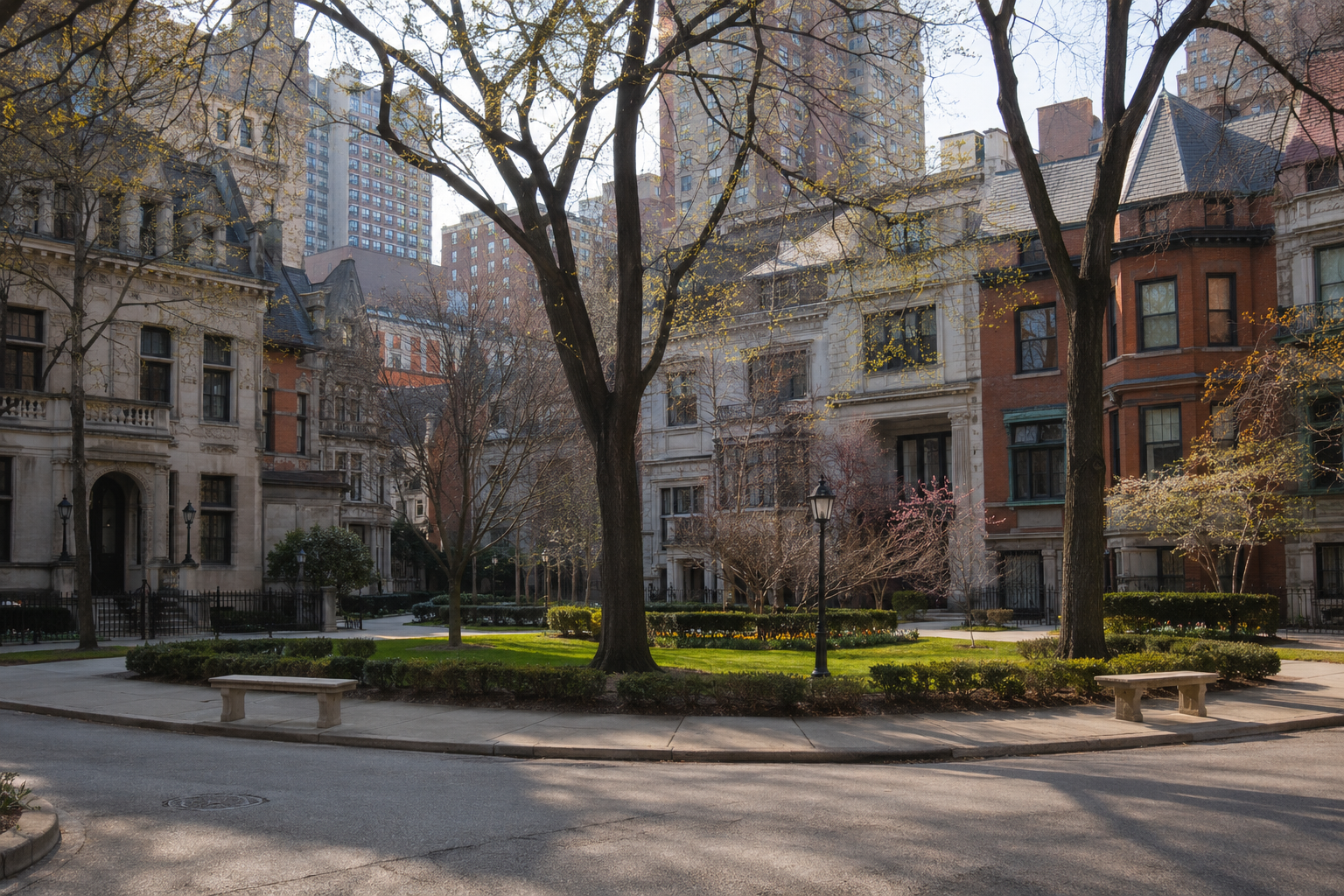
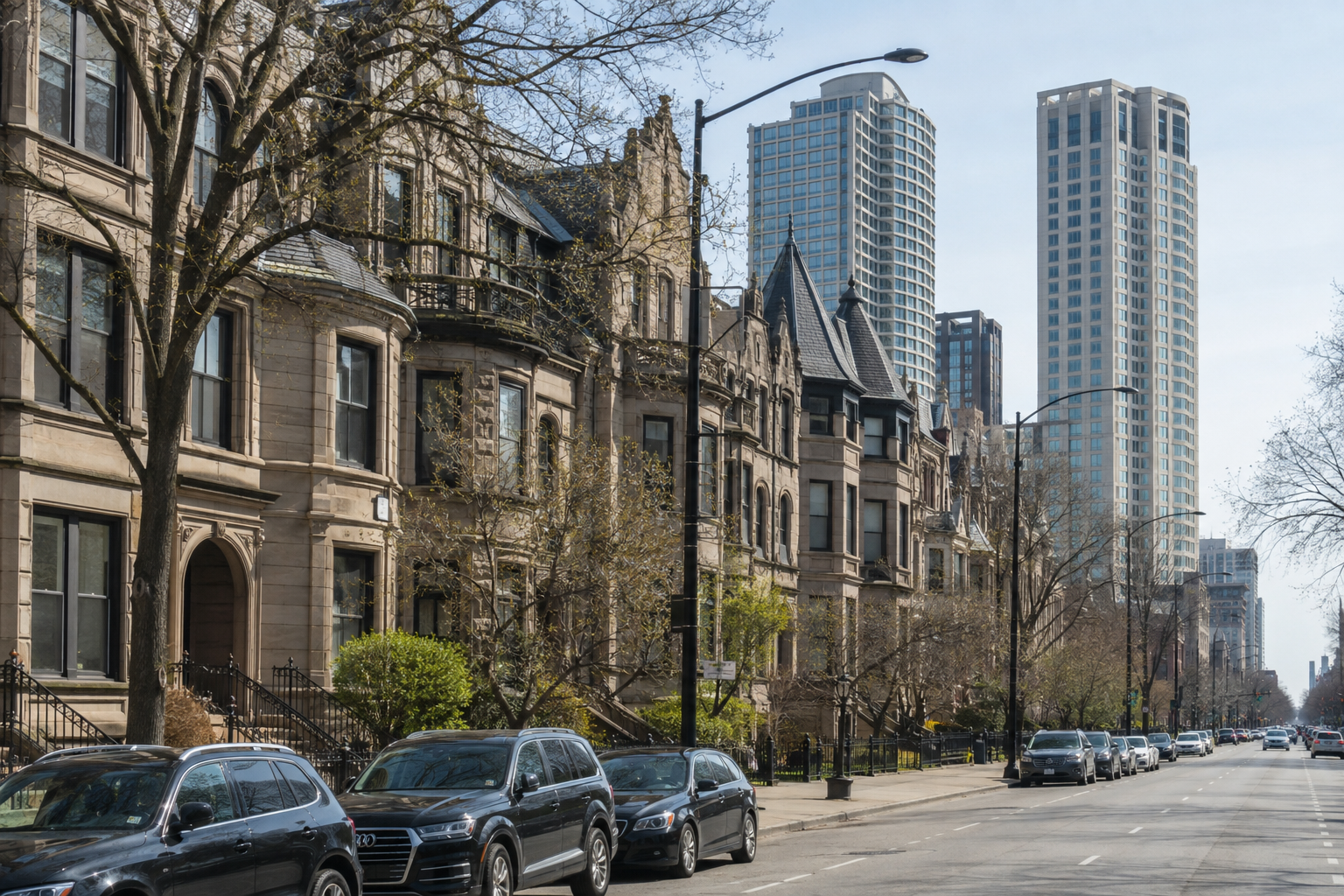
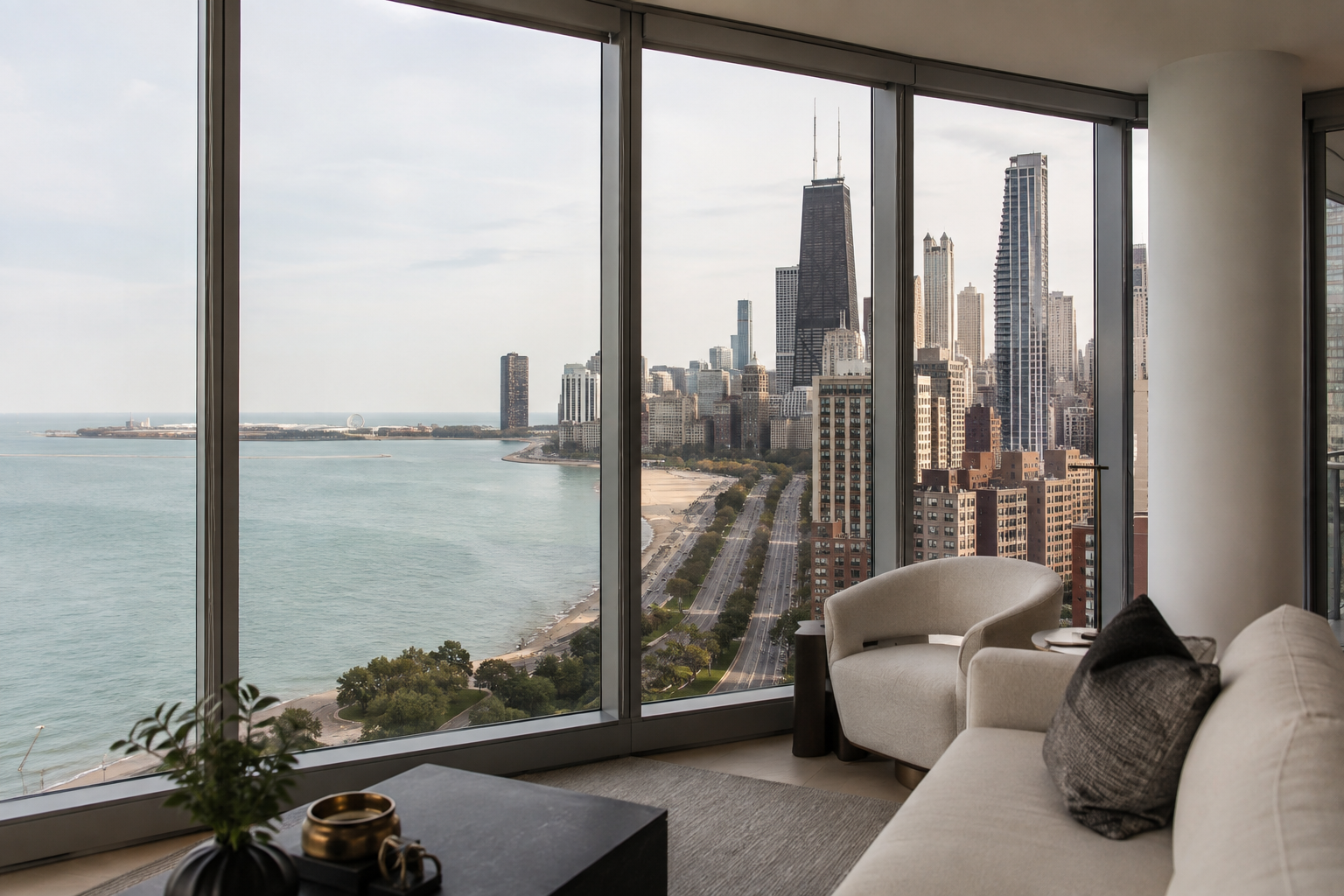
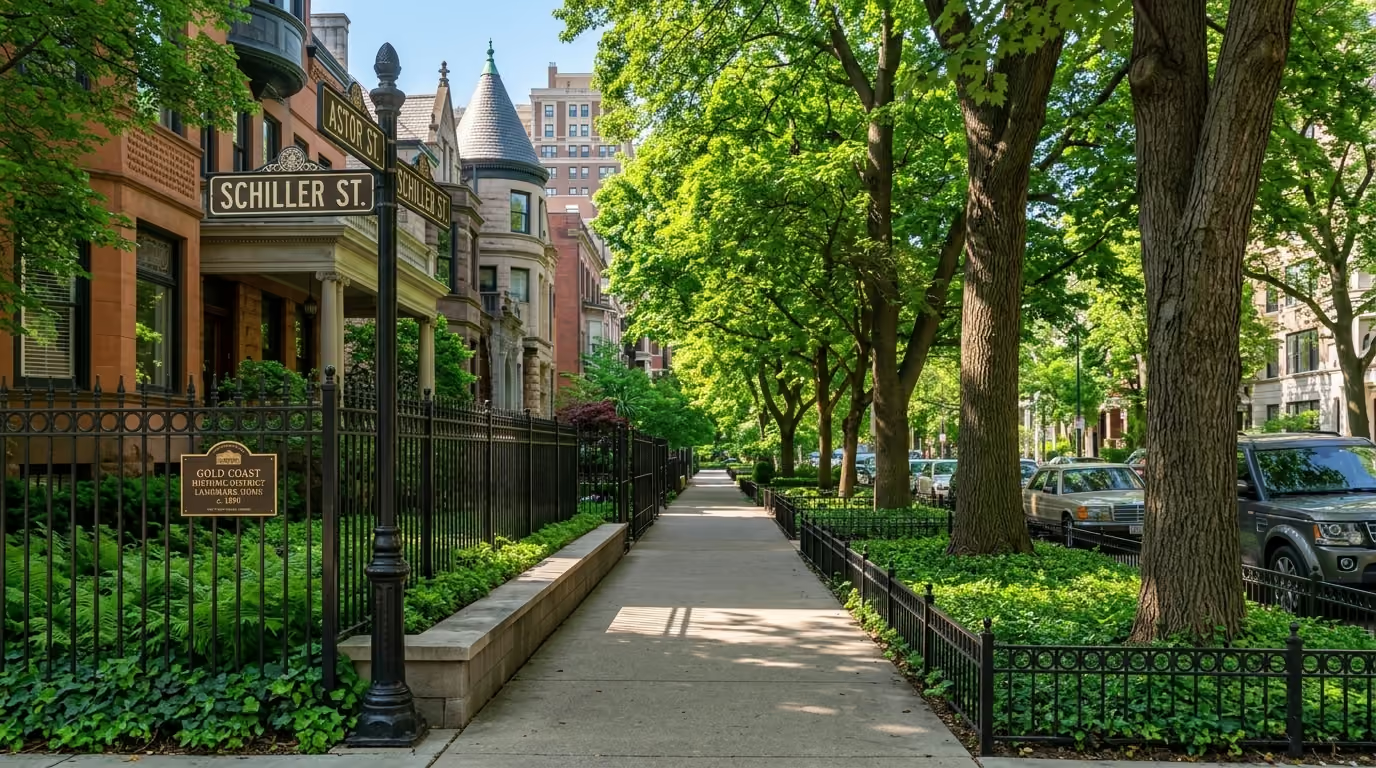
The Gold Coast is Chicago's wealthiest and most architecturally significant neighborhood, a compact stretch of the Near North Side bounded by North Avenue on the north, Lake Michigan and Lake Shore Drive on the east, Oak Street on the south, and Clark Street on the west. It exists because of one decision. In 1882 the merchant Potter Palmer began building a 42-room mansion on filled-in swampland at 1350 North Lake Shore Drive, moving Chicago society off Prairie Avenue on the South Side and pulling the city's wealth north with him. Astor Street was fully built out within twenty years. The Palmer mansion itself was demolished in 1950 and two high-rises stand on the site today, but the neighborhood it created is still intact and still protected: the Astor Street District became a Chicago Landmark on 19 December 1975, and the wider Gold Coast Historic District was added to the National Register of Historic Places on 30 January 1978. Roughly 8,700 to 15,000 people live here depending on where the boundary is drawn, in ZIP codes 60610 and 60611.
The single most misleading number in Gold Coast real estate is the neighborhood median, and understanding why is worth more to a buyer or seller here than any other fact on this page. Redfin reported a median sale price of about $487,000 for January 2026 at roughly $397 per square foot, and Zillow put the typical Gold Coast home value near $359,000 in mid-2026. Those figures are accurate and almost useless as a guide to what buyers actually come to the Gold Coast for. The reason is inventory mix. Around nine in ten sales here are attached homes, and the pool is dominated by studio, one-bedroom, and two-bedroom units in mid-century and vintage buildings, including roughly 2,600 units in Carl Sandburg Village alone. Those trades set the median. Meanwhile the market Carrie works in sits far above it: in early August 2026 there were about 67 condos listed in the Gold Coast at a median asking price near $585,000 and about 55 days on market, while the handful of single-family houses on the market ranged from roughly $1.7 million to $21 million. In the premier towers, individual residences at No. 9 Walton have traded between about $2.6 million and $10 million over the past year. Read the median as the entry point to the neighborhood, not as its price.
What separates the Gold Coast from every comparable Chicago market is that it offers three genuinely different ownership products inside a few blocks of each other, and the differences matter more than the price bands. There are vintage cooperatives along Lake Shore Drive and State Parkway, where purchases go through board approval, financing rules are stricter, and monthly assessments often include property taxes. There are condominiums spanning 1920s conversions, 1960s and 1970s high-rises, and new construction. And there is a very thin supply of single-family houses, mostly greystone and brick rowhouses on Astor, State, Dearborn, Goethe, Scott, and Burton, which almost never come to market and trade in the millions when they do. Lincoln Park has houses in volume, Streeterville and River North have towers without the landmark streets, and neither has Oak Street retail or a swimming beach at the end of the block. The Gold Coast is the only Chicago neighborhood that has all of it, and the scarcity of the low-rise stock is what has held its values for a century.
Carrie McCormick has worked this market since 1999 and has closed more than $3.5 billion in career sales across Chicago's luxury neighborhoods, with the Gold Coast at the center of that business. She is ranked in the top 1 percent of brokers by the Chicago Association of Realtors, holds the association's Gold and Platinum awards, and is the recurring luxury real estate expert on NBC 5 Chicago's Emmy-nominated series Open House Chicago. Her practice covers exactly the range the Gold Coast demands: penthouses and new construction, single-family greystones, condominiums, and the co-op buildings most agents avoid because the board process is unfamiliar. Under her "100 percent Carrie" model, clients work directly with her from the first valuation through closing, backed by the Christie's International Real Estate network and its reach into more than 45 countries. Whether you are buying your first Gold Coast condominium, moving up to a full-floor residence, or selling a landmark house that needs to be priced against five genuine comparables rather than a neighborhood median, call 312-961-4612.
The Astor Street District has been a protected Chicago Landmark since 1975, and it is a working residential street rather than a museum block. The Charnley-Persky House at 1365 North Astor Street, designed in 1891 by Adler and Sullivan with a young Frank Lloyd Wright as draftsman and now a National Historic Landmark, operates as a museum and the national headquarters of the Society of Architectural Historians. The Archdiocese of Chicago still owns the 1885 archbishop's residence at 1555 North State Parkway, which it uses for official functions, and the Graham Foundation runs free exhibitions out of the 1902 Madlener House at 4 West Burton Place.
Oak Street is the densest luxury retail block in the Midwest, a narrow tree-lined stretch running east from Rush Street with Hermès, Chanel, Prada, Dior, Harry Winston, Brunello Cucinelli, and Loro Piana among its tenants. The long-vacant Barneys New York building at 1 to 15 East Oak has been re-tenanted, with Cartier and Balenciaga now at street level and the restaurant Arla on the top floor, which returned foot traffic to the block after three years of a dark anchor.
Oak Street Beach sits at 1000 North Lake Shore Drive, at the foot of the neighborhood, with chair, bike, and volleyball rentals, the Oak Street Beach Café, and a marked distance-swimming lane running parallel to shore from Division Street to the Chess Pavilion. The 18-mile Lakefront Trail passes directly through, north toward Lincoln Park and south toward the Loop, and every August the Chicago Air and Water Show is visible from the sand.
Gibsons Bar and Steakhouse has anchored 1028 North Rush Street since May 1989 and still sets the tone for the block. Around it: Maple and Ash at 8 West Maple, Carmine's back at 1037 North Rush after a roughly $4 million rebuild, Tavern on Rush reopened inside the Thompson Chicago at 1015 North Rush, Adalina at 912 North State, and Le Colonial at 57 East Oak. Very few residential neighborhoods in America have this concentration of destination restaurants inside a five-block radius.
Daily life here is genuinely car-optional. There is a 56,000 square foot Jewel-Osco at 102 West Division Street at the base of The Sinclair, Potash Markets at 875 North State Street, a pharmacy on almost every commercial corner, and two CTA Red Line stations, Clark/Division and Chicago, plus the 22 Clark, 36 Broadway, 151 Sheridan, and 156 LaSalle bus routes. The Loop is a fifteen-minute train ride or a forty-minute walk down the lakefront.
The Gold Coast lets a buyer enter at a Sandburg Village studio and move up through vintage condominium conversions, full-service Lake Shore Drive co-ops, new construction at No. 9 Walton or the Waldorf Astoria Residences, and finally a landmark single-family greystone, without ever changing neighborhoods. That internal ladder is rare in Chicago luxury, and it is the reason many Gold Coast owners buy here three or four times across a lifetime.
The Gold Coast is small enough to cross on foot in twenty minutes and varied enough that the block a home sits on changes its price, its ownership structure, and its buyer pool. Broadly, the low-rise landmark streets run through the middle of the neighborhood, the high-rises line Lake Shore Drive to the east, the new luxury towers cluster at the southern end near Oak and Walton, and the most attainable inventory sits at the western edge along Clark and LaSalle. Ranges below reflect typical recent activity and should be treated as a general guide rather than a valuation.

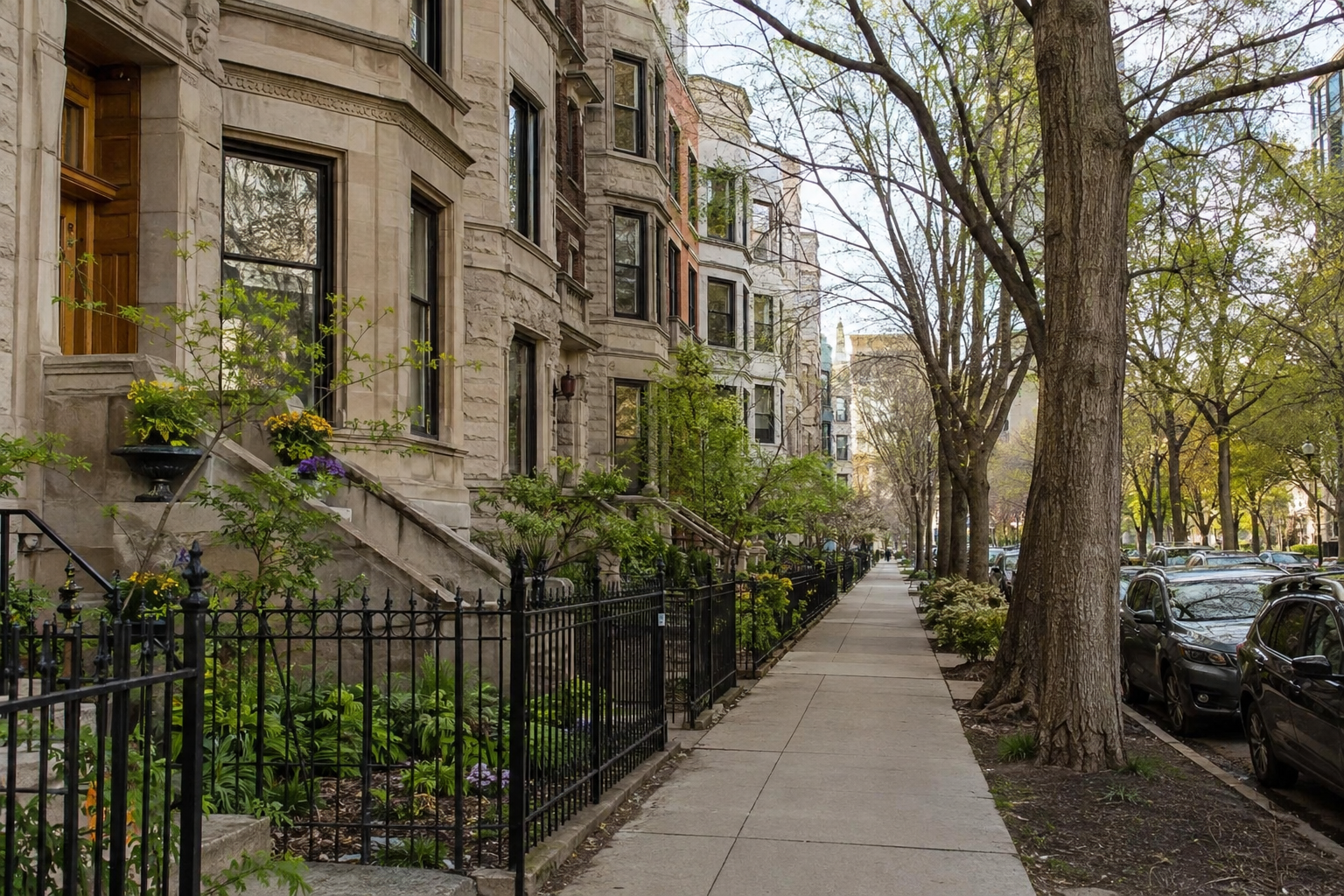


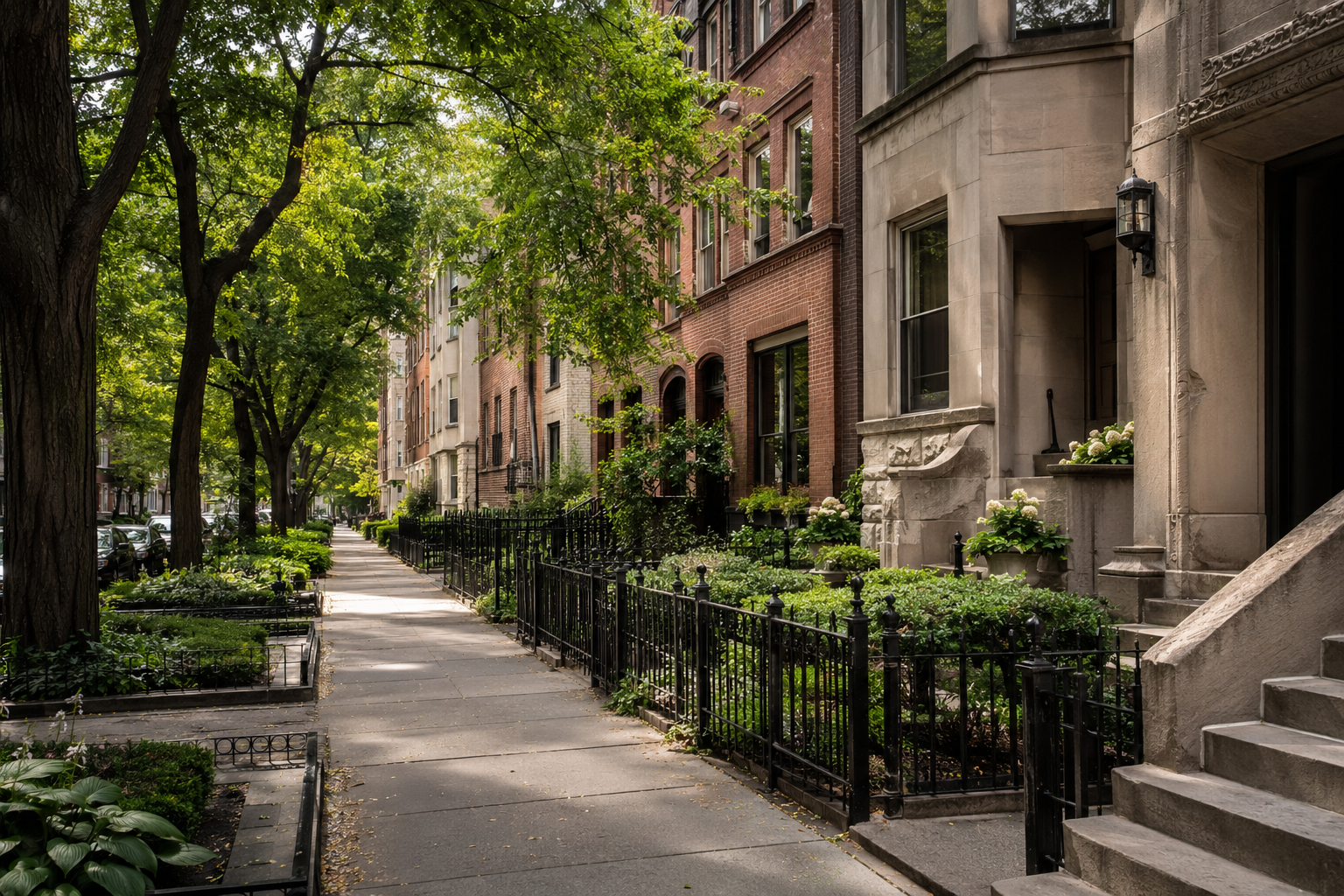
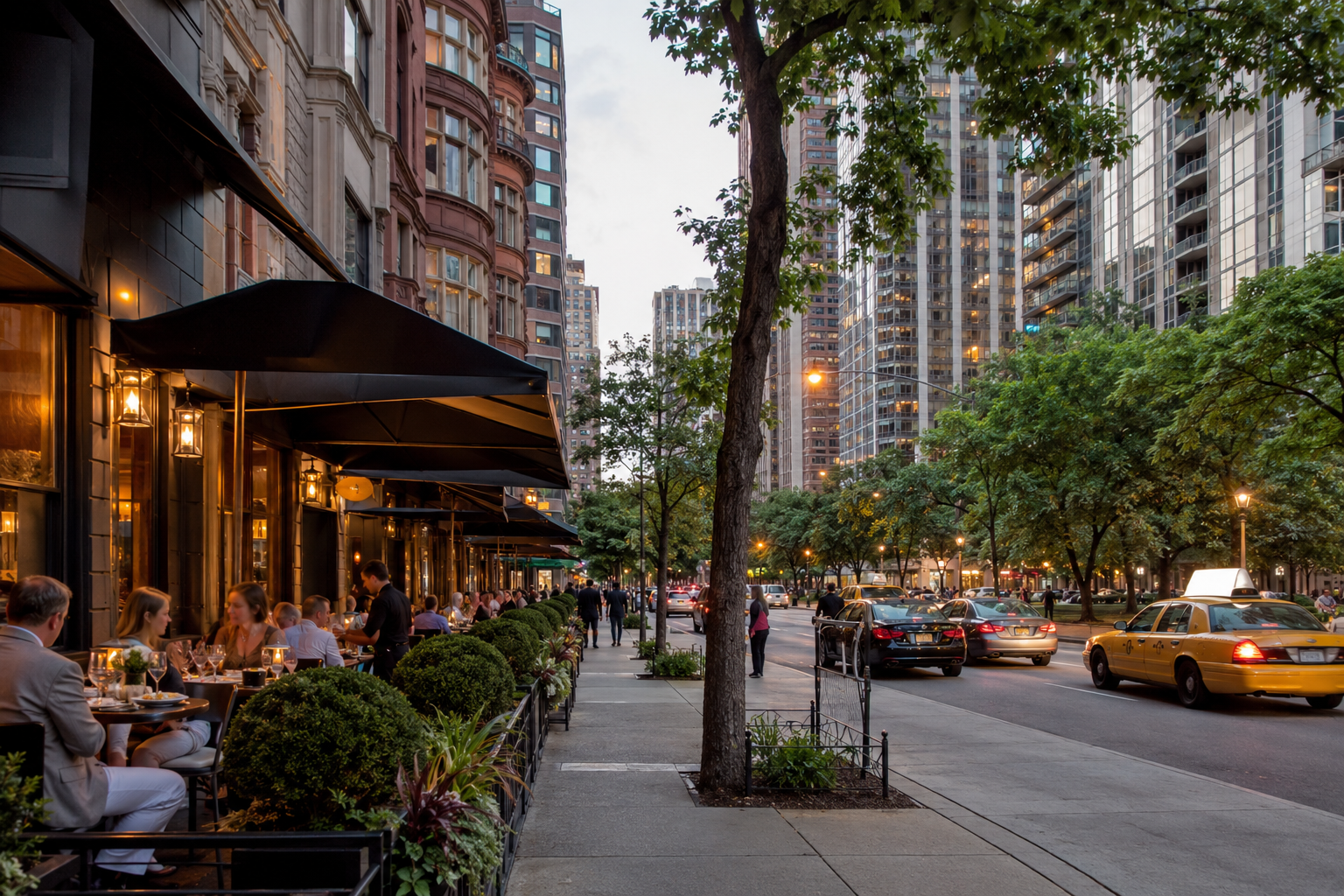
The Gold Coast concentrates its dining on three streets, Rush, State, and Oak, with the Rush and Bellevue corner functioning as the centre of gravity for the whole city's steakhouse culture.
At 1028 North Rush Street, this has been the neighborhood's anchor since May 1989, known for its prime Angus beef, its sidewalk patio, and a dining room where a table by the window is still a small status event in Chicago.
Sits directly next door to Gibsons on Rush Street and shares its second-floor private dining rooms, covering the seafood side of the same formula with its frog legs, crab, and fish.
At 8 West Maple Street is the neighborhood's modern steakhouse, built around a wood-fired hearth under chef Danny Grant, with a seafood tower and a wine programme that draw a younger crowd than the Rush Street classics.
At 1037 North Rush Street reopened in January 2026 after almost three years dark and a roughly $4 million reconstruction, returning the Rosebud Restaurant Group's Italian-American supper club to the block with a new second-floor four-season terrace overlooking Mariano Park.
Now occupies the ground and second floors of the Thompson Chicago at 1015 North Rush Street, a 16,000 square foot room with a cocktail lounge and patio, having reopened in 2024 across the street from the original location it left in 2022.
At 912 North State Street is the neighborhood's pasta destination, a Michelin-recognised Italian room from chef Soo Ahn with house-made extruded and stuffed pastas and imported meats and cheeses.
Opened on 18 June 2026 on the sixth floor of 15 East Oak Street, in the former Barneys New York space, pairing seaside Mediterranean cooking with Japanese technique across 230 indoor seats and two terraces overlooking Oak and Rush.
Le Colonial at 57 East Oak Street handles French-Vietnamese cooking over two floors with a second-storey balcony. LUXBAR at 18 East Bellevue Place covers the everyday end with burgers, a long bar, and a room that stays open late.
Inside the Viceroy Chicago at 1112 North State Street, rounds out the list with Mediterranean cooking from the Boka Restaurant Group and the neighborhood's most reliable hotel breakfast.

Oak Street is the Midwest's densest luxury retail block, a single tree-lined stretch between Rush Street and Michigan Avenue holding Hermès, Chanel, Prada, Dior, Harry Winston, Brunello Cucinelli, and Loro Piana, with Cartier and Balenciaga now occupying street level at the redeveloped former Barneys New York building at 1 to 15 East Oak. The block is narrower, quieter, and more discreet than Michigan Avenue two hundred feet away, which is precisely why it works. At the neighborhood's southern edge the Magnificent Mile begins, with the 900 North Michigan Shops and Water Tower Place at 835 North Michigan, the latter the subject of a $170 million redevelopment announced in April 2026, with construction slated to begin in 2027 and complete in 2028, consolidating retail on floors one to three and converting floors four to eight to office and medical use. For everyday needs, there is a 56,000 square foot Jewel-Osco at 102 West Division Street at the base of The Sinclair, the long-running Potash Markets at 875 North State Street, and hardware, pharmacy, and dry cleaning within a few blocks in every direction.
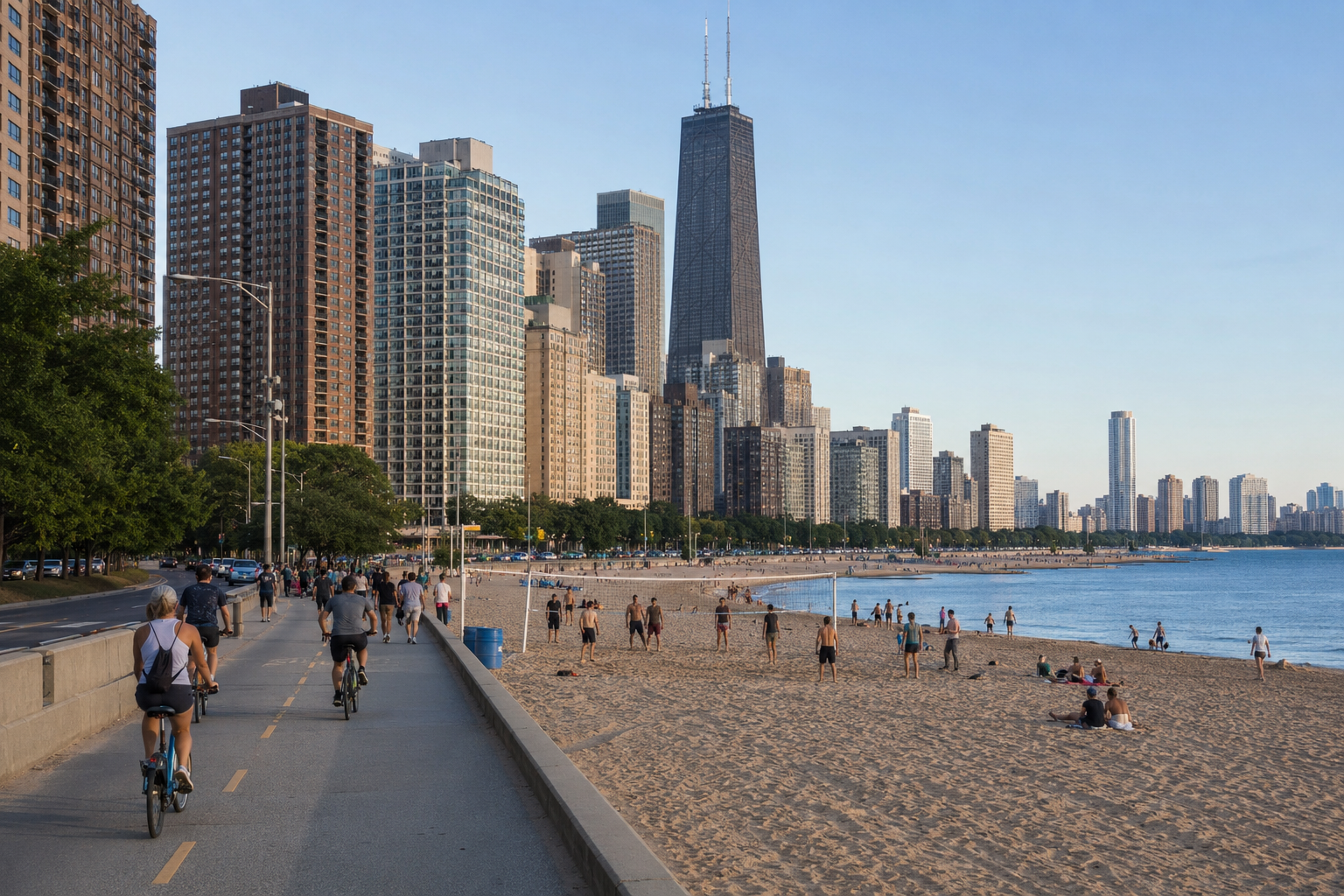
Oak Street Beach at 1000 North Lake Shore Drive is the neighborhood's front yard, a Chicago Park District beach with chair, bike, and volleyball rentals, the Oak Street Beach Café, summer volleyball tournaments, and a distance-swimming lane running parallel to shore from Division Street to the Chess Pavilion. Whispers at Oak Street Beach, at 1001 North Lake Shore Drive, is one of the very few Chicago bars and restaurants sitting directly on the water and runs seasonally. The 18-mile Lakefront Trail passes through, connecting north to Lincoln Park and North Avenue Beach and south to the Loop and the Museum Campus. Inland, Washington Square Park at 901 North Clark Street, known for a century as Bughouse Square for the soapbox orators who gathered there, sits directly across from the Newberry Library at 60 West Walton Street, an independent research library open to the public since 1887 with free exhibitions in a Henry Ives Cobb building. The International Museum of Surgical Science occupies a Howard Van Doren Shaw mansion modelled on the Petit Trianon at 1524 North Lake Shore Drive, with four floors of galleries covering the history of surgery and medicine. The Graham Foundation runs free architecture exhibitions from the Madlener House at 4 West Burton Place, and the Charnley-Persky House at 1365 North Astor Street offers tours of the Adler, Sullivan, and Wright collaboration that Wright later called the first modern house. Every August the Chicago Air and Water Show fills the sky over the lakefront. The 2026 edition ran on 15 and 16 August, centred on North Avenue Beach and visible along the shoreline south to Oak Street.
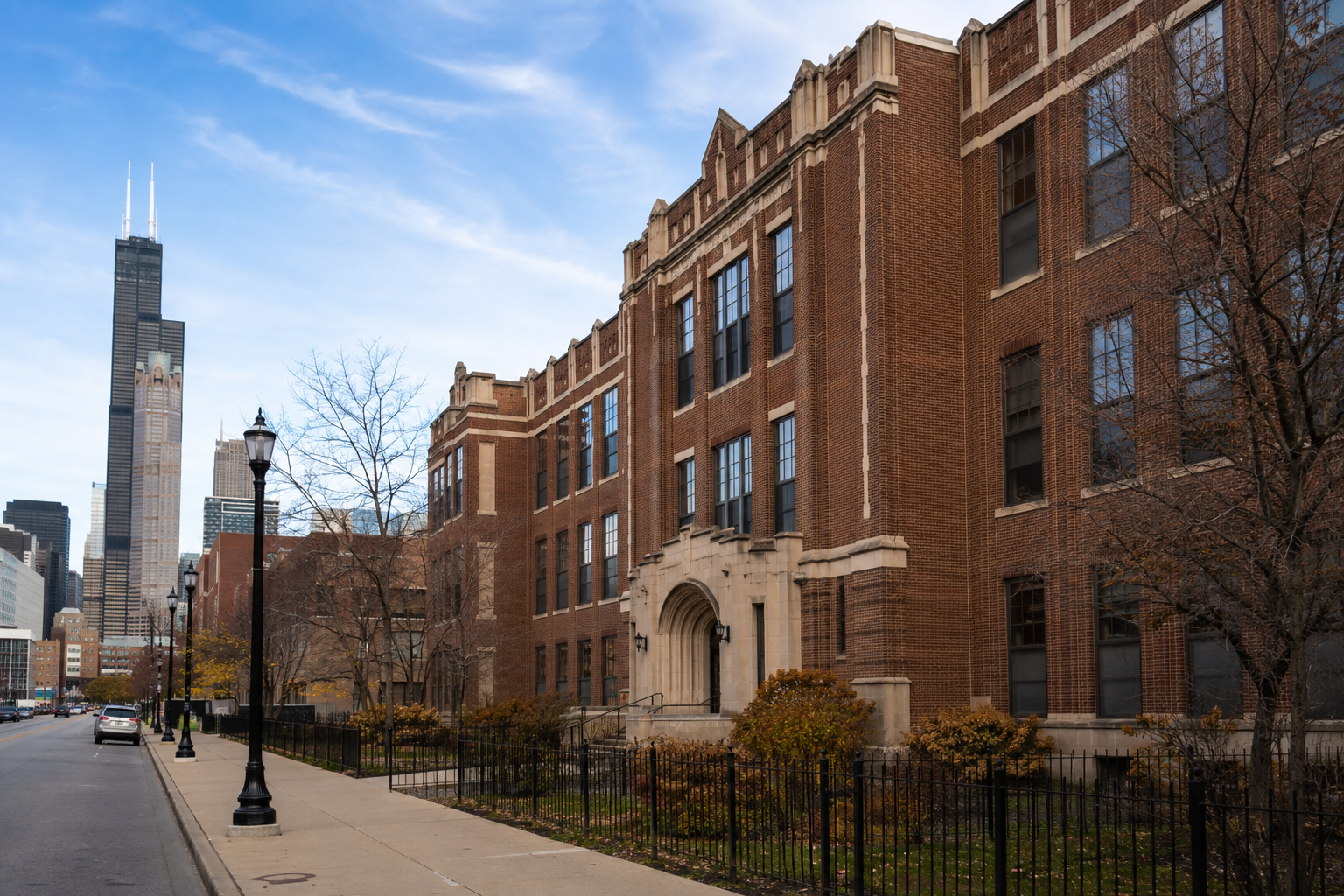
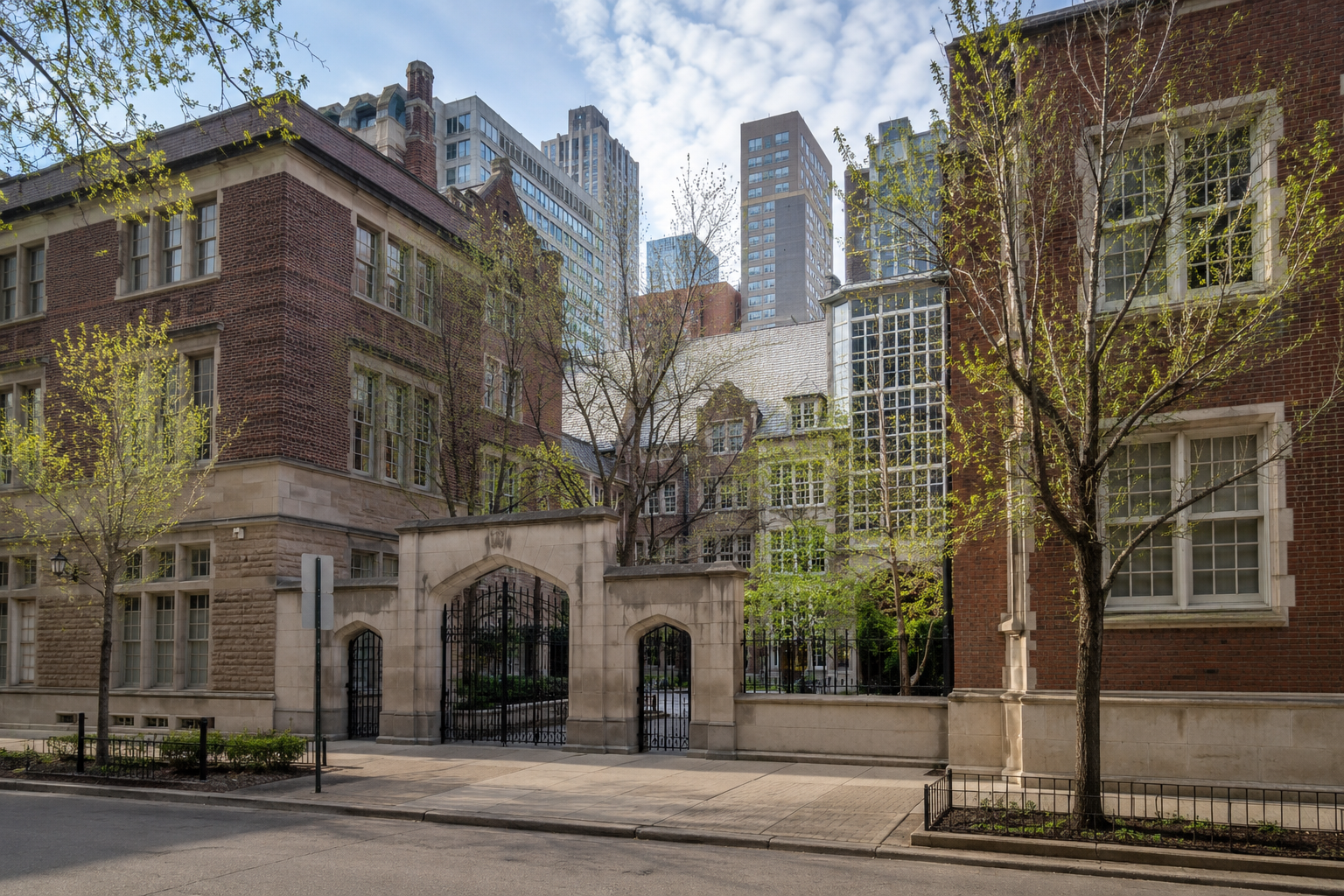
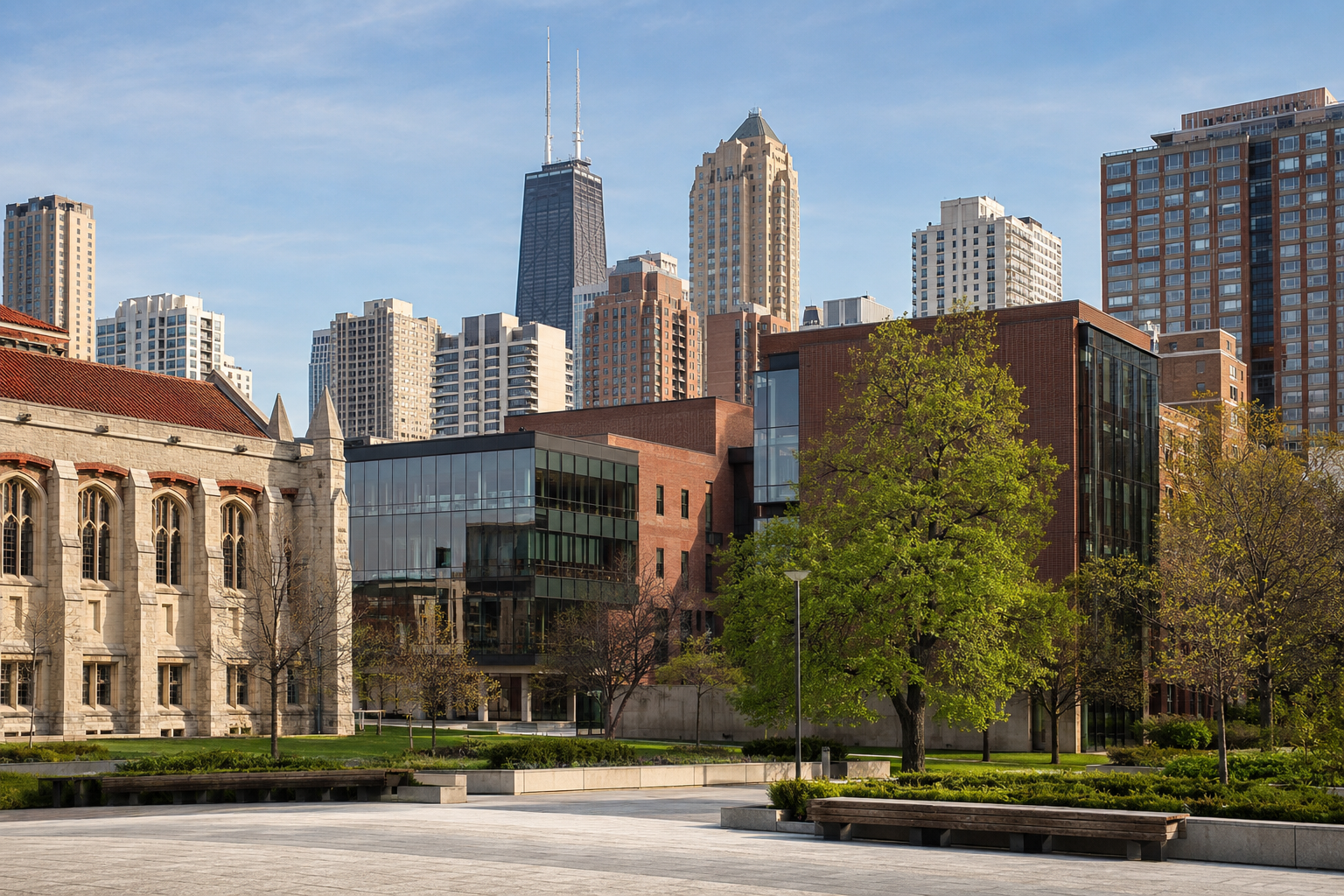
The Gold Coast is served by a single school district. Chicago Public Schools, formally City of Chicago School District 299, covers the entire neighborhood, so unlike suburban markets there is no district-boundary question to navigate here. What varies instead is the school itself, because Chicago assigns some schools by address, admits others by application or test, and the Gold Coast also sits inside one of the deepest independent-school markets in the country.
Ogden International is the neighborhood public school and the only full-continuum preschool through grade 12 public International Baccalaureate school in Illinois. It operates across three campuses: the East Campus at 24 West Walton Street in the Gold Coast for kindergarten through grade 4, the Jenner Campus at 1119 North Cleveland Avenue for grades 5 through 8, and the West Campus at 1250 West Erie Street for the high school grades. The school took its current form in 2018, when Ogden merged with Jenner Academy of the Arts, and it is among the most internationally diverse schools in the district, drawing families from consulates and global corporations. Ogden's prekindergarten programme moves to the East Campus for the 2026 to 2027 school year. Published performance ratings are mixed and should be read directly rather than taken on reputation: Niche assigns the high school a B and GreatSchools rates it 5 out of 10, while U.S. News ranks it 118th among Illinois high schools, with a roughly 92 percent graduation rate and about half of students participating in IB coursework.
Walter Payton College Preparatory High School sits at 1034 North Wells Street, which is west of Clark Street and therefore outside the Gold Coast boundary this page uses, roughly a ten-minute walk away. It is one of the highest-performing public high schools in the United States and the reason many Chicago families stay in the city for high school. Opened in 2000, it is an IB World School serving about 1,200 students, holds an A-plus grade from Niche and an 8 out of 10 from GreatSchools, ranks among the strongest public high schools in Illinois on test performance, and is ranked 54th nationally by U.S. News. One point matters more than any rating: Payton is a selective-enrollment school. Admission is by application, test score, and the district's tier system, not by home address, so no Gold Coast purchase guarantees a place there.
The Gold Coast has an unusually deep independent-school market for its size, and a large share of neighborhood families use it. The Latin School of Chicago, founded in 1888, operates its Lower School at 1531 North Dearborn Parkway and its Middle and Upper Schools on North Boulevard, serving roughly 1,190 students from junior kindergarten through grade 12 at a 9 to 1 student-teacher ratio, with an A-plus Niche grade and universal four-year college matriculation. Tuition for 2026 to 2027 runs at $44,585 for junior kindergarten through grade 4, $49,455 for grades 5 through 8, and $50,635 for grades 9 through 12. The Frances Xavier Warde School, a Catholic independent school, runs its grades 4 through 8 campus at 751 North State Street at Holy Name Cathedral, with its younger grades at Old St. Patrick's on Desplaines Street. St. Chrysostom's Day School at 1424 North Dearborn Parkway serves early childhood inside the neighborhood, and Catherine Cook School in Old Town and the British International School of Chicago are both within a short drive.
Loyola University Chicago's Water Tower Campus sits a few blocks south of the neighborhood, Northwestern University's Chicago campus and medical centre are in adjacent Streeterville, and Moody Bible Institute occupies a campus on North LaSalle Street at the neighborhood's western edge. For buyers relocating for a downtown academic or medical appointment, the Gold Coast is one of very few Chicago neighborhoods within walking distance of all three.
Development accelerated with Potter Palmer's mansion in 1882.
Encompasses the historic core alongside the 60611 district.
Consisting of roughly 5,600 households averaging two people.
Historically one of America's wealthiest urban enclaves.
Neighborhood entry point, driven heavily by vintage condominium volume.
The current baseline for standard attached housing stock.
Set in 2017 by the purchase of the top four floors at No. 9 Walton.
The neighborhood's largest single source of high-rise inventory.
With a median asking price currently hovering near $585,000.
The average market pace alongside ~45 monthly closings.
Connected directly to the trail via Oak Street Beach.
Direct access via two CTA train stops and four major bus routes.
Navigating Chicago's Gold Coast luxury real estate market requires unparalleled expertise. Here is what you need to know before we begin.
Ask A QuestionUse the median with care, because in the Gold Coast it describes the entry point rather than the market. Redfin reported a median sale price of about $487,000 for January 2026 at roughly $397 per square foot, and Zillow put the typical home value near $359,000 in mid-2026. Those numbers are set by studio, one-bedroom, and two-bedroom units in vintage and mid-century buildings, which make up the bulk of transaction volume. Above them sits the market most buyers picture: about 67 condominiums were listed at a median near $585,000 in early August 2026, single-family houses ranged from roughly $1.7 million to $21 million, and residences in premier towers such as No. 9 Walton have traded between about $2.6 million and $10 million over the past year. Narrow by building and ownership type before treating any figure as meaningful.
The Gold Coast is most commonly defined as North Avenue on the north, Lake Michigan and Lake Shore Drive on the east, Oak Street on the south, and Clark Street on the west, inside the Near North Side community area. The boundary is genuinely contested at the southern edge. The Gold Coast Neighbors Association works from the Gold Coast Historic District map, which reaches south to Walton Street east of Michigan Avenue, while some developers market buildings well south of Chicago Avenue as Gold Coast addresses. This matters when you are searching listings, because portal neighborhood tags are loose and will show you homes in River North, Old Town, and Streeterville labelled as Gold Coast. Check the cross streets, not the label.
Yes, but they are scarce, and that scarcity is the whole story. In July 2026 there were roughly 11 houses on the market across the entire neighborhood, priced from about $1.7 million to $21 million. Almost all of them are greystone or brick rowhouses on Astor Street, State Parkway, Dearborn Parkway, Goethe, Scott, Banks, or Burton, built between the 1880s and the 1920s, and many sit inside the Astor Street landmark district where exterior alterations require review. Because so few trade each year, pricing one accurately means working from a handful of genuine comparables rather than any neighborhood average, and buyers frequently need to be positioned before a house is publicly listed.
A condominium buyer owns their unit outright, while a co-operative buyer owns shares in a corporation that owns the building and holds a proprietary lease on their apartment. In the Gold Coast the distinction is practical rather than academic, because many of the largest and best-located vintage apartments along Lake Shore Drive and State Parkway are co-ops. Co-op purchases usually require board approval and a financial review, lenders often require larger down payments and some buildings restrict or prohibit financing altogether, subletting is commonly limited, and the monthly assessment frequently includes property taxes, which makes it look far higher than a comparable condominium assessment until the numbers are normalised. Co-ops also often trade at a discount per square foot for exactly these reasons, which is where the opportunity lies for a buyer who understands the process.
The Gold Coast is served by one district, Chicago Public Schools, District 299, so there is no district-boundary question here. The neighborhood public school is Ogden International School of Chicago, the only full-continuum preschool through grade 12 public International Baccalaureate school in Illinois, with its kindergarten through grade 4 campus at 24 West Walton Street. Its published ratings are mixed, with a Niche B and a GreatSchools 5 out of 10 at the high school level. Ten minutes west, Walter Payton College Prep is ranked 54th nationally by U.S. News, but it is selective-enrollment, so admission comes through application and testing rather than address. Many neighborhood families use the private market, which is unusually deep here: the Latin School of Chicago, founded in 1888, the Frances Xavier Warde School, and St. Chrysostom's Day School are all inside or adjacent to the neighborhood. Verify current attendance areas and ratings for a specific address before making a decision.
It depends on how long you intend to stay, and the Gold Coast rental market is genuinely strong, which is why the question comes up so often. Large amenity buildings such as The Sinclair at Clark and Division draw renters who want the location without a commitment. The case for buying turns on two things specific to this neighborhood. First, the low-rise landmark stock cannot be added to, which has protected values on Astor, State, Dearborn, and the interior streets for over a century. Second, the vintage co-op and condominium tier offers entry pricing that is low relative to the neighborhood's reputation, so buyers can often own for a monthly figure close to what a comparable rental costs. If you expect to be in Chicago more than three or four years, it is worth running the comparison on a specific building rather than on the neighborhood, because assessments and taxes vary enormously between addresses.
Daily life in the Gold Coast is walkable, dense, and unusually quiet for how central it is, once you are off the commercial streets. Groceries, pharmacies, dry cleaning, and hardware are within a few blocks, with a large Jewel-Osco at 102 West Division Street and Potash Markets at 875 North State Street. Two CTA Red Line stations, Clark/Division and Chicago, put the Loop about fifteen minutes away. Oak Street Beach is at the foot of the neighborhood and the 18-mile Lakefront Trail runs through it. Dining is a genuine amenity rather than a convenience, with Gibsons, Maple and Ash, Carmine's, Tavern on Rush, Adalina, and Arla all within a few blocks. The trade-off is noise and activity: the blocks around Rush, State, and Division are lively late into summer weekends, while Astor Street, Dearborn Parkway, and the interior streets a few hundred feet away are among the quietest addresses downtown.
No, and this catches almost everyone. Despite the name, the Gold Coast Art Fair has not been held in the neighborhood for years. The 2026 edition, its 68th, ran on 20 and 21 June at Butler Field in Grant Park, roughly two miles south. The event began in the Gold Coast decades ago and kept the name after moving downtown for space. Actual Gold Coast events sit on the lakefront and in the neighborhood's institutions: the Chicago Air and Water Show over the shoreline each August, visible south to Oak Street Beach, free exhibitions at the Newberry Library and the Graham Foundation, and tours at the Charnley-Persky House.
Carrie McCormick has worked Chicago's luxury market since 1999 and has closed more than $3.5 billion in career sales, and under her "100 percent Carrie" model clients work directly with her rather than being handed to a team. That matters more in the Gold Coast than in most markets, because value here turns on specifics a generalist misses: whether a building is a co-op or a condominium and what that does to a buyer pool, whether an assessment includes taxes, which Astor Street alterations need landmark review, how a Sandburg Village association's reserves compare to its neighbour's, and how to price a landmark greystone against five genuine comparables rather than a neighborhood median. She is ranked in the top 1 percent of brokers by the Chicago Association of Realtors, holds the association's Gold and Platinum awards, is the recurring luxury real estate expert on NBC 5 Chicago's Open House Chicago, and works within the Christie's International Real Estate network, which reaches buyers across more than 45 countries. Call 312-961-4612.
Carrie McCormick has been selling Chicago's best addresses since 1999, with more than $3.5 billion in career sales and the Gold Coast at the centre of her business, from Sandburg Village first purchases and vintage Lake Shore Drive co-ops to new-construction residences at Oak and Walton and landmark greystones on Astor and Dearborn. Ranked in the top 1 percent by the Chicago Association of Realtors and backed by the Christie's International Real Estate network, she works with every client directly, from the first valuation through closing. To talk through a purchase, a sale, or a relocation, call 312-961-4612 or email carrie@atproperties.com.