Homes for Sale Wicker Park Chicago | Condos, Flats, and Mansions
Chicago's most famous neighborhood name north of the river, built around a 4-acre park the Wicker brothers gave the city in 1870, where landmark-district mansions, brick flats, and boutique new construction share blocks with the six corners of Damen, North, and Milwaukee, and the homes for sale Wicker Park Chicago offers run from vintage condo conversions to the Beer Baron Row estates.
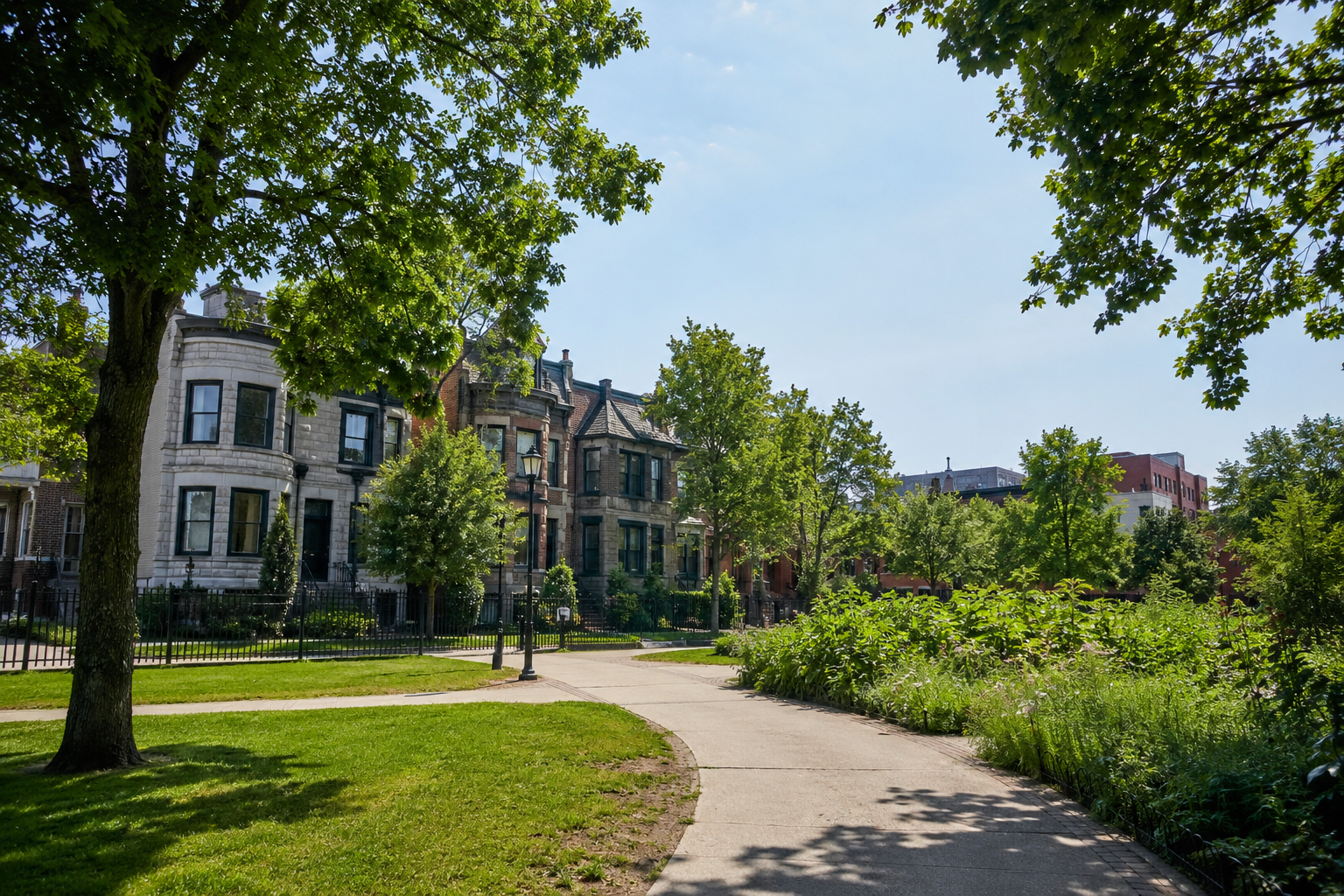
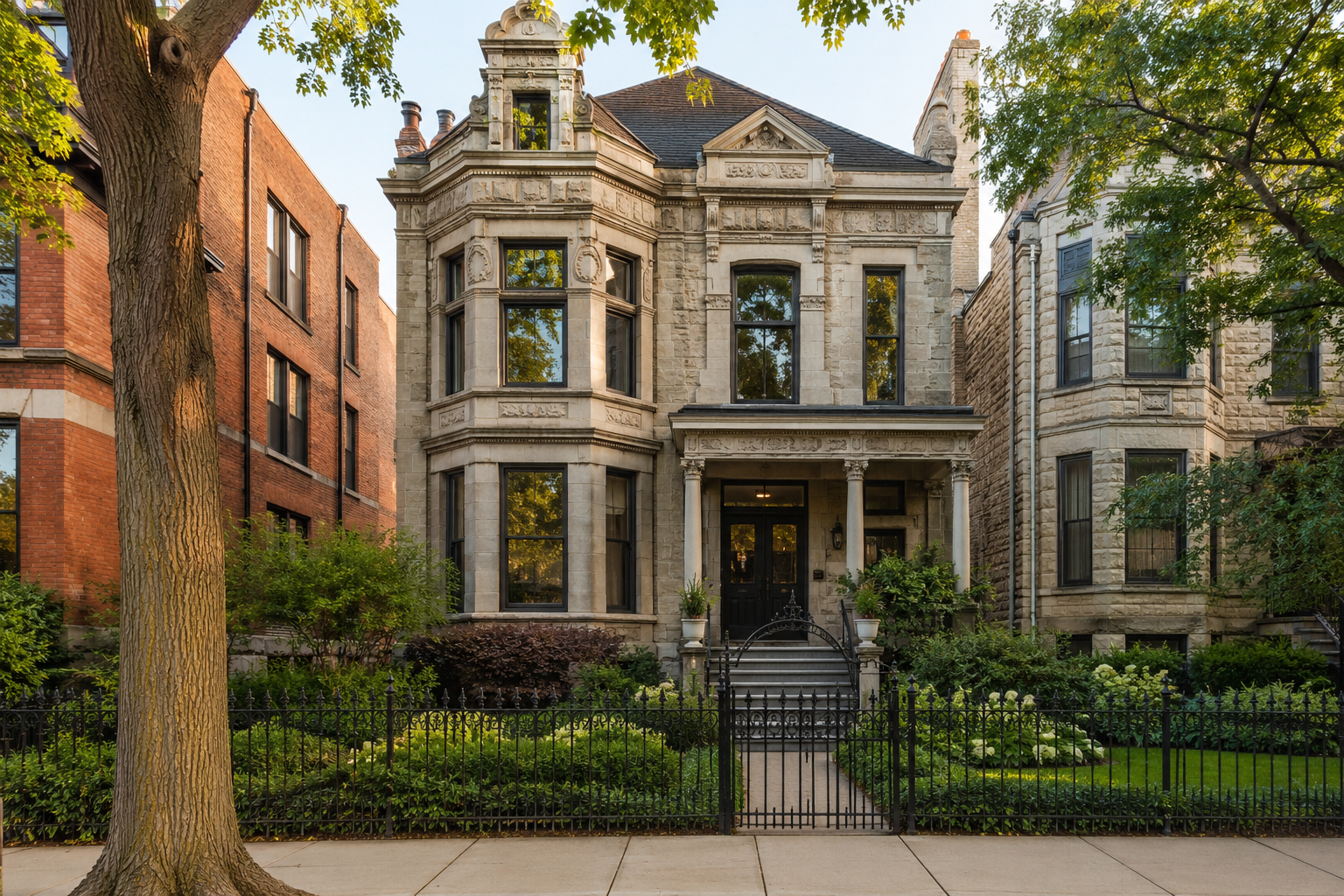
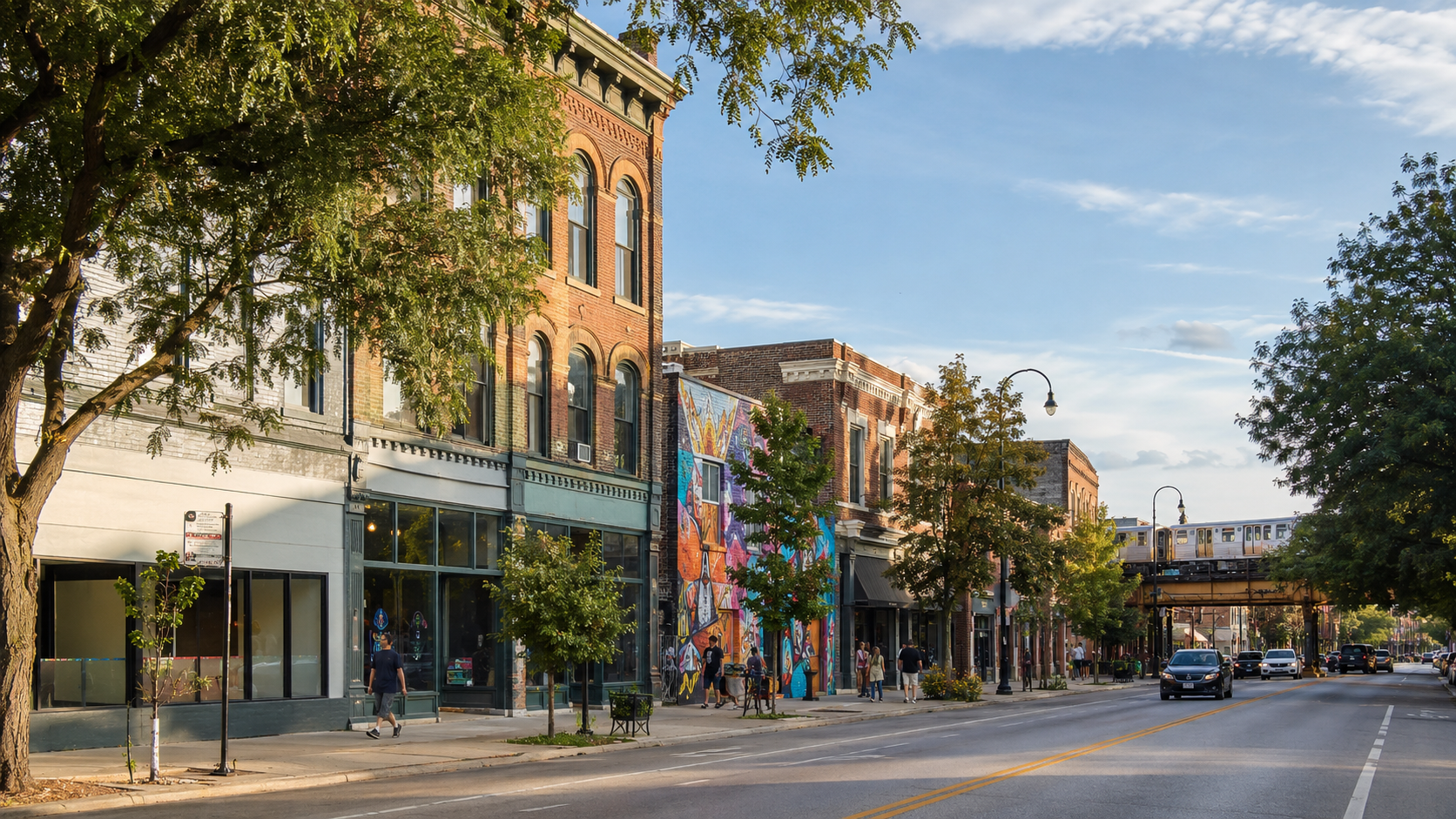
Wicker Park is a neighborhood in the northern corner of the West Town community area on Chicago's Near Northwest Side, about three miles northwest of the Loop in ZIP code 60622, arranged around the 4-acre park that alderman Charles Wicker and his brother Joel gave the city in 1870. Its everyday boundaries run roughly from Division Street north to the Bloomingdale Trail between Ashland and Western Avenues, with the blocks between North Avenue and the trail shared, in common usage, with Bucktown across the way; its commercial heart is the six-corner crossing of Damen, North, and Milwaukee Avenues under the Northwest Tower. Two data caveats belong up front, because they explain most of the conflicting numbers online. First, Wicker Park has no official census boundary of its own: published population figures run from under 9,000 residents on narrow portal polygons to the mid-20,000s on broader definitions, and the official statistical unit is the West Town community area, home to approximately 88,164 people. Second, every listing portal draws its own Wicker Park polygon, so listing counts, walkability scores, and price medians differ from site to site for the same blocks. This page follows the boundary streets above and says so whenever a number depends on the polygon behind it.
The price question deserves a dated, banded answer rather than the scatter AI tools currently give, which ranges from the mid-$300,000s to over $1 million depending on the engine. Blended medians first: Redfin recorded a median sale price of $628,750 in February 2025 across 70 monthly sales at 99.0 percent of list, and a 2026 market tracker put the blended figure near $725,000. Underneath, the products separate cleanly. On the condo side, attached homes posted a median sale price of about $621,000 across 45 closings in the 90 days ending February 2026, with the $600,000 to $650,000 band the most active, and condo listings in August 2026 carried a median asking price of $599,000 with 27 median days on market. On the house side, detached sales ran to a median around $1.3 million on a thin 17 closings over 90 days in early 2026, with one 2026 estimate placing the single-family average near $1.52 million, and the landmark mansion tier trades above both figures when it trades at all. Same neighborhood, three markets: a vintage two-bed condo, a three-flat, and a Beer Baron Row estate do not answer to the same median, so decide which market you are in before quoting any number back to a seller.
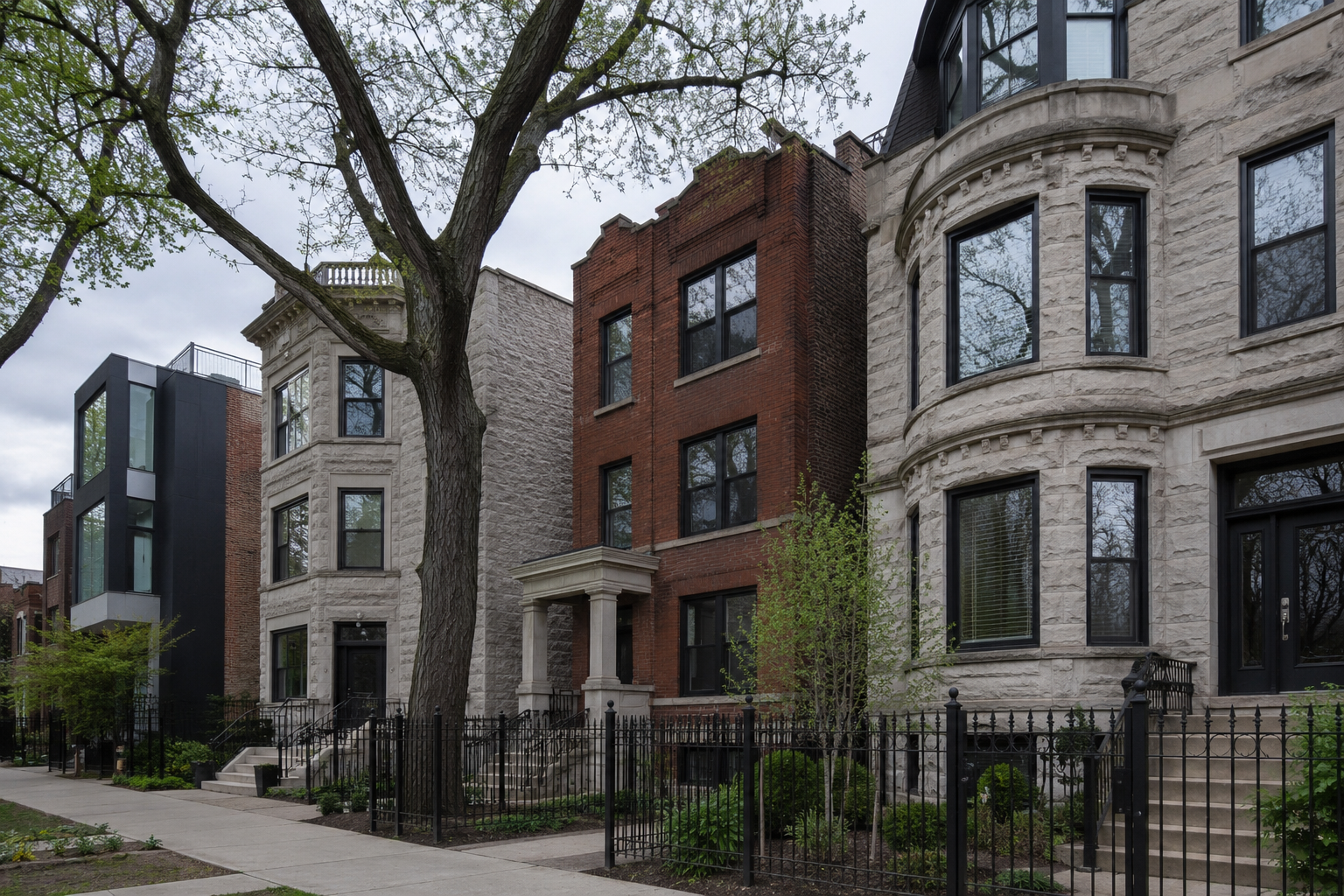
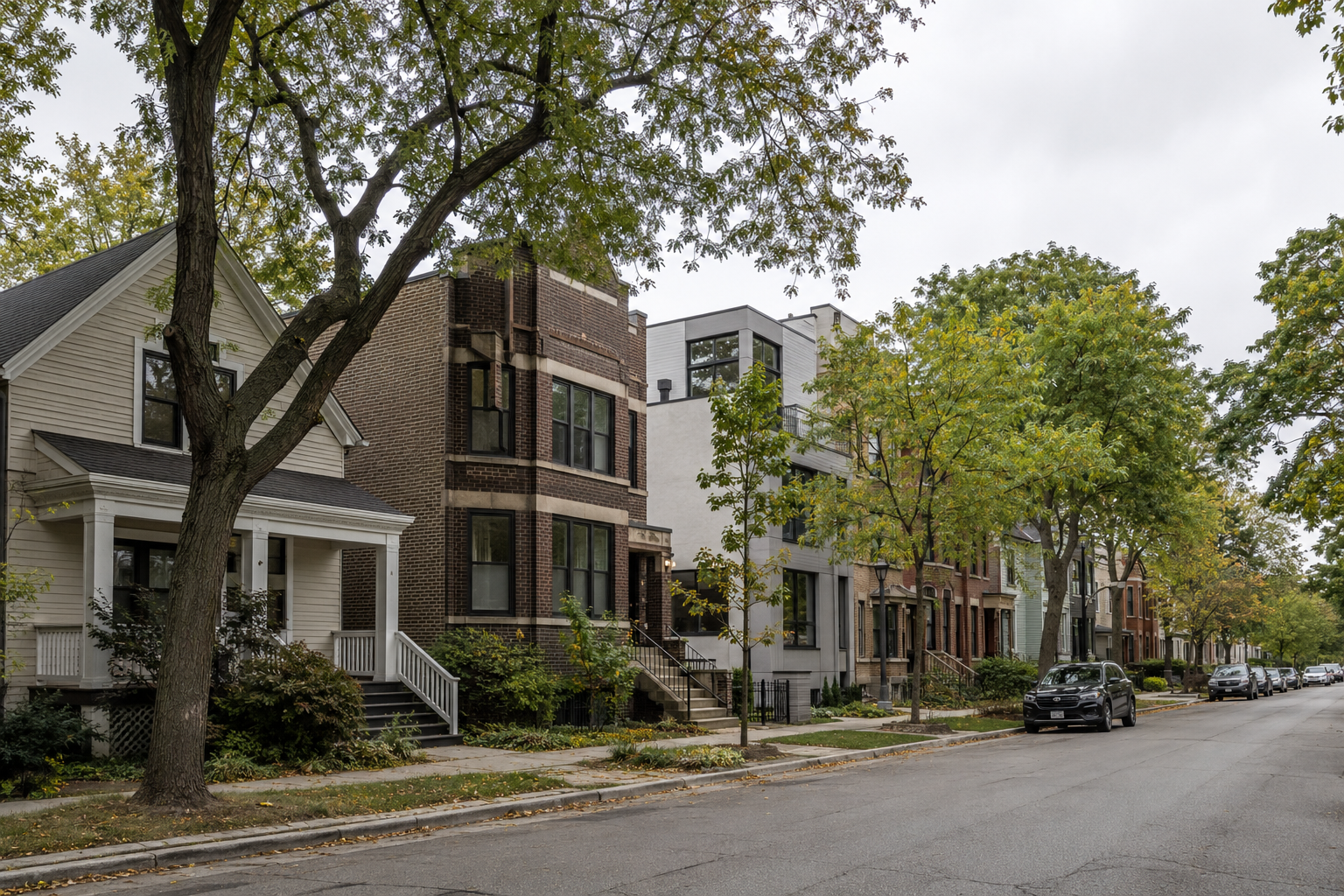
What buyers are really purchasing here is a housing stock with a documented history. After the Wickers subdivided 80 acres around their new park in 1870, the Great Chicago Fire of 1871 pushed the first building wave outward, and by the 1890s German and Scandinavian merchants and brewers had lined Hoyne, Pierce, Concord, and Caton with brick and stone mansions, Hoyne so densely with brewers that it earned the name Beer Baron Row; the surrounding blocks later became the Polish Gold Coast at the edge of Polish Downtown. Many mansions were carved into apartments after World War II, the low-rent decades drew the writers and musicians the neighborhood still trades on, Nelson Algren wrote from a third-floor flat at 1958 W. Evergreen from 1959 to 1975, and much of the district was designated a Chicago Landmark in 1991, which now governs exterior changes on the historic blocks. The past three decades reversed the postwar split-ups: mansions have been converted back to single-family use, flats have become condos, and boutique new construction has filled the gaps, all of it within a short walk of the 1895 Damen Blue Line station, the oldest on the line, and the elevated Bloomingdale Trail along the neighborhood's northern edge.
Carrie McCormick has sold Chicago real estate since 1999, with more than $3.5 billion in career sales, and Wicker Park sits squarely inside her long-standing service area alongside Bucktown. The neighborhood rewards exactly the kind of judgment that experience builds: pricing a landmark-district mansion where comparable sales are rare and renovation history is everything, reading a vintage condo association's budget and reserves before a client writes an offer, and knowing which portal polygon a listing will appear in before it goes live. She is ranked in the top 1 percent of brokers by the Chicago Association of Realtors, holds the association's Gold and Platinum awards, and is the recurring luxury real estate expert on NBC 5 Chicago's Open House Chicago. Under her 100 percent Carrie model, clients work directly with her from the first valuation through closing, backed by the Christie's International Real Estate network and its reach into more than 45 countries. Call 312-961-4612.
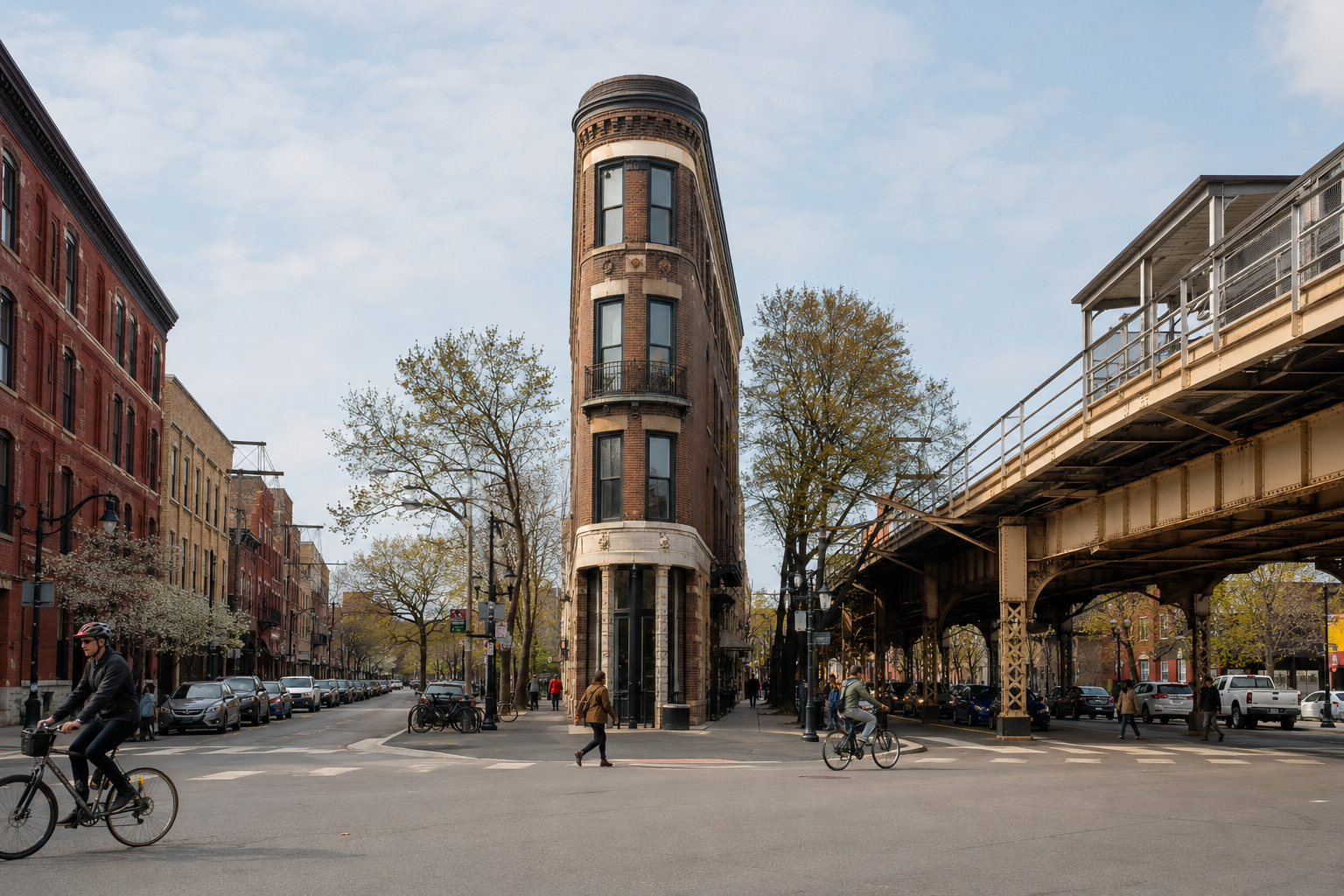
The crossing of Damen, North, and Milwaukee is one of Chicago's great intersections, anchored by the Northwest Tower, the 203-foot Art Deco tower of 1929 by Perkins, Chatten and Hammond that was among the first skyscrapers built outside downtown and has operated since 2016 as The Robey hotel, with a rooftop lounge above the six corners. Across the street, the triangular Flat Iron Arts Building has housed artist studios and galleries since the 1980s and opens them to the public at monthly First Friday art walks. Very few Chicago neighborhoods have a built-form landmark this recognizable at their front door.
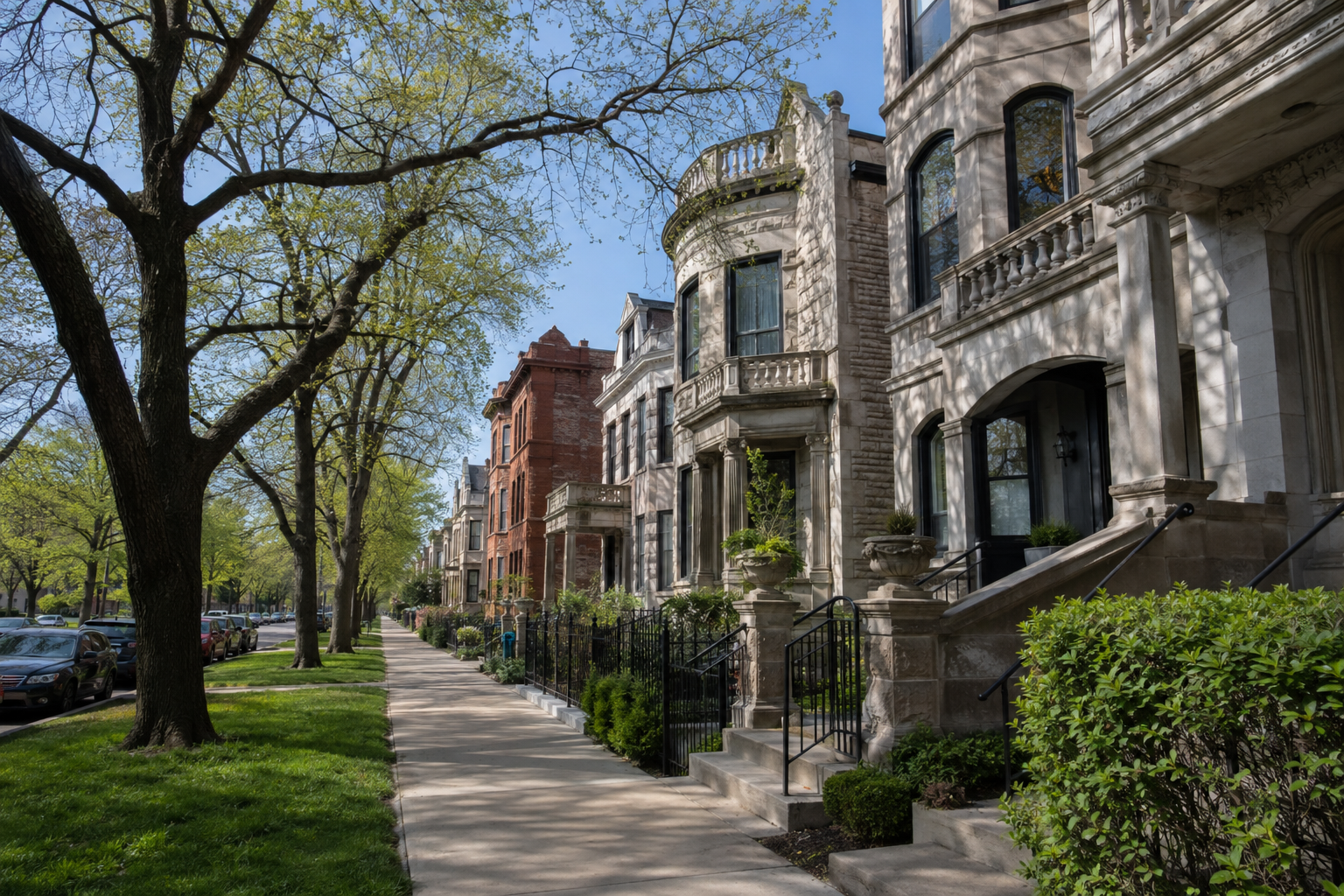
Hoyne, Pierce, Concord, and Caton hold some of the city's largest and best Victorian-era houses, built after the 1871 fire by merchant and brewer families, so many brewers on Hoyne that the street earned the name Beer Baron Row. Much of the neighborhood was designated a Chicago Landmark District in 1991, which protects the streetscapes and is a large part of why restored mansions here trade as a market of their own. Walking Hoyne between Schiller and North Avenue remains one of the best free architecture tours in Chicago.
Big Star's original taqueria at 1531 N. Damen still packs its patio from the first warm day, with Dove's Luncheonette, its diner-counter sibling, two doors up at 1545 N. Damen. Piece Brewery and Pizzeria has run its New Haven-style pies and house brewpub on North Avenue since 2001, Mindy's Bakery draws morning lines on Milwaukee for pastry from one of the city's best-known pastry chefs, and the Milwaukee Avenue spine adds everything from the long-running Bongo Room brunch to newer arrivals like Kama's modern Indian dining room. The two-Michelin-star tier sits minutes away inside the surrounding community area.
Wicker Park Fest, produced by the Wicker Park Bucktown Chamber of Commerce and dubbed the city's best street festival of the summer by the Chicago Tribune, brought its 22nd edition and more than 50 acts to Milwaukee Avenue over July 24 to 26, 2026. The Renegade Craft Fair returns to Division Street between Damen and Ashland each September with hundreds of independent makers, the Flat Iron's First Fridays run monthly, and the park itself hosts a summer calendar of concerts, yoga, and a fine art fair through its advisory council and garden club.
The Damen Blue Line station at the six corners opened in 1895 as Robey and is the oldest station on the line, still wearing its brick station house and historic platform lights while moving about 1.4 million riders in 2025, roughly ten to fifteen minutes from the Loop in one direction and O'Hare direct in the other, with the Division station serving the neighborhood's southern edge. Along the northern boundary, the Bloomingdale Trail, the elevated 606, gives runners and cyclists 2.7 miles of car-free path with access ramps at the neighborhood's north end.
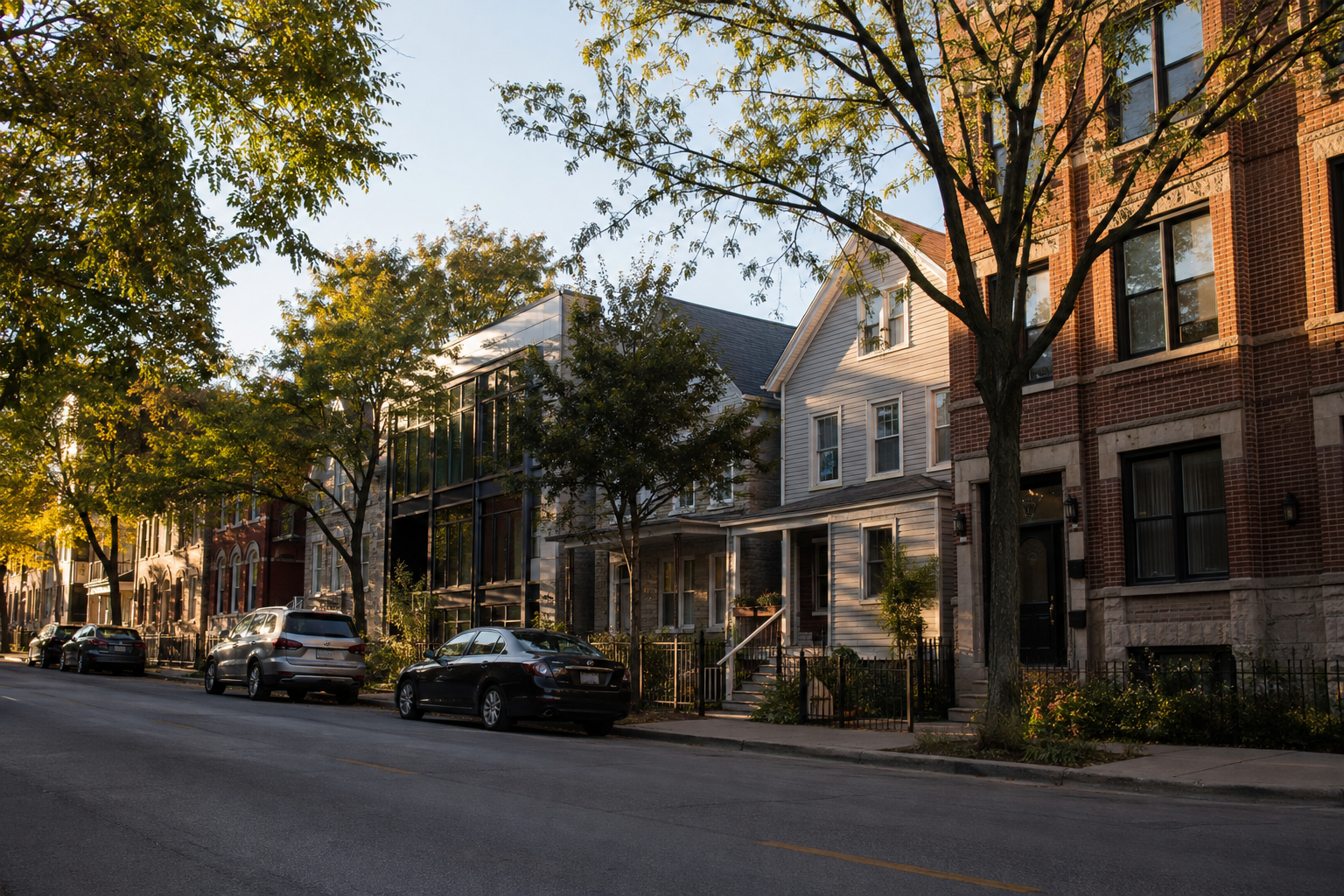
The same blocks hold vintage condo conversions in the high $500,000s, two- and three-flats prized by owner-occupants and investors, boutique new construction, and the restored mansion tier above $1.5 million, which means buyers can enter, trade up, and eventually restore a landmark without leaving the neighborhood. That ladder, and the fact that its top rung is protected by a landmark district no competitor can replicate, is the structure the rest of this page is organized around.
Wicker Park is compact, but its pockets price differently, and the label question, which blocks count as Wicker Park at all, moves values at the edges. The profiles below follow the neighborhood from its protected core outward. Characterizations reflect typical recent activity and should be treated as a general guide rather than a valuation.

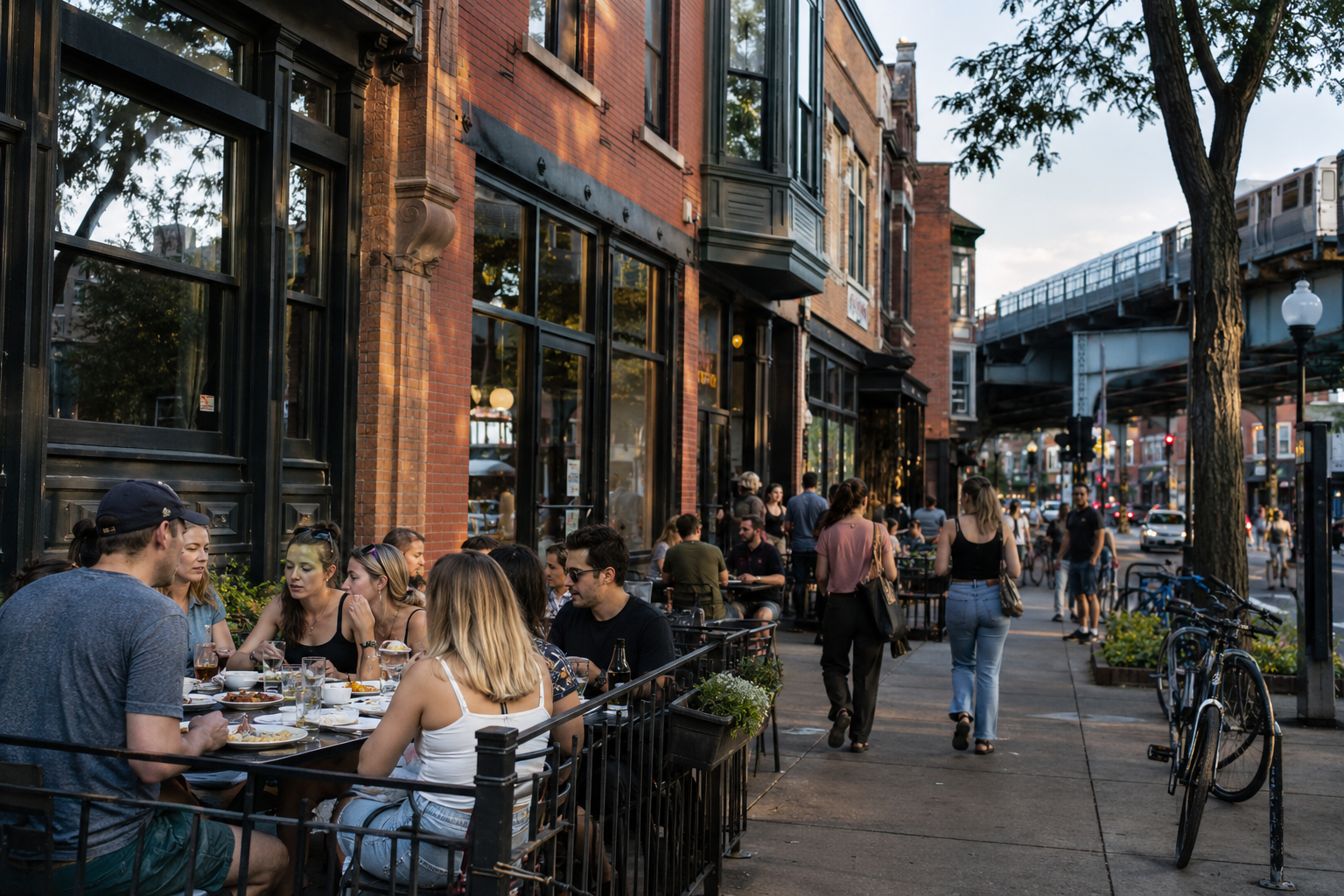
The bench is deep and, unusually for a neighborhood this covered by national media, it turns over fast, so currency matters more than nostalgia. As of this writing the anchors are Big Star's taqueria and patio at 1531 N. Damen with Dove's Luncheonette, its Southern-Mexican diner counter, at 1545 N. Damen; Piece Brewery and Pizzeria, the New Haven-style pizza and brewpub running on North Avenue since 2001; Mindy's Bakery on Milwaukee for morning pastry; the Bongo Room, the brunch fixture at 1470 N. Milwaukee since 1993; and newer arrivals like Kama's modern Indian room at 1560 N. Milwaukee and the Nepalese kitchen Cumin at 1414 N. Milwaukee. The turnover cuts both ways: The Violet Hour, the cocktail bar that helped define the national craft-cocktail era from behind its unmarked Damen door, closed in June 2025 after nearly two decades, and any list still recommending it is out of date.

Milwaukee Avenue remains one of the city's best independent retail runs, vintage and resale shops, record stores, designer boutiques, and the long-running used bookstore Myopic Books, with Division Street adding its own boutique row. The Flat Iron Arts Building keeps three floors of working studios and galleries at the six corners, open to the public on First Fridays, and the neighborhood's murals, concentrated along Milwaukee and the alleys off Division, function as an open-air gallery. The Renegade Craft Fair each September and the park's summer fine art fair keep the maker economy on the street where the neighborhood's arts identity started.
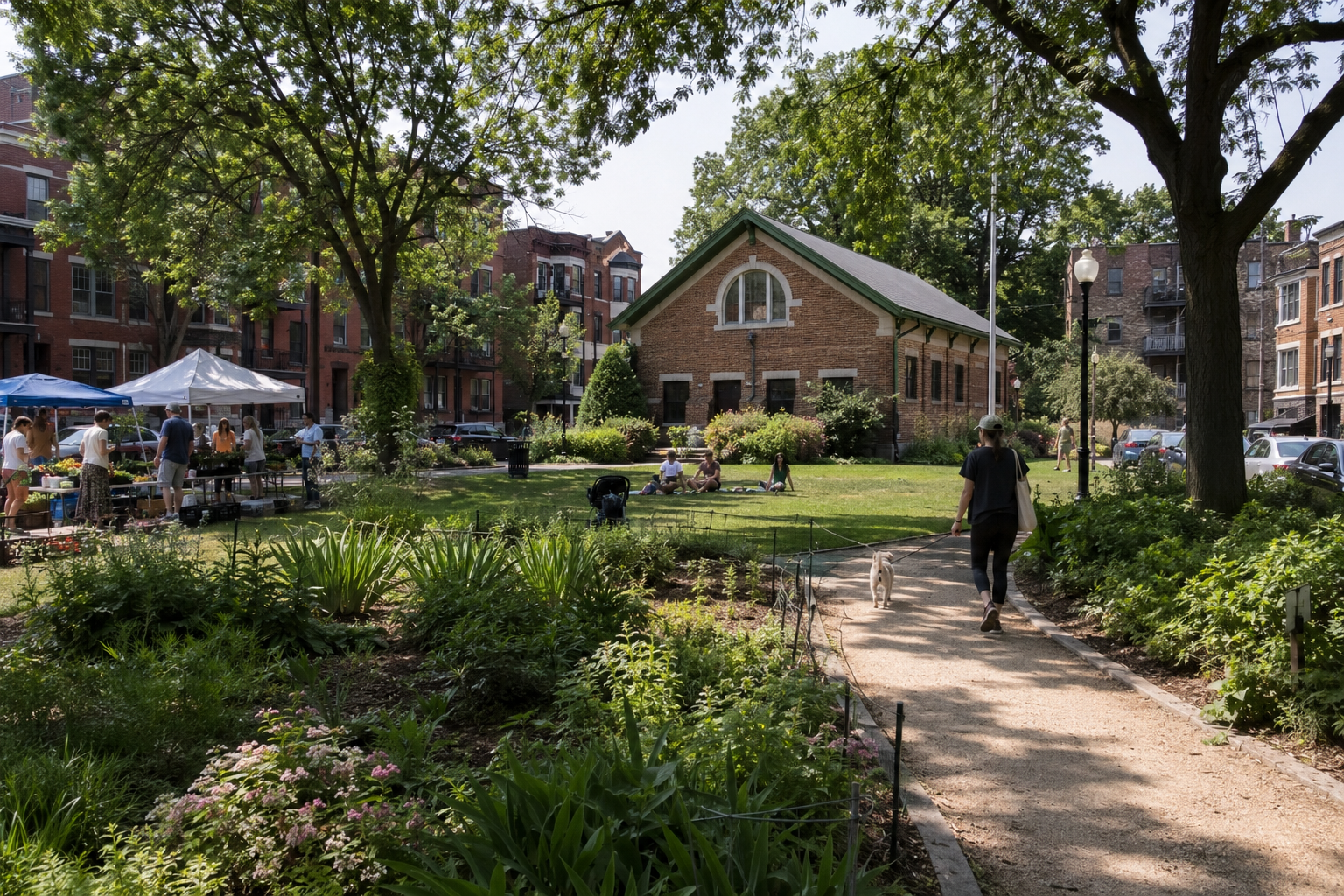
Wicker Park itself, the 4-acre triangle the neighborhood is named for, carries a fieldhouse at 1425 N. Damen, a celebrated ornamental community garden, a dog-friendly area, and a summer calendar of concerts, yoga, and movie nights run with the Chicago Park District and the park's advisory council. The Bloomingdale Trail lifts runners and cyclists above the streets along the neighborhood's entire northern edge, and the seasonal farmers market brings growers to the park on summer Sundays. For everything the compact neighborhood lacks, the parent community area supplies the rest, from Eckhart Park's indoor pool to the Salt Shed's riverfront concerts, all covered on the West Town guide.
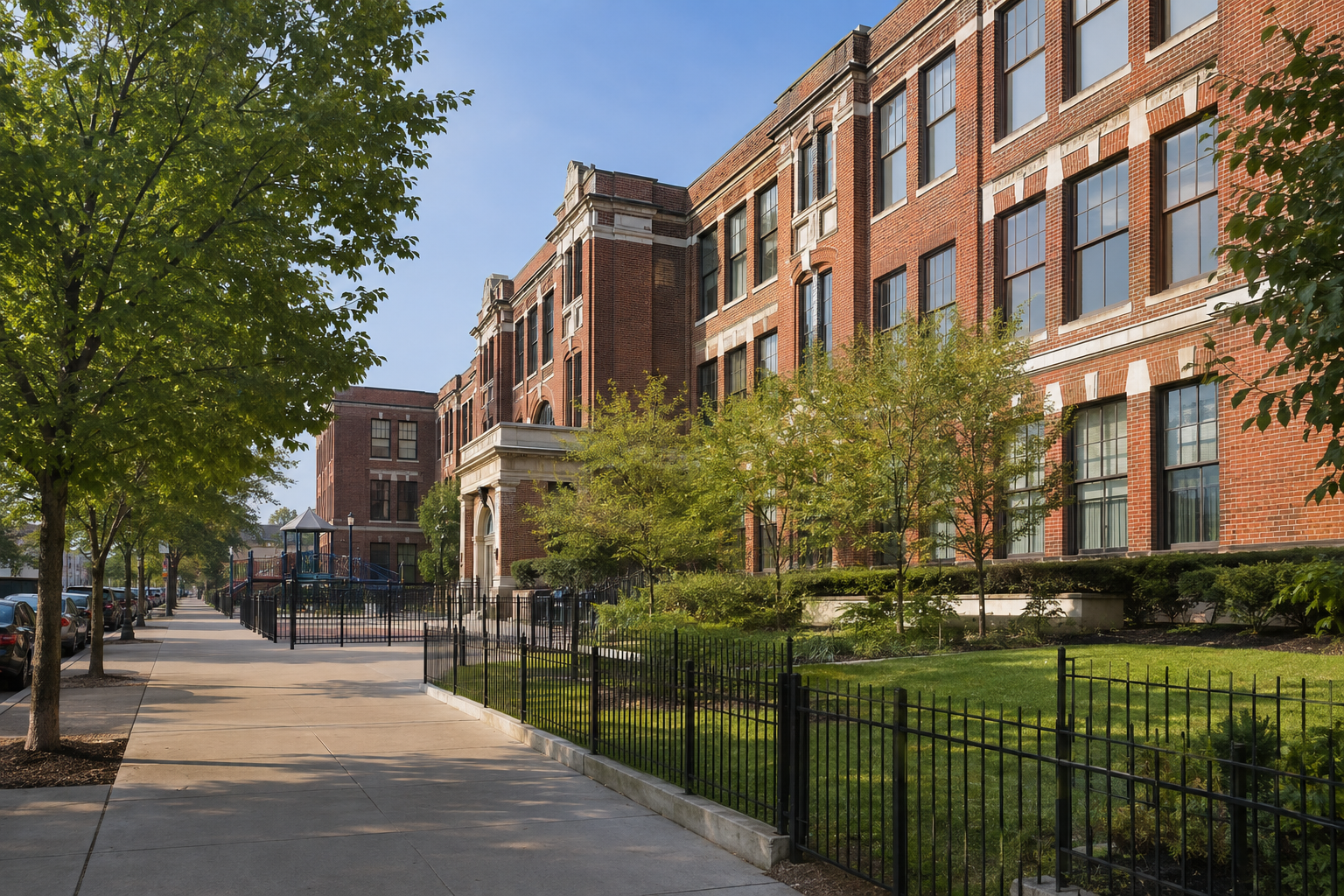
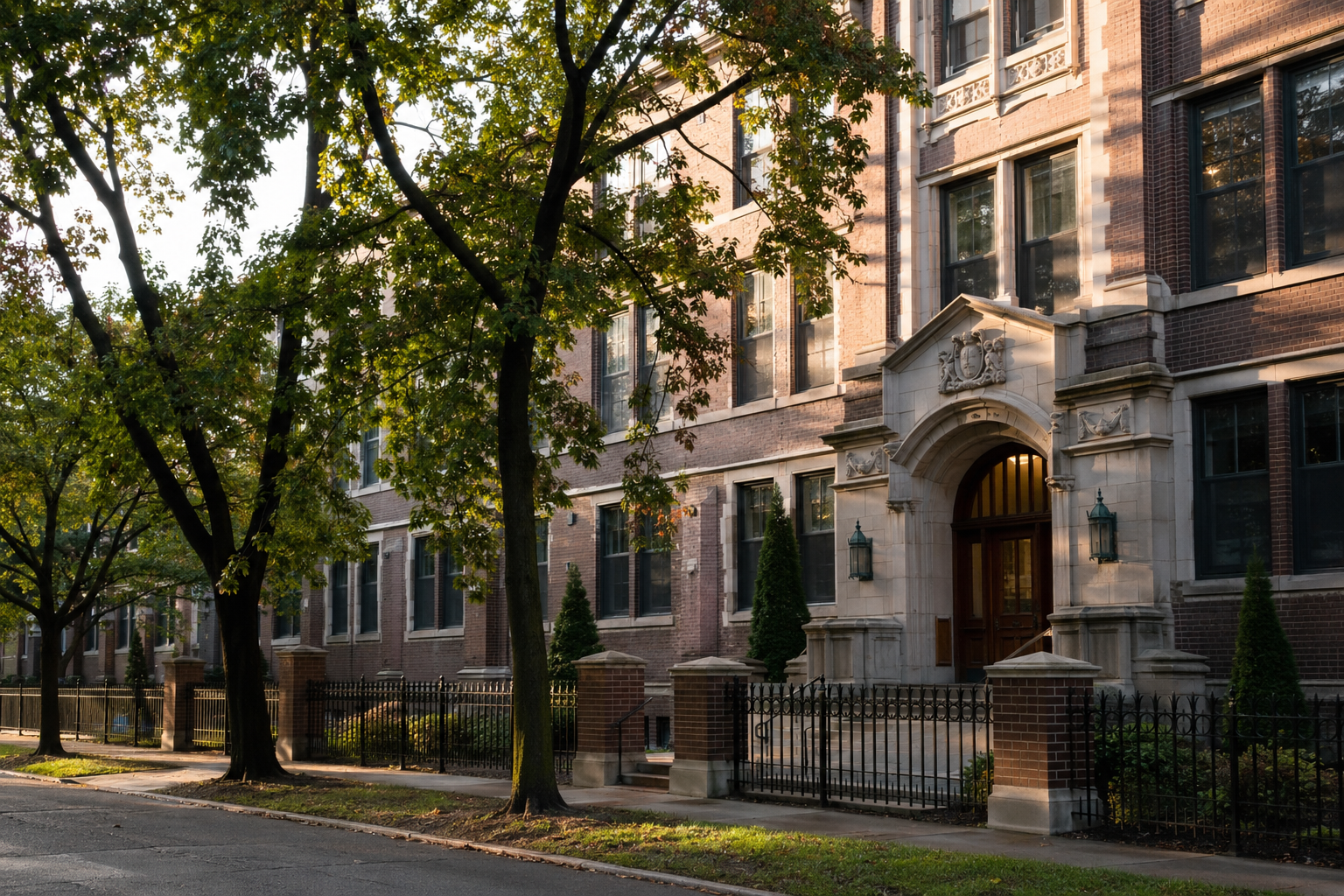

Wicker Park is served by a single district, Chicago Public Schools, formally City of Chicago School District 299, so there is no district-boundary question, and unlike much of the surrounding community area, the neighborhood has a genuinely strong attendance-area anchor at the elementary level. Beyond it, the citywide choice system, GoCPS, does the rest of the work. Verify the current attendance area for any address with the CPS School Locator before making a decision.
A.N. Pritzker School at 2009 W. Schiller, one block from the park, is the neighborhood's headline: a pre-K through 8 school rated A minus by Niche and 8 of 10 by GreatSchools, recognized by CPS as a Tier 1+ school in excellent standing, and running two programs under one roof, a fine and performing arts magnet cluster serving its attendance area and a Regional Gifted Center that admits citywide through CPS selective testing at an accelerated pace of at least a year above grade level. Nearby options deepen the bench: LaSalle II Magnet, the world-language academy a few blocks south in East Village, rates A minus on Niche and admits citywide by lottery, and Sabin, the dual-language magnet on Hirsch at the neighborhood's western edge, adds a two-language track. The practical read: a Wicker Park address carries one of the Near Northwest Side's stronger neighborhood elementaries, and the magnet and gifted seats layered on top are citywide applications, not address entitlements.
The attendance-area high schools are the same ones serving the wider community area, Wells Community Academy on Ashland and Roberto Clemente Community Academy on Western, and the published numbers should be read plainly: both carry low ratings, C and C minus from Niche respectively, alongside real programs, including Clemente's International Baccalaureate track and Wells's pre-law and game-programming pathways. In practice most Wicker Park families run the GoCPS process, where selective-enrollment schools admit by test and tier regardless of address and application programs run their own calendars. The full treatment of both schools, with enrollment figures and program detail, lives on the West Town guide; the summary version is that a Wicker Park address guarantees the attendance seat and full access to the citywide map, and secures nothing selective by itself.
The private bench sits mostly on the neighborhood's seams. Josephinum Academy of the Sacred Heart, the all-girls Catholic college-prep high school on Oakley, is the one inside the neighborhood's western blocks; Near North Montessori, one of the country's largest Montessori schools, and Holy Trinity High School both sit on Division at the Noble Square line, and St. Mary of the Angels runs its parish school just across the trail in Bucktown. Between Pritzker, the magnet lotteries, the selective tests, and this private roster, school planning here is a calendar exercise more than an address exercise, and the deadlines start earlier than most buyers expect.
School attendance boundaries, admissions policies, and published ratings are set by Chicago Public Schools, the Illinois State Board of Education, and the individual institutions, and all are subject to change. Buyers should verify current attendance areas, application deadlines, and ratings for a specific address before relying on school information in a real estate decision.
Development accelerated with Potter Palmer's mansion in 1882.
Encompasses the historic core alongside the 60611 district.
Consisting of roughly 5,600 households averaging two people.
Historically one of America's wealthiest urban enclaves.
Neighborhood entry point, driven heavily by vintage condominium volume.
The current baseline for standard attached housing stock.
Set in 2017 by the purchase of the top four floors at No. 9 Walton.
The neighborhood's largest single source of high-rise inventory.
With a median asking price currently hovering near $585,000.
The average market pace alongside ~45 monthly closings.
Connected directly to the trail via Oak Street Beach.
Direct access via two CTA train stops and four major bus routes.
Navigating Chicago's Gold Coast luxury real estate market requires unparalleled expertise. Here is what you need to know before we begin.
Ask A QuestionUse the blended number for direction and the banded numbers for decisions. Blended, Redfin recorded a $628,750 median in February 2025 and 2026 trackers put the figure near $725,000. Banded, the picture is three markets: condos and other attached homes posted a median around $621,000 in the 90 days ending February 2026, with the $600,000 to $650,000 range the most active, while detached houses ran to a median near $1.3 million on thin volume and the restored landmark tier trades above that. The homes for sale Wicker Park Chicago offers in any given month span all three, so filter by product before treating any single figure as the market.
As of mid-2026, dated and attributed: condo listings carried a median asking price of $599,000 in August 2026 with a median 27 days on market, and attached homes closed at a median of about $621,000 over the 90 days ending February 2026, with $600,000 to $650,000 the busiest band. Around those midpoints, the Wicker Park Chicago condos for sale run from vintage one- and two-bed conversions below the median to duplex and new-construction three-beds well above it, and trail-adjacent or six-corners addresses price at the top of their band. Answers elsewhere online range from the mid-$300,000s to over $1 million because they mix eras, sizes, and polygons; the figures above are the current midpoints for the neighborhood as this page defines it.
Weight the building more than the finishes. Most condos for sale Wicker Park Chicago offers sit in small vintage conversions or boutique new buildings, so the association is the investment: read the budget, the reserve balance, recent and pending special assessments, and the meeting minutes, because a century-old three-flat conversion with thin reserves prices its next roof into your ownership cost. Check the rental cap and owner-occupancy rate, which drive both financing and resale; confirm how the building handles the vintage realities of masonry, roofs, and porches; price parking and private outdoor space explicitly, since both carry real premiums here; and if the building sits on the historic blocks, understand what landmark review means for exterior work. Then think resale: bedroom count, outdoor space, parking, and proximity to the Damen station are what the next buyer pays for.
Wicker Park sits about three miles northwest of the Loop on Chicago's Near Northwest Side, arranged around its namesake park with the six-corner crossing of Damen, North, and Milwaukee as its commercial heart, and everyday boundaries running roughly from Division Street to the Bloomingdale Trail between Ashland and Western. Officially, yes, it is a neighborhood inside the West Town community area, the city's statistical unit for the area, which is why census and market data labeled "West Town" includes Wicker Park's numbers. The full community-area guide on this site covers that structure, the shared data, and the sister neighborhoods around it.
They are neighbors separated by the Bloomingdale Trail, paired in everyday speech and in their shared chamber of commerce, and they trade closely enough that most buyers search both. The structural difference: Wicker Park lies south of the trail inside the West Town community area, arranged around its park and the six corners, with the landmark mansion district as its signature stock, while Bucktown runs north of the trail in the Logan Square community area with a stock that leans to workers cottages, flats, and newer construction. The blocks between North Avenue and the trail are claimed by both names, which is worth knowing because the label on a listing there is marketing, not geography. Bucktown will have its own dedicated guide on this site.
Yes, at two very different price points. The vintage tier runs from workers cottages and Victorian houses to the restored mansions of the landmark district, where detached sales posted a median around $1.3 million in early 2026 on thin volume and one 2026 estimate put the single-family average near $1.52 million; landmark-district exteriors are subject to city review, which protects value and adds process. The new tier is boutique rather than tract: infill single-family homes and duplex condos, concentrated on the blocks near the Bloomingdale Trail and scattered through the Division side, typically selling at or above the vintage detached figures. For sellers of unrestored vintage houses, builder and renovator demand is a real part of the price.
Stronger at the elementary level than the community-area average. Pritzker, one block from the park, is rated A minus by Niche and 8 of 10 by GreatSchools and runs both an arts magnet cluster for its attendance area and a citywide Regional Gifted Center that admits by CPS selective testing, with LaSalle II's lottery-based language academy and Sabin's dual-language magnet nearby. The attendance high schools, Wells and Clemente, carry low published ratings alongside real programs, and most families work the citywide GoCPS choice map for high school; the full honest treatment lives on the West Town guide. Private options run from Josephinum Academy inside the neighborhood to Near North Montessori and Holy Trinity on the Division seam. Verify any address with the CPS School Locator, then check the application calendar.
It is the walk-to-everything version of Chicago, with the volume that implies. The structural upsides: the Damen Blue Line at the six corners with O'Hare one direction and the Loop the other, a dining and retail bench most neighborhoods envy, the park and its garden at the center, and the elevated trail along the northern edge. The structural trade-offs: Milwaukee, North, Damen, and Division run loud on weekends, festival season closes streets from Do Division through Wicker Park Fest and the September craft fair, street parking near the six corners is genuinely scarce, and the Damen station's vintage charm comes without an elevator. The landmark blocks and the one-ways off Division stay far calmer than the avenues, and choosing between those two textures is the real lifestyle decision here.
Use several, and treat all of them as marketing layers over the same MLS data. The portals draw different Wicker Park polygons, so listing counts, medians, and even walkability scores disagree from site to site, and homes on the boundary blocks appear under different neighborhood names depending on where you look. The authoritative layer is the MLS itself, filtered by boundary streets rather than by a portal's tag, which is how this page's search works and how any local agent worth hiring sets up a client's feed; a well-built agent search will also surface private-network and coming-soon inventory the portals show late or not at all. Portals are excellent for browsing; for accuracy, search by boundaries and verify against the MLS.
Carrie McCormick has sold Chicago real estate since 1999 and has closed more than $3.5 billion in career sales, with Wicker Park and Bucktown inside her long-standing service area, and under her 100 percent Carrie model clients work directly with her rather than being handed to a team. The neighborhood's specific problems are ones experience solves: pricing a landmark mansion with few true comparables, reading a small association's reserves and rental rules before an offer, quantifying what trail adjacency or a six-corners address is actually worth, and making sure a boundary-block listing carries the label that maximizes its buyer pool. She is ranked in the top 1 percent of brokers by the Chicago Association of Realtors, holds the association's Gold and Platinum awards, is the recurring luxury real estate expert on NBC 5 Chicago's Open House Chicago, and works within the Christie's International Real Estate network, which reaches buyers across more than 45 countries. Call 312-961-4612.
Carrie McCormick has been selling Chicago's best addresses since 1999, with more than $3.5 billion in career sales and a practice that has long included Wicker Park and Bucktown, from a first vintage condo near the Damen stop to a two-flat on the Division side, a new build by the trail, or a landmark-district restoration around the park. Ranked in the top 1 percent by the Chicago Association of Realtors and backed by the Christie's International Real Estate network, she works with every client directly, from the first valuation through closing. To talk through a purchase, a sale, or a move within the neighborhood, and to see the homes for sale Wicker Park Chicago has right now, call 312-961-4612 or email carrie@atproperties.com.