
Homes for Sale in West Loop Chicago | Lofts and Condos
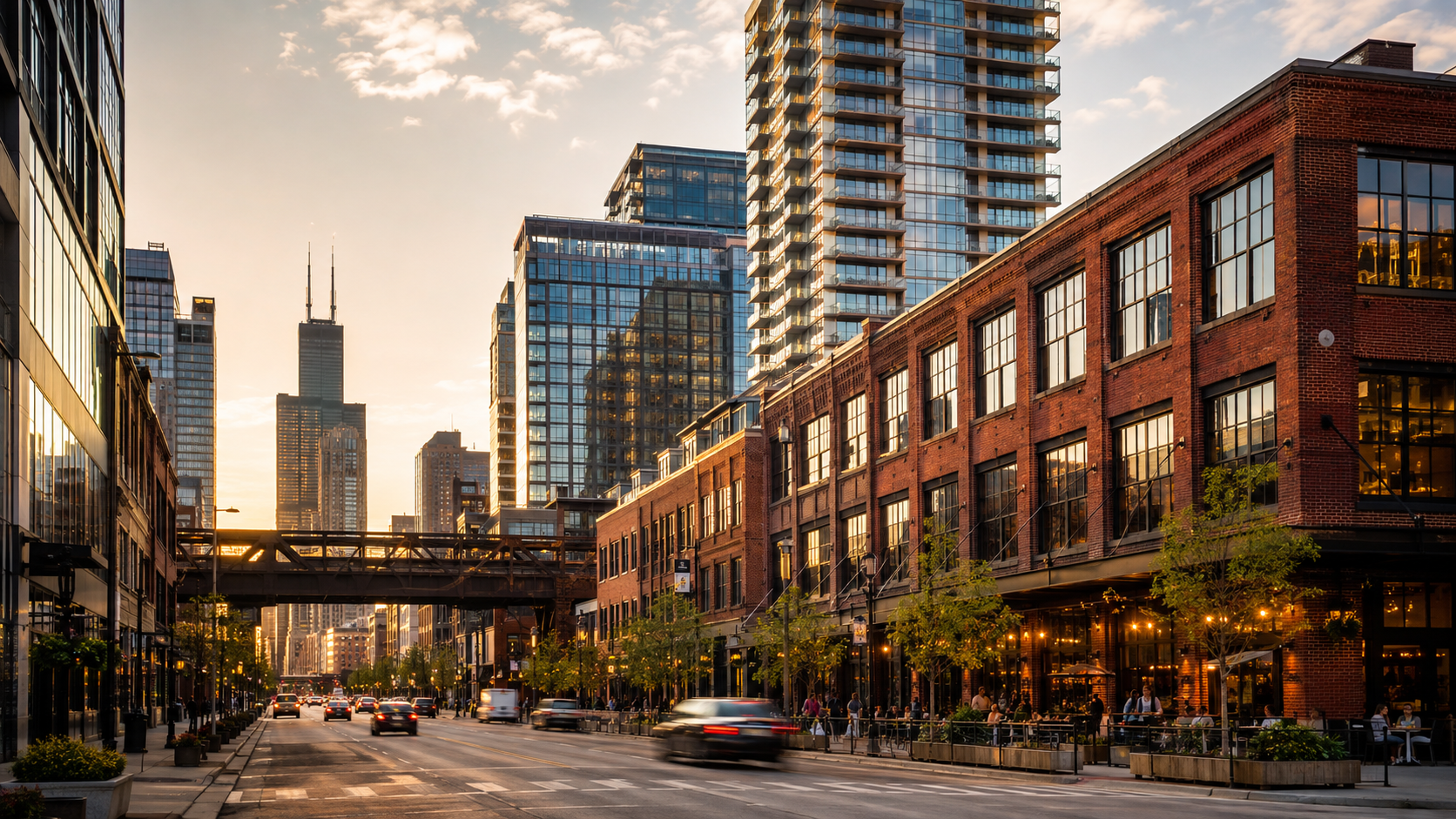
Chicago's former meatpacking and warehouse district, now the city's densest restaurant neighborhood and its most competitive condominium market: brick-and-timber lofts, new luxury towers, two landmark districts, and seven Michelin-starred kitchens inside a mile.
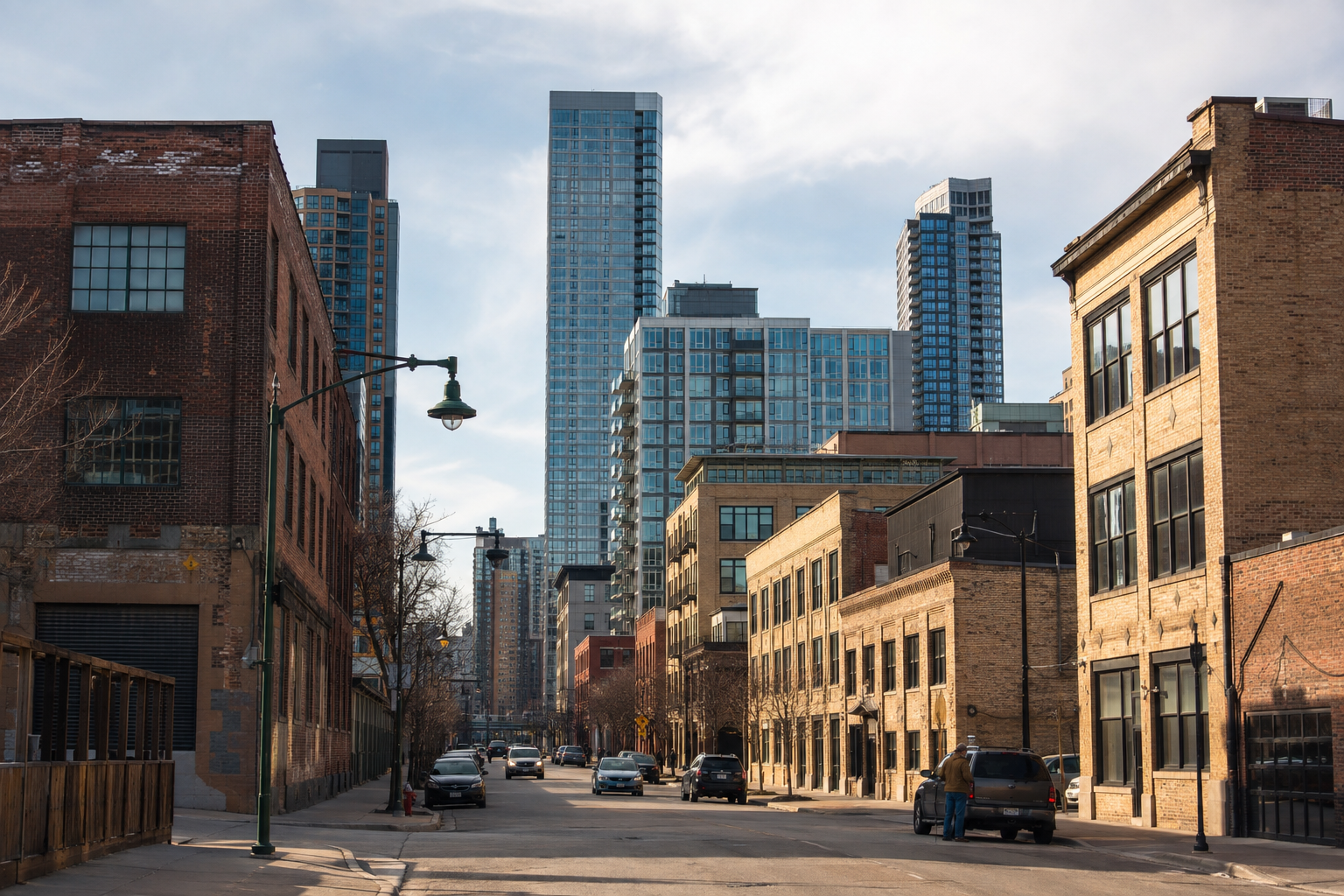
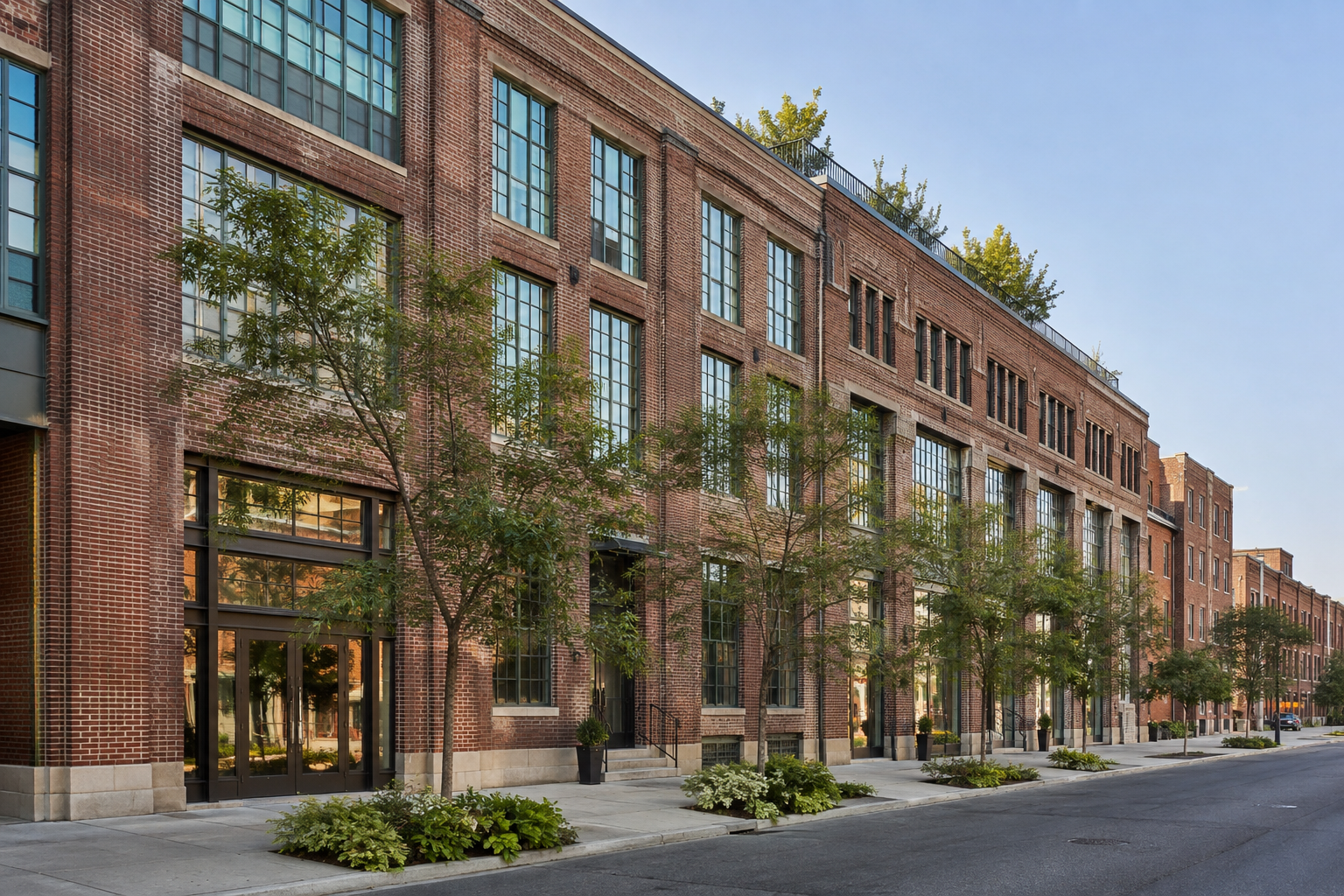
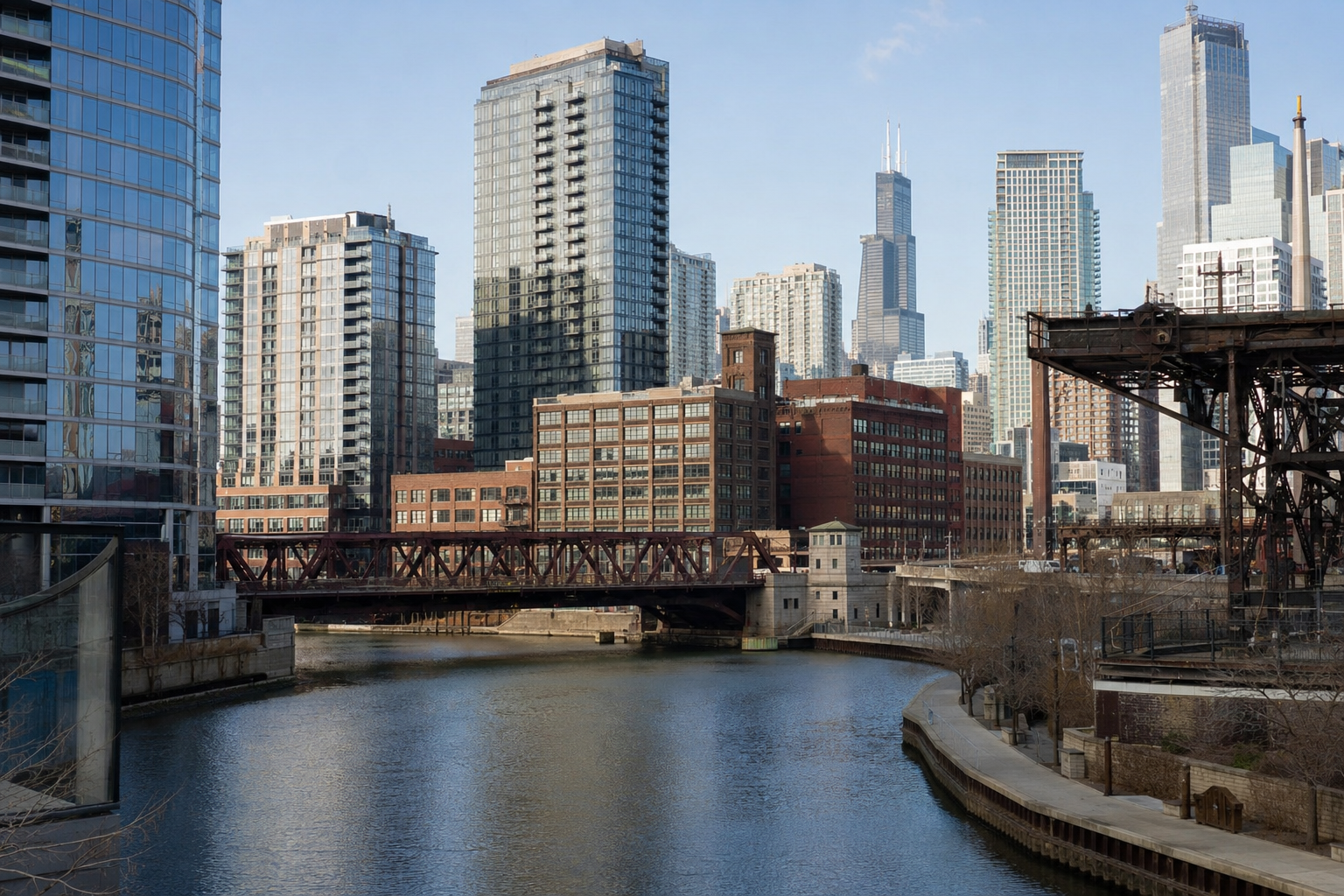
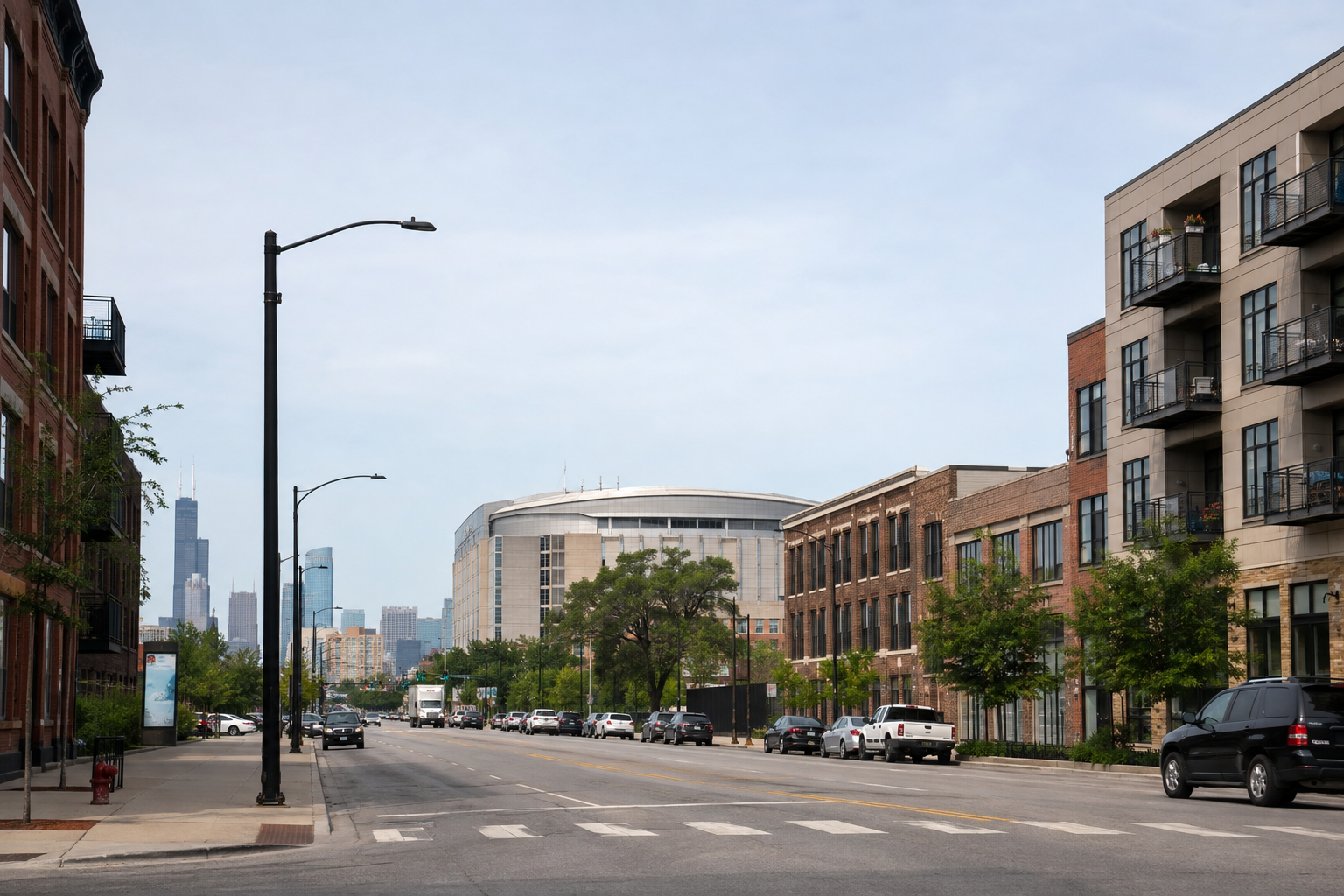
The West Loop is the neighborhood immediately west of downtown Chicago, sitting mostly inside the Near West Side community area with a northern edge in West Town. Its boundaries are the most disputed in the city. The most widely used definition runs Grand Avenue on the north, the Eisenhower Expressway on the south, Ashland Avenue on the west, and the Chicago River on the east, which is the version the Neighbors of West Loop association uses. Others stop the eastern edge at the Kennedy Expressway, and Connie Fairbanks, who wrote the neighborhood's history, draws it tighter still: Jefferson Street to Ashland, Fulton Street to the Eisenhower. Inside those lines sit several named districts that are often mistaken for separate neighborhoods, including Fulton Market, Restaurant Row along Randolph Street, Greektown on South Halsted, West Loop Gate, and the Fulton River District. For a century this was Chicago's meatpacking, produce, and warehouse quarter. Google opening its Chicago headquarters on Fulton Market in 2015 is the event most people date the change from.
The most important fact about buying here is that the West Loop is almost entirely an attached-housing market. Condominiums, lofts, and townhouses make up essentially all of the for-sale inventory, and buyers looking for detached houses are generally sent to Bucktown or Ukrainian Village instead. The one real exception is the Jackson Boulevard District, a Chicago Landmark since 1976, which holds a small cluster of restored Victorian single-family houses. Published medians for the neighborhood diverge sharply and should always be dated. Redfin's recent neighborhood snapshot showed a median sale price of about $411,000 at roughly $404 per square foot with 71 days on market, down almost 25 percent year on year on thin volume of 48 sales, while earlier 2026 Redfin readings put the median between about $518,000 and $530,000 at $387 to $408 per square foot, Realtor.com reported $495,000 for December 2025, and one brokerage analysis put the trailing three-month median near $499,000 and up 6.2 percent. The practical ranges matter more: entry one-bedroom condominiums from the upper $200,000s, larger one-bedrooms in the $350,000s to $500,000s, two-bedroom condominiums and lofts from the $500,000s into the $800,000s, and new-construction luxury from roughly $1.2 million to above $3 million.
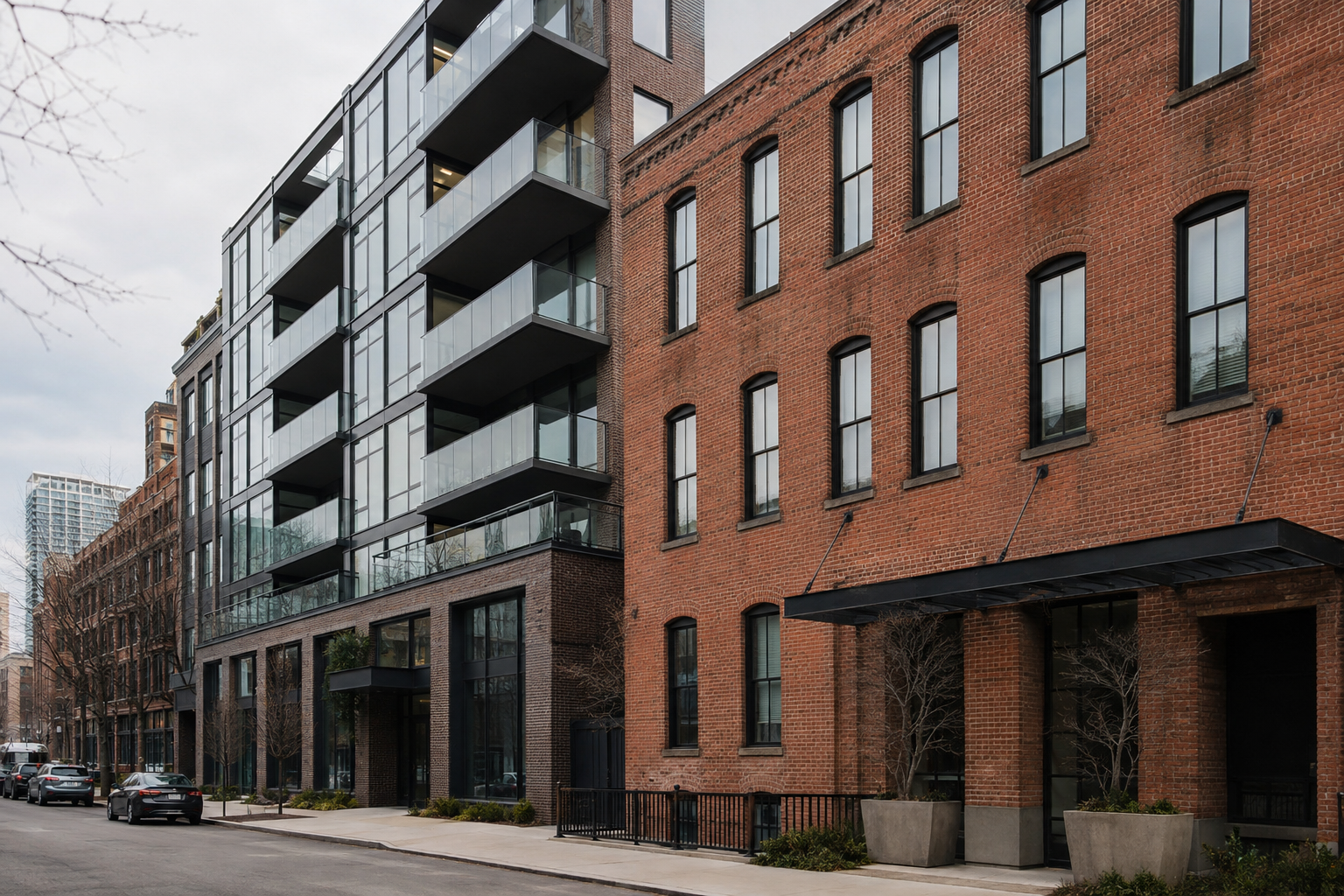
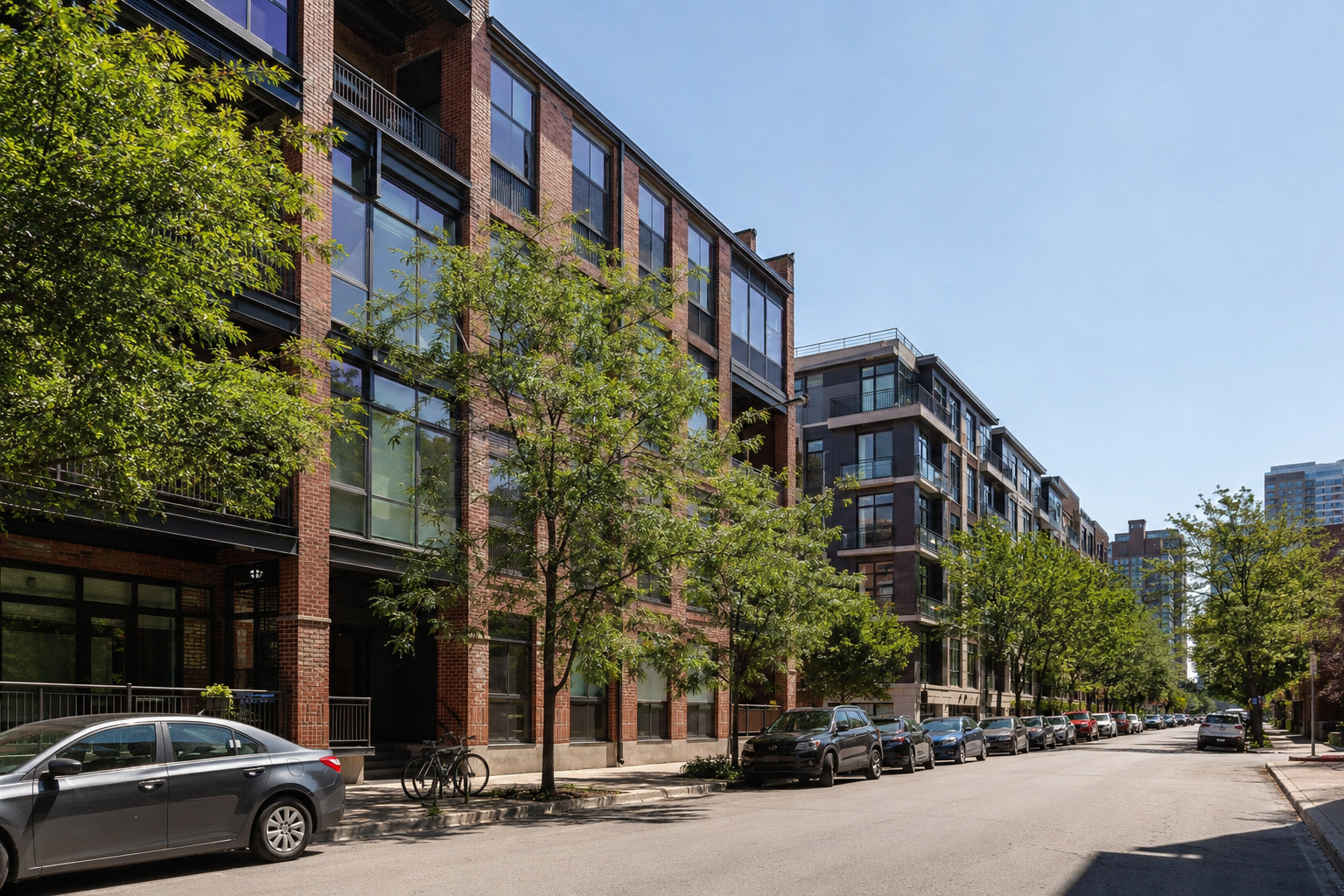
What genuinely separates the West Loop is that four distinct products trade side by side and none of them shares a buyer pool. True brick-and-timber lofts in converted warehouses sell on ceiling height, exposed structure, and window walls. Concrete lofts offer the same volume with better sound separation. Soft lofts are newer construction imitating the look with conventional layouts. And the new full-amenity buildings, led by Embry at 21 N. May Street and The Hayden at 1109 W. Washington Boulevard, sell on service, parking, and finish level at the top of the market. Two building-level factors move value more here than in any other Chicago neighborhood. Deeded parking typically adds $25,000 to $50,000, because street parking is genuinely difficult. And association financial health, reserves, rental caps, and the owner-to-investor mix decide both what a lender will approve and what a unit resells for, which is why a beautiful kitchen in a weak building is the most common expensive mistake made here.
Carrie McCormick has sold Chicago real estate since 1999 and has closed more than $3.5 billion in career sales, concentrated in the city's luxury neighborhoods. She is ranked in the top 1 percent of brokers by the Chicago Association of Realtors, holds the association's Gold and Platinum awards, and is the recurring luxury real estate expert on NBC 5 Chicago's Emmy-nominated series Open House Chicago. Her practice covers exactly what the West Loop consists of: new construction, penthouses, and condominiums. In a market this building-driven, the work is comparing associations rather than neighborhoods, knowing which loft conversions have addressed their facades and which have not, reading a reserve study before an offer rather than after, and pricing a unit against the four or five genuinely comparable sales in its own building instead of a neighborhood median that has moved 25 percent in either direction depending on which month you read. To talk through a purchase or a sale in the West Loop, call 312-961-4612.
Seven West Loop restaurants hold Michelin stars: Smyth, which was elevated to three stars and is the only three-star restaurant in Chicago, two-starred Ever and Oriole, and one-starred Elske, Mako, Next, and Sepia. Taqueria Chingon was added as a Bib Gourmand in the 2026 guide. No other residential neighborhood in the country carries this concentration.
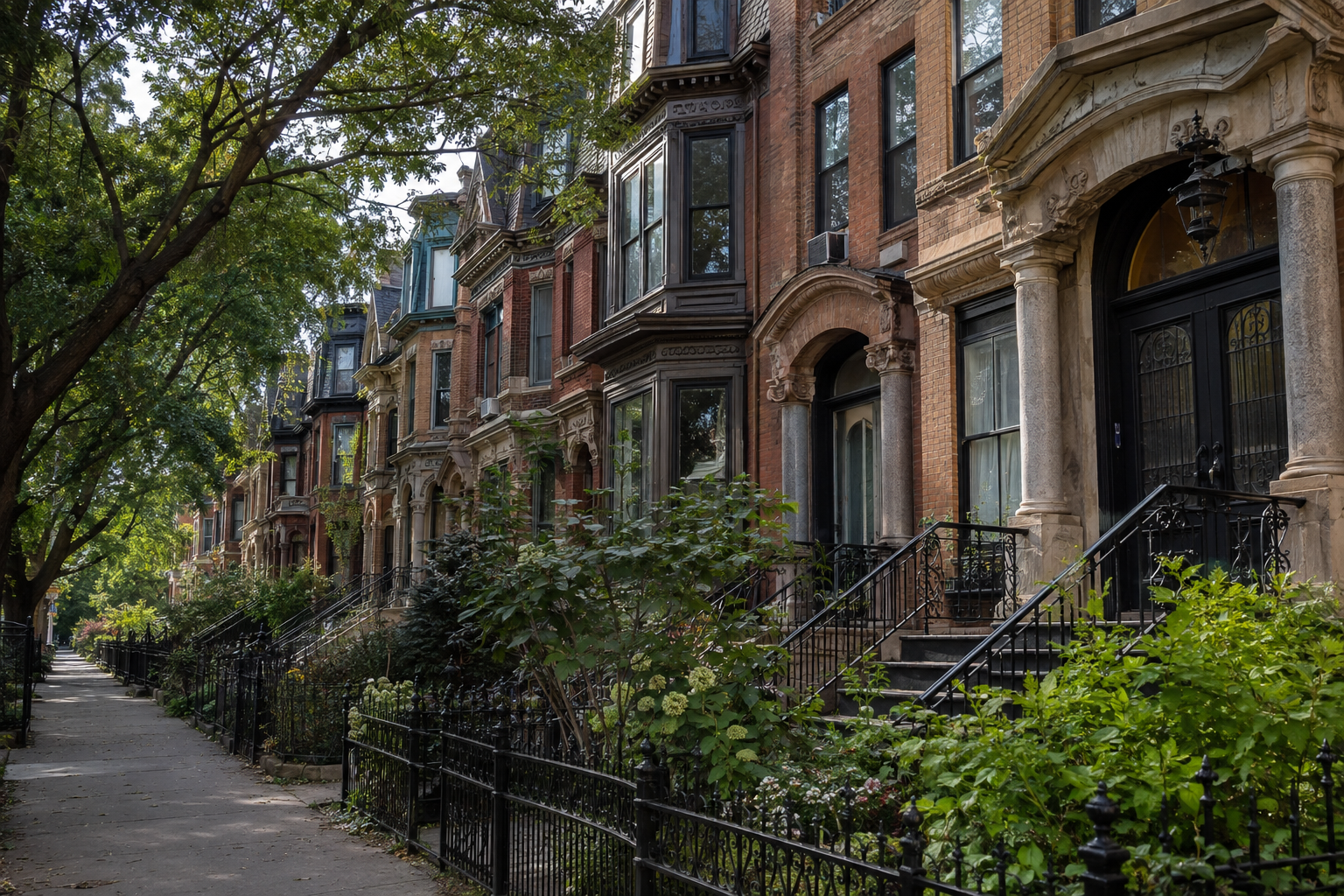
The Fulton-Randolph Market District became a Chicago Landmark in 2015, protecting more than a hundred brick-and-timber market buildings along Fulton Market, Randolph, Lake, and Sangamon. Three miles of streetscape away in feel, the Jackson Boulevard District has been landmarked since 1976 and preserves 34 contributing Victorian buildings from the 1880s.
Morgan and Clinton stations put the Green and Pink Lines through the middle of the neighborhood, the Blue Line runs along its southern edge at UIC-Halsted and Racine, and Union Station and Ogilvie Transportation Center are both walkable from most of it. Very few Chicago neighborhoods offer four rail lines plus both Metra terminals.
Google opened its Chicago headquarters on Fulton Market in 2015 and the corporate migration followed. McDonald's global headquarters sits at 110 N. Carpenter Street, on the Washington Boulevard site that housed Oprah Winfrey's Harpo Studios from 1990 to 2015. For buyers, that means a genuine walk-to-work market rather than a commuter one.
True timber lofts, concrete lofts, soft lofts, and new full-amenity condominiums all trade here, from the upper $200,000s to above $3 million. That range inside a half-mile is unusual, and it means a first-time buyer and a $3 million buyer can both be well served without leaving the neighborhood.
Skinner West Elementary at 111 S. Throop Street is a highly rated Chicago Public School with three enrollment routes, including an attendance boundary that covers much of the neighborhood. Whitney M. Young Magnet High School at 211 S. Laflin Street is one of the city's most competitive selective-enrollment high schools. Both sit inside the West Loop.
The West Loop is navigated by district rather than by the neighborhood name, and several of those districts are mistaken for separate neighborhoods. Broadly, Fulton Market occupies the north, Restaurant Row runs along Randolph through the middle, Greektown and the Jackson Boulevard District sit south, the residential blocks concentrate along Madison, Monroe, Adams, and Washington, and the Fulton River District sits in the northeast corner against the river. Ranges below reflect typical recent activity and are a general guide rather than a valuation.
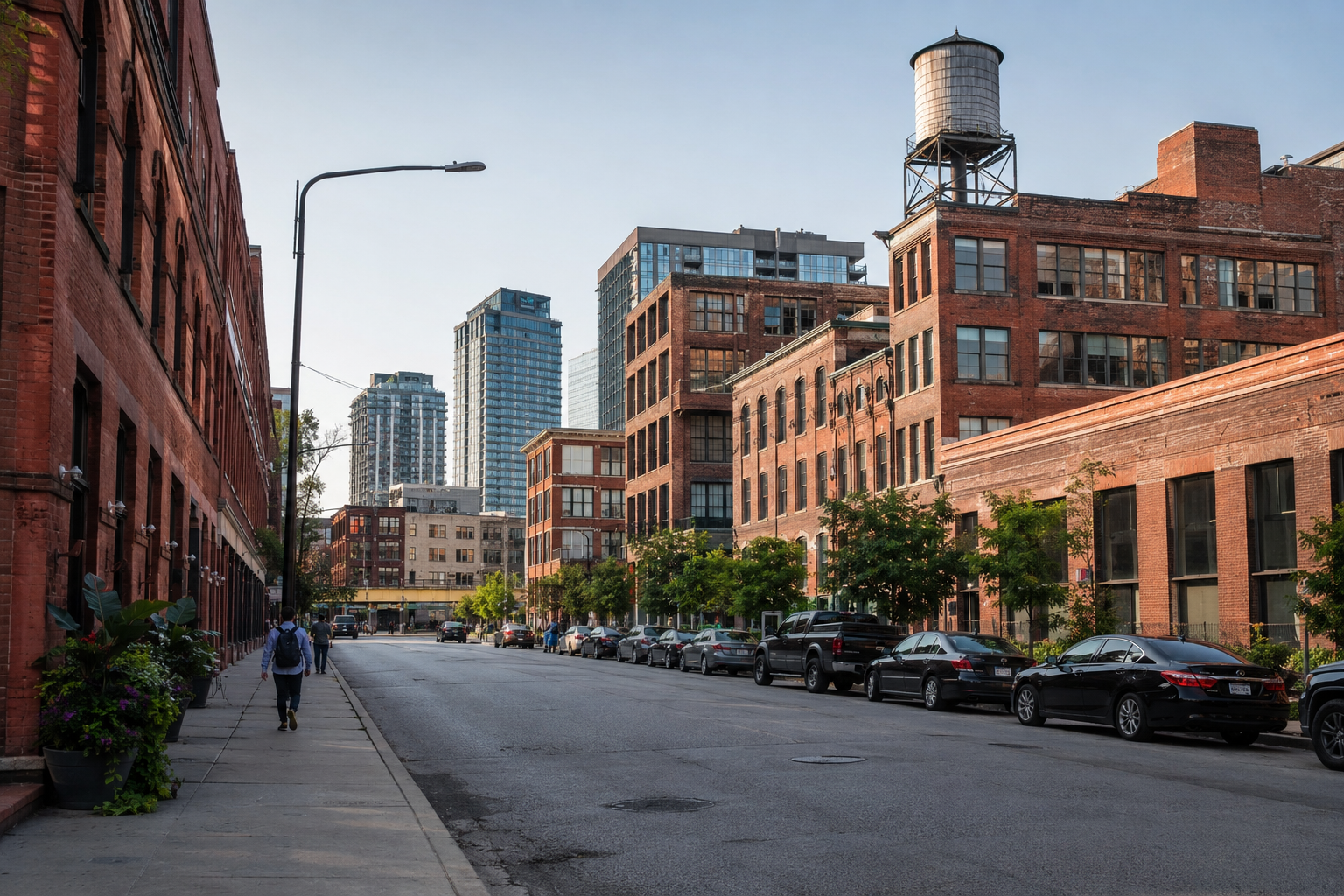
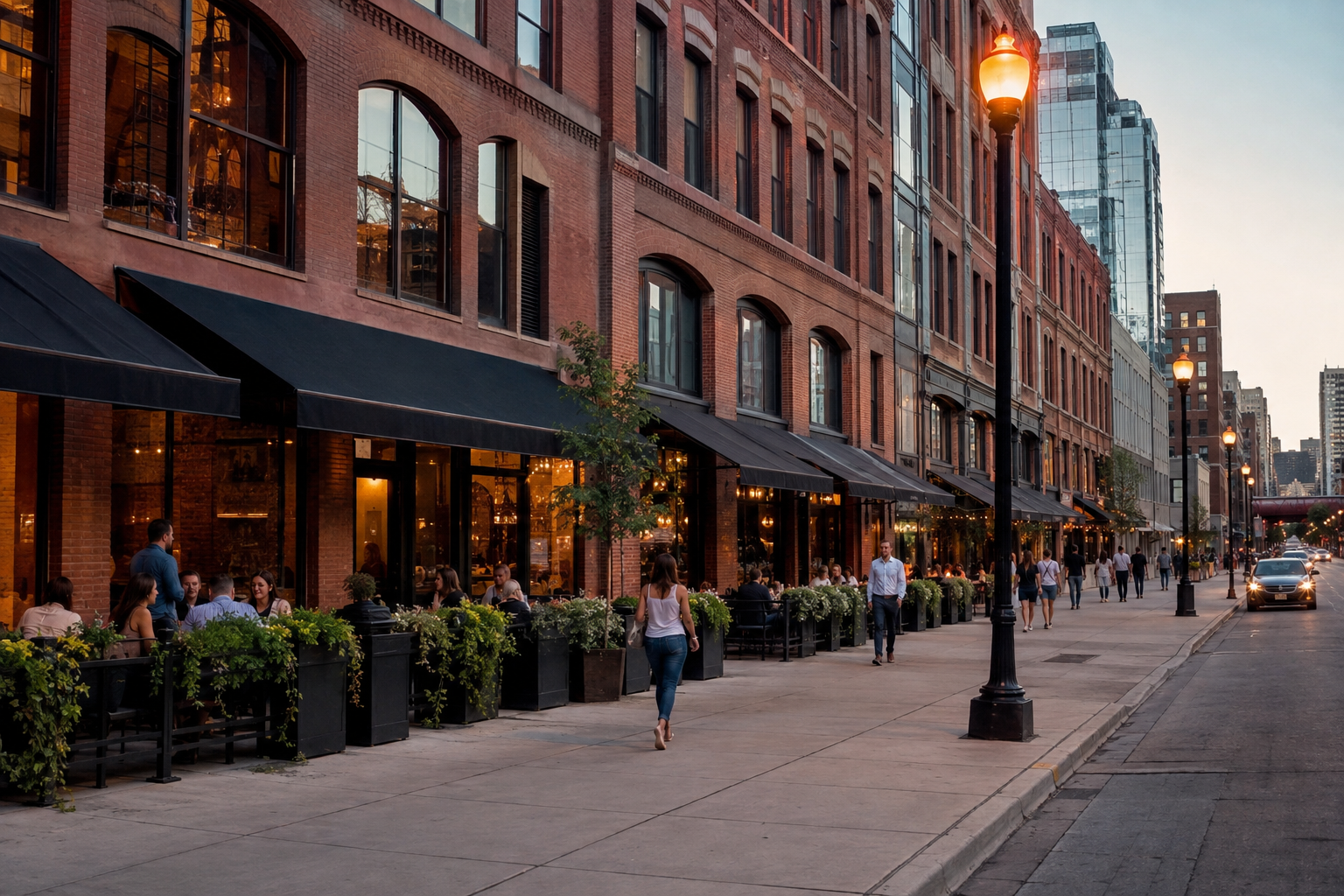
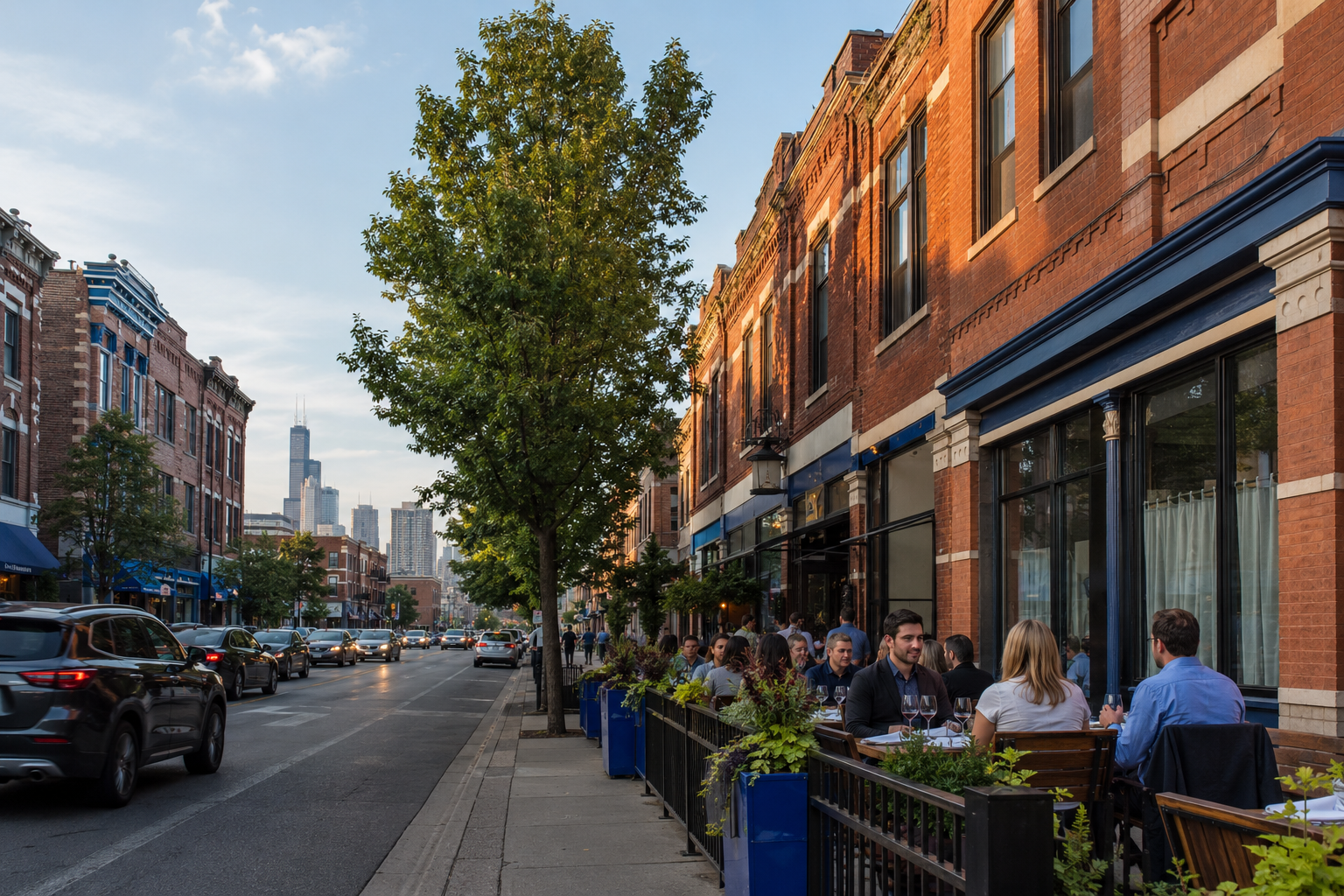
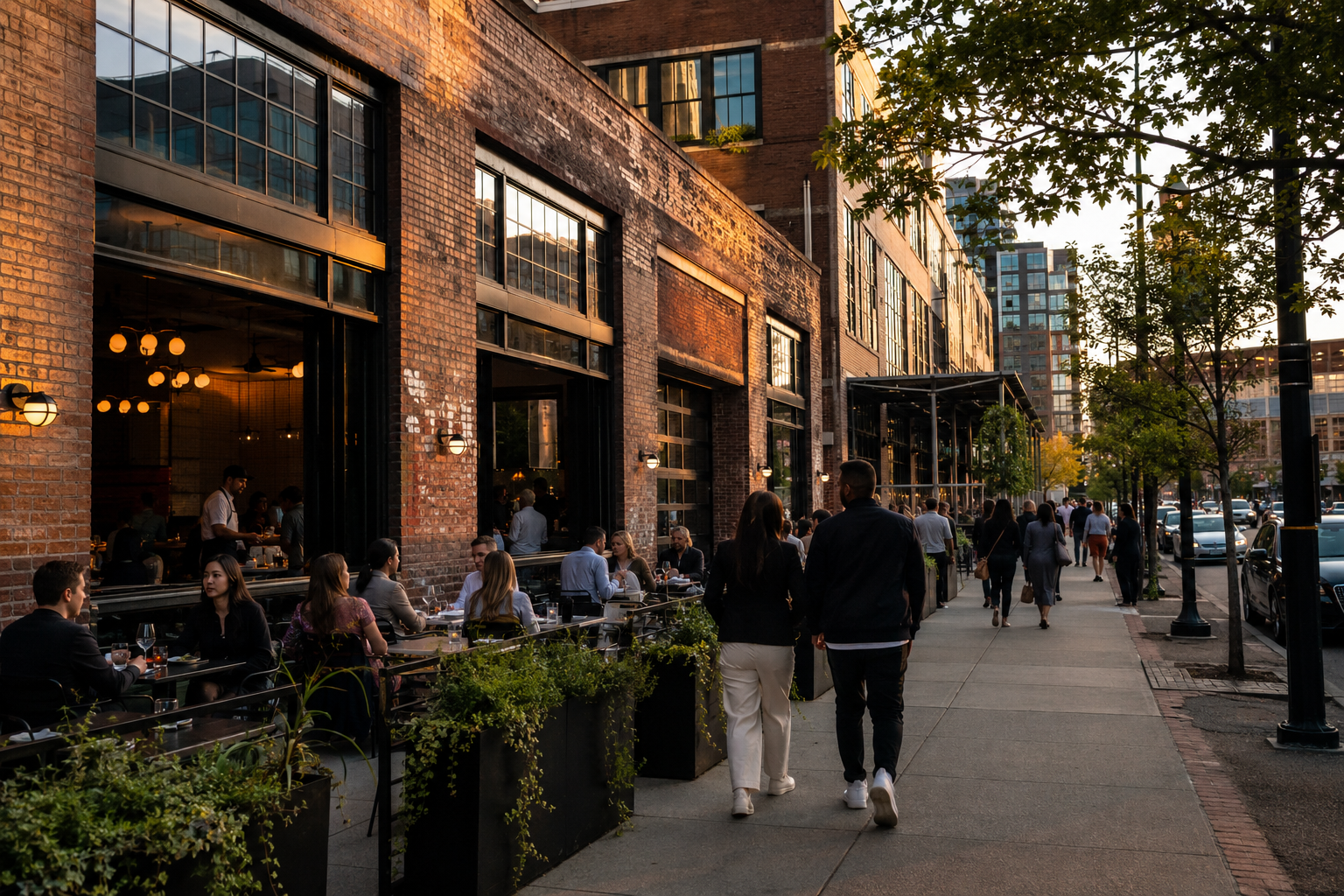
The West Loop is the densest restaurant neighborhood in Chicago and holds seven of the city's Michelin-starred kitchens, concentrated along Randolph Street and Fulton Market.
Smyth, at 177 N. Ada Street, was elevated to three Michelin stars and is now the only three-star restaurant in Chicago, with the more casual Loyalist downstairs from John and Karen Urie Shields's tasting-menu room.
Ever, on West Fulton Market, and Oriole, on West Walnut Street, each hold two stars, Oriole having maintained two-star status since the 2017 guide.
Elske at 1350 W. Randolph Street has held a star since 2018 for Anna and David Posey's Danish-influenced cooking, and Next on West Fulton Market is the Alinea Group room whose entire menu changes by theme.
Mako on West Lake Street and Sepia at 123 N. Jefferson Street complete the starred list, and Taqueria Chingon was added as a Bib Gourmand in the 2026 guide.
Below the starred tier sits the run of restaurants that built the neighborhood's reputation: Girl and the Goat and avec on Randolph, Monteverde on West Madison Street for pasta, Au Cheval for the burger, Duck Duck Goat and Aba in Fulton Market, Swift and Sons for steak, The Publican on West Fulton Market, and the cocktail room at The Aviary.
Greektown on South Halsted holds the long-standing Greek dining rooms including Greek Islands and Athena.

The West Loop is a dining destination first and a shopping district second, which is worth stating plainly rather than overselling. What it has is specific: the Morgan, Green, and Peoria Street blocks carry a long-standing gallery and design district, Fulton Market holds a growing set of fashion and lifestyle showrooms alongside its restaurants, and the Randolph Street Market Festival brings vintage, antique, and artisan dealers to 1341 W. Randolph Street on a monthly schedule through the warmer months. For everyday needs there is a Whole Foods at the base of Skybridge on West Washington Boulevard, a Mariano's a short distance north, and a weekly farmers market in season. Buyers who want a conventional retail corridor at their door will find more of one on Armitage in Lincoln Park or Oak Street in the Gold Coast; buyers here are trading that for restaurants and transit.
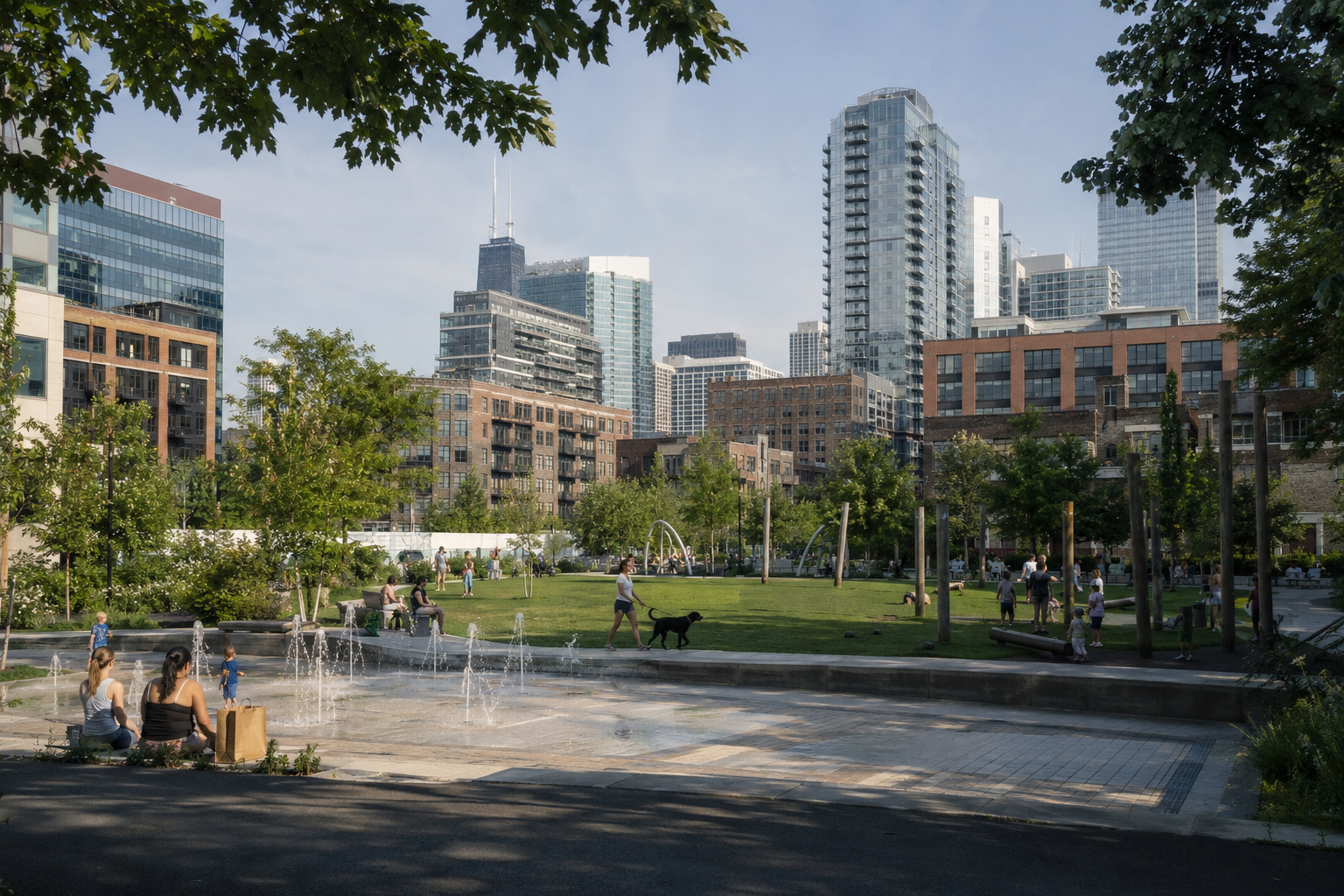
Green space is the West Loop's genuine constraint and its most active area of improvement. Union Park at 1501 W. Randolph Street is the largest at roughly 13 to 14 acres, with a pool, fieldhouse, tennis and basketball courts, and athletic fields. Mary Bartelme Park on South Sangamon Street is the neighborhood favourite, with skyline views, a fountain plaza, a play area, and a well-used dog park, and Skinner Park serves the blocks around Skinner West and Whitney Young. On the culture side, the WNDR Museum at 1130 W. Monroe Street is an immersive art and technology space that rotates its installations, the National Hellenic Museum in Greektown is the country's leading institution for Greek-American history, and the gallery district along Morgan, Green, and Peoria carries a working art scene that predates the restaurants. The neighborhood's own annual events include the Taste of Randolph street festival in early summer and the Randolph Street Market Festival, and the United Center, home of the Bulls and Blackhawks, is about a mile west.
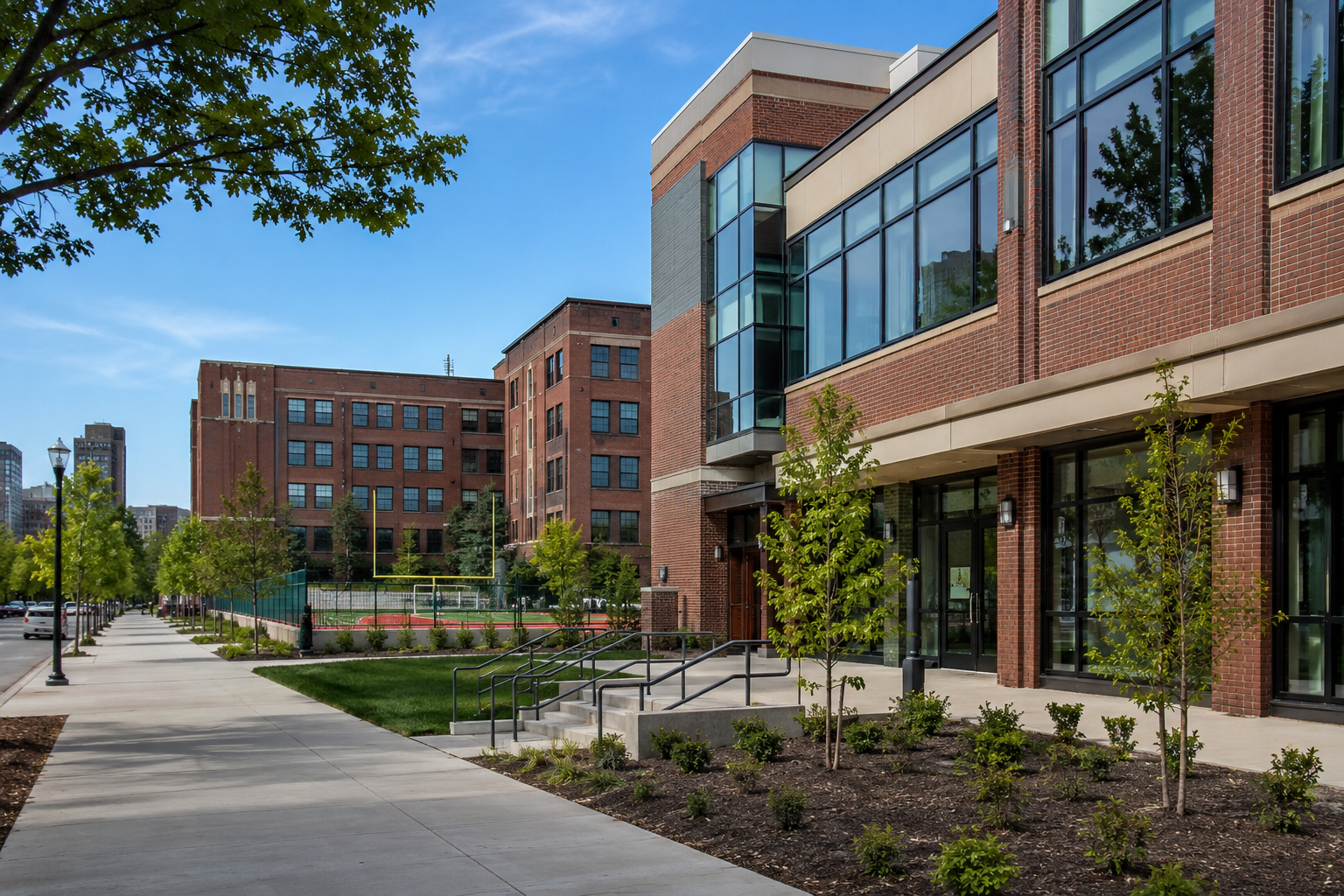
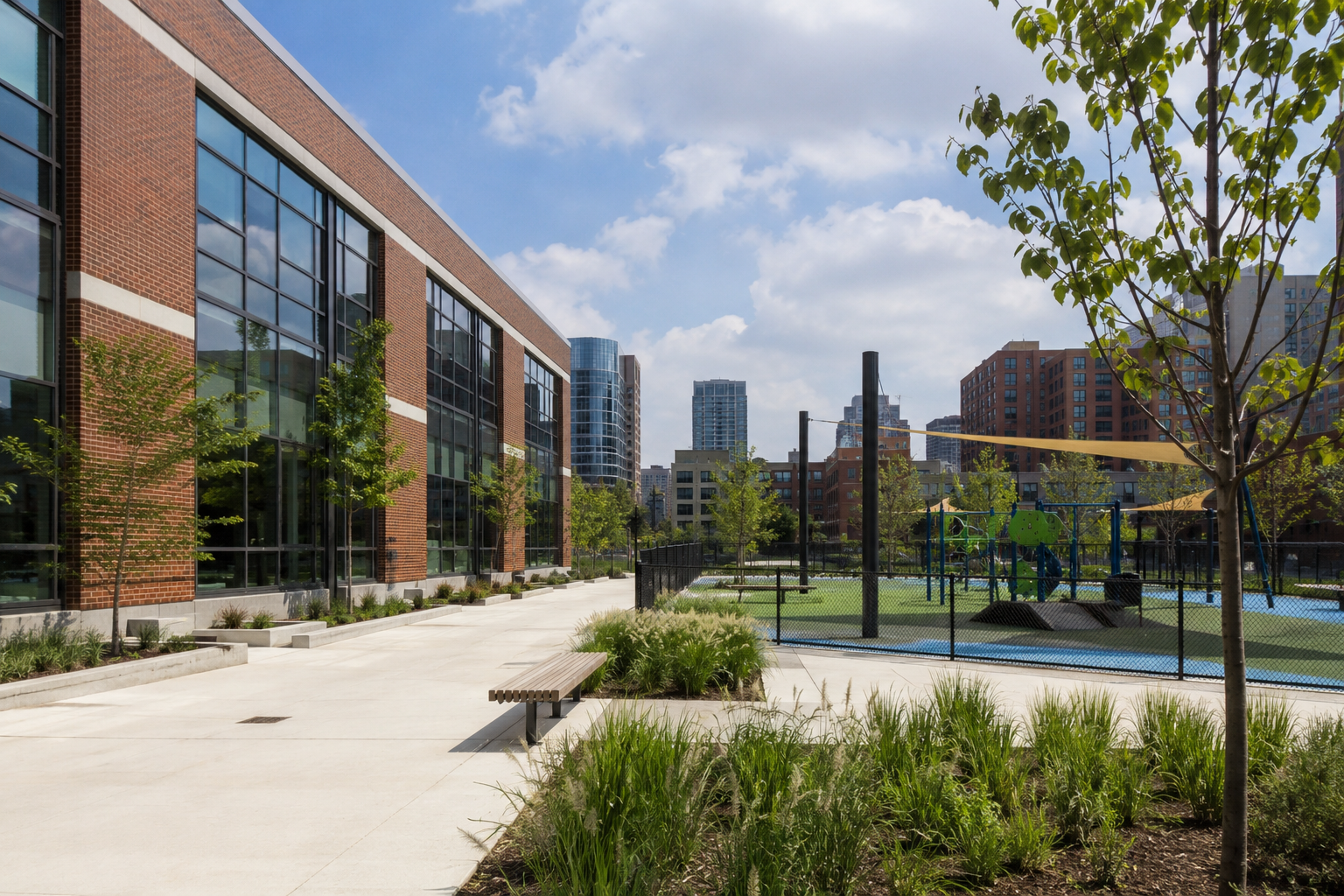
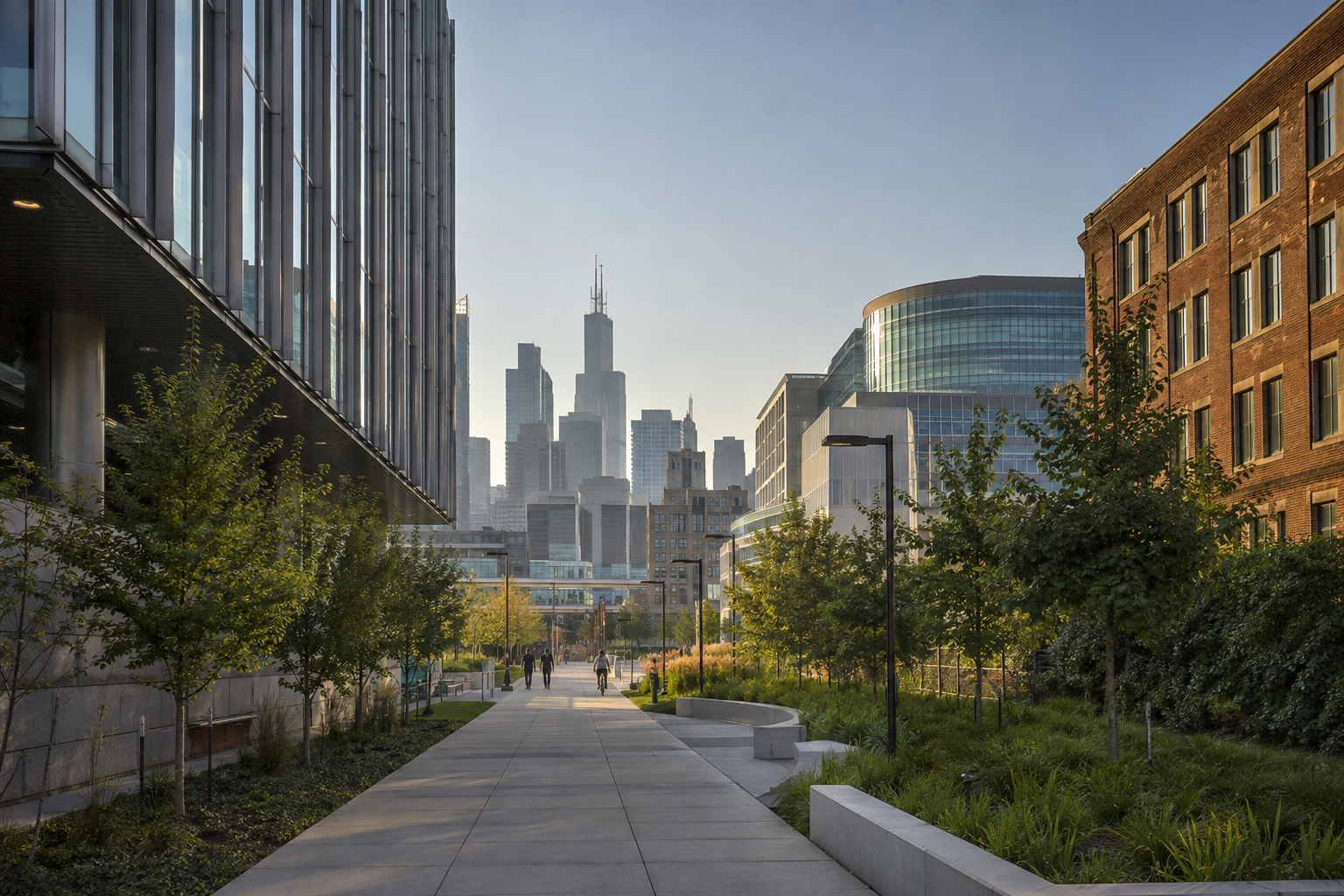
The West Loop is served by a single school district, Chicago Public Schools, formally City of Chicago School District 299. Two of the district's stronger schools sit inside the neighborhood, which is unusual for an area that was industrial within living memory. What buyers need to understand is how Chicago enrollment works, because in the West Loop the same school can be reached three different ways and the route determines the experience.
Mark T. Skinner West Elementary at 111 S. Throop Street serves preschool through grade 8 and enrols roughly 1,050 students at about a 16 to 1 ratio, with an A from Niche and an 8 out of 10 from GreatSchools. Reported proficiency runs near 60 percent in math and 67 percent in reading. The important structural point is that Skinner West has three enrollment routes: selective-enrollment testing for its Classical programme, automatic enrollment for families living inside the attendance boundary, and a lottery for kindergarten through grade 5. The school therefore runs a Classical and a neighborhood programme alongside each other, and published test scores reflect both. A family buying for the attendance boundary should ask the school directly about the programme structure rather than reading the headline rating as a single number.
Whitney M. Young Magnet High School at 211 S. Laflin Street serves grades 7 through 12 and enrols roughly 2,200 students. It opened as a magnet school in 1975 and moved to full selective-enrollment status by 1979 with an entrance exam, and it remains one of the most competitive high schools in the city. The point buyers most often miss is that Whitney Young admits city-wide by test and tier rather than by address, so living across the street from it confers no admissions advantage. It is a neighborhood asset in the sense that it is walkable and it anchors the blocks around it, not in the sense that a West Loop purchase secures a place.
School capacity has been a live neighborhood issue in the West Loop for over a decade, driven by rapid residential growth in an area that was not built with families in mind. Enrollment pressure at Skinner West and the question of additional elementary capacity have been the subject of ongoing community and district discussion. Any buyer making a school-driven purchase here should confirm the current attendance boundary and capacity position with Chicago Public Schools directly rather than relying on a neighborhood page, because this is the one school situation in the series most likely to have changed since publication.
Independent options serving West Loop families are mostly a short distance away rather than inside the neighborhood, and families commonly look toward the British International School of Chicago in South Loop, Catherine Cook in Old Town, and the Frances Xavier Warde School downtown. For higher education, the University of Illinois Chicago campus sits immediately south of the Eisenhower Expressway, Rush University Medical Center and the Illinois Medical District are just west of it, and Malcolm X College is nearby, which together make the West Loop one of the few Chicago neighborhoods within walking distance of a major university and a major medical campus.
School attendance boundaries, admissions policies, capacity, and published ratings are set by Chicago Public Schools, the Illinois State Board of Education, and the individual institutions, and all are subject to change. Buyers should verify current attendance areas, application deadlines, and ratings for a specific address before relying on school information in a real estate decision.
Development accelerated with Potter Palmer's mansion in 1882.
Encompasses the historic core alongside the 60611 district.
Consisting of roughly 5,600 households averaging two people.
Historically one of America's wealthiest urban enclaves.
Neighborhood entry point, driven heavily by vintage condominium volume.
The current baseline for standard attached housing stock.
Set in 2017 by the purchase of the top four floors at No. 9 Walton.
The neighborhood's largest single source of high-rise inventory.
With a median asking price currently hovering near $585,000.
The average market pace alongside ~45 monthly closings.
Connected directly to the trail via Oak Street Beach.
Direct access via two CTA train stops and four major bus routes.
Navigating Chicago's Gold Coast luxury real estate market requires unparalleled expertise. Here is what you need to know before we begin.
Ask A QuestionCompetitive, but the published numbers disagree enough that a single figure is not usable. A recent Redfin snapshot showed a West Loop median of about $411,000 at roughly $404 per square foot with 71 days on market across 48 sales, down almost 25 percent year on year, while earlier 2026 Redfin readings showed $518,000 to $530,000, Realtor.com reported $495,000 for December 2025, and one brokerage analysis reported about $499,000 for a trailing three months and up 6.2 percent. Low monthly sales volume is what makes the median swing. In practice, entry one-bedrooms start in the upper $200,000s, larger one-bedrooms run $350,000s to $500,000s, two-bedroom condominiums and lofts run $500,000s to $800,000s, and new-construction luxury runs from about $1.2 million to above $3 million. Price by building and product type, not by neighborhood median.
Very few, and this is the most important expectation to set. The West Loop is almost entirely condominiums, lofts, and townhouses, and buyers looking for detached houses are usually shown Bucktown or Ukrainian Village instead. The one real exception is the Jackson Boulevard District, a Chicago Landmark since 1976, which preserves 34 contributing Victorian buildings including restored single-family houses on West Jackson Boulevard and West Adams Street between Laflin and Ashland. Those properties come to market rarely and sit under landmark review for exterior work. If a house in the West Loop is the requirement, the search is essentially that district plus a handful of scattered conversions.
Fulton Market is a district inside the West Loop, not a separate neighborhood. The West Loop is the broader area west of downtown, and Fulton Market is its northern core, centred on West Fulton Market Street and protected since 2015 as the Fulton-Randolph Market District. The distinction matters commercially because Fulton Market skews newer, denser, more rental-weighted, and more expensive per square foot, while the residential blocks south of Randolph along Madison, Monroe, and Adams hold most of the condominium stock and behave more like a conventional residential market. Two further names cause confusion: the Fulton River District is a separate area in the northeast corner between the Kennedy Expressway and the river, and the Near West Side is the official City community area containing all of it.
They are three different products with three different buyer pools, and the distinction drives price more than square footage does. A true brick-and-timber loft is a converted warehouse with exposed masonry, heavy timber posts and beams, high ceilings, and large industrial windows, and it sells on that character. A concrete loft offers similar volume in a poured-concrete structure with noticeably better sound separation between units. A soft loft is newer construction that imitates the aesthetic with conventional layouts, ceiling heights, and windows. A new full-amenity condominium sells on service, parking, and finish level instead of industrial character. Ask which one you are actually looking at, because comparing price per square foot across the four categories produces misleading conclusions.
The West Loop is served by one district, Chicago Public Schools District 299, and it has two strong schools inside the neighborhood, though most access to them is by application rather than address. Skinner West Elementary at 111 S. Throop Street enrols about 1,050 students preschool through grade 8, holds an A from Niche and an 8 out of 10 from GreatSchools, and has three enrollment routes: selective-enrollment testing for its Classical programme, automatic enrollment inside its attendance boundary, and a kindergarten through grade 5 lottery. Whitney M. Young Magnet High School at 211 S. Laflin Street is one of the city's most competitive selective-enrollment high schools and admits city-wide by test and tier, so a West Loop address confers no advantage there. Elementary capacity has been a live neighborhood issue for years, so confirm the current boundary and capacity position with CPS for a specific address.
It is one of Chicago's strongest rental submarkets, which is both the opportunity and the risk. Demand is supported by the restaurant economy, the corporate headquarters inside the neighborhood, four rail lines, and both Metra terminals, and published rent data places many West Loop rents from the mid-$2,000s to the low-$3,000s depending on size and building. The risks are specific rather than general: purchase prices are high relative to those rents, a large volume of new rental supply competes directly, and building-level factors decide returns. Before buying to rent, read the association's rental cap and current rented percentage, the reserve study, and any pending special assessment, and confirm the building is warrantable for financing. A well-located unit with parking and outdoor space behaves very differently from a generic one with high carrying costs.
They serve three different buyers. The West Loop is the newest of the three, almost entirely attached housing, the densest for restaurants, the best connected for commuting, and the shortest on green space and schooling by address. The Gold Coast is the most established and most expensive per square foot, built on vintage co-operatives and luxury condominium towers with almost no houses and Oak Street retail at the door. Lincoln Park is the largest, has genuine depth in row houses and detached houses, seven landmark districts, a top-twenty state attendance-area elementary school, and Chicago's largest park on its edge. Broadly: buyers who want a loft, a short commute, and to walk to dinner choose the West Loop; buyers who want a full-service vintage building choose the Gold Coast; buyers who want a house and a school catchment choose Lincoln Park.
Carrie McCormick has sold Chicago real estate since 1999 and has closed more than $3.5 billion in career sales, with a practice built on new construction, penthouses, and condominiums, which is precisely what the West Loop consists of. Under her "100 percent Carrie" model clients work directly with her from the first valuation through closing. In a market this building-driven that matters more than usual: the work is comparing associations rather than neighborhoods, knowing which loft conversions have addressed their facades and mechanical systems, reading a reserve study and a rental cap before an offer rather than after, understanding what deeded parking is worth on a given block, and pricing against the four or five genuinely comparable sales inside the same building rather than a neighborhood median that has moved 25 percent in either direction depending on the month. She is ranked in the top 1 percent of brokers by the Chicago Association of Realtors, is the recurring luxury real estate expert on NBC 5 Chicago's Open House Chicago, and works within the Christie's International Real Estate network. Call 312-961-4612.
Carrie McCormick has been selling Chicago real estate since 1999, with more than $3.5 billion in career sales and a practice built on new construction, penthouses, and condominiums. In the West Loop that means loft conversions on Randolph and Fulton Market, condominiums on the Madison and Monroe blocks, and new-construction residences at the top of the market. Ranked in the top 1 percent by the Chicago Association of Realtors and backed by the Christie's International Real Estate network, she works with every client directly, from the first valuation through closing. To talk through a purchase, a sale, or an investment purchase, call 312-961-4612 or email carrie@atproperties.com.