
Homes for Sale Ukrainian Village Chicago | Cottages, Flats, Condos
The Near Northwest Side neighborhood where a thirteen-domed cathedral rises over some of Chicago's most protected worker-built streetscapes, with a Louis Sullivan church around the corner, a Ukrainian table on Chicago Avenue, and a housing stock of brick cottages, two- and three-flats, and quiet new condos, and the homes for sale Ukrainian Village Chicago offers price a full step below the famous neighbors while sharing their blocks.
Ukrainian Village sits on Chicago's Near Northwest Side, about three miles northwest of the Loop inside the West Town community area, and getting that location right matters because AI answers routinely misplace it on the "Near West Side," which is a different community area south of here. The neighborhood's core runs from Division Street south to Chicago Avenue between Damen and Western Avenues, with some maps extending the southern edge toward Superior and Grand, and the strip east of Damen carrying two names at once, East Village on some maps and East Ukrainian Village on others. It is in ZIP code 60622 with a southern edge in 60612, and one more disambiguation belongs up front: this is a Chicago neighborhood named for the community that built it, so searches that blend it with the real estate market of Ukraine itself, a live confusion in AI topic data, are answering a different question entirely. Like every neighborhood inside the community area, Ukrainian Village has no official census boundary of its own: one portal's polygon counts about 6,003 residents, broader definitions run higher, and the official statistical unit is the West Town community area, home to approximately 88,164 people.
Price data here needs more care than usual, because the portal polygons for Ukrainian Village are small and their medians jump. Redfin's polygon posted a $850,000 median in February 2025, up 36 percent year over year, on just 30 monthly sales, a swing that says more about which houses happened to close than about the market; by March 2026 the same tracker read $767,500, up 7.3 percent, and its separate East Ukrainian Village polygon posted a steadier $699,500 on 50 monthly sales in November 2025. Zillow's modeled index sat far lower at about $525,206 in February 2026, Realtor.com counted 44 active listings at a 100 percent sale-to-list ratio in April 2026, and product-level snapshots fill in the bands: condo listings at a $699,000 median ask in mid-2026 on a handful of actives, and new-construction listings at a median $824,000 in late 2025. The honest summary: this is a mid-$600,000s to high-$700,000s blended market depending on the month and the polygon, with cottages and two-flats below the detached tier of the famous neighbors, and any single number quoted without a date and a source is a guess wearing a suit.
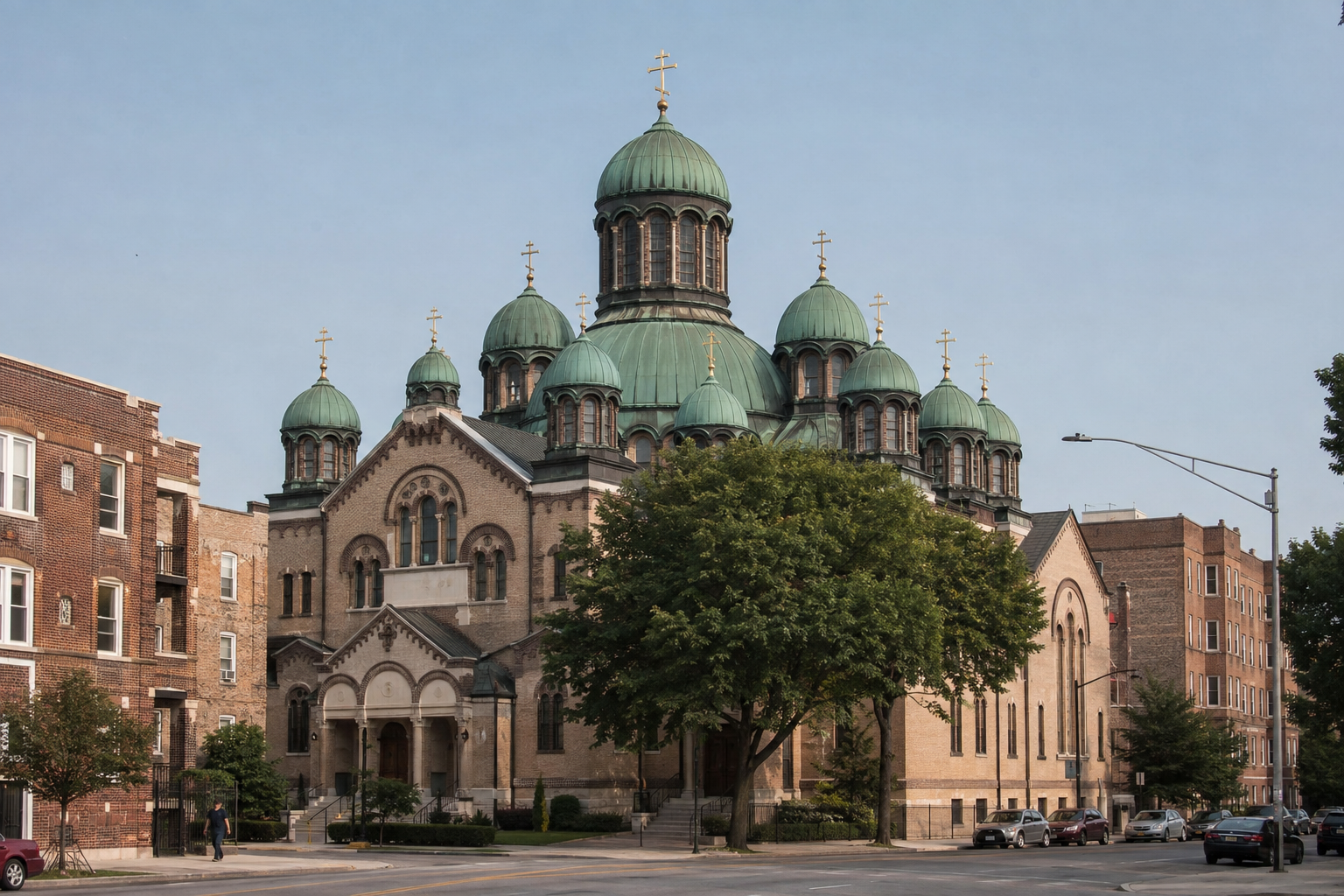
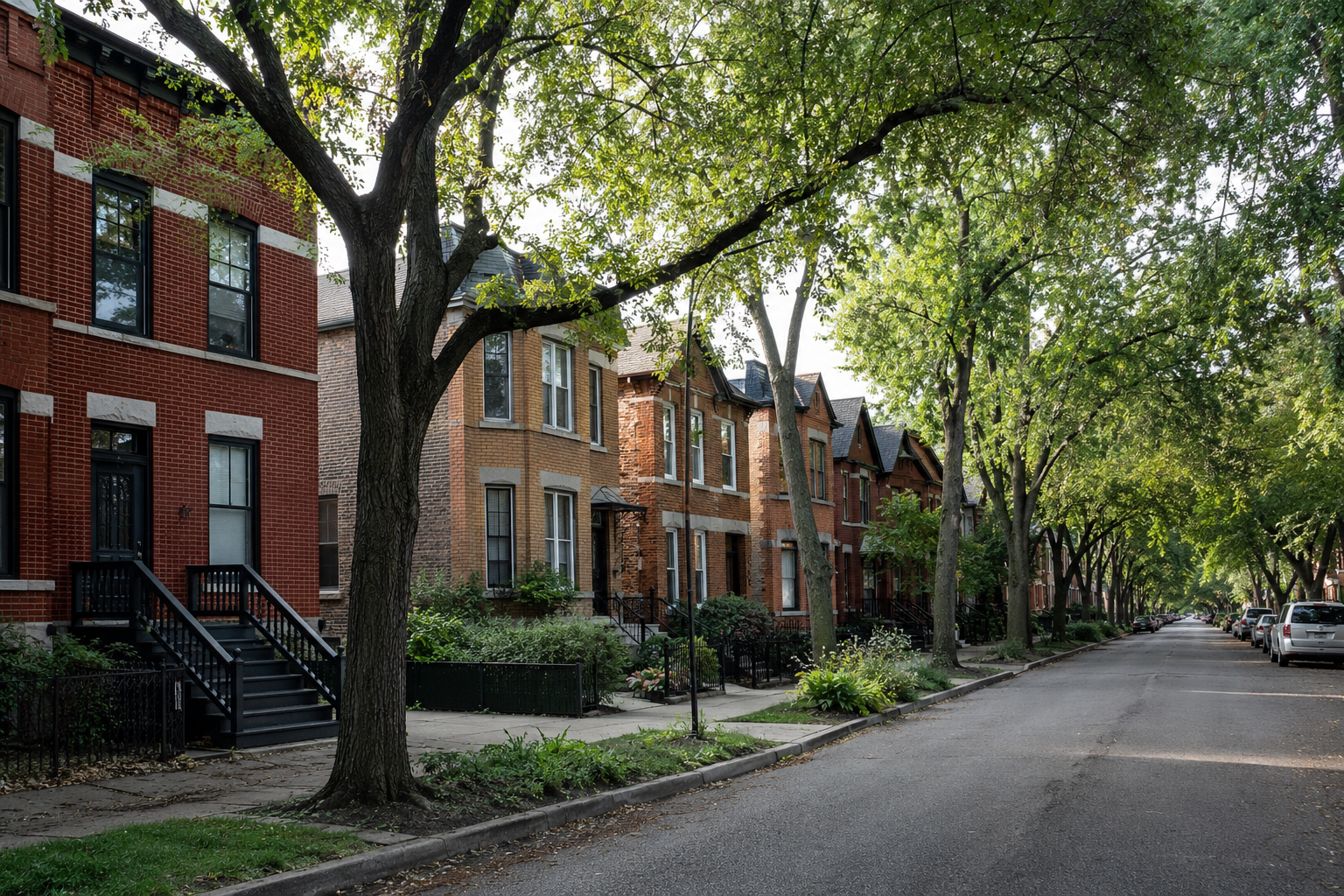
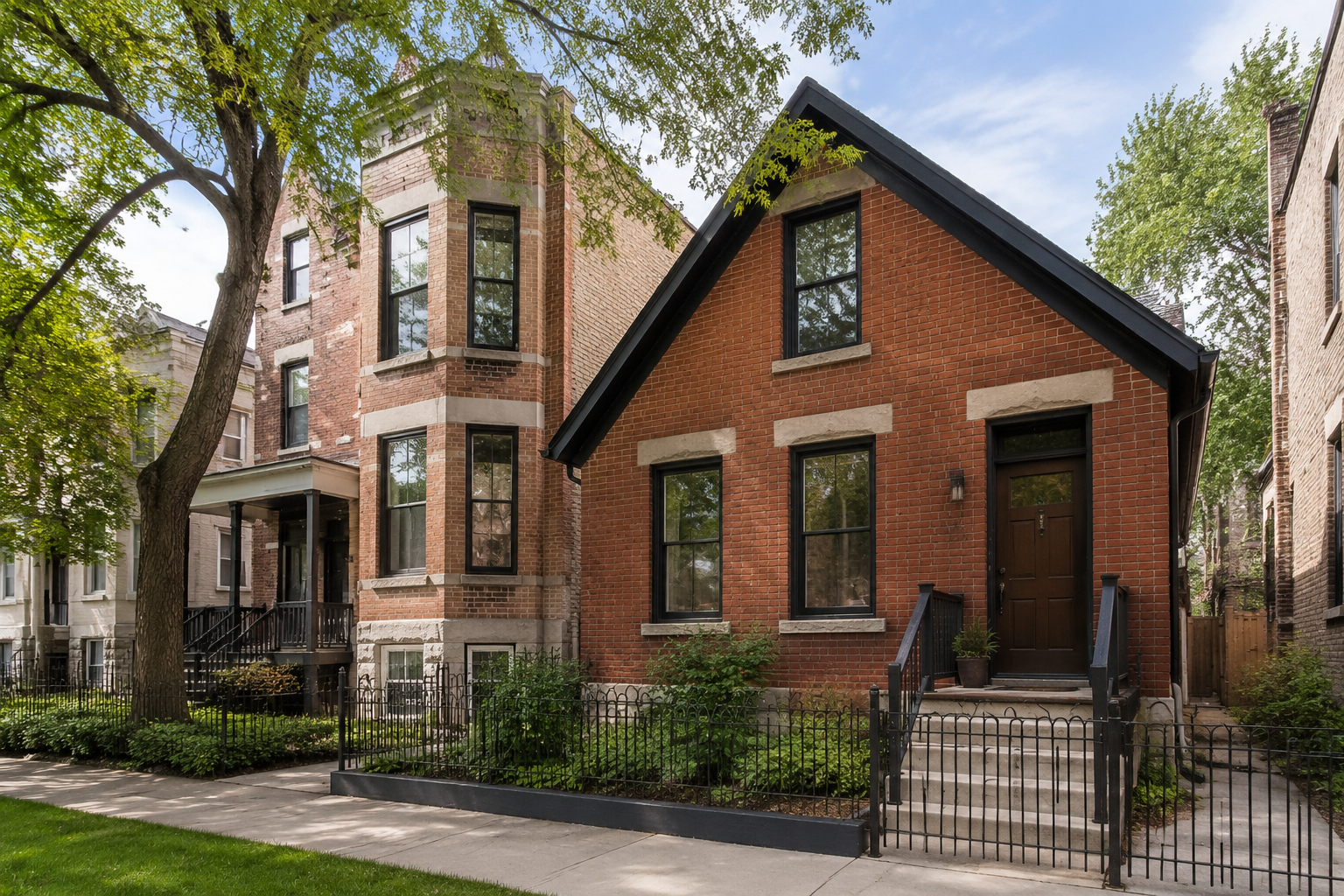
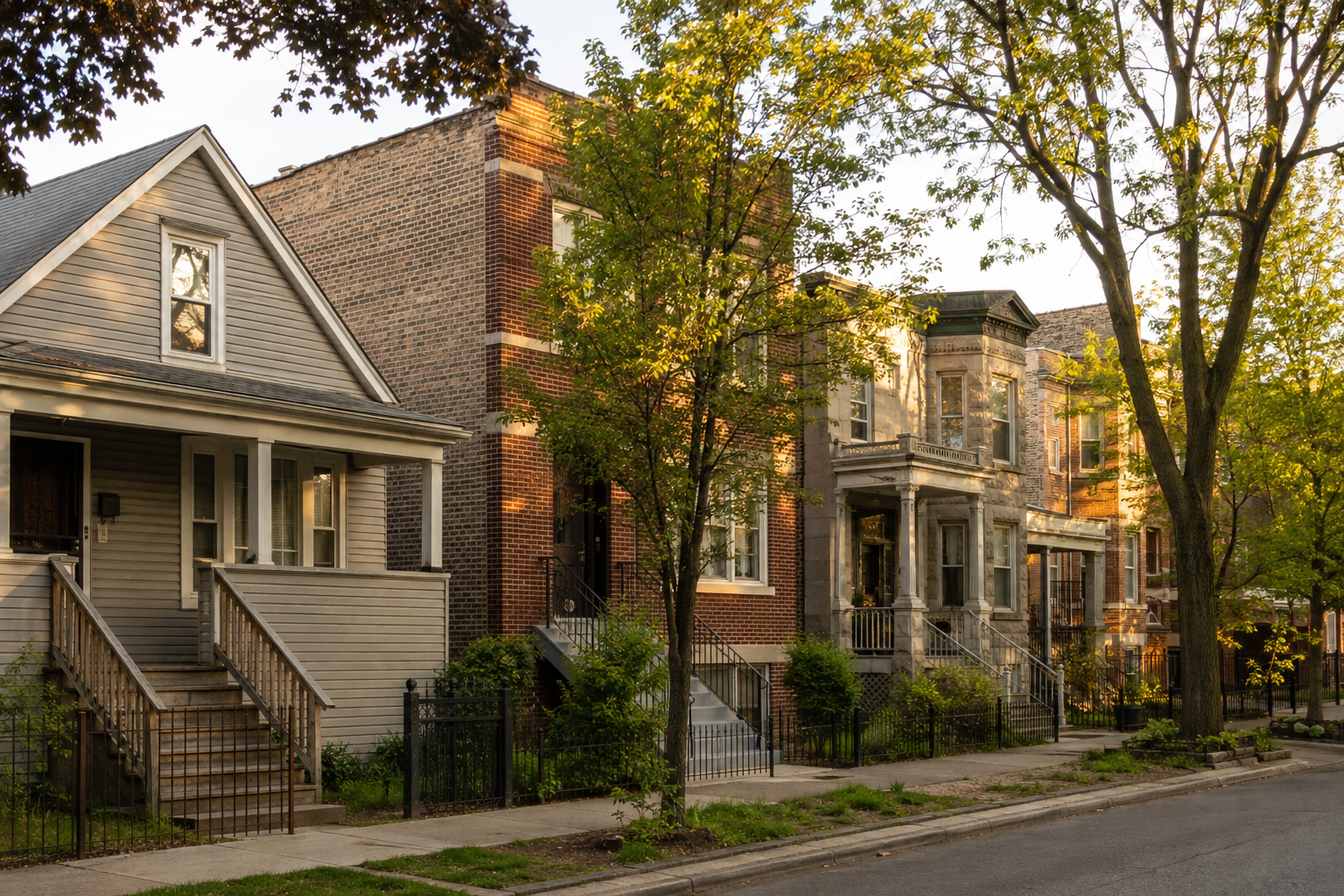
What the money buys is a documented streetscape and the institutions that built it. The Ukrainian Village District, designated a Chicago Landmark on December 4, 2002 and extended twice in the following years, protects blocks of Haddon, Thomas, and Cortez between Damen and Leavitt where roughly a third of the 254 original district buildings are finely crafted brick workers cottages of 1886 to 1905, and the majority are the brick two- and three-flats of 1892 to 1904 that still set the neighborhood's scale. Above them rise the churches: St. Nicholas Ukrainian Catholic Cathedral of 1915 by Worthmann and Steinbach, its thirteen domes modeled on Saint Sophia's in Kyiv; Holy Trinity Orthodox Cathedral of 1903 on Leavitt, designed by Louis Sullivan with financing help from Tsar Nicholas II and a Chicago Landmark since 1979; and Sts. Volodymyr and Olha, founded in 1969 after a calendar dispute split St. Nicholas's congregation, its entrance mosaic depicting the baptism of Ukraine in 988. The Ukrainian National Museum, founded in 1952, and the Ukrainian Institute of Modern Art, founded in 1971, anchor a civic density few Chicago neighborhoods match, and since February 2022 those same institutions have made the neighborhood the visible center of the city's Ukrainian solidarity. The housing economy underneath is distinctive too: a rental tracker counts 91 percent of the neighborhood's apartments in buildings of under 50 units, which is another way of saying the two-flat and three-flat still run this market.
Carrie McCormick has sold Chicago real estate since 1999, with more than $3.5 billion in career sales, and Ukrainian Village rewards her kind of specificity: pricing a two-flat off its rental income in a neighborhood where trackers disagree by hundreds of dollars a month, reading what landmark-district review means for a cottage renovation before a client commits, and keeping a listing's label straight on blocks where three neighborhood names overlap. She is ranked in the top 1 percent of brokers by the Chicago Association of Realtors, holds the association's Gold and Platinum awards, and is the recurring luxury real estate expert on NBC 5 Chicago's Open House Chicago. Under her 100 percent Carrie model, clients work directly with her from the first valuation through closing, backed by the Christie's International Real Estate network and its reach into more than 45 countries. Call 312-961-4612.
Three sanctuaries define the neighborhood from blocks away. St. Nicholas Ukrainian Catholic Cathedral of 1915 raises thirteen domes over Rice Street, modeled on Saint Sophia's Cathedral in Kyiv and seat of a Ukrainian Catholic eparchy. Two streets over on Leavitt, Holy Trinity Orthodox Cathedral of 1903 is the rare Louis Sullivan church, built with help from Tsar Nicholas II's treasury and a Chicago Landmark since 1979. And on Oakley, Sts. Volodymyr and Olha, born of a 1969 parish schism, greets the street with a monumental mosaic of Ukraine's baptism in 988. No other Chicago neighborhood puts this much sacred architecture inside a ten-minute walk.
The Ukrainian Village District, a Chicago Landmark since December 2002 with later extensions, protects the blocks of Haddon, Thomas, and Cortez between Damen and Leavitt, where brick workers cottages of the 1880s and 1890s stand shoulder to shoulder with the two- and three-flats that housed the parishes that built the churches. It is one of the city's most intact worker-built streetscapes, and it is why the neighborhood photographs like a period set while functioning as ordinary housing: people live in the exhibit.
Chicago Avenue still serves the old country daily: Tryzub's modern Ukrainian kitchen and house-infused spirits at Western, Old Lviv's buffet of varenyky and stuffed cabbage a block away, Shokolad's pastry counter, and Kasia's pierogi tradition nearby. The same corridor now carries the new guard, led by Feld at 2018 W. Chicago, which earned a Michelin star and a Green Star in November 2025, with Forbidden Root's botanic brewpub pouring at 1746 W. Chicago and A Tavola's decades-running Italian dining room off the strip. Crain's judged this avenue the city's best restaurant street in early 2026, and the Ukrainian Village stretch is a large part of the reason.
The Ukrainian National Museum, founded in 1952 on Superior Street, keeps folk art, archives, and an unflinching Holodomor exhibition; the Ukrainian Institute of Modern Art, founded in 1971 on Chicago Avenue, has shown contemporary work for over five decades; and the surrounding blocks hold the cultural center, parishes, and Ukrainian-owned institutions that have made this the community's American capital for a century. Since 2022, that institutional density has made the neighborhood the visible center of Chicago's solidarity with Ukraine, a civic identity no marketing could invent.
The neighborhood drinks in institutions rather than scenes: the Empty Bottle on Western has been the city's essential independent rock room since 1992, the Rainbo Club on Damen has poured for generations of writers and musicians, and Sportsman's Club, Happy Village, and the corner taverns between them keep the low-key register the neighborhood prefers. Do Division fills the northern boundary street with stages each spring, and the rest of the year the loudest thing on most blocks is a church bell.
With 91 percent of its rental stock in small buildings, this is a neighborhood where the classic Chicago two-flat still does its historic work: an owner in one unit, rent covering the mortgage from the other, and a cottage or condo on either side of that rung. Entry condos price below the Wicker Park line, cottages and flats carry the middle, and renovated landmark-block houses and boutique new construction hold the top. That ladder, at a discount to the famous neighbors one street over, is the argument the rest of this page makes in detail.
Ukrainian Village is compact and reads as one neighborhood, but its blocks divide cleanly by what they sell: protected streetscape in the middle, restaurant-corridor energy on the south edge, dual-label territory to the east, and quieter value to the west. Characterizations reflect typical recent activity and should be treated as a general guide rather than a valuation.

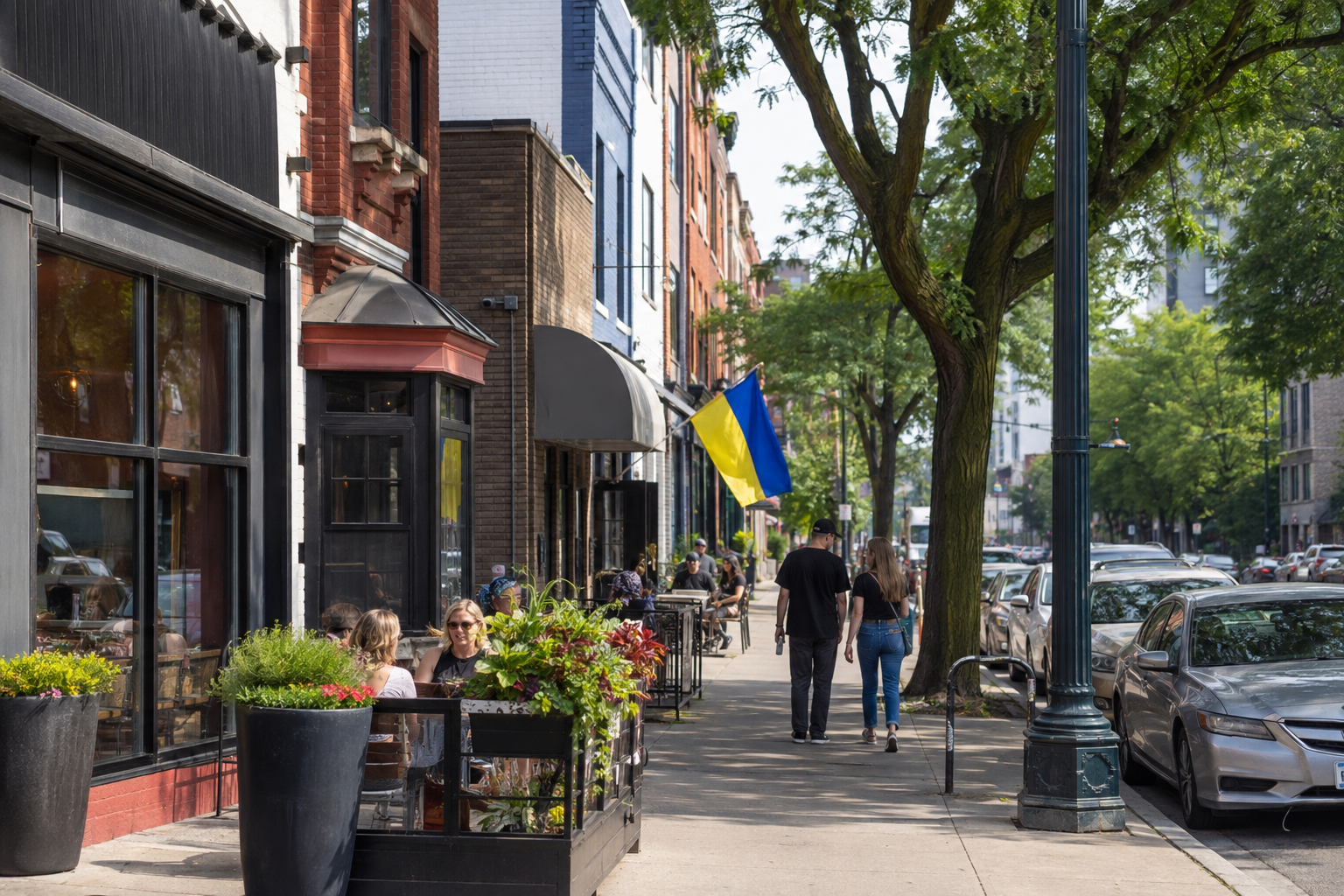




The corridor eats in two languages. The Ukrainian table holds: Tryzub's modern kitchen and house nastoyanka infusions at 2201 W. Chicago, Old Lviv's old-world buffet at 2228 W. Chicago, Shokolad's pastry case, and Kasia's pierogi counter, with Black Dog Gelato for dessert. The broader bench around them is deep and current: Feld's Michelin-starred tasting room at 2018 W. Chicago, Forbidden Root's botanic brewpub at 1746 W. Chicago, A Tavola's handmade pastas off the strip, Lao Peng You's hand-pulled noodles, and All Together Now's cafe-and-bottle-shop hybrid. The bars stay resolutely unglamorous on purpose: the Empty Bottle for bands, the Rainbo Club for the literary dive tradition, Sportsman's Club for the patio, Happy Village and the corner taverns for everything else.

Green space is the honest gap: the neighborhood proper is short on parks, borrowing Smith Park to the southwest, Wicker Park one street north, and Eckhart Park's fieldhouse and indoor pool to the east, all covered on their respective guides. Transit is bus-first: the 66 Chicago and 70 Division run the length of the neighborhood, the 49 Western and 50 Damen cross it, and the Blue Line waits at the corners, Division station toward the northeast and Chicago station east, a 10-to-20-minute walk from the core depending on the block. Daily errands concentrate on Chicago and Division, street parking is genuinely easier than in Wicker Park, and the neighborhood's quiet is the amenity residents defend most.
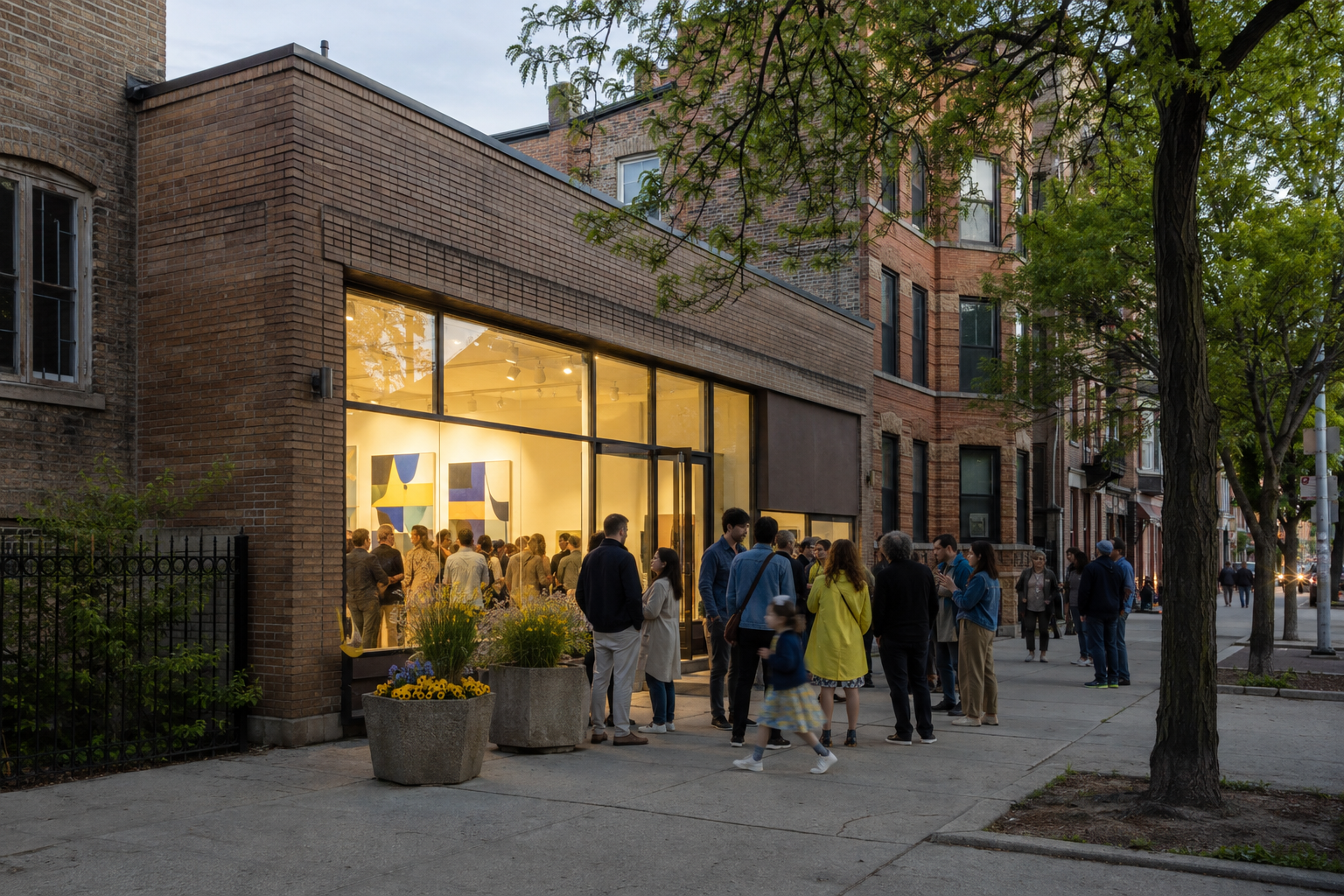
Few Chicago neighborhoods concentrate this much institutional life in a half mile. The Ukrainian National Museum on Superior keeps folk arts, immigration archives, and its Holodomor exhibition, open Thursday through Sunday; the Ukrainian Institute of Modern Art on Chicago Avenue runs a year-round exhibition program from a collection strong in Ukrainian-American abstraction; and the three great churches hold the calendar together, from Easter workshops to the parish festivals. The Chicago Architecture Center runs a walking tour of the district, Do Division brings stages to the northern boundary street each spring, and the neighborhood's own festival and commemoration calendar, including Ukrainian Independence Day each August, runs through the parishes and institutions.
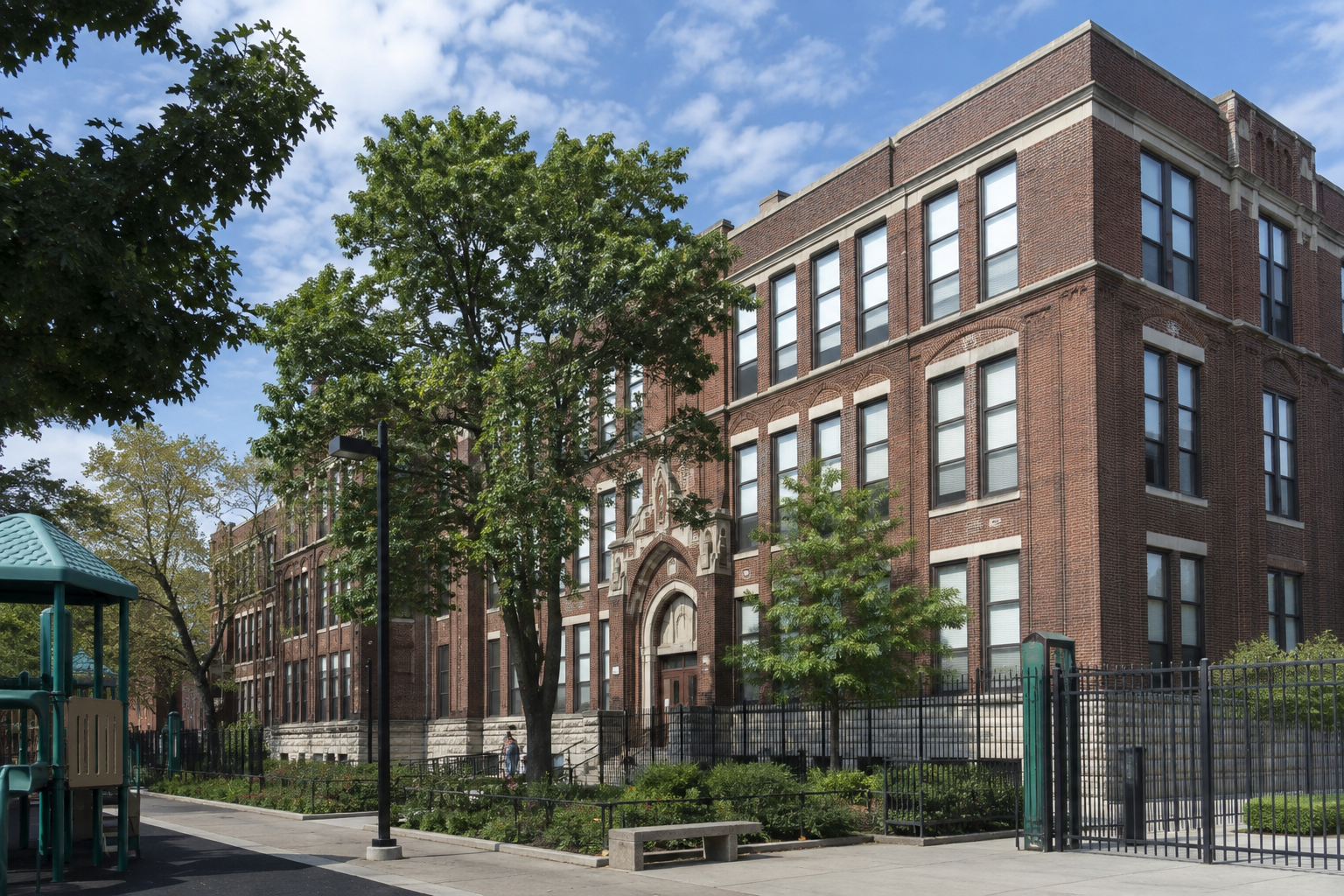

Ukrainian Village is served by a single district, Chicago Public Schools, formally City of Chicago School District 299, so there is no district-boundary question; what an address controls is its attendance-area schools, and the rest of the map runs on applications. Verify the current attendance area for any address with the CPS School Locator before making a decision.
The attendance-area anchors are inside or on the edges of the neighborhood: Columbus Elementary at 1003 N. Leavitt, in the heart of the village, carries a 6 of 10 from GreatSchools, and Mitchell Elementary at 2233 W. Ohio on the southern seam a 7 of 10. The citywide layer adds the strongest options: LaSalle II Magnet, the world-language academy in the dual-label strip east of Damen, rated A minus by Niche with GreatSchools scores of 8 or better depending on the pull, admits citywide by lottery, and Pritzker's gifted center sits one neighborhood north in Wicker Park. Talcott, the dual-language arts magnet on Ohio, serves the area with published ratings that vary widely by aggregator. The parish layer is real here too: St. Nicholas Cathedral School continues the teaching tradition attached to the cathedral parish. The practical read is the same as everywhere in the community area, with one local twist: check the address, check the lottery calendar, and check the parish office.
The attendance-area high schools are Roberto Clemente Community Academy, whose campus sits at the neighborhood's own northwest corner at 1147 N. Western, and Wells Community Academy on Ashland, and the honest summary is unchanged from the parent guide: low published ratings, C minus and C from Niche respectively, alongside real programs, led by Clemente's International Baccalaureate track, career academies, and athletic facilities. Most families here run the citywide GoCPS process, where selective-enrollment schools admit by test and tier regardless of address and the Chicago High School for the Arts auditions citywide from its campus at the community area's west end. The full treatment of both schools lives on the West Town guide; a Ukrainian Village address guarantees the attendance seat and the citywide map, and nothing selective by itself.
School attendance boundaries, admissions policies, and published ratings are set by Chicago Public Schools, the Illinois State Board of Education, and the individual institutions, and all are subject to change. Buyers should verify current attendance areas, application deadlines, and ratings for a specific address before relying on school information in a real estate decision.
Development accelerated with Potter Palmer's mansion in 1882.
Encompasses the historic core alongside the 60611 district.
Consisting of roughly 5,600 households averaging two people.
Historically one of America's wealthiest urban enclaves.
Neighborhood entry point, driven heavily by vintage condominium volume.
The current baseline for standard attached housing stock.
Set in 2017 by the purchase of the top four floors at No. 9 Walton.
The neighborhood's largest single source of high-rise inventory.
With a median asking price currently hovering near $585,000.
The average market pace alongside ~45 monthly closings.
Connected directly to the trail via Oak Street Beach.
Direct access via two CTA train stops and four major bus routes.
Navigating Chicago's Gold Coast luxury real estate market requires unparalleled expertise. Here is what you need to know before we begin.
Ask A QuestionQuote it with a date and a source, because the polygons here are small and the medians jump. Redfin's neighborhood polygon read $767,500 in March 2026, up 7.3 percent year over year, after posting a volume-driven $850,000 spike in February 2025 on just 30 sales; the adjacent East Ukrainian Village polygon held a steadier $699,500 on 50 November 2025 sales, and Zillow's modeled index sat near $525,206 in early 2026. Underneath the blend, condo listings asked a median $699,000 in mid-2026, new construction a median $824,000 in late 2025, and cottages and two-flats fill the middle. Treat Ukrainian Village Chicago real estate as a mid-$600,000s to high-$700,000s blended market that prices product by product, a step below Wicker Park for comparable vintage stock.
Search the name in any map app and you will land in the right place; here is what you are looking at. Ukrainian Village sits on Chicago's Near Northwest Side, about three miles northwest of the Loop, inside the West Town community area. Its core runs from Division Street on the north to Chicago Avenue on the south, between Damen Avenue on the east and Western Avenue on the west, with some maps extending south toward Superior and Grand; the center of the neighborhood falls near Chicago Avenue and Oakley Boulevard, where the cathedral cluster stands. Landmarks to orient by: the thirteen domes of St. Nicholas Cathedral at 2238 W. Rice, Holy Trinity Cathedral at 1121 N. Leavitt, and the Ukrainian Institute of Modern Art at 2320 W. Chicago. And one note for search: this is a Chicago neighborhood, so results about the real estate market of Ukraine the country are answering a different question.
No, and the mistake is common enough in AI answers to correct directly. Ukrainian Village is on the Near Northwest Side, inside the West Town community area, Community Area 24 in the city's official geography. The Near West Side is a separate community area, Community Area 28, south of here across the Kinzie industrial corridor, home to the West Loop, Fulton Market, and the Illinois Medical District. The confusion matters practically: data, schools, and market reports labeled Near West Side describe a different place with different prices. When in doubt, check the community area, not the compass phrase.
It is a story of parishes building a neighborhood. Ukrainian immigration began arriving in the 1880s and 1890s and continued in waves through the interwar years and the postwar displaced-persons generation, and each wave built institutions: St. Nicholas Ukrainian Catholic Cathedral rose in 1915 with thirteen domes modeled on Saint Sophia's in Kyiv, Holy Trinity Orthodox Cathedral had already opened in 1903 to a Louis Sullivan design, and a 1969 calendar dispute at St. Nicholas produced Sts. Volodymyr and Olha and its great mosaic of Ukraine's baptism. The worker-built cottages and flats around them, largely 1886 to 1905, were protected as the Ukrainian Village District, a Chicago Landmark, in 2002. The Ukrainian National Museum has kept the archive since 1952, the Ukrainian Institute of Modern Art has shown contemporary work since 1971, and since 2022 the neighborhood's institutions have anchored Chicago's solidarity with Ukraine. People live in that history; it is not a museum district, it is a functioning neighborhood that happens to be one.
Yes, and they are the neighborhood's signature. The Ukrainian Village Chicago houses for sale run from the brick workers cottages of the 1880s and 1890s, many inside the landmark district where exterior changes are reviewed, to renovated vintage houses and the boutique new construction that posted a median $824,000 asking price in late 2025. The value logic is straightforward: comparable vintage houses here price a full tier below Wicker Park one street north, the landmark blocks protect the streetscape that premium rests on, and the west-of-Leavitt blocks hold the entry pricing. Sellers of unrenovated cottages should know the buyer pool includes both restorers and builders, and pricing the land against the house is part of the job.
Yes, if you buy the building and not just the unit. The condos for sale Ukrainian Village Chicago offers sit mostly in small vintage conversions of two- and three-flats and in boutique newer buildings along the corridor, with listings asking a median $699,000 in mid-2026 on thin inventory; entry pricing runs below the Wicker Park line for comparable space. Because associations here are small, the diligence is everything: budget, reserves, special assessments, rental caps, and how the building maintains century-old masonry and porches. Ukrainian Village Chicago condos for sale range from investor-friendly buildings to strict owner-occupancy associations, and that single document difference moves both financing and resale more than any finish level.
It is one of the best cases in the city for the classic owner-occupant play, and the numbers explain why. The neighborhood's rental stock is 91 percent small buildings by one mid-2026 tracker's count, meaning the two- and three-flat is still the market's working unit, and 2026 trackers place typical one-bedroom rents roughly between $1,500 and $1,900 and two-bedrooms between $1,900 and $2,700, with the spread reflecting source and stock mix rather than one true number, and one tracker reading comparable vintage units 10 to 15 percent below Wicker Park. For a buyer, that supports the historic math: live in one unit, let the second carry the mortgage, and hold a protected-streetscape asset while doing it. Underwrite conservatively with actual leases and current taxes, not tracker averages, and have the rental history verified before you price the income.
One district, Chicago Public Schools, with the usual Chicago layering. Columbus Elementary sits in the heart of the village with a 6 of 10 from GreatSchools and Mitchell carries a 7 on the southern seam; the standout options admit by application, led by LaSalle II's lottery-based language academy in the strip east of Damen, rated A minus by Niche, with Pritzker's gifted center one neighborhood north. St. Nicholas Cathedral School continues the parish teaching tradition. The attendance high schools, Clemente, whose campus anchors the neighborhood's own northwest corner, and Wells, carry low published ratings alongside real programs including Clemente's International Baccalaureate track, and most families run the citywide GoCPS process; the full treatment lives on the West Town guide. Verify any address with the CPS School Locator, then check the application calendar.
Quieter than its reputation-heavy neighbors, by design. The daily texture is landmark blocks, church bells, a world-class restaurant corridor on Chicago Avenue, and bars that refuse to be scenes, with Do Division bringing the one loud weekend to the northern boundary each spring. The honest trade-offs: transit is bus-first, with the Blue Line a 10-to-20-minute walk at the corners rather than in the core, and the neighborhood proper is short on park space, borrowing Smith Park, Wicker Park, and Eckhart Park from its neighbors. In exchange, street parking is genuinely easier than in Wicker Park, prices run a tier lower for comparable vintage stock, and the interior blocks are as calm as any on the Near Northwest Side. Buyers choosing between here and Wicker Park are usually choosing between energy at the door and quiet at a discount.
Because the strip between Damen and Ashland carries two names at once, East Village on some maps and East Ukrainian Village on others, and every portal draws its own lines on top of that. Redfin even tracks East Ukrainian Village as its own market, where it recorded steadier volume than the core polygon, while other sites fold the same blocks into Wicker Park's southern edge or the parent West Town area. The city's official unit underneath all of it is the West Town community area, and this site's pages divide coverage by boundary streets so nothing is counted twice. The practical rule is the one an appraiser would give: trust cross streets over labels, compare a property against its actual blocks, and treat portal neighborhood tags as marketing.
Carrie McCormick has sold Chicago real estate since 1999 and has closed more than $3.5 billion in career sales, and under her 100 percent Carrie model clients work directly with her rather than being handed to a team. This neighborhood's work is specific: pricing a two-flat off verified leases in a market where rent trackers disagree by hundreds of dollars, walking a cottage buyer through what landmark review does and does not restrict, keeping a boundary-block listing under the label that maximizes its buyer pool, and reading small-association condo documents before an offer rather than after. She is ranked in the top 1 percent of brokers by the Chicago Association of Realtors, holds the association's Gold and Platinum awards, is the recurring luxury real estate expert on NBC 5 Chicago's Open House Chicago, and works within the Christie's International Real Estate network, which reaches buyers across more than 45 countries. Call 312-961-4612.
Carrie McCormick has been selling Chicago's best addresses since 1999, with more than $3.5 billion in career sales and a practice built for exactly what this neighborhood asks of an agent, from a first condo in a vintage conversion to a landmark-block cottage, an income-producing two-flat under the domes, or a quiet new build off the corridor. Ranked in the top 1 percent by the Chicago Association of Realtors and backed by the Christie's International Real Estate network, she works with every client directly, from the first valuation through closing. To talk through a purchase, a sale, or a move within the neighborhood, and to see the homes for sale Ukrainian Village Chicago has right now, call 312-961-4612 or email carrie@atproperties.com.