

Homes for Sale in Streeterville Chicago | Lakefront Condos
Chicago's lakefront downtown neighborhood, built on 186 acres of land that did not exist before 1886: high-rise condominiums and vintage co-operatives between the Magnificent Mile and Lake Michigan, with Navy Pier, the Museum of Contemporary Art, and Northwestern's medical campus inside its borders.
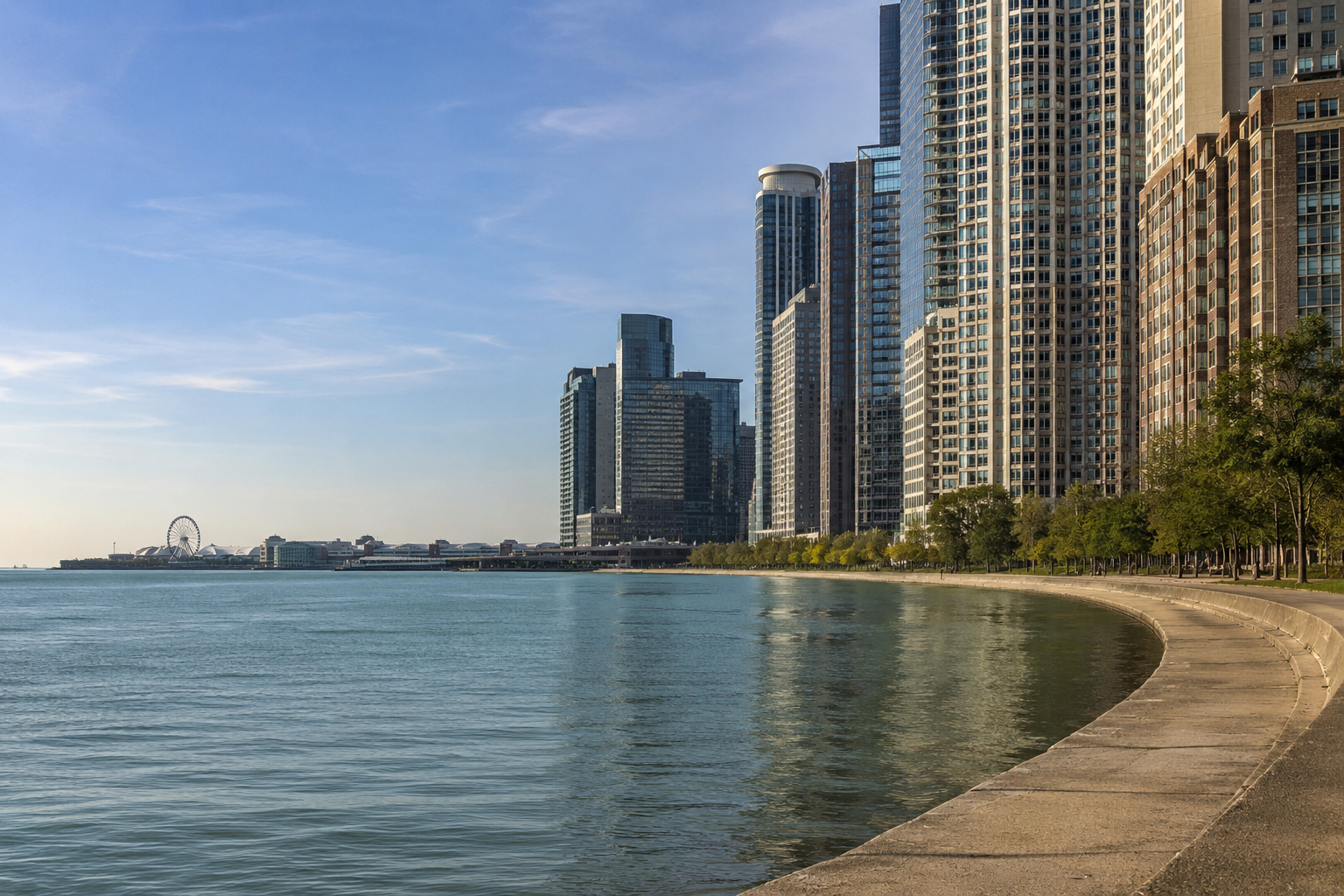
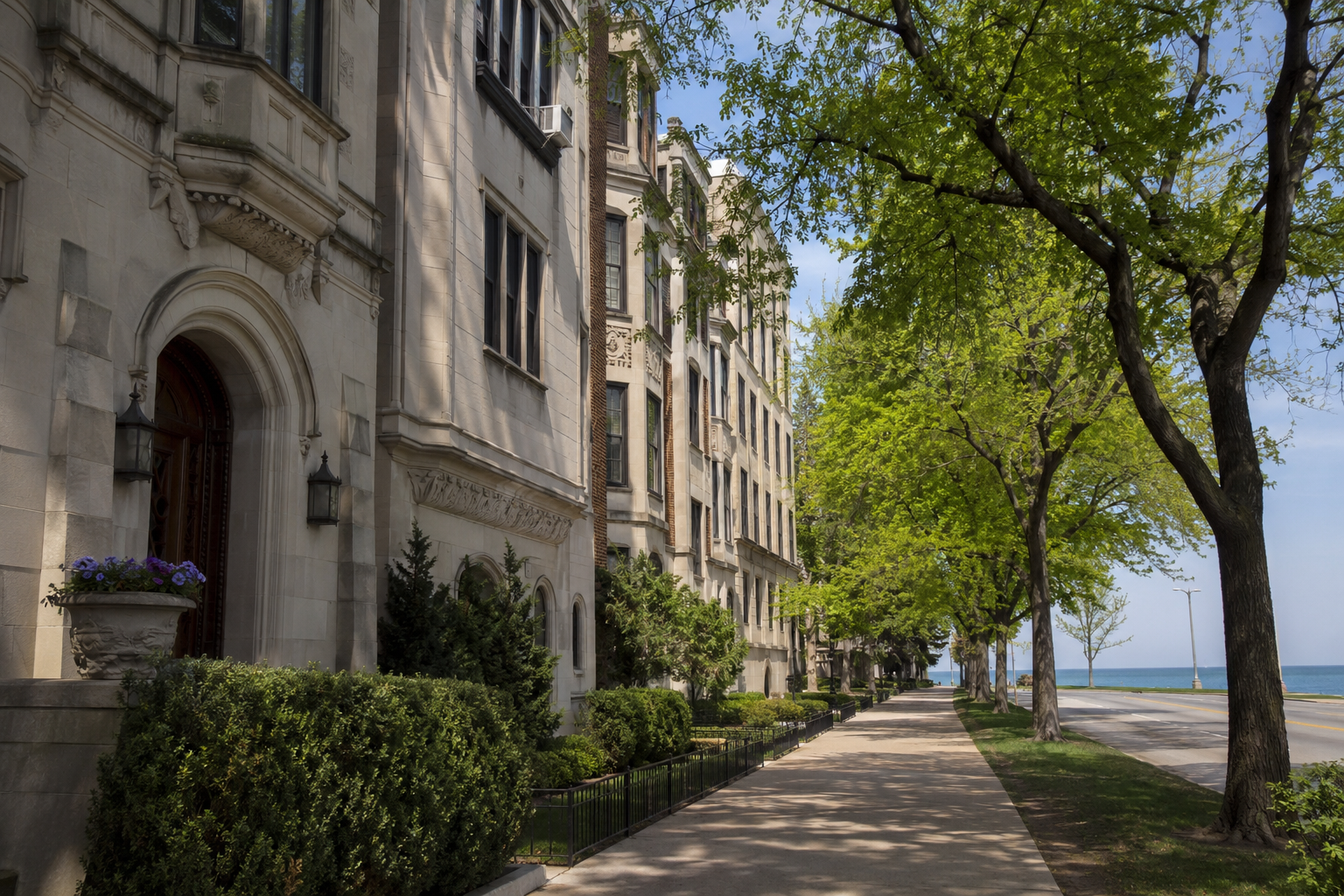
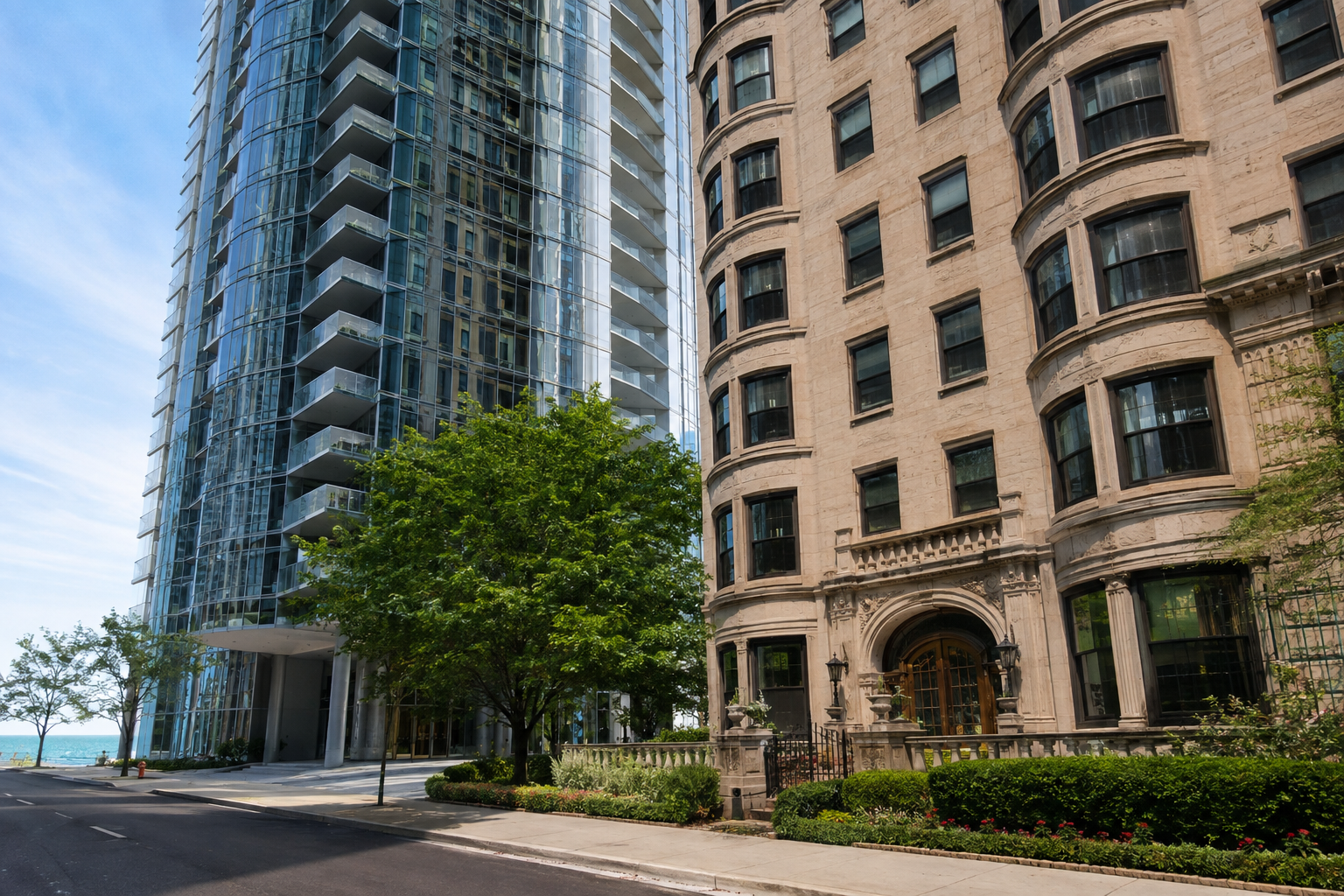
Streeterville is the lakefront neighborhood immediately north of the Chicago River in the Near North Side community area, with a primary ZIP code of 60611. Its southern and eastern boundaries are settled: the Chicago River on the south and Lake Michigan on the east, including Navy Pier. The other two are not. The Streeterville Organization of Active Residents, the neighborhood's own association, draws the northern boundary at Oak Street and the western boundary at Rush Street, while other definitions use Chicago Avenue on the north and Michigan Avenue or St. Clair Street on the west. The neighborhood covers roughly 186 acres, and almost all of it is made land. It takes its name from George Wellington "Cap" Streeter, a Civil War veteran whose steamboat ran aground on a sandbar off the shoreline on 10 July 1886. Rather than leave, he stayed, allowed the area around the wreck to be filled with construction debris, declared the resulting land the District of Lake Michigan, sold plots he had no title to, and fought the City and the Gold Coast landowners in court and occasionally with weapons for the better part of three decades.
The market here needs reading carefully, because the headline number is currently misleading in an unusual way. Redfin reported a February 2026 median sale price of $515,000, up 24.1 percent year on year at about $400 per square foot. That looks like sharp appreciation, but two figures alongside it suggest otherwise: homes were taking about 97 days to sell, down from 114 a year earlier but still slow in absolute terms, and volume fell to 127 sales from 176 in the same month a year earlier. A 24 percent median increase on a 28 percent volume decline is far more likely to reflect a change in what is selling, with fewer and larger high-floor units closing, than a genuine 24 percent rise in what any given condominium is worth. Other readings underline the spread: Realtor.com showed a February 2026 median listing price of $594,500, Zillow put the median sale price near $449,833 in late January 2026, and Redfin's condominium view in mid-2026 showed 222 units listed at a median of about $512,000 with 52 days on market. Do not treat any of these as your number. Price by building, floor, and exposure.
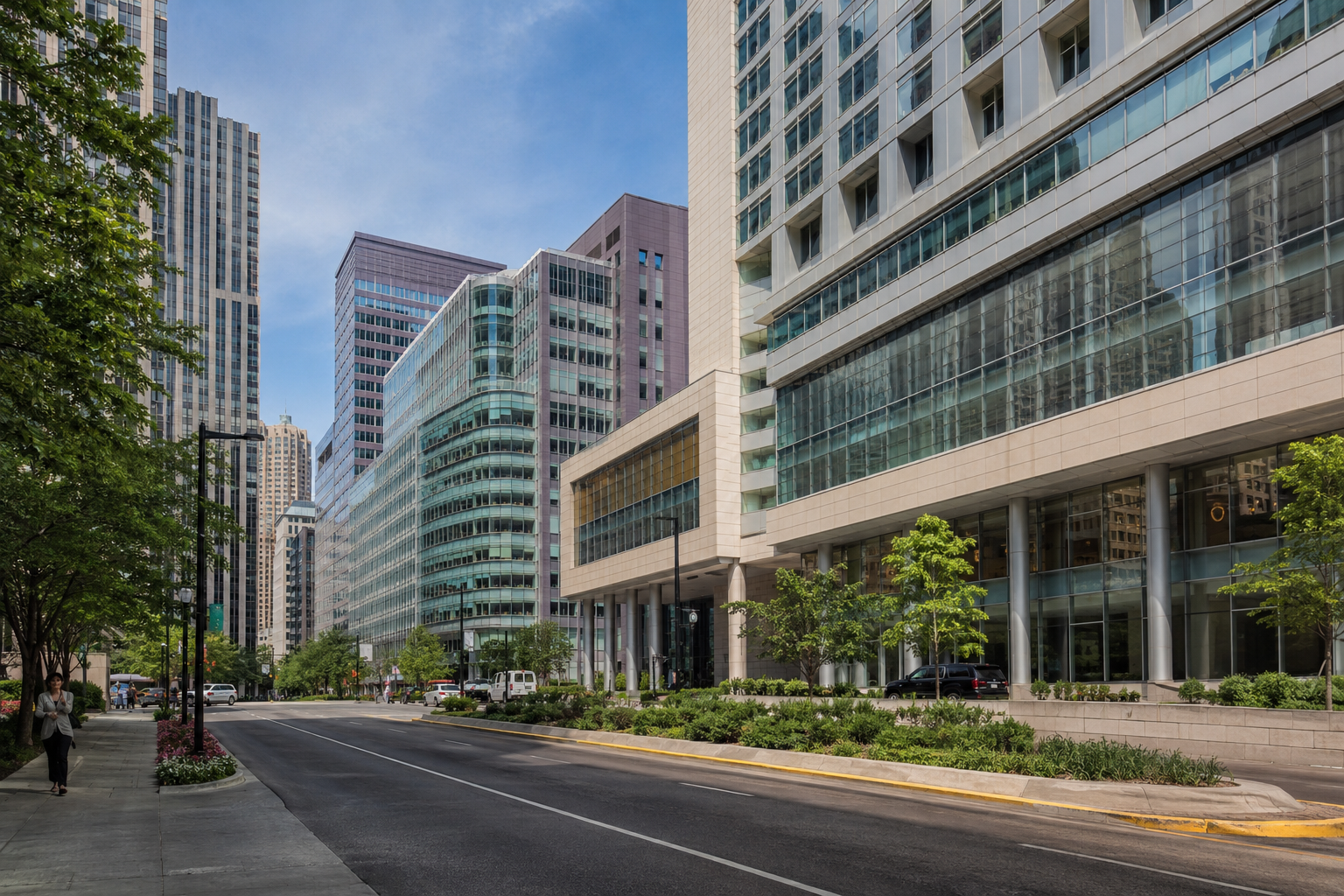
Streeterville is the most vertical residential neighborhood in Chicago and the housing stock reflects that completely. There are almost no single-family homes. What there is instead is a set of very different high-rise products: 1920s and 1930s vintage co-operatives and conversions on the Pearson, Walton, and East Lake Shore Drive blocks; mid-century landmarks including Lake Point Tower at 505 N. Lake Shore Drive, completed in 1968 and still the only residential building east of Lake Shore Drive; large 1990s and 2000s condominium towers such as the twin towers at 600 N. Lake Shore Drive; and newer luxury buildings including One Bennett Park at 451 E. Grand Avenue and the Ritz-Carlton Residences. Two factors drive value more than finishes. The first is the view, because an unobstructed lake or Navy Pier outlook is the scarce commodity here and the spread between a high east-facing floor and a low interior line in the same building is very wide. The second is the monthly assessment, which commonly runs between about $500 and $1,500 depending on age and service level and materially changes what a unit actually costs to own.
Carrie McCormick has sold Chicago real estate since 1999, has closed more than $3.5 billion in career sales, and works across the Near North Side including Streeterville, the Gold Coast, and River North. She is ranked in the top 1 percent of brokers by the Chicago Association of Realtors, holds the association's Gold and Platinum awards, and is the recurring luxury real estate expert on NBC 5 Chicago's Emmy-nominated series Open House Chicago. In a market where nearly every home is a unit in a tower, the work is reading buildings rather than streets: knowing which co-operative boards approve quickly and which do not, which associations have funded their facade and mechanical work and which will bill for it later, which lines in a given building hold their view permanently and which will be built out, and how to price a unit against the four or five genuinely comparable sales inside its own address when the neighborhood median has moved 24 percent on falling volume. Whether you are buying a first lakefront condominium, a full-floor residence, or selling into a market where the average listing takes three months, call 312-961-4612.
Ohio Street Beach, Milton Lee Olive Park, DuSable Park, and the Lakefront Trail all sit inside or immediately beside the neighborhood, and Navy Pier extends 3,300 feet into the lake from its southern edge. No other downtown Chicago neighborhood puts this much open water and shoreline within a few minutes on foot.
The Magnificent Mile runs along the western edge, the Loop begins across the river, and the neighborhood carries a Walk Score around 98. Groceries, pharmacies, hospitals, museums, theaters, and offices are all within a few blocks, which is why a large share of residents here do not own a car.
Northwestern Memorial Hospital, the Shirley Ryan AbilityLab, Lurie Children's Hospital, and Northwestern University's Feinberg School of Medicine occupy a substantial part of central Streeterville. For physicians, residents, nurses, and researchers, this is one of the very few places in Chicago where you can genuinely walk to work at a major academic medical center.
East-facing units above the low floors look at Lake Michigan, and nothing can be constructed between them and the water. Lake Point Tower at 505 N. Lake Shore Drive, completed in 1968, remains the only residential building east of Lake Shore Drive, with a nearly three-acre private park on top of its garage.
The Museum of Contemporary Art sits on East Chicago Avenue, the Lookingglass Theatre operates inside the historic Water Tower Pumping Station, Chicago Shakespeare Theater is on Navy Pier, and the Broadway Playhouse is at Water Tower Place. Very few residential neighborhoods anywhere hold four significant cultural venues inside their own boundaries.
Streeterville offers 1920s co-operatives with proper proportions and plaster detail, mid-century landmarks, large full-service towers from the 1990s and 2000s, and recent luxury buildings, all within about a half-mile. That is unusual range for a neighborhood this compact, and it means the decision here is genuinely about building character rather than about location.
Streeterville is small, dense, and almost entirely vertical, so buyers navigate it by building rather than by street. Six areas behave differently on price, view, building era, and assessment level, and the differences are large enough to decide an offer. Ranges below reflect typical recent activity and are a general guide rather than a valuation.
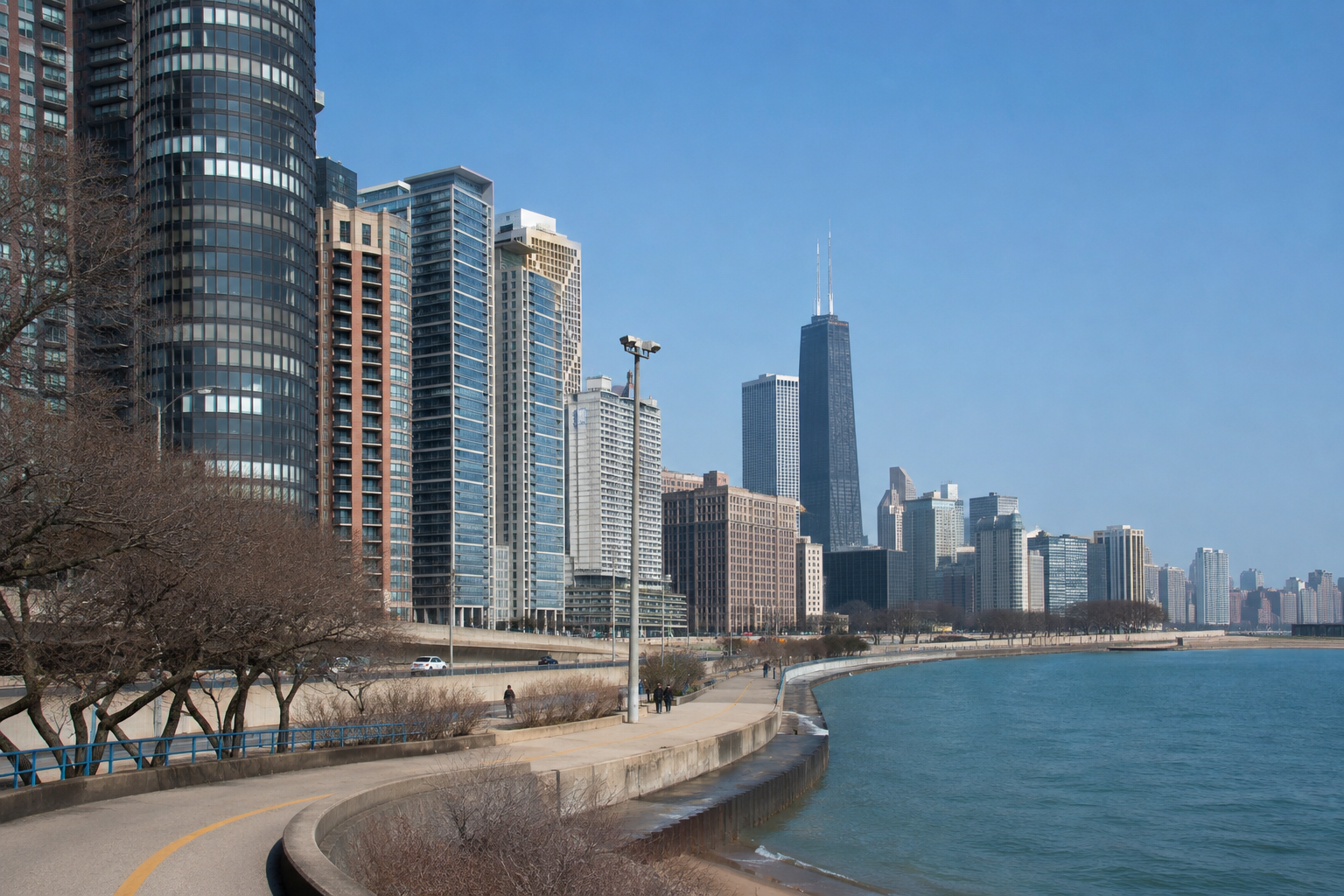


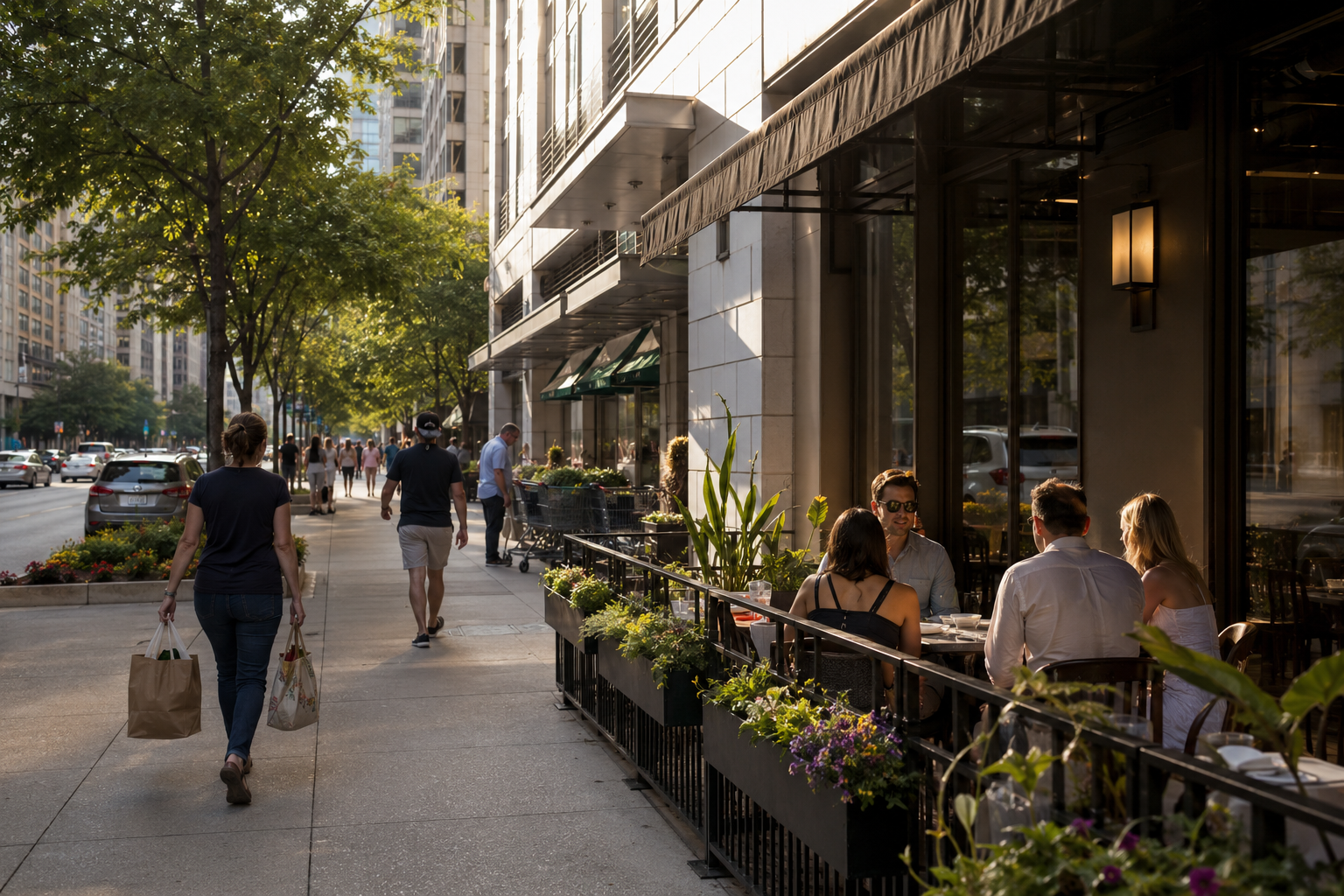
Streeterville's dining is a mix of hotel dining rooms, Magnificent Mile restaurants, and neighborhood places serving a large resident and hospital population, and it turns over quickly. One clarification is worth making because the question keeps being asked: GreenRiver, the Michelin-starred restaurant and cocktail bar on the eighteenth floor at 259 E. Erie Street, closed in January 2018 and has not reopened, despite several websites still describing it in the present tense. For everyday life the neighborhood is unusually well served for a downtown area, with multiple full-service grocery stores, pharmacies on most commercial corners, a Target, and the full retail range of the Magnificent Mile along the western edge. The trade-off residents most often name is that shopping here is oriented toward visitors as much as toward neighbors, so buyers who want an independent local retail street will find more of one on Southport, Armitage, or Oak Street.
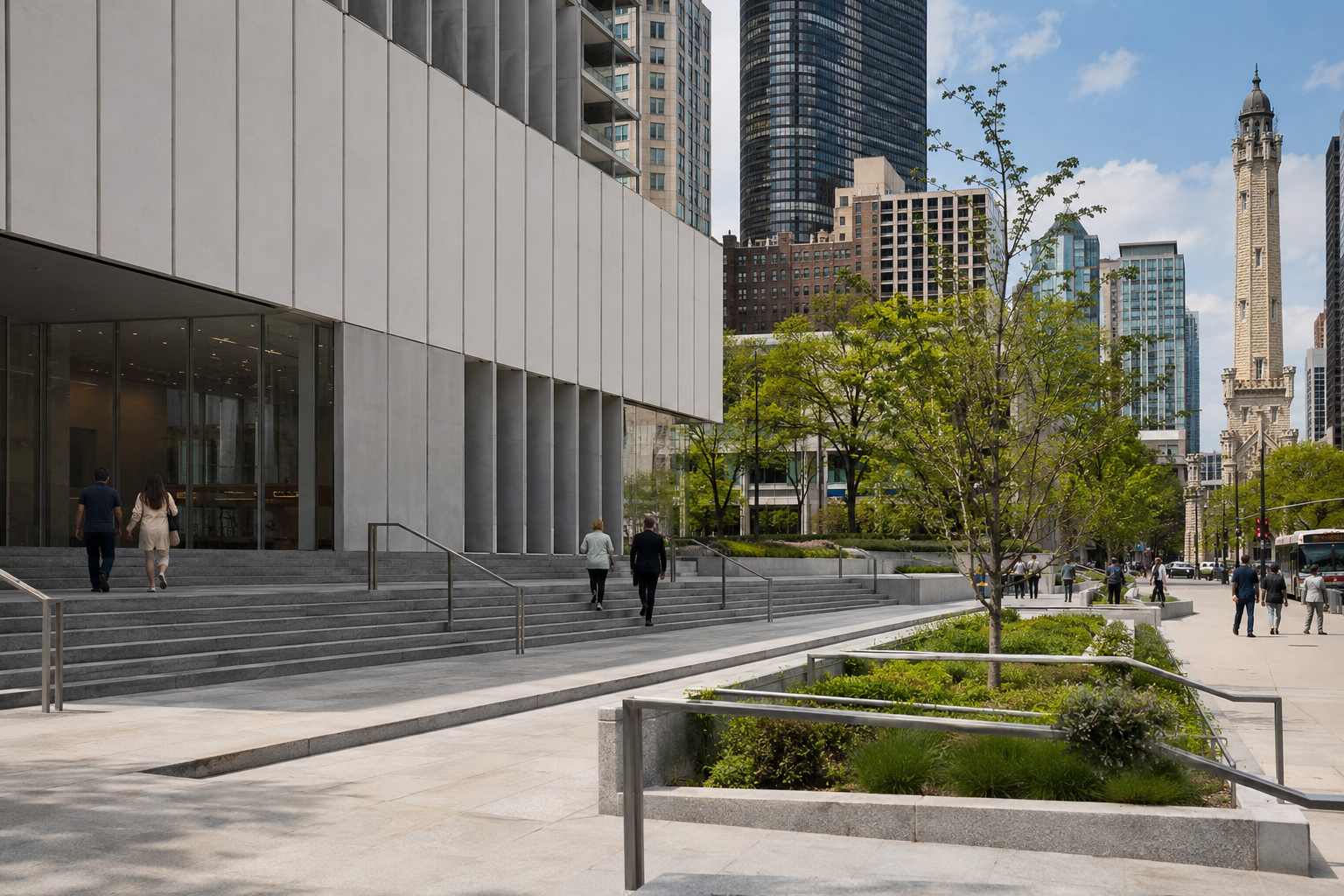
Navy Pier extends 3,300 feet into Lake Michigan from the southern edge and is among the most visited attractions in the Midwest, with the Centennial Wheel, the Chicago Children's Museum, Chicago Shakespeare Theater, gardens, and seasonal fireworks. Inland, the Museum of Contemporary Art on East Chicago Avenue holds one of the largest collections of postwar and contemporary art in the country and runs a substantial program of exhibitions and performances. The Lookingglass Theatre Company performs inside the historic Water Tower Pumping Station, and the Broadway Playhouse at Water Tower Place stages touring productions. For residents, the practical effect is a neighborhood where a significant cultural evening requires no travel at all, balanced against the reality of living in a place large numbers of visitors come to see.
Streeterville is the densest downtown neighborhood in Chicago without a CTA rail station inside it, which is a genuine and frequently overlooked point. The nearest stations are Grand and Chicago on the Red Line, both a walk of roughly five to fifteen minutes west depending on the block, with Blue Line stations at Grand and Chicago a little further. What the neighborhood has instead is exceptional bus coverage, including routes along Michigan Avenue, Illinois and Grand, Chicago Avenue, and Fairbanks, plus a Walk Score around 98 that makes most daily errands walkable. Buyers relocating from cities where a rail station is assumed should test their specific commute on foot before committing, because the difference between a Grand Avenue address and a Walton Street address is meaningful in winter.
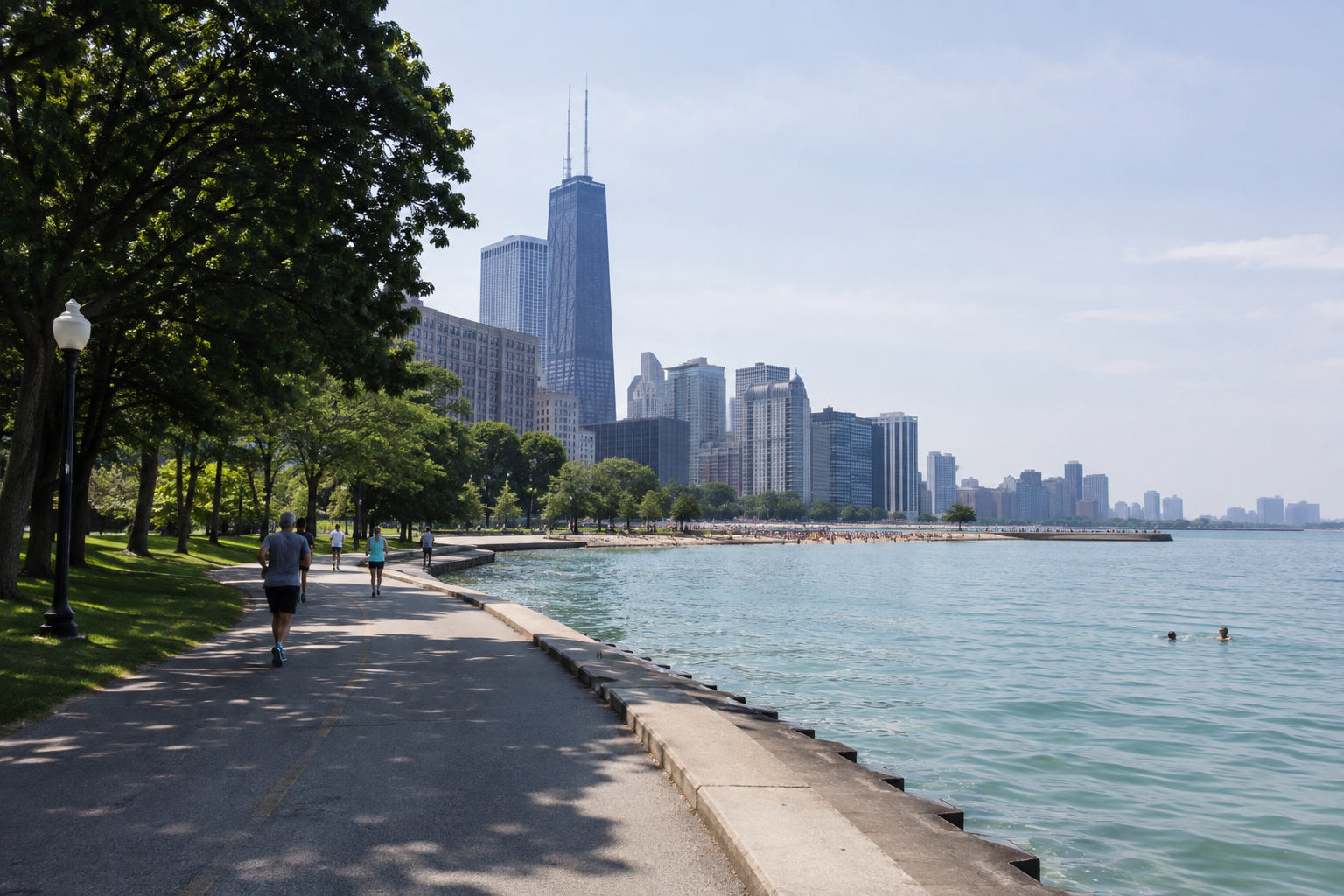
Streeterville's defining amenity is the water. Ohio Street Beach sits at the foot of Ohio Street with calm, shallow swimming and a long-standing open-water swim community, and Milton Lee Olive Park just north of Navy Pier is one of the quietest green spaces downtown, with fountains and unobstructed lake views. The Lakefront Trail runs the length of the neighborhood, connecting north to Oak Street Beach and Lincoln Park and south to the Museum Campus. Ogden Slip brings working boat moorings into the neighborhood, DuSable Park occupies the point of land between the slip and the mouth of the Chicago River and is being built out alongside the 400 Lake Shore development, and Lake Shore Park on East Chicago Avenue provides a track, field, and playground on the northern edge. For a downtown neighborhood built entirely on landfill, the open-space provision is unusually good, though almost all of it is linear and along the water rather than distributed through the residential blocks.
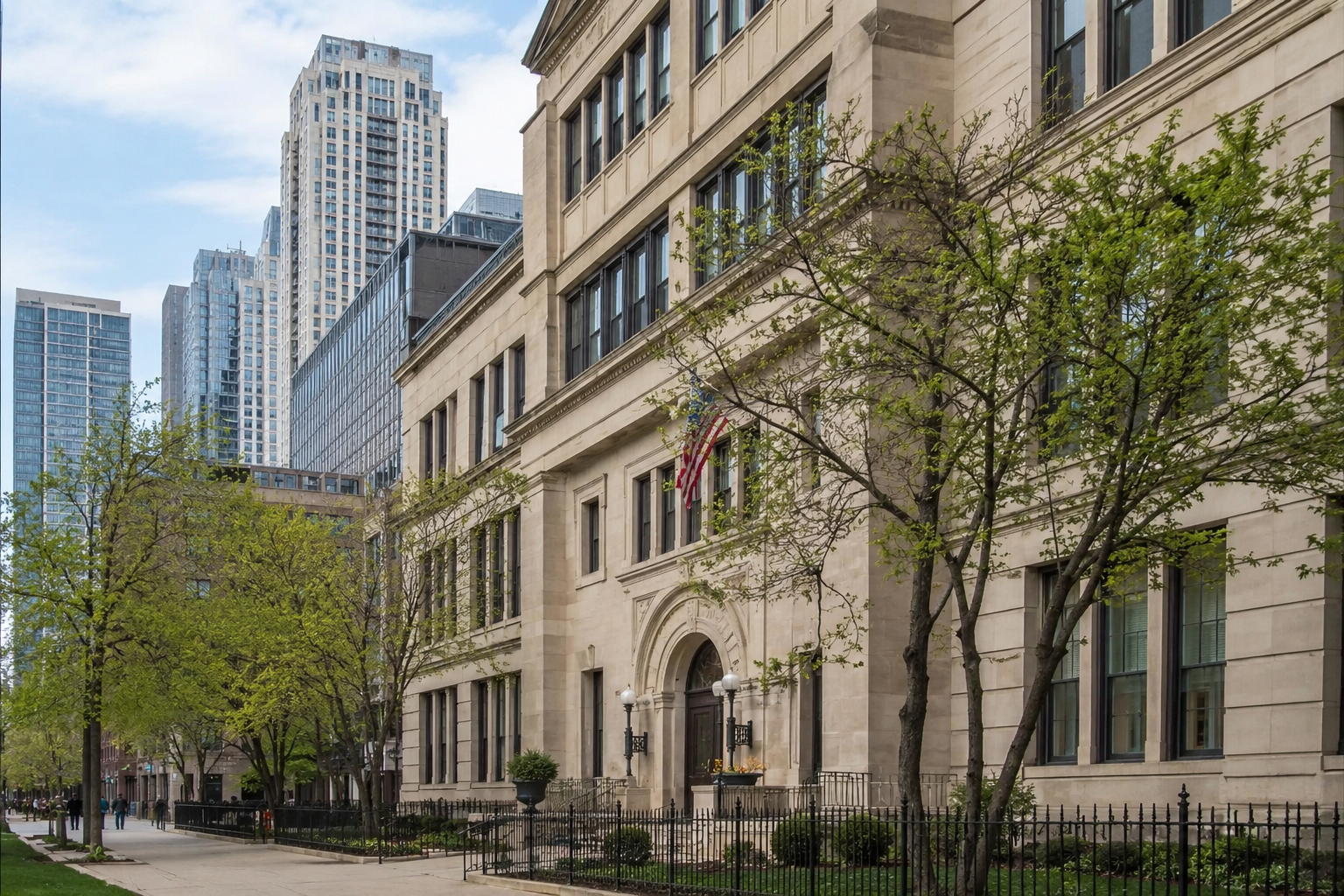

Streeterville is served by a single school district, Chicago Public Schools, formally City of Chicago School District 299. Like River North, it is not primarily a family neighborhood: the housing stock is overwhelmingly one and two bedroom high-rise units, and buyers who need school catchments and outdoor space more often choose Lincoln Park, North Center, or the Southport Corridor. There are, however, real options here and nearby, and the distinction that matters is between schools reached by address and schools reached by application.
Much of Streeterville falls within the attendance area of Ogden International School of Chicago, the same school serving the Gold Coast and parts of River North. Ogden operates a kindergarten through grade 4 East Campus at 24 W. Walton Street, grades 5 through 8 at the Jenner Campus on North Cleveland Avenue, and a high school at the West Campus on West Erie Street, and it is the only full-continuum preschool to grade 12 public International Baccalaureate school in Illinois. Its published ratings are mixed rather than strong, with a Niche B and a GreatSchools 5 out of 10 at the high school level, so read the current figures directly rather than relying on the IB designation. Confirm the attendance boundary for a specific address with Chicago Public Schools, since it does not follow neighborhood lines.
Walter Payton College Prep on North Wells Street is among the highest-ranked public high schools in the country and is a realistic option for Streeterville families, but it admits city-wide by test score and tier rather than by address, so no purchase here secures a place. On the independent side, the Frances Xavier Warde School runs its grades 4 through 8 campus at 751 N. State Street beside Holy Name Cathedral, a short walk west, with British International School of Chicago, Catherine Cook School in Old Town, and the Latin School of Chicago in the Gold Coast all drawing families from the neighborhood.
Streeterville is as much a campus neighborhood as a residential one. Northwestern University's Chicago campus, including the Feinberg School of Medicine, sits at its center alongside Northwestern Memorial Hospital, the Shirley Ryan AbilityLab, and Lurie Children's Hospital, and Loyola University Chicago's Water Tower Campus is on the western edge. For graduate students, medical residents, and faculty, this is one of very few Chicago neighborhoods where living and working within a five-minute walk is genuinely achievable.
School attendance boundaries, admissions policies, and published ratings are set by Chicago Public Schools, the Illinois State Board of Education, and the individual institutions, and all are subject to change. Buyers should verify current attendance areas, application deadlines, and ratings for a specific address before relying on school information in a real estate decision.
Development accelerated with Potter Palmer's mansion in 1882.
Encompasses the historic core alongside the 60611 district.
Consisting of roughly 5,600 households averaging two people.
Historically one of America's wealthiest urban enclaves.
Neighborhood entry point, driven heavily by vintage condominium volume.
The current baseline for standard attached housing stock.
Set in 2017 by the purchase of the top four floors at No. 9 Walton.
The neighborhood's largest single source of high-rise inventory.
With a median asking price currently hovering near $585,000.
The average market pace alongside ~45 monthly closings.
Connected directly to the trail via Oak Street Beach.
Direct access via two CTA train stops and four major bus routes.
Navigating Chicago's Gold Coast luxury real estate market requires unparalleled expertise. Here is what you need to know before we begin.
Ask A QuestionStreeterville is the lakefront neighborhood immediately north of the Chicago River, inside the Near North Side community area, and its primary ZIP code is 60611. The southern and eastern boundaries are settled: the Chicago River on the south and Lake Michigan on the east, including Navy Pier. The northern and western boundaries are genuinely disputed. The Streeterville Organization of Active Residents, the neighborhood's own association, uses Oak Street on the north and Rush Street on the west, while other sources place the northern edge at Chicago Avenue and the western edge at Michigan Avenue or St. Clair Street. Because Streeterville shares the Near North Side with the Gold Coast and River North, buildings near those edges are sometimes marketed under more than one neighborhood name, so check the cross streets rather than the label on a listing.
The headline figure currently needs a caveat. Redfin reported a February 2026 median sale price of $515,000, up 24.1 percent year on year, which sounds like sharp appreciation. But price per square foot rose only about 2.8 percent over the same period, sales volume fell to 127 from 176, and homes were taking about 97 days to sell. That combination points to a change in what is selling, with fewer and larger high-floor units closing, rather than a broad 24 percent rise in value. Other sources put the picture differently again: Realtor.com showed a February 2026 median listing price of $594,500 and Zillow a median sale price near $449,833. What actually sets price here is the building, the floor, and the exposure, and what sets total cost is the monthly assessment, commonly between about $500 and $1,500.
A condominium buyer owns their unit outright, while a co-operative buyer owns shares in a corporation that owns the building and holds a proprietary lease on their apartment. Streeterville has genuine co-operative stock, concentrated in the older buildings on the northern blocks around Pearson, Walton, and East Lake Shore Drive. The practical differences matter. Co-op purchases usually require board approval and a financial review, lenders often require larger down payments and some buildings restrict financing entirely, subletting is commonly limited, and the monthly assessment frequently includes property taxes, which makes it look far higher than a comparable condominium assessment until the numbers are normalized. Co-ops also often trade at a discount per square foot for those reasons, which is where the opportunity sits for a buyer who understands the process.
No, and this surprises more buyers than any other fact about the neighborhood. Streeterville is the densest downtown Chicago neighborhood without a CTA rail station inside it. The nearest are Grand and Chicago on the Red Line, roughly five to fifteen minutes west on foot depending on your block, with Blue Line stations at Grand and Chicago a little further west again. What Streeterville has instead is extensive bus coverage along Michigan Avenue, Illinois and Grand, Chicago Avenue, and Fairbanks, and a walkability level that makes most daily errands car-free. If your commute depends on rail, test it on foot in winter before you commit, because the difference between a Grand Avenue address and a Walton Street address is real.
It has one of the most reliable rental demand bases in Chicago, because Northwestern Memorial Hospital, the Shirley Ryan AbilityLab, Lurie Children's, and the Feinberg School of Medicine sit inside the neighborhood and generate a continuous flow of residents, fellows, nurses, and faculty who want a short walk to shift work. That is a genuinely different demand driver from a nightlife or office district. The cautions are building-level rather than neighborhood-level. Assessments here are high and eat into yield, several buildings carry rental caps that limit how many units can be leased at once, co-operative buildings frequently prohibit subletting altogether, and warrantability affects both your financing and your eventual buyer pool. Read the rental cap, the current rented percentage, the reserve study, and any pending special assessment before you make an offer.
GreenRiver has been closed since January 2018. It opened in 2015 on the eighteenth floor at 259 E. Erie Street as a collaboration involving Danny Meyer's Union Square Hospitality Group, held a Michelin star in 2017 and 2018, and served its final night on 24 January 2018. The reason this needs saying is that several websites still describe it in the present tense as an operating restaurant, and searches for it continue. If you are looking for a high-floor restaurant with lake and skyline views in this part of the city, ask a local broker what is actually open now rather than relying on a listing that has not been updated in eight years.
All three sit inside the Near North Side and all three are condominium markets, but they suit different buyers. The Gold Coast is the most established and most expensive per square foot, built on vintage co-operatives and luxury towers inside a landmark district, with Oak Street retail at the door. River North is the deepest and widest condominium market, closest to the Loop, with the most nightlife and, on recent readings, the softest pricing. Streeterville is the most lakefront of the three: the best water access, the most permanent views, a major medical campus inside its borders, Navy Pier and the Museum of Contemporary Art, and no rail station. Buyers who want the lake and a short walk to a hospital or university choose Streeterville; buyers who want a landmark vintage building choose the Gold Coast; buyers who want the widest choice and the shortest walk to the Loop choose River North.
This question comes up constantly, and the honest answer is that a licensed real estate broker should not answer it. Under federal fair housing law, characterizing the safety of a neighborhood can amount to steering, because safety language frequently operates as a proxy for the demographic makeup of an area, and the National Association of Realtors advises members against making these judgments regardless of intent. That is not an evasion, and it is not a comment on Streeterville. It means the useful thing a broker can do is point you to primary sources so you can form your own view. The Chicago Police Department publishes district-level incident data, the City of Chicago Data Portal publishes reported crime by location and date, and both are free and searchable. We would also encourage you to walk the specific block at different times of day and evening, speak to residents in the building you are considering, and ask the association about building security arrangements, all of which will tell you more about a particular address than any neighborhood-level statistic.
Carrie McCormick has sold Chicago real estate since 1999, has closed more than $3.5 billion in career sales, and works across the Near North Side including Streeterville, the Gold Coast, and River North. Under her "100 percent Carrie" model clients work directly with her from the first valuation through closing. In a neighborhood where nearly every home is a unit in a tower, the value sits in building knowledge: understanding which co-operative boards approve smoothly and which do not, which associations have funded facade and mechanical work and which will assess for it later, which lines keep their lake view permanently and which face a parcel that could still be built, how to normalize a co-op assessment against a condominium one, and how to price against the four or five genuinely comparable sales inside the same address rather than a neighborhood median that just moved 24 percent on falling volume. She is ranked in the top 1 percent of brokers by the Chicago Association of Realtors, holds the association's Gold and Platinum awards, is the recurring luxury real estate expert on NBC 5 Chicago's Open House Chicago, and works within the Christie's International Real Estate network. Call 312-961-4612.
Carrie McCormick has been selling Chicago real estate since 1999, with more than $3.5 billion in career sales and a practice spanning the Near North Side. In Streeterville that means vintage co-operatives on the Pearson and Walton blocks, lakefront high floors on North Lake Shore Drive, and newer residences around Grand Avenue and Ogden Slip. Ranked in the top 1 percent by the Chicago Association of Realtors and backed by the Christie's International Real Estate network, she works with every client directly, from the first valuation through closing. To talk through a purchase, a sale, or an investment purchase, call 312-961-4612 or email carrie@atproperties.com.