

Homes for Sale in Roscoe Village Chicago | Houses and Condos
The Village Within the City: a compact, low-rise neighborhood inside North Center, built around six walkable blocks of Roscoe Street, with workers cottages and greystones on tree-lined side streets, a Brown Line stop at each end, and two of Chicago's best-loved street festivals every summer.

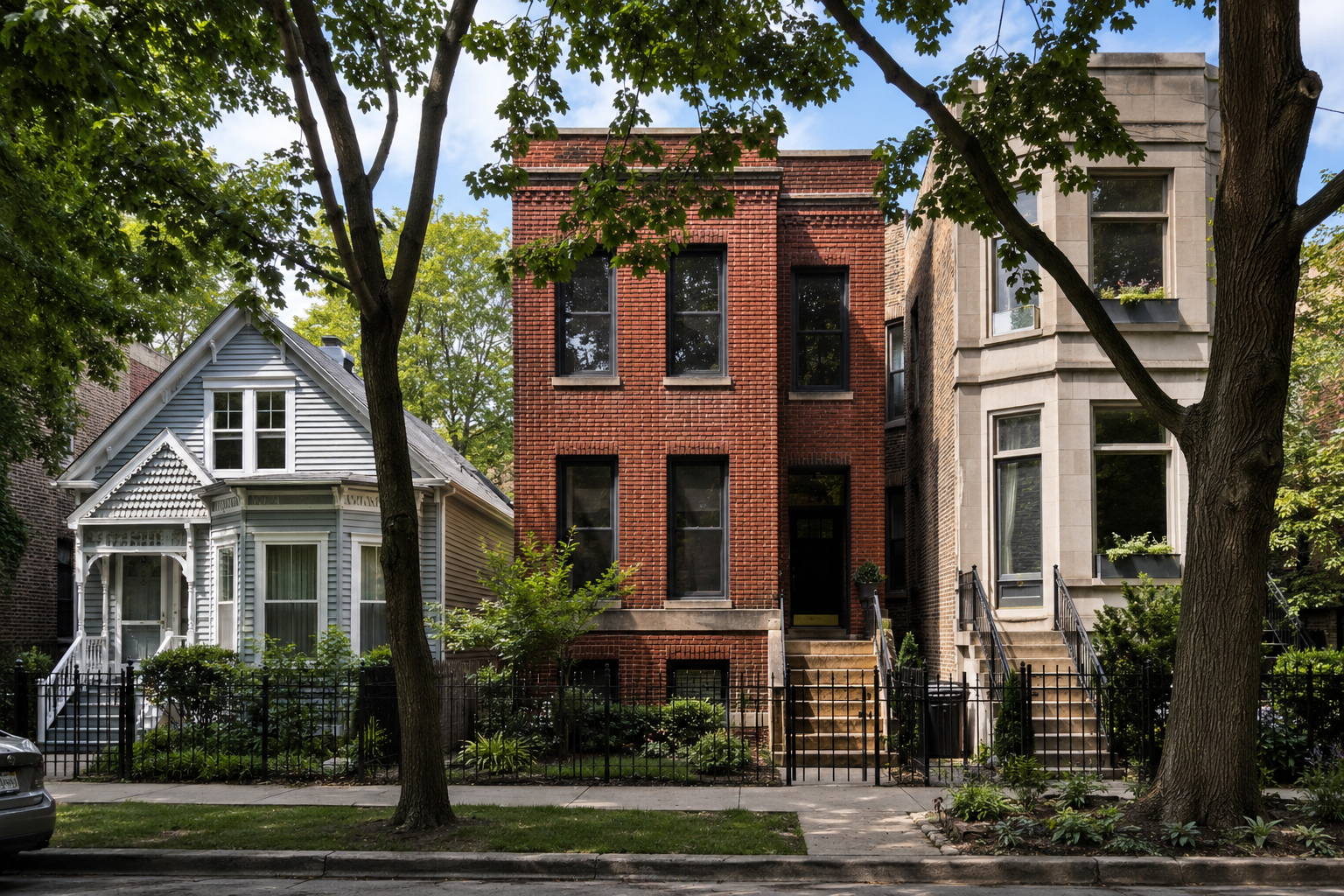
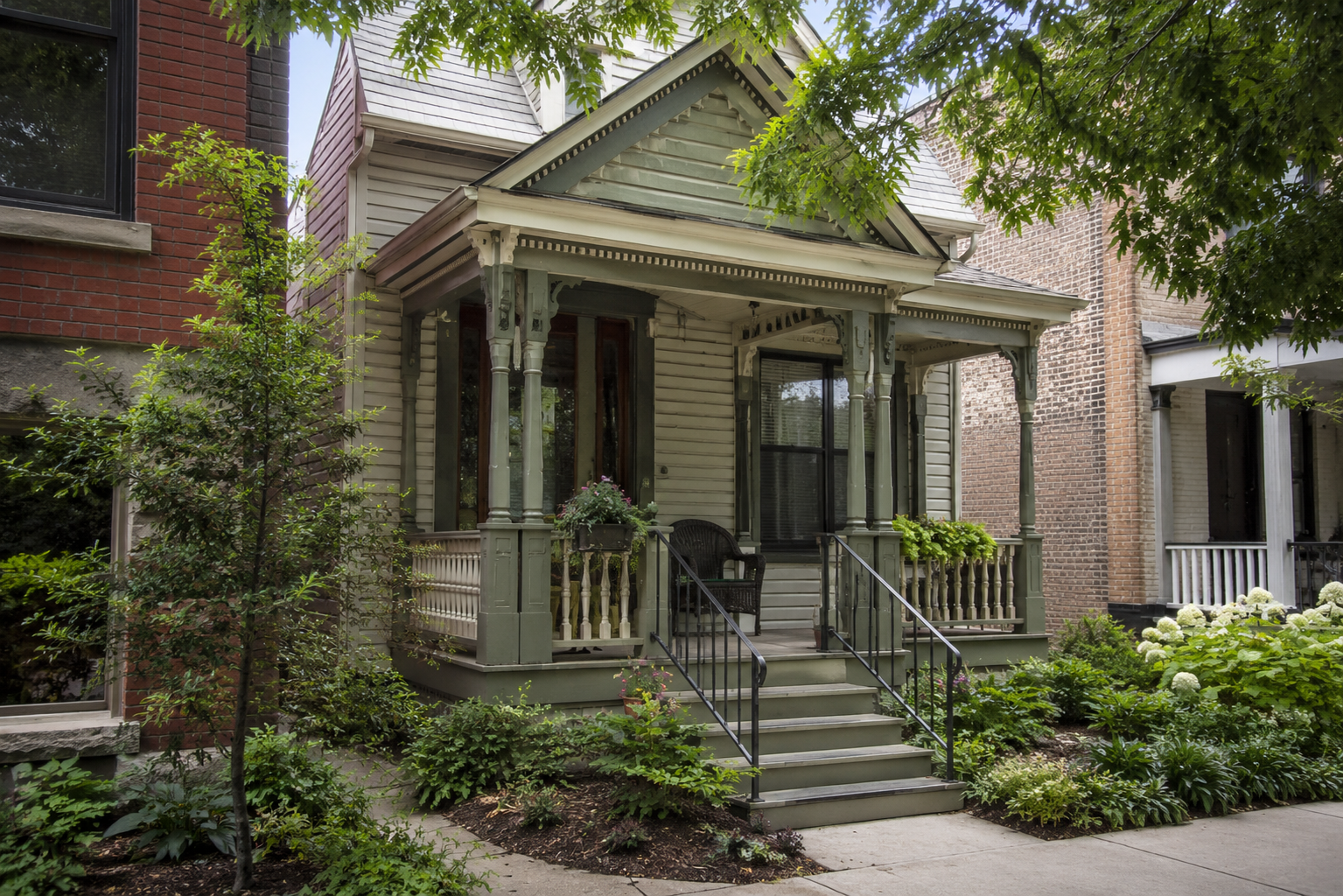
Roscoe Village is a neighborhood on Chicago's North Side, roughly five miles from the Loop, inside the North Center community area. It is not itself one of the city's 77 official community areas, which is why its boundaries come from the neighborhood rather than from City Hall. Roscoe Village Neighbors, the residents association that has served the area for more than thirty years, defines it as bounded by Addison Street on the north, Belmont Avenue on the south, Ravenswood Avenue on the east, and the Chicago River on the west. Its ZIP codes are 60618 and 60657, and Redfin puts the population at roughly 14,400. The nickname you will hear everywhere, from the residents association to the chamber of commerce, is the Village Within the City, and it is earned rather than marketed: the neighborhood is genuinely compact, almost entirely low-rise, and organized around a single walkable commercial street, Roscoe Street between Damen and Western Avenues.
The market here is small, tight, and volatile in a way that makes any single figure unreliable. Recent Redfin data showed a median sale price around $694,000, down 11.0 percent year on year, at about $395 per square foot, which was up 6.8 percent over the same period, with 34 days on market and 19 homes sold in the month. A median falling while price per square foot rises is a change in what is selling rather than a fall in value, and with roughly 19 to 21 sales a month one large or small transaction moves the number. The spread across sources underlines the point: a separate analysis citing the same source reported a median nearer $908,000 with homes selling around 5 percent above list. What holds steady is the gap between property types. Condominium inventory has recently listed at a median around $569,000 to $575,000, townhouse inventory nearer $897,000, and detached single-family homes above that, with historical single-family medians in the $1.2 million to $1.3 million range. Ask about the property type before you ask about the neighborhood.
The housing stock is what makes Roscoe Village feel different from the higher-density neighborhoods east of it. It is overwhelmingly low-rise: frame workers cottages, brick two-flats and three-flats, greystones, and a steady supply of gut rehabs and new-construction single-family homes on standard Chicago lots, with condominiums concentrated in conversions and small buildings along Belmont, Addison, and the commercial edges. Original detail survives at an unusual rate here, with stained glass, hardwood, and front porches common, partly because the neighborhood organized early around preserving its scale. Roscoe Village Neighbors has maintained a formal statement of principles on land use and zoning since 2001, updated in 2008 and again in 2019, which is the sort of institutional continuity that shows up in a streetscape decades later. For buyers, the practical consequence is that new construction here has to fit rather than dominate, and that the neighborhood has not been reshaped by high-rise development the way parts of Lakeview and Lincoln Park have.
Carrie McCormick has sold Chicago real estate since 1999, has closed more than $3.5 billion in career sales, and works across the North Side including Lincoln Park, Lakeview, and the Southport Corridor. She is ranked in the top 1 percent of brokers by the Chicago Association of Realtors, holds the association's Gold and Platinum awards, and is the recurring luxury real estate expert on NBC 5 Chicago's Emmy-nominated series Open House Chicago. In a market this small, comparable selection is most of the job. Nineteen sales a month means a seller may have only three or four genuinely similar closings to price against, and choosing the wrong ones is expensive in both directions. A cottage that has been gut rehabbed and one that has not are different products at the same address type. A condominium in a three-flat conversion and one in a newer elevator building on Belmont attract different buyers. And a blended neighborhood median that has moved 11 percent while price per square foot moved the other way will mislead anyone who relies on it. Whether you are buying a first condominium, a cottage to renovate, or a finished new-construction house, call 312-961-4612.
The commercial spine runs along Roscoe Street between Damen and Western, and it is genuinely small-scale: low-rise storefronts, sidewalk seating, independent restaurants and shops, and almost no chain retail. Most daily errands, coffee runs, and dinners happen within a few blocks on foot, which is what the Village Within the City nickname actually refers to.
Roscoe Village Neighbors has served the area for more than thirty years and has maintained written land-use and zoning principles since 2001, updated in 2008 and 2019. The result is visible: new construction here fits the existing scale rather than replacing it, and the frame cottages, two-flats, and greystones that define the streets are still standing.
The Roscoe Village Burger Fest runs each July and reached its nineteenth year in 2026, with eleven Chicago restaurants competing across a weekend at Belmont and Damen. Retro on Roscoe follows with three stages, antique and classic car shows, and vintage vendors across six blocks. Both are run for the neighborhood rather than at it, and the proceeds go back into local organizations.
Roscoe Village has real single-family stock, from unrenovated workers cottages to finished new construction, on standard Chicago lots five miles from the Loop. Detached houses sit above the townhouse and condominium tiers, but the range means a first-time buyer and a family trading up can both find something without leaving the neighborhood.
Hamlin Park sits at the southern edge with a pool, baseball and soccer fields, basketball and tennis courts, a playground, and a fieldhouse, and it functions as the neighborhood back garden. To the west, the Chicago River, Clark Park, and the WMS Boathouse open onto the 312 RiverRun path, which is a genuinely underused amenity for a neighborhood this central.
Audubon Elementary and Bell Elementary serve parts of the area by address, Coonley and Blaine are within easy reach, and Lane Tech College Prep, the largest high school in Illinois, sits at Addison and Western on the neighborhood's northwestern corner. Lane Tech admits city-wide by test rather than address, but having it here still anchors the blocks around it.
Roscoe Village is small enough to walk end to end in about twenty minutes, so buyers here navigate by cross street rather than by sub-neighborhood. Five stretches behave differently on housing type, price, and noise, and the differences matter on a single offer. Ranges below reflect typical recent activity and are a general guide rather than a valuation.



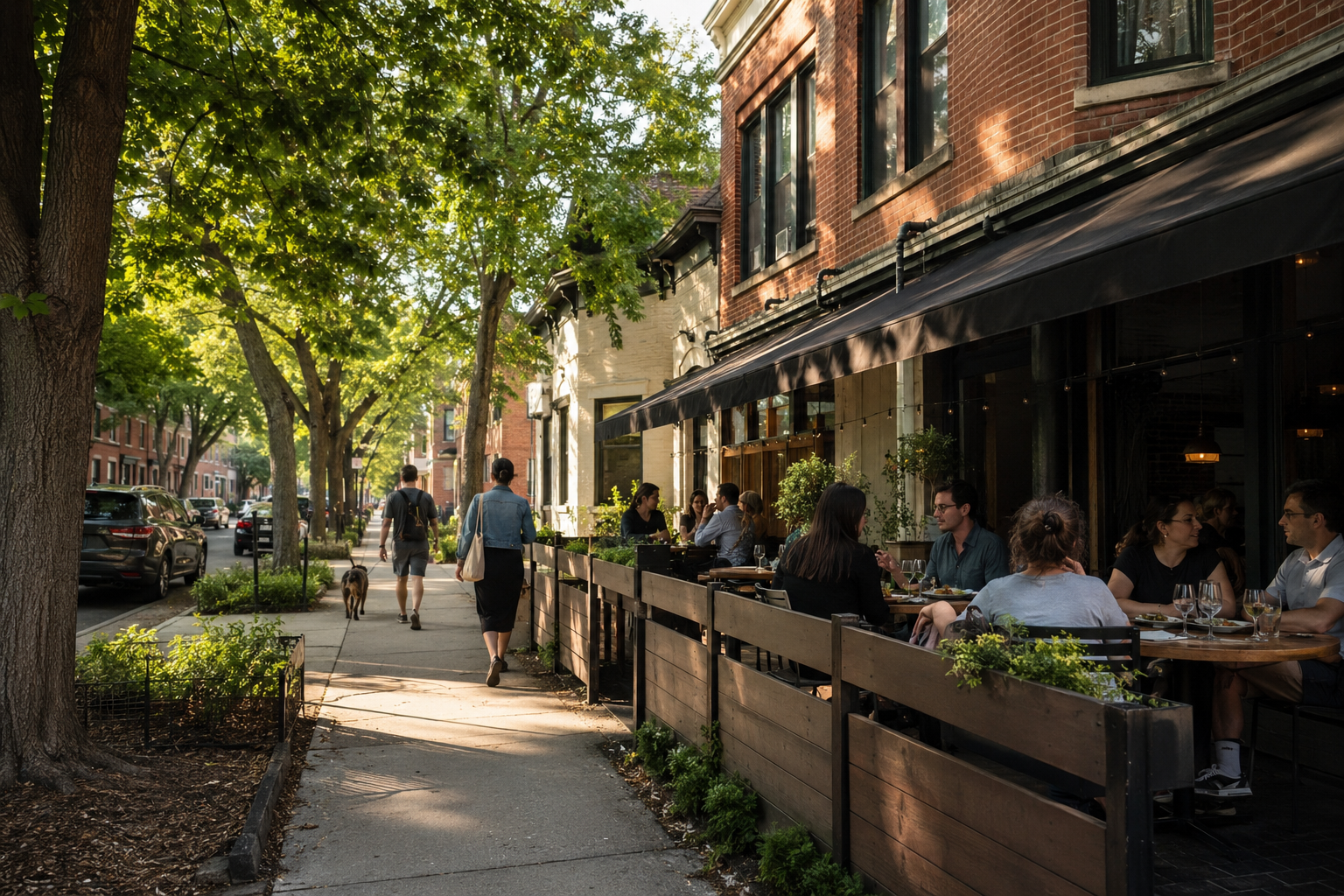
Almost everything happens on six blocks of Roscoe Street between Damen and Western, and the mix is unusually independent for a Chicago commercial strip this close in.
Volo Restaurant Wine Bar at 2008 W. Roscoe Street has been open more than twenty years, serving small plates and an approachable wine list from a year-round patio that is one of the better ones in the neighborhood.
Turquoise Restaurant at 2147 W. Roscoe Street is the neighborhood's long-standing Turkish room, with the Bordeaux Lounge wine bar next door.
Le Sud at 2301 W. Roscoe Street covers French Mediterranean cooking in a contemporary setting, and Amor y Tequila at 2118 W. Roscoe Street handles homestyle Mexican.
The Region Handcrafted Hamburgers at 2057 W. Roscoe Street opened in 2017 and has been named best burger in Chicago by Chicago magazine, and Kitsch'n on Roscoe serves comfort food and brunch in a room built around 1970s kitsch.
The Village Tap on West Roscoe Street is the neighborhood gastropub, known for its craft beer list and its beer garden, and The Stop Along is the local tavern that swept both the People's Choice and Critic's Choice awards at the 2025 Burger Fest and took the title again in 2026.
For everyday needs, Lush Wine and Spirits sits at 2232 W. Roscoe Street and Levant Coffee Bar at 2256 W. Roscoe, in the space that was previously Dip and Sip Donuts.
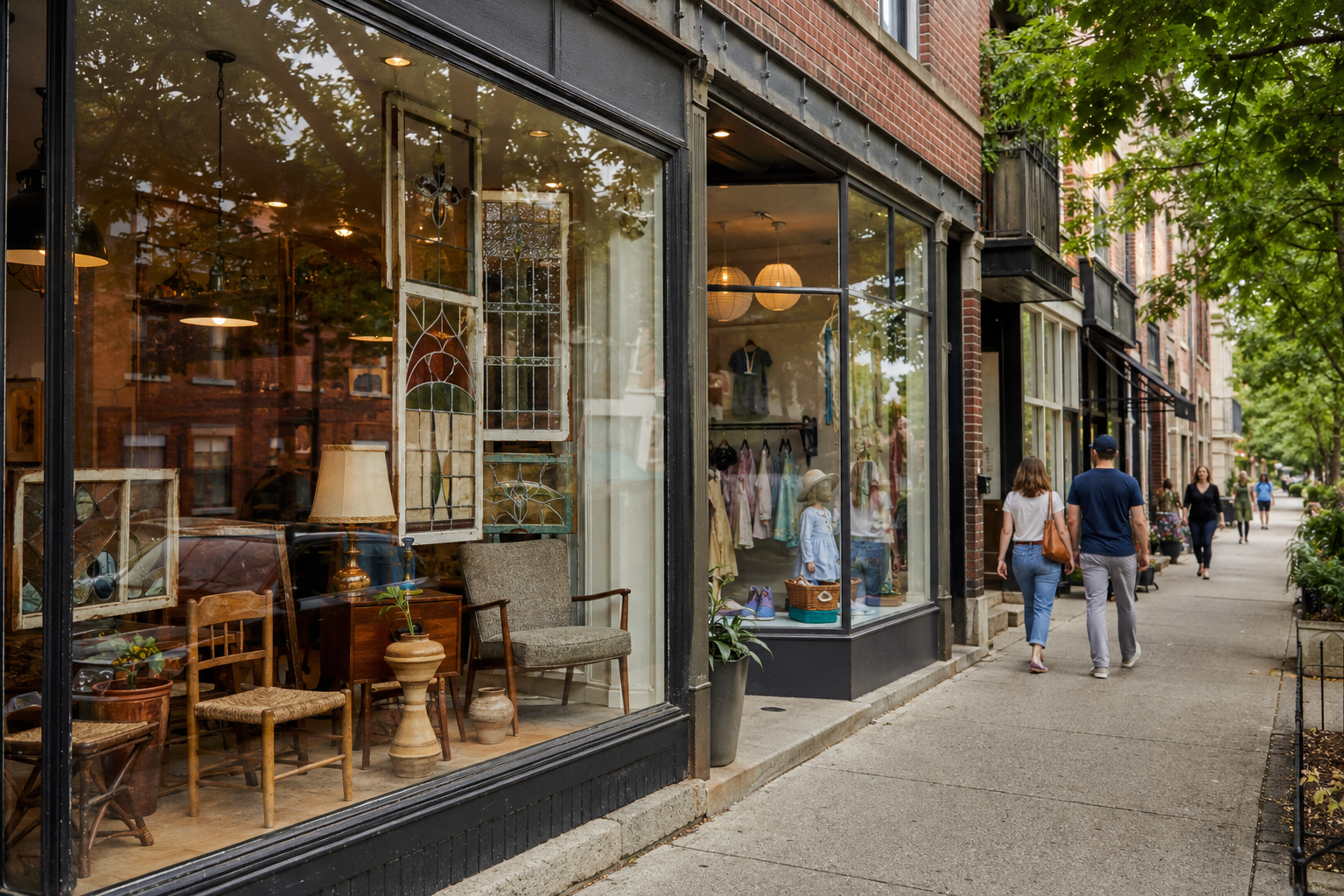
Roscoe Village's retail is small-scale and largely independent, running along Roscoe Street with a second cluster on Belmont Avenue. Long-standing names include Good Old Days Antiques for salvaged stained glass and vintage furniture, Cinnamon Boutique for women's clothing, and Twinkle Twinkle Little One for children's items. One point of accuracy is worth making, because competitor pages repeat it: the stretch of Belmont between Damen and Western was for years described as Antique Row and as holding the largest concentration of antique shops in the Midwest. That claim is decades old and no longer reflects the street. Antique and vintage retail does survive here, and it remains part of the neighborhood's identity through Retro on Roscoe's vendor market, but a buyer arriving expecting a five-block antiques district will be disappointed. What Roscoe Village actually offers is a walkable independent shopping street rather than a specialist destination.
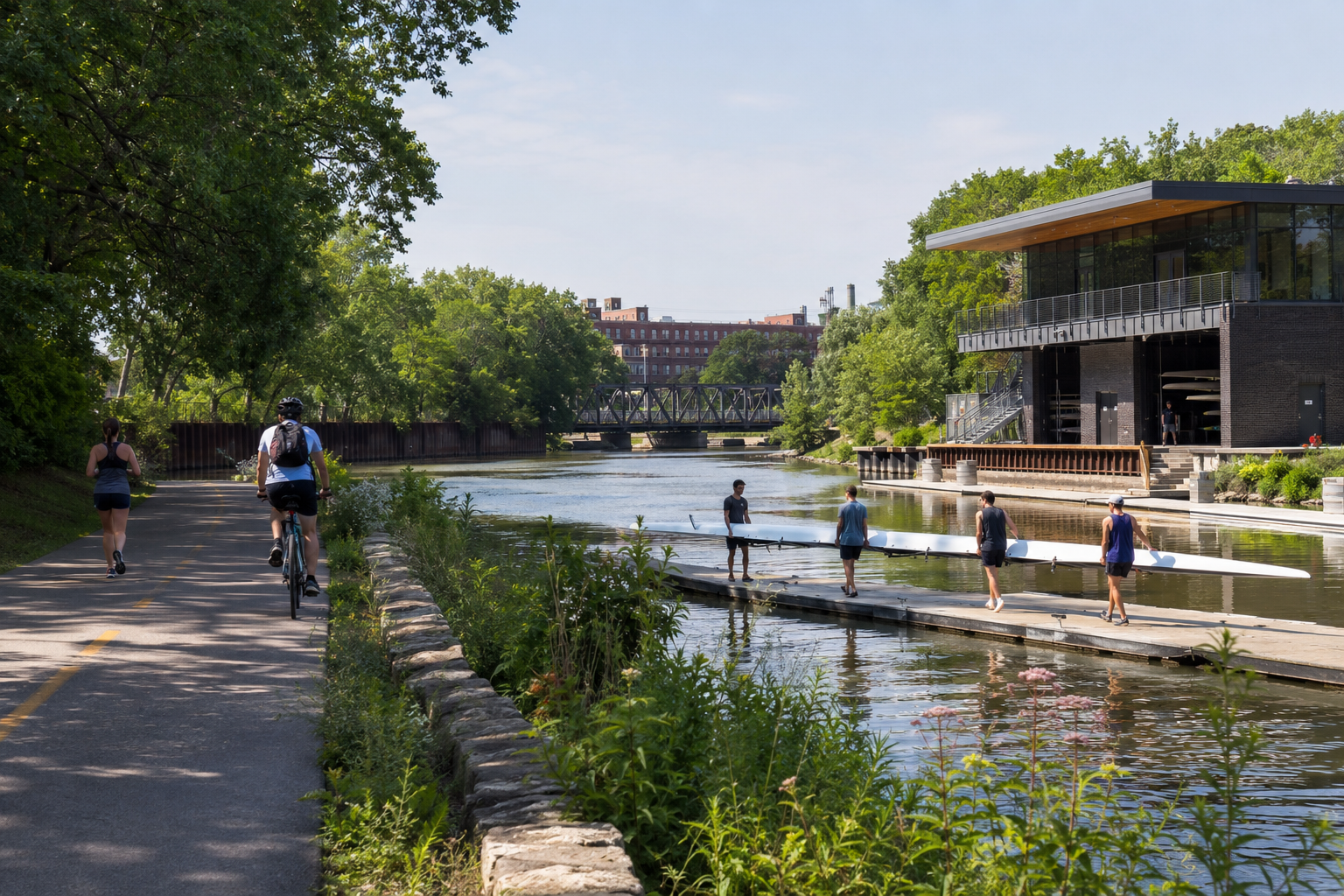
Hamlin Park anchors the southern side of the neighborhood with a swimming pool, baseball and soccer fields, basketball and tennis courts, a playground, and a fieldhouse, and for most residents it substitutes for a private yard. To the west, Clark Park and the WMS Boathouse sit on the Chicago River at Rockwell Street, opening onto the 312 RiverRun multi-use path, which is a genuine and underused amenity for a neighborhood this central. The two festivals define the neighborhood calendar. The Roscoe Village Burger Fest reached its nineteenth year in 2026, running from 17 to 19 July at Belmont and Damen with eleven Chicago restaurants competing, two music stages, and a kids' zone, with a $10 suggested gate donation benefiting the Lakeview Roscoe Village Chamber of Commerce. Retro on Roscoe, run by Roscoe Village Neighbors, spreads three stages across six blocks with vintage vendors and an antique and classic car show, with the 2026 edition scheduled for 18 to 20 September. A weekly farmers market and a neighborhood Porchfest round out the calendar.
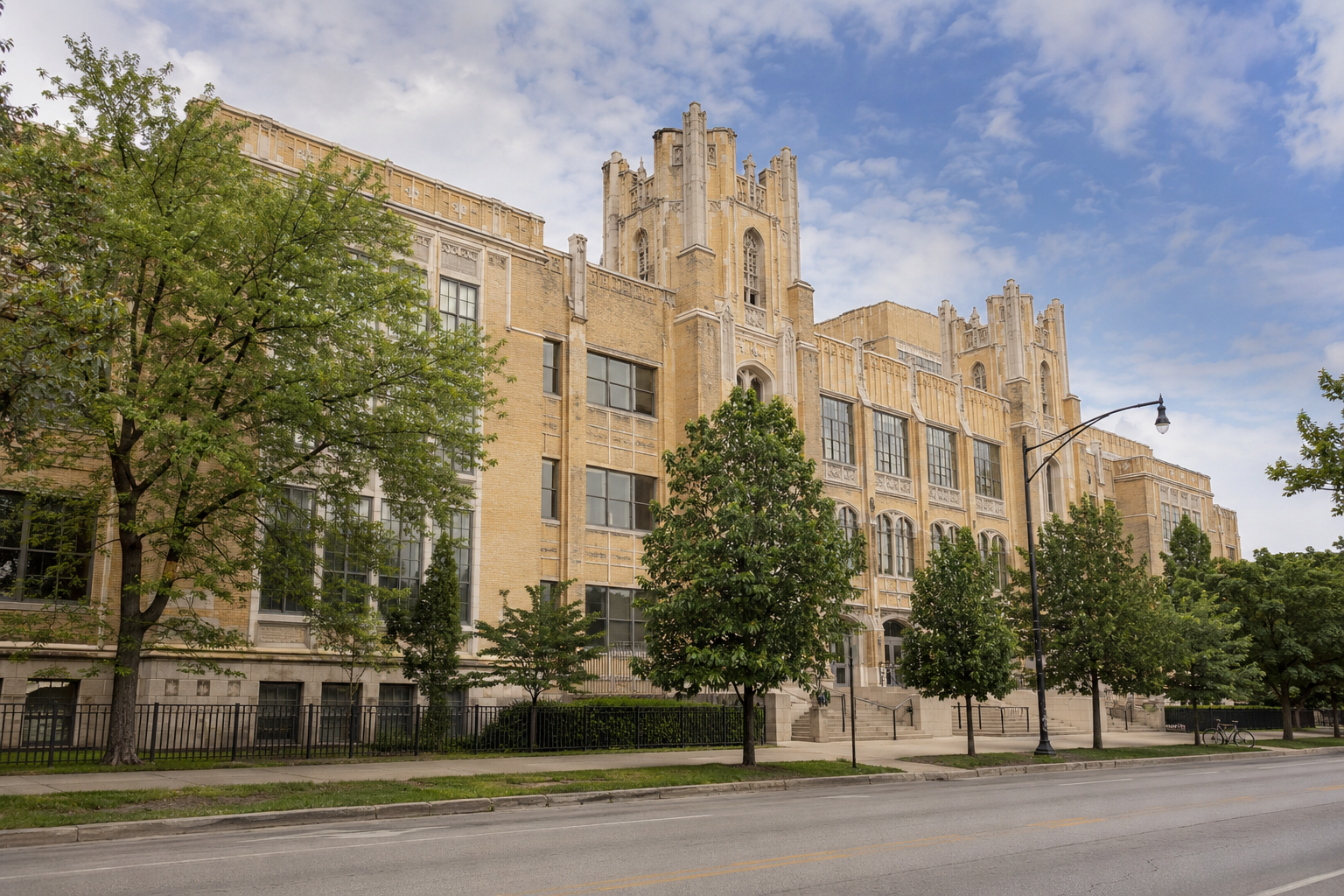
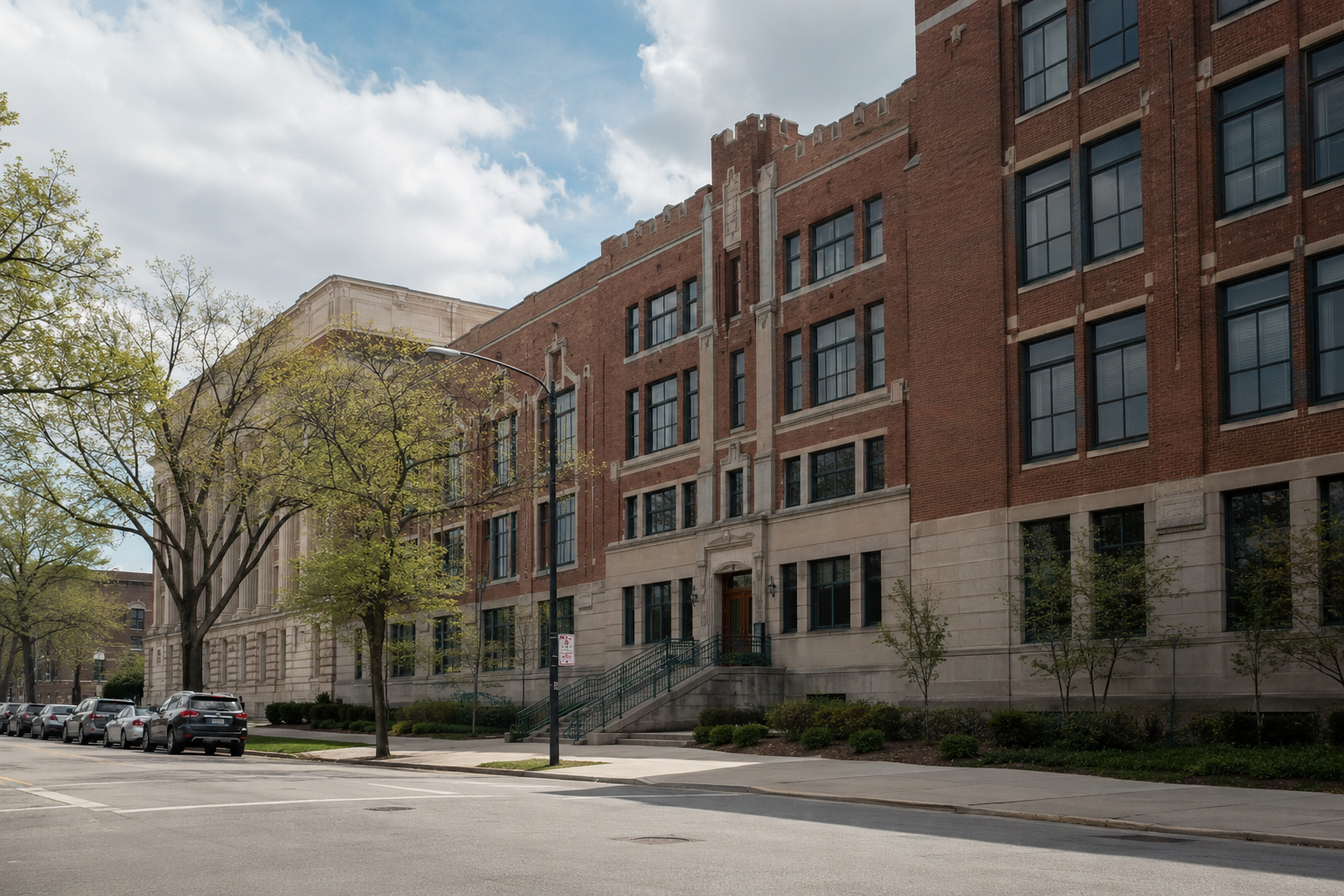

Roscoe Village is served by a single school district, Chicago Public Schools, formally City of Chicago School District 299. Because the neighborhood is small and sits inside a larger community area, it does not have one school of its own. Several attendance areas cross it, and which one applies depends on the address rather than the neighborhood, so verification at address level matters more here than a general answer ever will.
Audubon Elementary on North Hoyne Avenue and Bell Elementary on North Oakley Avenue are the two most commonly referenced attendance-area schools for Roscoe Village addresses, and both are well regarded locally. Bell is covered in detail on the North Center page, where it serves a large part of that community area and operates a Regional Gifted Center and a citywide program for deaf and hard-of-hearing students alongside its neighborhood program. Coonley Elementary and Blaine Elementary are also within easy reach for some addresses, and Blaine is covered on the Southport Corridor page. Because four different schools are referenced for a neighborhood of roughly fourteen thousand people, the only reliable approach is to confirm the catchment for a specific address with the Chicago Public Schools locator before it factors into a purchase.
Lane Tech College Preparatory High School sits at 2501 W. Addison Street, on the neighborhood's northwestern corner, and is the largest high school in Illinois with more than 4,600 students on a 33-acre campus. It opened in 1908, runs the largest Advanced Placement program in the city with near-universal participation, and has a 96 percent graduation rate, making it one of the strongest public high schools in the city. The distinction that matters is the same one that applies to every selective-enrollment school in Chicago: Lane Tech admits city-wide by test score and the district's tier system, not by address. Living across the street from it confers no admissions advantage. It anchors the blocks around it and it is a genuine neighborhood asset, but it is not a catchment school.
For families who do not secure a selective-enrollment place, Lake View High School is the neighborhood attendance-area high school for parts of this area and is a STEM school, with Advanced Placement and dual-credit options through its early college program. On the independent side, St. Benedict Preparatory School in North Center is the nearest Catholic option, and families here also look toward Francis W. Parker School in Lincoln Park, the Latin School of Chicago in the Gold Coast, and Chicago City Day School in Lakeview. Between the attendance-area schools, the selective and magnet programs, and the independent options within a short distance, Roscoe Village families generally have more paths available than the size of the neighborhood would suggest.
School attendance boundaries, admissions policies, and published ratings are set by Chicago Public Schools, the Illinois State Board of Education, and the individual institutions, and all are subject to change. Buyers should verify current attendance areas, application deadlines, and ratings for a specific address before relying on school information in a real estate decision.
Development accelerated with Potter Palmer's mansion in 1882.
Encompasses the historic core alongside the 60611 district.
Consisting of roughly 5,600 households averaging two people.
Historically one of America's wealthiest urban enclaves.
Neighborhood entry point, driven heavily by vintage condominium volume.
The current baseline for standard attached housing stock.
Set in 2017 by the purchase of the top four floors at No. 9 Walton.
The neighborhood's largest single source of high-rise inventory.
With a median asking price currently hovering near $585,000.
The average market pace alongside ~45 monthly closings.
Connected directly to the trail via Oak Street Beach.
Direct access via two CTA train stops and four major bus routes.
Navigating Chicago's Gold Coast luxury real estate market requires unparalleled expertise. Here is what you need to know before we begin.
Ask A QuestionRoscoe Village is on Chicago's North Side about five miles from the Loop, inside the North Center community area. Because it is a neighborhood rather than one of the city's 77 official community areas, its boundaries come from the neighborhood itself. Roscoe Village Neighbors, the residents association that has served the area for more than thirty years, defines it as Addison Street on the north, Belmont Avenue on the south, Ravenswood Avenue on the east, and the Chicago River on the west. Its ZIP codes are 60618 and 60657. Two qualifications are worth knowing. Some people informally treat Western Avenue as the western edge rather than the river, and the commercial strip is often described more narrowly as Roscoe Street between Damen and Western, which is a shopping district rather than the neighborhood.
North Center. Roscoe Village sits inside the North Center community area, alongside Northcenter proper, St. Ben's, and Hamlin Park. Lakeview is the community area immediately east, and the two meet at Ravenswood Avenue, which is why listings on Roscoe Village's eastern blocks are sometimes marketed as West Lakeview. Both labels can be defensible near the line depending on which definition an agent uses, but the community area boundary is Ravenswood and it does not move. This matters more than it sounds, because it affects which comparable sales an appraiser is likely to use and which school attendance lookups apply. Check the cross streets rather than the neighborhood name on a listing sheet.
Ask about the property type, because the neighborhood median is unusually unreliable here. Roscoe Village closes only about 19 to 21 homes a month, so a single large or small sale moves the number, and published figures disagree: recent Redfin data showed a median around $694,000, down 11.0 percent year on year, while a separate analysis citing the same source reported nearer $908,000. Note also that while the median fell, price per square foot rose 6.8 percent to about $395, which indicates a change in what is selling rather than a fall in value. The property-type gap is far steadier. Condominium inventory has recently listed at a median around $569,000 to $575,000, townhouses near $897,000, and detached single-family homes above that, with historical single-family medians running $1.2 million to $1.3 million.
Because it behaves like one. The neighborhood is compact enough to walk end to end in about twenty minutes, almost entirely low-rise, and organized around a single independent commercial street, Roscoe Street between Damen and Western, where most residents do their everyday errands on foot. The nickname is used by the residents association, the Lakeview Roscoe Village Chamber of Commerce, and local brokerages alike, so it is a genuine local identity rather than marketing language. It also reflects something structural: Roscoe Village Neighbors has maintained written land-use and zoning principles since 2001, updated in 2008 and 2019, which is part of why the low-rise scale and the nineteenth-century housing stock survived when denser development reshaped neighborhoods nearby.
Not in the way the phrase suggests, and this is worth correcting because it still appears on neighborhood guides. For years the stretch of Belmont between Damen and Western was described as Antique Row and as holding the largest concentration of antique shops in the Midwest. That description is decades old and no longer reflects the street. Antique and vintage retail does survive in Roscoe Village, notably at Good Old Days Antiques, and the tradition continues through Retro on Roscoe, the neighborhood festival built around vintage vendors and a classic car show. But a buyer arriving expecting a five-block antiques district will not find one. What Roscoe Village genuinely offers is a walkable independent shopping and dining street on Roscoe, with a second smaller commercial cluster on Belmont.
The neighborhood is served by one district, Chicago Public Schools District 299, and it does not have a single school of its own. Several attendance areas cross it: Audubon Elementary on North Hoyne and Bell Elementary on North Oakley are the two most commonly referenced, with Coonley and Blaine reachable from some addresses. Because four schools are referenced across a neighborhood of roughly fourteen thousand people, the catchment genuinely depends on the address and needs checking with the Chicago Public Schools locator. For high school, Lane Tech College Prep sits at Addison and Western on the neighborhood's corner and is the largest high school in Illinois, but it admits city-wide by test score and tier rather than by address, so living beside it confers no advantage. Lake View High School is the attendance-area high school for parts of the area.
It is one of the more family-oriented neighborhoods on the North Side, and the reasons are practical rather than atmospheric. The housing stock includes genuine single-family homes and two-flats with yard space at prices below Lincoln Park. Hamlin Park provides a pool, athletic fields, courts, and a fieldhouse that functions as a shared back garden for much of the neighborhood. The commercial street is walkable and quiet in the evenings rather than a nightlife destination. The two annual festivals are organized by neighborhood groups and include dedicated kids' areas. The trade-offs are worth naming too: the neighborhood has no school of its own, catchments vary by address, and inventory is thin enough that families often wait for the right house rather than choosing between several.
They are neighbours and they overlap, so the distinctions are worth being precise about. North Center is the community area that contains Roscoe Village, and it is larger, includes Northcenter proper with its own commercial core at Lincoln, Damen, and Irving Park, and carries one of Chicago's most active new-construction single-family markets. Lakeview is the community area immediately east, far larger and more varied, running from Wrigleyville to the lakefront. The Southport Corridor sits inside Lakeview and is the closest comparison to Roscoe Village in character, another compact walkable retail street with period housing behind it, though Southport is more expensive and more tightly held. Roscoe Village is the smallest and most self-contained of the four, and the one where the whole neighborhood is genuinely walkable from any address in it.
Carrie McCormick has sold Chicago real estate since 1999, has closed more than $3.5 billion in career sales, and works across the North Side including Lincoln Park, Lakeview, and the Southport Corridor. Under her "100 percent Carrie" model clients work directly with her from the first valuation through closing. In a market that closes only about nineteen homes a month, comparable selection is most of the job and there is little room for error. A seller here may have three or four genuinely similar closings to price against, and choosing the wrong ones costs money in both directions. A gut-rehabbed cottage and an original one on the same street are different products. A condominium in a three-flat conversion and one in a newer building on Belmont attract different buyers. And a blended median that moved 11 percent in one direction while price per square foot moved the other will mislead anyone relying on it. She is ranked in the top 1 percent of brokers by the Chicago Association of Realtors, holds the association's Gold and Platinum awards, is the recurring luxury real estate expert on NBC 5 Chicago's Open House Chicago, and works within the Christie's International Real Estate network. Call 312-961-4612.
Carrie McCormick has been selling Chicago real estate since 1999, with more than $3.5 billion in career sales and a practice spanning the North Side. In Roscoe Village that means workers cottages and greystones on the side streets, two-flats and conversions south toward Belmont, new-construction single-family homes, and condominiums along the commercial edges. Ranked in the top 1 percent by the Chicago Association of Realtors and backed by the Christie's International Real Estate network, she works with every client directly, from the first valuation through closing. To talk through a purchase, a sale, or a renovation project, call 312-961-4612 or email carrie@atproperties.com.