Homes for Sale in Old Town Chicago | Cottages to Condos
One of Chicago's best-preserved Victorian neighborhoods and the birthplace of modern American improv: narrow tree-lined streets of frame cottages and brick row houses north of North Avenue, the Wells Street corridor running south, and a landmark district that grew back from the ashes of the 1871 fire.
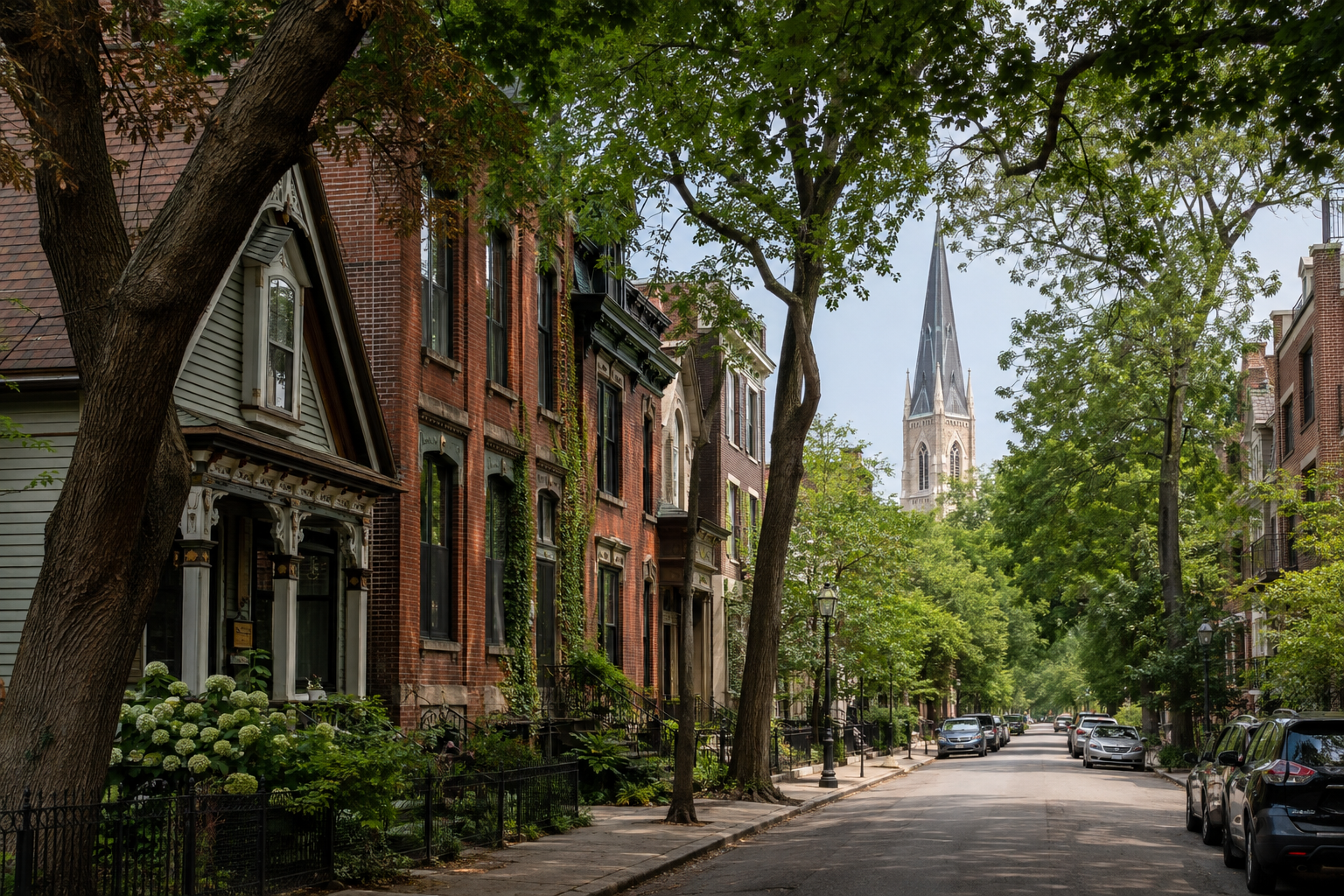
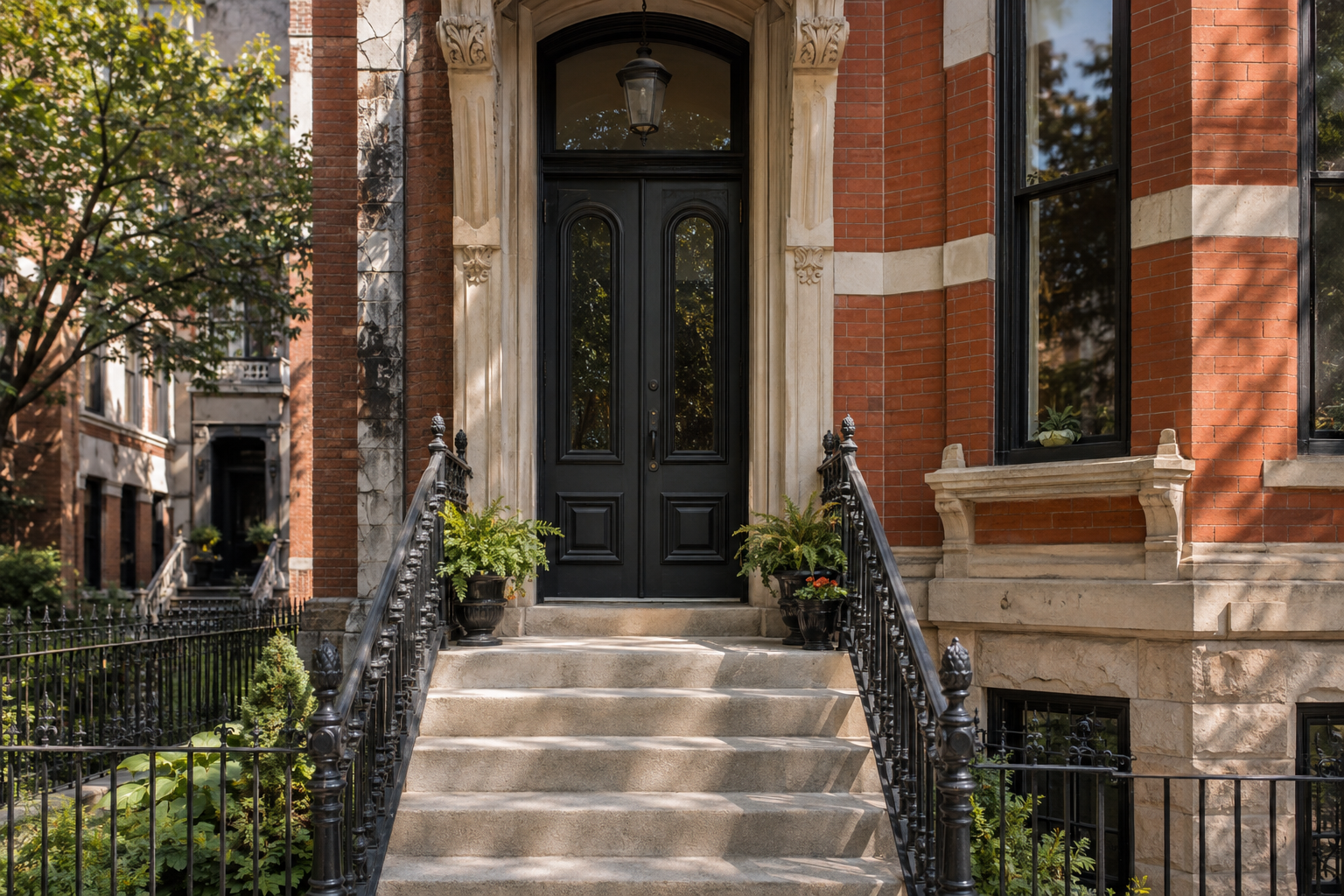
Old Town sits on Chicago's near North Side, roughly a mile and a half north of the Loop, centered on Wells Street and spanning both sides of North Avenue. Its ZIP codes are 60610 and 60614. The single most useful thing to understand about it is structural: Old Town is not one community area but two. The Old Town Triangle, the historic core, lies north of North Avenue inside the Lincoln Park community area, while the Wells Street commercial corridor running south toward Division Street lies inside the Near North Side. Boundaries beyond that are contested, with published definitions variously running north to Armitage Avenue, west to Halsted Street or Clybourn Avenue or Larrabee Street, east to Clark Street, and south to Division. The neighborhood was settled in the 1850s by German and Luxembourgish Catholic immigrants who farmed the marshy meadows north of North Avenue, planting celery, potatoes, and cabbage, which earned the area the nickname the Cabbage Patch. Their parish church, St. Michael's at 1633 N. Cleveland Avenue, was completed in 1869 and was briefly the tallest building in Chicago. The local saying is that if you can hear the bells of St. Michael's, you are in Old Town.
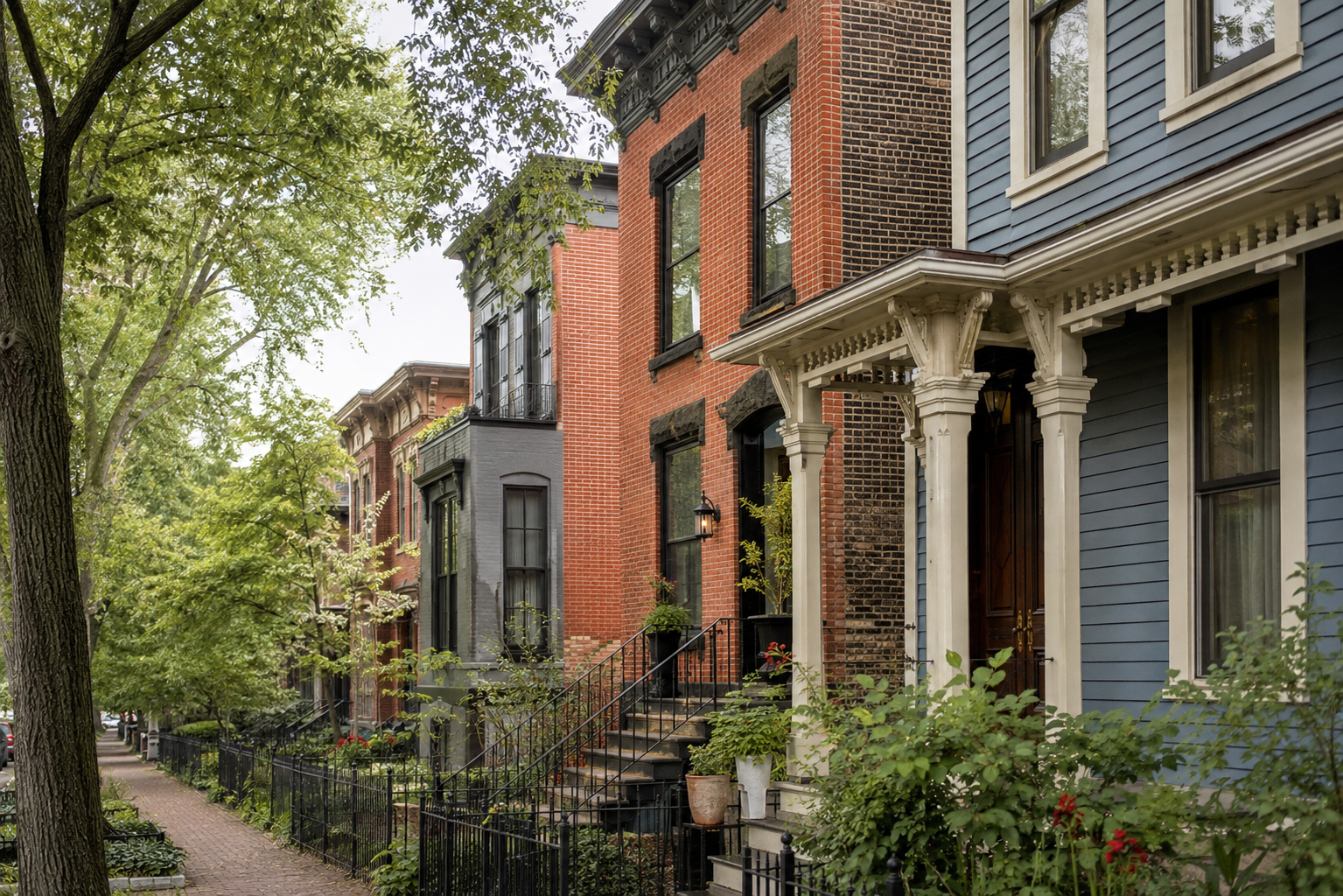
The Great Chicago Fire of 1871 destroyed almost everything here. St. Michael's stone walls survived and the church was rebuilt inside them, and it is commonly cited as one of seven buildings to survive within the fire's path, though heavily damaged. What went up afterwards is what buyers come for today: small frame workers cottages built in the years immediately after the fire, before a city ordinance banned further wood construction, and then brick and stone row houses and larger houses through the last decades of the nineteenth century. The Old Town Triangle District was designated a Chicago Landmark in 1977 and listed on the National Register in 1984, and the conservation effort behind it, begun by residents after the Second World War, is recognized as one of the earliest neighborhood preservation campaigns in the United States. That history is why the streets here are narrow, why the housing stock is genuinely old rather than merely old-looking, and why exterior alterations inside the district require review.
The market divides along the same line as the geography. Redfin, which tracks the Old Town Triangle rather than the whole neighborhood, reported a median sale price of about $415,000 for the three months ending March 2026, up 5 percent year on year, with homes selling in around 34 days and roughly 31 sales in March. Set against nearby downtown neighborhoods, 34 days is fast: Streeterville was running near 97 days and River North near 70 over comparable periods. Separately, single-family houses in Old Town have been reported at a median near $750,000, and the top of the market runs well beyond that for restored row houses inside the landmark district. Read those two figures as describing two markets. The condominium market, much of it in conversions and newer buildings along and near Wells Street, carries the volume and the more attainable pricing. The house market, concentrated in the Triangle and on the quiet streets around it, is thin, competitive, and constrained by landmark review, and it is where the scarcity premium sits.
Carrie McCormick has sold Chicago real estate since 1999, has closed more than $3.5 billion in career sales, and works across the neighborhoods on either side of Old Town, including Lincoln Park and the Gold Coast. She is ranked in the top 1 percent of brokers by the Chicago Association of Realtors, holds the association's Gold and Platinum awards, and is the recurring luxury real estate expert on NBC 5 Chicago's Emmy-nominated series Open House Chicago. Old Town rewards precision about small distances. Whether an address falls inside the landmark district determines what an owner can change to the exterior and how long approvals take. Which side of North Avenue it sits on determines its community area, its ward, and sometimes its school lookup. A cottage on a Triangle street and a condominium two blocks west are not comparable properties even at the same price. And a house here has to be priced against the handful of genuinely similar sales rather than a median drawn from a condominium-weighted sample. Whether you are buying a first condominium on Wells, a row house in the Triangle, or selling a property that needs the right comparable set, call 312-961-4612.
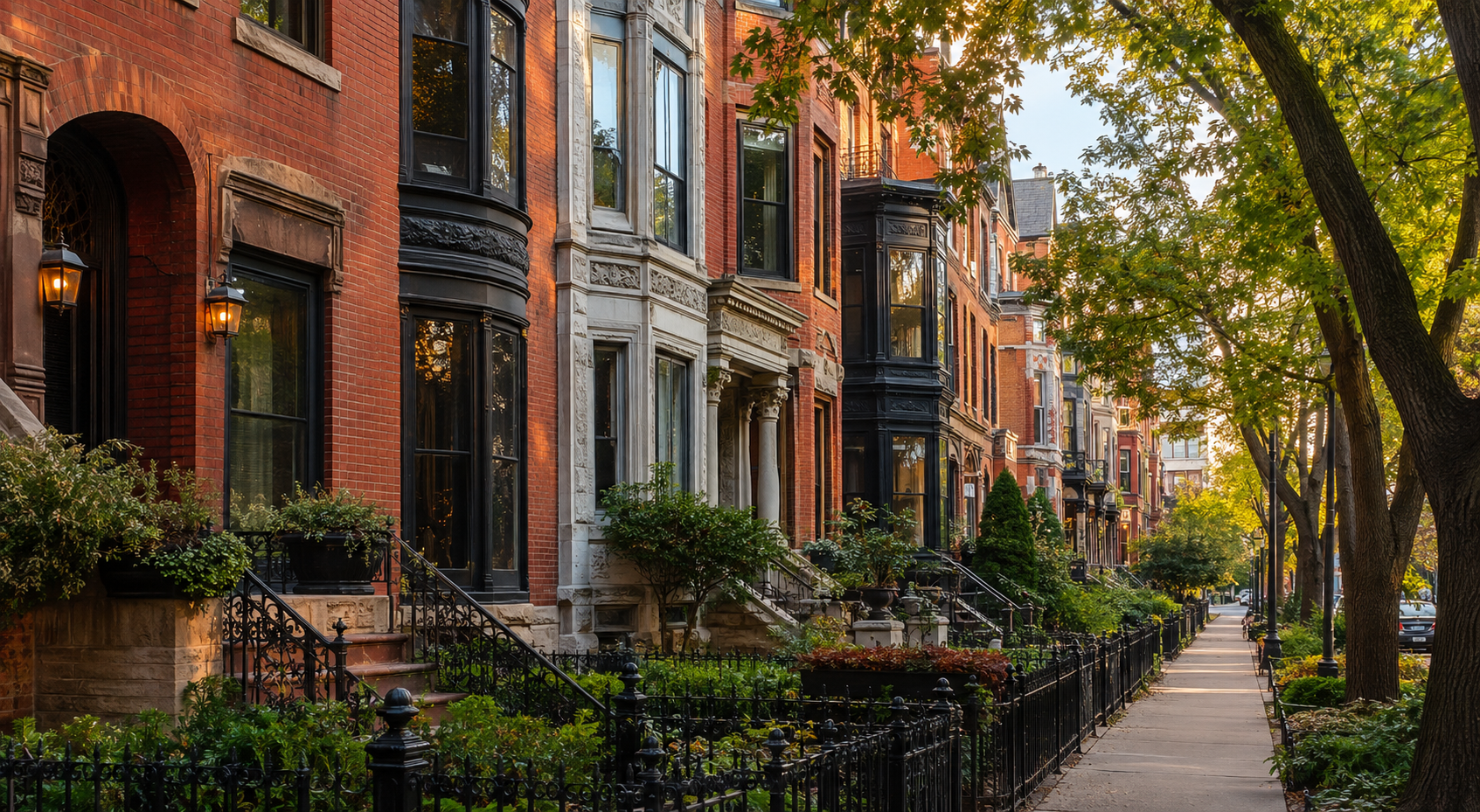
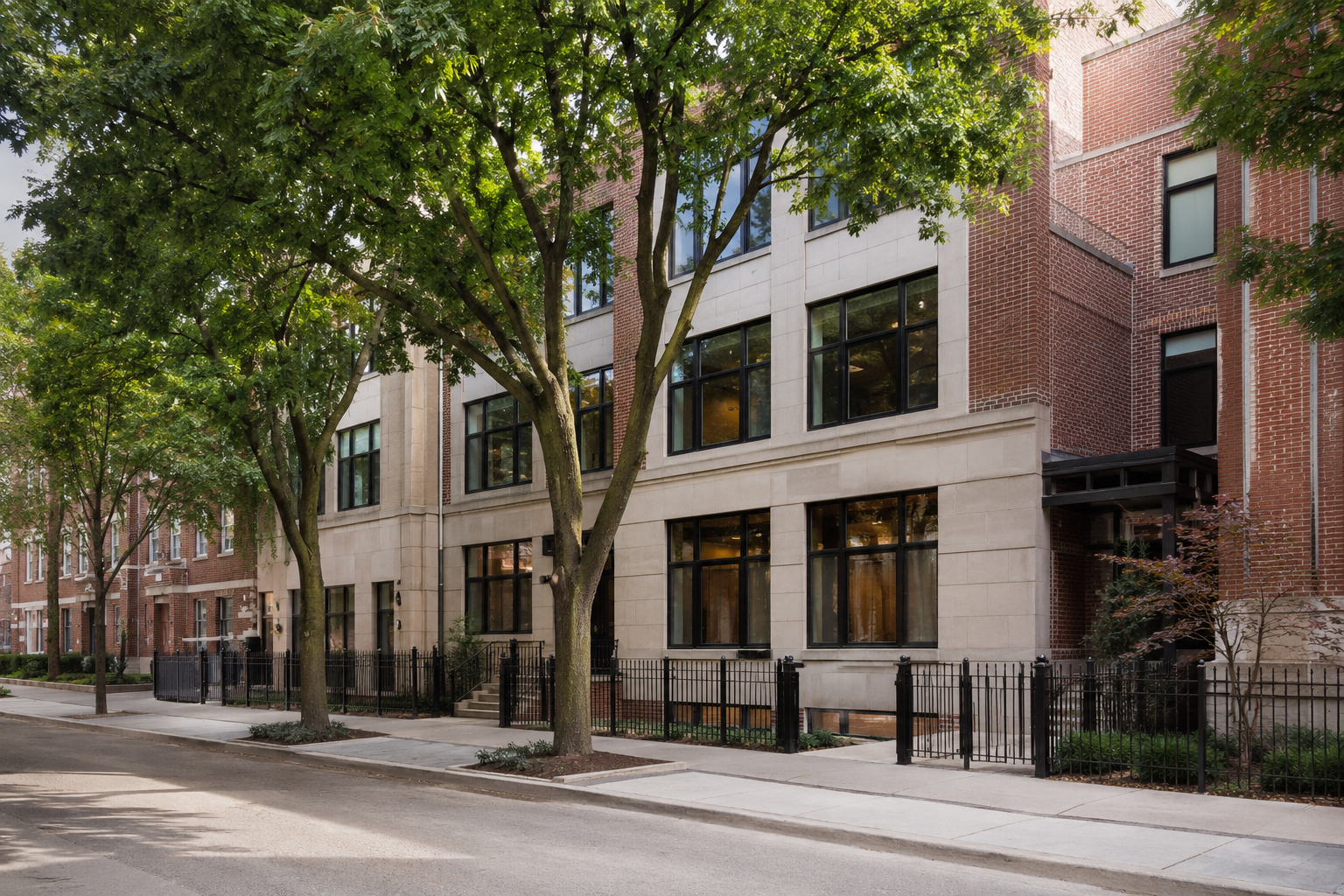
The Old Town Triangle holds one of the best-preserved concentrations of nineteenth-century residential architecture in the city: frame workers cottages built in the narrow window after the 1871 fire and before wood construction was banned, alongside Italianate and Queen Anne brick and stone row houses. The streets are narrow, the setbacks are shallow, and the tree canopy is mature.
The Second City opened in Old Town in December 1959, has been at 1616 N. Wells Street since 1967, and has launched Bill Murray, Gilda Radner, John Belushi, Mike Myers, Chris Farley, Tina Fey, Stephen Colbert, Amy Poehler, Steve Carell, and Keegan-Michael Key. Zanies has been booking stand-up two blocks south at 1548 N. Wells since 1978.
Wells is the neighborhood's spine and it works at a genuinely walkable scale: low-rise storefronts, independent restaurants and boutiques, comedy clubs, and old-school taverns, running from Division Street north to North Avenue and beyond. Very few Chicago neighborhoods this close to downtown have a commercial street that still feels local.
After the Second World War, Old Town residents organized one of the country's earliest neighborhood conservation campaigns, which is the reason the Triangle survived mid-century urban renewal largely intact and was designated a Chicago Landmark district in 1977. Buyers here are buying into a place that was deliberately saved.
Unlike Streeterville, River North, or the West Loop, Old Town has real single-family stock: frame cottages, brick row houses, and restored Victorians, with single-family medians reported near $750,000 and restored Triangle houses running well above. Being able to buy a house a mile and a half from the Loop is genuinely unusual.
Walter Payton College Preparatory High School sits at 1034 N. Wells Street, inside Old Town, and is consistently among the highest-ranked public high schools in the United States. It admits city-wide by test score and tier rather than by address, so proximity is not an advantage, but having it on your street is still a considerable neighborhood asset.
Old Town is small enough to walk end to end in twenty minutes, and the differences within it are sharp: landmark status, community area, housing type, and price all change within a few blocks. Six areas behave differently. Ranges below reflect typical recent activity and are a general guide rather than a valuation.
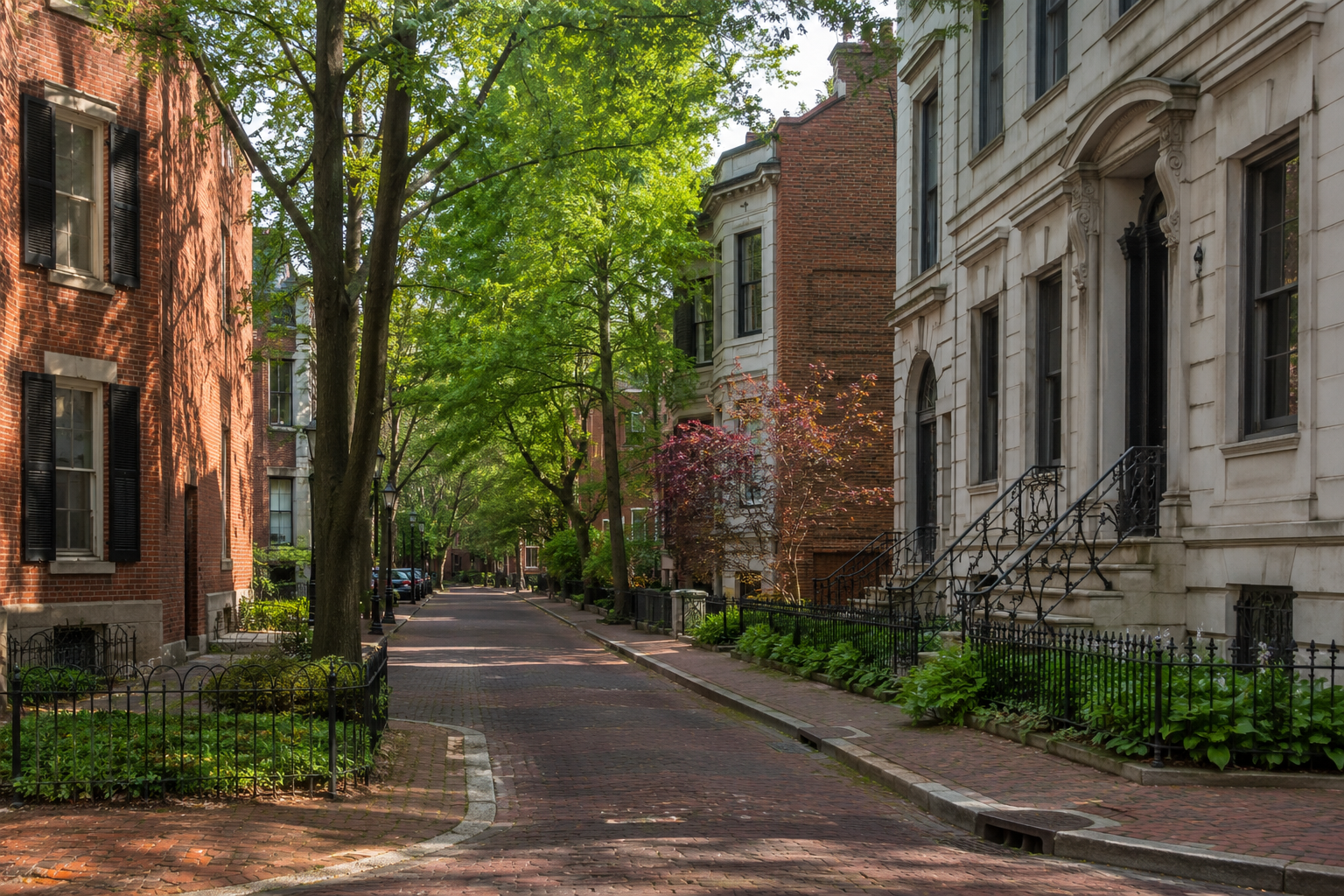

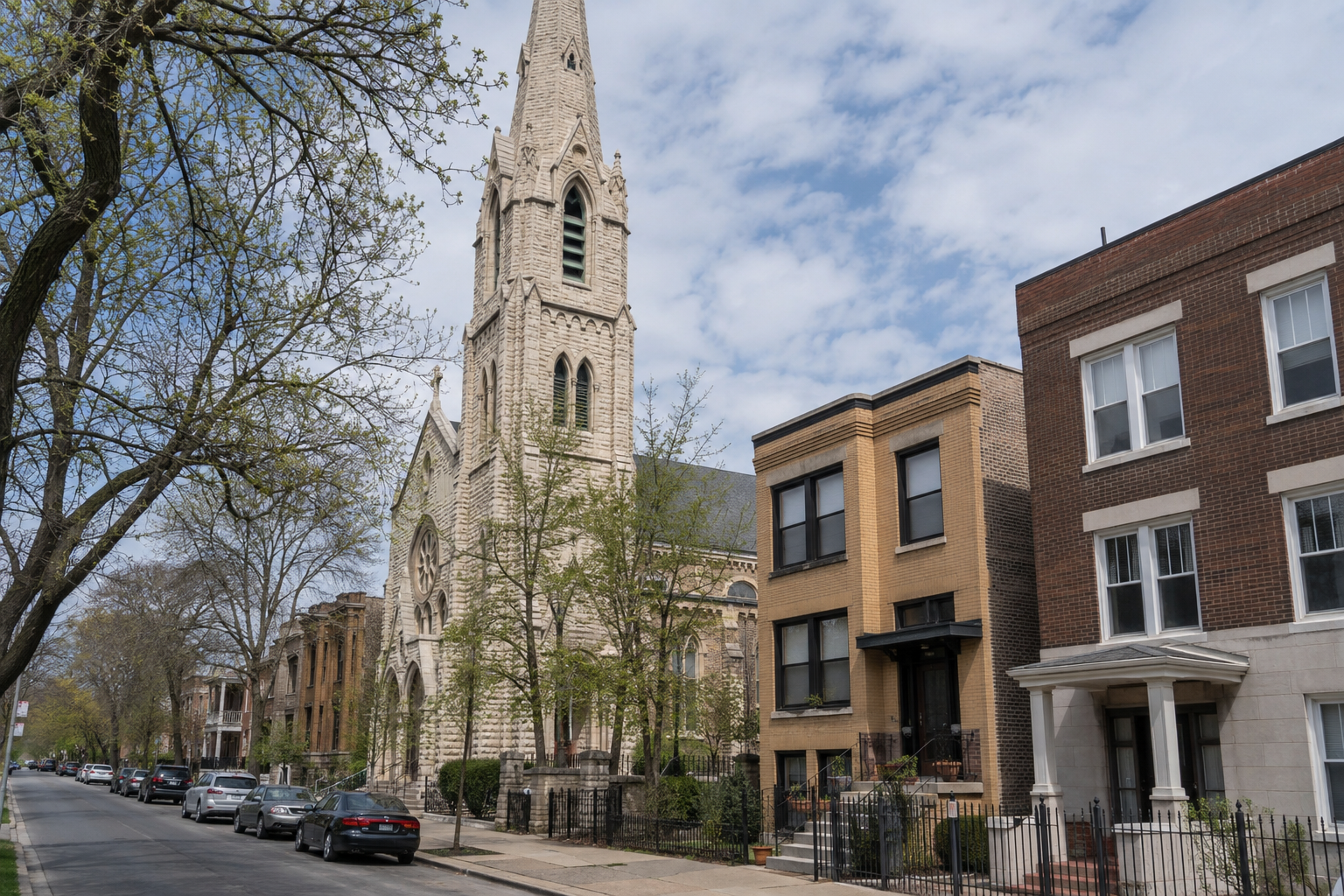


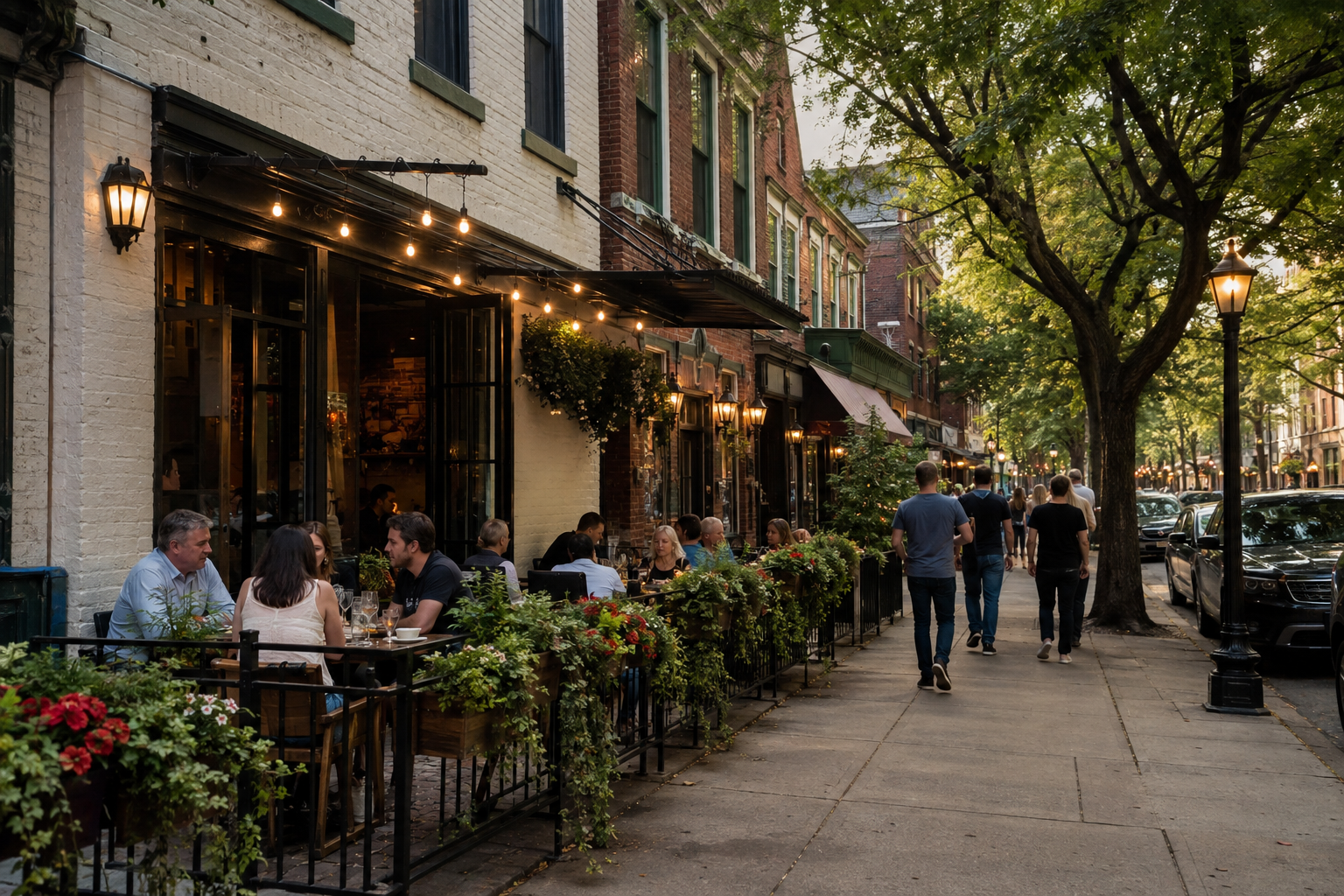
Wells Street is the commercial spine and it carries an unusually high proportion of long-standing independent businesses for a street this central.
Twin Anchors at 1655 N. Sedgwick Street is the neighborhood institution, a former speakeasy known for baby back ribs and for a room that has changed very little in decades.
Topo Gigio at 1516 N. Wells Street has served Tuscan-style Italian on the same block for years and keeps one of the better patios in the neighborhood.
Kamehachi at 1531 N. Wells Street has been serving sushi in Old Town for more than forty years, and the Old Town Ale House at 219 W. North Avenue is the dive bar across from Second City that generations of comedians have used as a green room.
For everyday eating, Nookies at 1746 N. Wells Street covers breakfast and brunch, and Happy Camper at 1209 N. Wells does classic and tavern-style pizza.

Old Town shops on Wells Street, which carries independent boutiques, home and gift retail, and specialty food at a genuinely walkable low-rise scale, though it is a neighborhood retail street rather than a destination like Oak Street or Armitage. Everyday needs are well covered, with a Mariano's on Clybourn Avenue, a Jewel-Osco at Division and Sedgwick, and a Target just outside the neighborhood at Division and Larrabee, with pharmacy counters inside both the Jewel and the Target. Green space comes mostly from Lincoln Park itself, immediately east across Clark Street, with the zoo about a fifteen-minute walk and North Avenue Beach roughly a mile away. The neighborhood's signature event is the Old Town Art Fair, held in the Old Town Triangle each June and organized by the Old Town Triangle Association from its center at 1763 N. North Park Avenue. The 2026 edition ran on 13 and 14 June and drew more than 200 juried artists and around 35,000 visitors, and the association has set 12 and 13 June for the 2027 fair. The Wells Street Art Festival runs the same weekend and is a separate event.
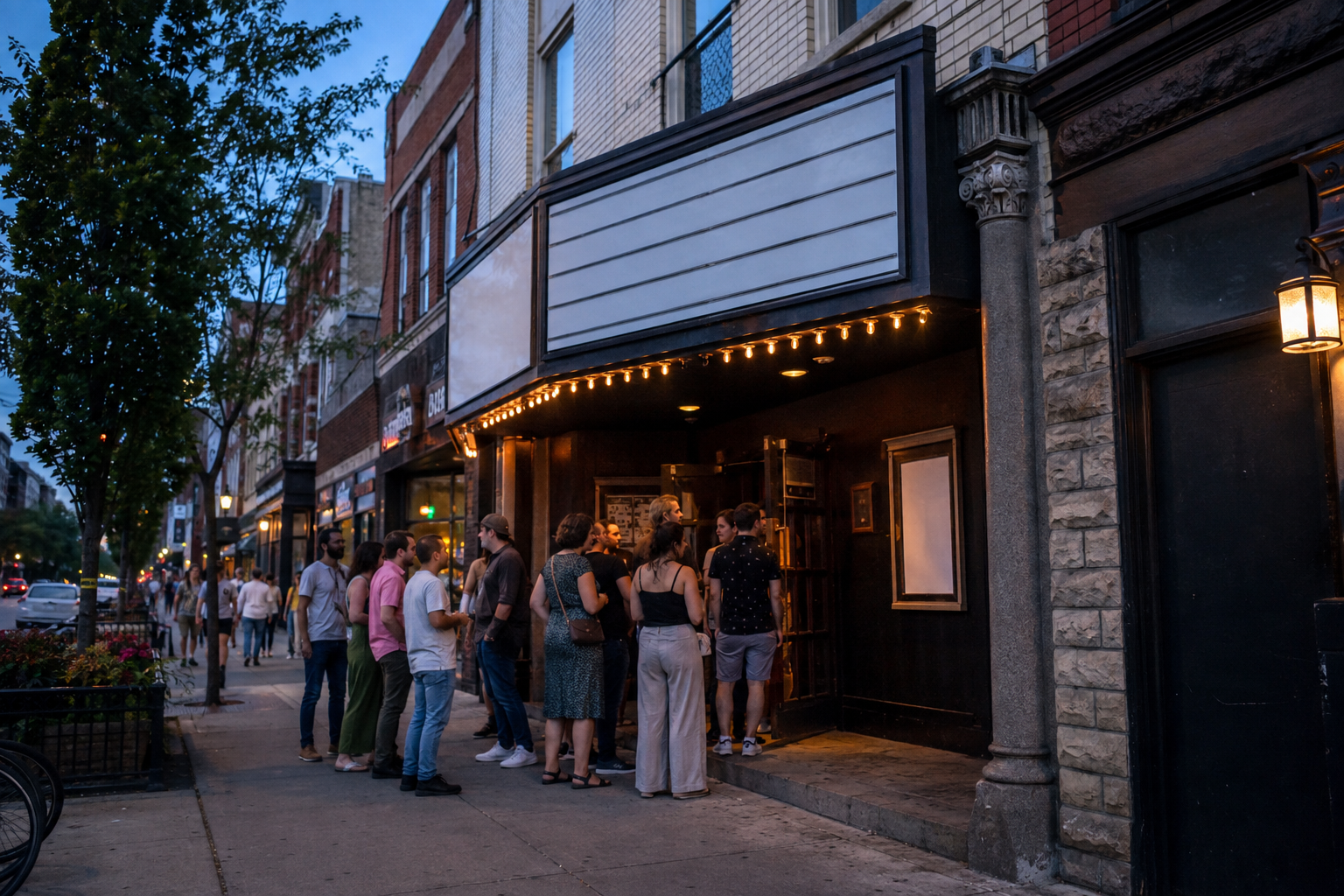
Old Town is where modern American improvisational comedy began and it is still the center of it. The Second City opened in Old Town in December 1959 as a small cabaret theater, moved a few blocks south to its current home at 1616 N. Wells Street in 1967, and now runs three resident stages, with an alumni list that includes Bill Murray, Gilda Radner, John Belushi, Mike Myers, Chris Farley, Tina Fey, Stephen Colbert, Amy Poehler, Steve Carell, and Keegan-Michael Key. Two blocks south at 1548 N. Wells Street, Zanies has booked stand-up in the same cramped hundred-seat storefront since 1978, with Jay Leno, Jerry Seinfeld, and Kathy Griffin among the names who played it early. The Chicago History Museum sits at the neighborhood's eastern edge at 1601 N. Clark Street, and St. Michael's Church remains both a working parish and the neighborhood's architectural anchor.
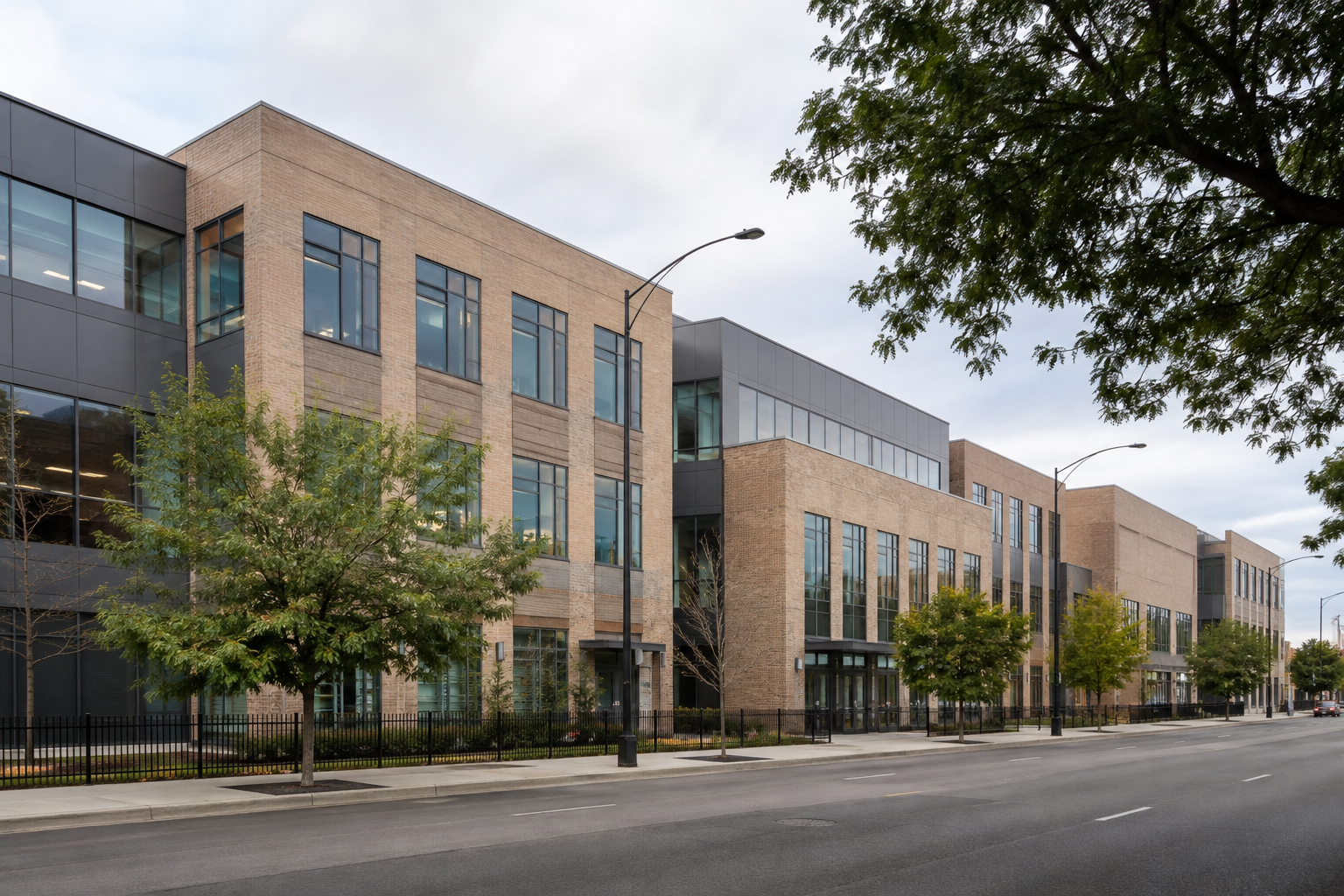

Old Town is served by a single school district, Chicago Public Schools, formally City of Chicago School District 299, so there is no district question here. There is a wrinkle specific to this neighborhood, though: because Old Town spans two community areas and the attendance boundaries do not follow the North Avenue line, two addresses a few hundred feet apart can fall into different elementary catchments. Verify the boundary for a specific address rather than for the neighborhood.
Walter Payton College Preparatory High School at 1034 N. Wells Street is inside Old Town and is one of the highest-ranked public high schools in the United States, ranked 54th nationally by U.S. News with an A-plus from Niche. The point that matters for buyers is the same one that applies across Chicago: Payton is a selective-enrollment school, admitting city-wide by test score and the district's tier system rather than by address, so living on the same street confers no admissions advantage. It is a neighborhood asset in the sense that it anchors the blocks around it, not in the sense that an Old Town purchase secures a place.
Several Chicago Public Schools elementary options serve parts of Old Town, and which one applies depends on the address. Franklin Fine Arts Center on West Evergreen Avenue is a magnet school with a fine and performing arts focus admitting by application. LaSalle Language Academy on North Orleans Street is a magnet offering world language instruction from the primary grades, also by application. Ogden International School of Chicago, which serves the Gold Coast, River North, and Streeterville, operates its grades 5 through 8 Jenner Campus on North Cleveland Avenue inside Old Town. Parts of the neighborhood north of North Avenue may fall into Lincoln Park attendance areas. Confirm each catchment with the Chicago Public Schools locator for the specific address before relying on it.
Catherine Cook School on West Schiller Street is the principal independent option inside the neighborhood, serving preschool through grade 8. Immaculate Conception and St. Joseph School on North Park Avenue provides a parochial option, and families here also look to the Latin School of Chicago in the Gold Coast, Francis W. Parker School in Lincoln Park, and the British International School of Chicago. Because Old Town sits between two of the strongest independent school clusters in the city, the private options within a short distance are unusually deep.
Development accelerated with Potter Palmer's mansion in 1882.
Encompasses the historic core alongside the 60611 district.
Consisting of roughly 5,600 households averaging two people.
Historically one of America's wealthiest urban enclaves.
Neighborhood entry point, driven heavily by vintage condominium volume.
The current baseline for standard attached housing stock.
Set in 2017 by the purchase of the top four floors at No. 9 Walton.
The neighborhood's largest single source of high-rise inventory.
With a median asking price currently hovering near $585,000.
The average market pace alongside ~45 monthly closings.
Connected directly to the trail via Oak Street Beach.
Direct access via two CTA train stops and four major bus routes.
Navigating Chicago's Gold Coast luxury real estate market requires unparalleled expertise. Here is what you need to know before we begin.
Ask A QuestionOld Town sits on the near North Side about a mile and a half north of the Loop, centered on Wells Street and spanning both sides of North Avenue. Its ZIP codes are 60610 and 60614, with 60610 covering the southern portion and 60614 the northern. The boundaries beyond that are contested: published definitions run north to Armitage Avenue or North Avenue, south to Division Street, west to Halsted Street, Clybourn Avenue, or Larrabee Street, and east to Clark Street. Because the neighborhood has no official boundary and is not a City of Chicago community area in its own right, listings on the edges are sometimes marketed as Lincoln Park, Gold Coast, or River North, so it is worth checking the cross streets rather than the label on a listing sheet.
Both, and this is the single most useful thing to understand about the neighborhood. Chicago divides the city into 77 official community areas, and Old Town straddles two of them. The Old Town Triangle, the historic core north of North Avenue, sits inside the Lincoln Park community area. The Wells Street commercial corridor running south from North Avenue toward Division Street sits inside the Near North Side. The practical consequences are real: the two halves fall in different wards, some city data is reported separately for each, school attendance lookups follow the address rather than the neighborhood name, and a listing north of North Avenue may legitimately be described as either Old Town or Lincoln Park. Always check which side of North Avenue an address is on.
Ask which market you are in, because Old Town has two. The condominium market, concentrated along and behind Wells Street in conversions and newer buildings, carries the transaction volume and the more attainable pricing. The house market, concentrated in the Old Town Triangle and the streets around it, is thin and competitive. Redfin, which tracks the Old Town Triangle rather than the whole neighborhood, reported a median sale price of about $415,000 for the three months ending March 2026, up 5 percent year on year, with homes selling in around 34 days. Single-family houses across Old Town have separately been reported at a median near $750,000, and restored row houses inside the landmark district run well above that. Note that 34 days is fast for a downtown-adjacent Chicago market, which tells you the demand here is real.
There is a specific obstacle worth knowing. Old Town is not a Midwest Real Estate Data MLS area and it has no official boundary, so listings here are classified under either Lincoln Park or the Near North Side depending on which side of North Avenue they fall. That means there is no single field to filter on, and the Old Town tags used by national portals are approximations that routinely return Lincoln Park addresses north of Armitage and Gold Coast addresses east of Clark. ZIP filtering does not help either, since the neighborhood spans 60610 and 60614 and both extend far beyond it. The reliable approach is to search by street and block range, or by whether a property sits inside the Old Town Triangle landmark district if architecture and renovation potential are driving your decision, then confirm the cross streets on anything promising.
German and Luxembourgish Catholic immigrants settled the marshy meadows north of North Avenue in the 1850s and farmed them, planting celery, potatoes, and cabbage, which earned the area the nickname the Cabbage Patch. They built St. Michael's Church, completed in 1869 and briefly the tallest building in Chicago. The Great Chicago Fire of 1871 destroyed almost everything: St. Michael's lost its roof and interior but its stone walls stood, and it is commonly cited as one of seven buildings to survive within the fire's path. Residents rebuilt immediately in wood, producing the frame workers cottages that still line the streets, until a city ordinance banned further wood construction and brick and stone row houses followed. After the Second World War, residents organized one of the earliest neighborhood conservation efforts in the country, which is why the district survived urban renewal and was designated a Chicago Landmark in 1977.
It was the original one, and Lincoln Square is the one that survived as a German commercial district, which is why searches for German Chicago usually return Lincoln Square rather than Old Town. Both answers are correct at different points in time. Old Town was settled in the 1850s by German and Luxembourgish Catholic immigrants, and St. Michael's parish was founded in 1852 specifically to serve them; the neighborhood was the center of German Chicago in the nineteenth century. Lincoln Square, several miles north, developed later and retained a visible German commercial identity into the modern era, with institutions and businesses that Old Town lost as it changed through the twentieth century. If you are looking for German heritage architecture and the original settlement, that is Old Town. If you are looking for the surviving German commercial district, that is Lincoln Square.
No, and the name misleads a lot of people. The school was founded in Old Town in the late 1950s and was central to the neighborhood's folk and counterculture era, but it moved to a building on West Armitage Avenue in Lincoln Park decades ago and its main campus is now in Lincoln Square on North Lincoln Avenue. Several neighborhood guides still list it as an Old Town attraction, which it has not been for a very long time. What is genuinely still here on the entertainment side is The Second City, open since 1959 and at 1616 N. Wells Street since 1967, and Zanies at 1548 N. Wells Street, open since 1978.
They border each other and they suit different buyers. Lincoln Park is much larger, has genuine depth in row houses and detached houses, seven landmark districts, a top-ranked attendance-area elementary school, and Chicago's biggest park on its edge, and it is the most expensive of the three for houses. The Gold Coast is denser and almost entirely attached housing, built on vintage co-ops and luxury towers inside a landmark district, with Oak Street retail at the door and very few houses. Old Town sits between them physically and in character: the best-preserved Victorian streetscape of the three, a walkable independent main street in Wells, genuine single-family stock at prices below Lincoln Park, and the comedy institutions. Buyers who want a period house and a village-scale commercial street, without Lincoln Park pricing or Gold Coast density, generally end up here.
Carrie McCormick has sold Chicago real estate since 1999, has closed more than $3.5 billion in career sales, and works across Lincoln Park and the Gold Coast on either side of Old Town. Under her "100 percent Carrie" model clients work directly with her from the first valuation through closing. Old Town rewards precision about small distances. Whether an address sits inside the Old Town Triangle landmark district determines what an owner can change to the exterior and how long approvals take. Which side of North Avenue it sits on determines its community area, its ward, and sometimes its school lookup. A frame cottage on a Triangle street and a condominium two blocks west are not comparable properties even at identical prices, and a period house has to be priced against the handful of genuinely similar sales rather than a median drawn from a condominium-weighted sample. She is ranked in the top 1 percent of brokers by the Chicago Association of Realtors, holds the association's Gold and Platinum awards, is the recurring luxury real estate expert on NBC 5 Chicago's Open House Chicago, and works within the Christie's International Real Estate network. Call 312-961-4612.
Carrie McCormick has been selling Chicago real estate since 1999, with more than $3.5 billion in career sales and a practice covering Lincoln Park and the Gold Coast on either side of Old Town. Here that means frame cottages and restored row houses inside the Old Town Triangle, two-flats and conversions on Sedgwick and Cleveland, and condominiums along the Wells Street corridor. Ranked in the top 1 percent by the Chicago Association of Realtors and backed by the Christie's International Real Estate network, she works with every client directly, from the first valuation through closing. To talk through a purchase, a sale, or a relocation, call 312-961-4612 or email carrie@atproperties.com.