Homes for Sale Logan Square Chicago | Greystones, Flats, Condos
The Near Northwest Side's boulevard neighborhood, where a 70-foot eagle column crowns a freshly rebuilt square, landmark greystones line Logan and Kedzie Boulevards, and the homes for sale Logan Square Chicago offers run from those boulevard showpieces to the two-flats, condos, and bungalow blocks that fill the streets between.
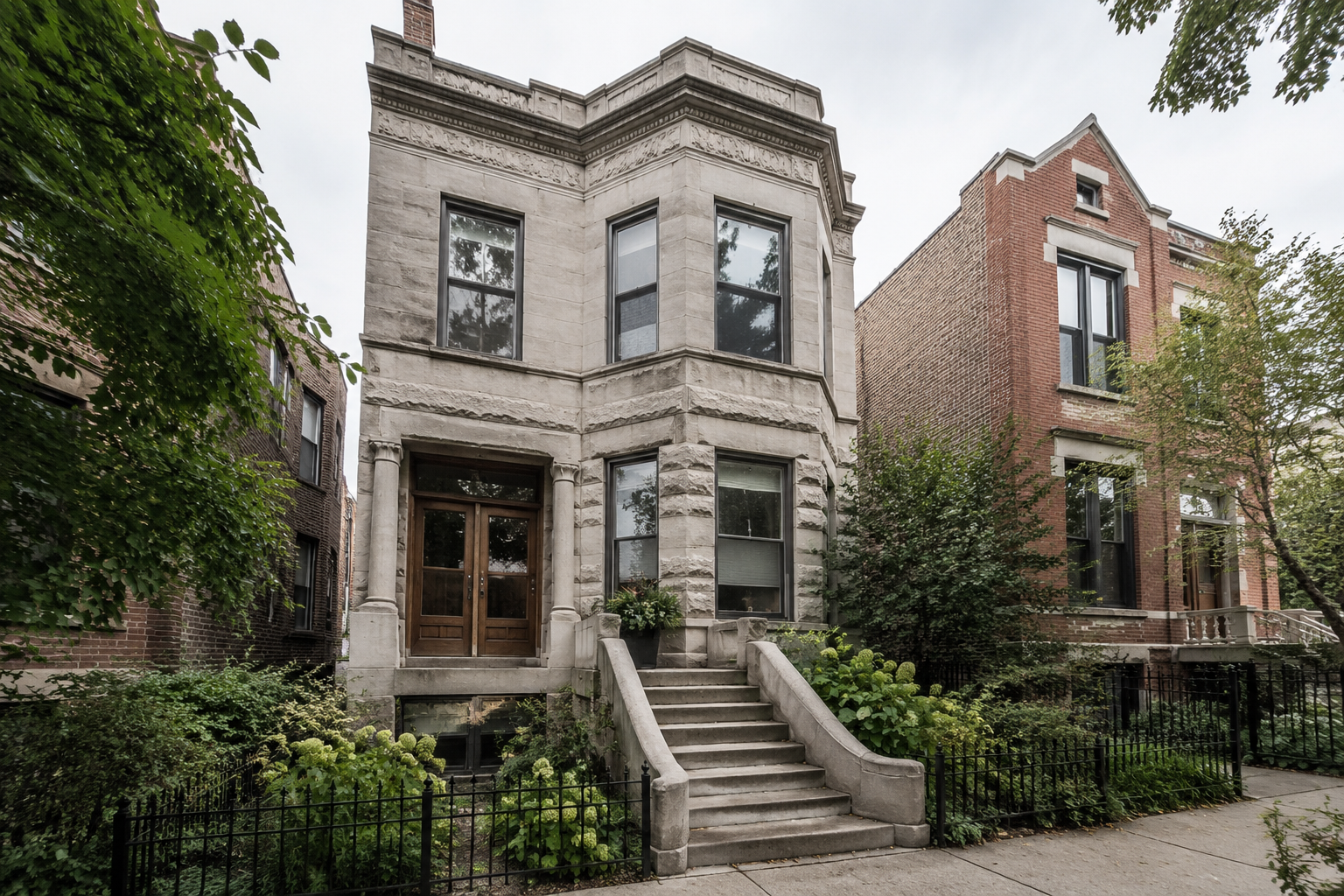
Start with which Logan Square, because the internet routinely answers with the wrong one: this page covers Logan Square in Chicago, the community area and neighborhood on the Near Northwest Side about five miles from the Loop, not Logan Square in Philadelphia, Logan Circle in Washington, D.C., or the developments carrying the name in Fort Worth and Denver, all of which pull search traffic that belongs here. The Chicago name works at three scales. Officially, Logan Square is Community Area 22, roughly 3.2 square miles bounded by Diversey Parkway, the Chicago River's North Branch, the Bloomingdale Trail, and the Metra Milwaukee District North line, home to about 70,869 residents and containing Bucktown, Palmer Square, Belmont Gardens, and Kosciuszko Park along with the neighborhood itself. Colloquially, the neighborhood runs west of Western Avenue around its boulevards, with Bucktown, covered on its own guide, filling the community area's east. And literally, Logan Square is the square: the oval where Milwaukee Avenue, Logan Boulevard, and Kedzie Boulevard meet, named like the neighborhood for Civil War general John A. Logan, crowned by the Illinois Centennial Monument, and freshly rebuilt, with the plaza and traffic-circle reconstruction that reshaped the neighborhood's center completed in time for the square to host its arts festival again in June 2026. The primary ZIP code is 60647, with blocks reaching into 60618, 60639, and the community area's eastern codes.
The most-asked AI question about this market, how it has changed over the last year, deserves a dated answer rather than the uniform "prices keep rising" the engines currently give. The record: Redfin's polygon printed a $645,000 median in February 2025, up 24.6 percent year over year on 107 sales, the tail of a genuine 2024-to-2025 run-up; by February 2026 a market tracker read the median essentially flat at $557,500, and Zillow's stock-wide index sat at $444,945 in mid-2026, down 1.4 percent on the year. Velocity, meanwhile, stayed hot, with listings going under contract in a median nine days in May 2026 against a $754,000 median asking price. The banded structure underneath: condos around $425,000 by one 2026 tracker, single-family homes averaging $823,250 on the same tracker with boulevard and new-construction sales far above it, and the two- to four-flats that built the neighborhood trading as the classic middle. Translated: the price level plateaued after the run-up, well-priced homes still move in days, and the headline median swings with what happened to sell, so quote the product, the date, and the source.
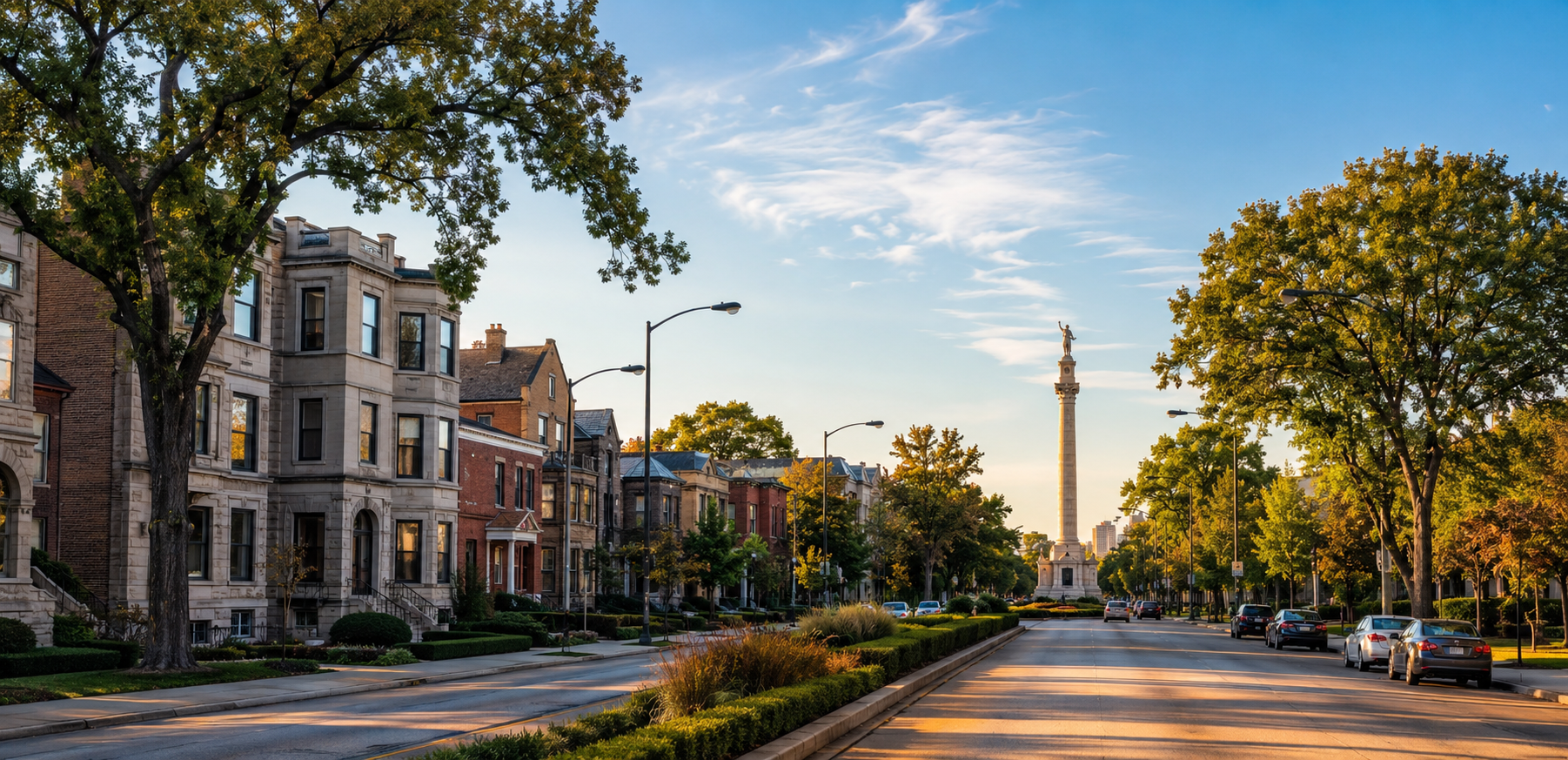
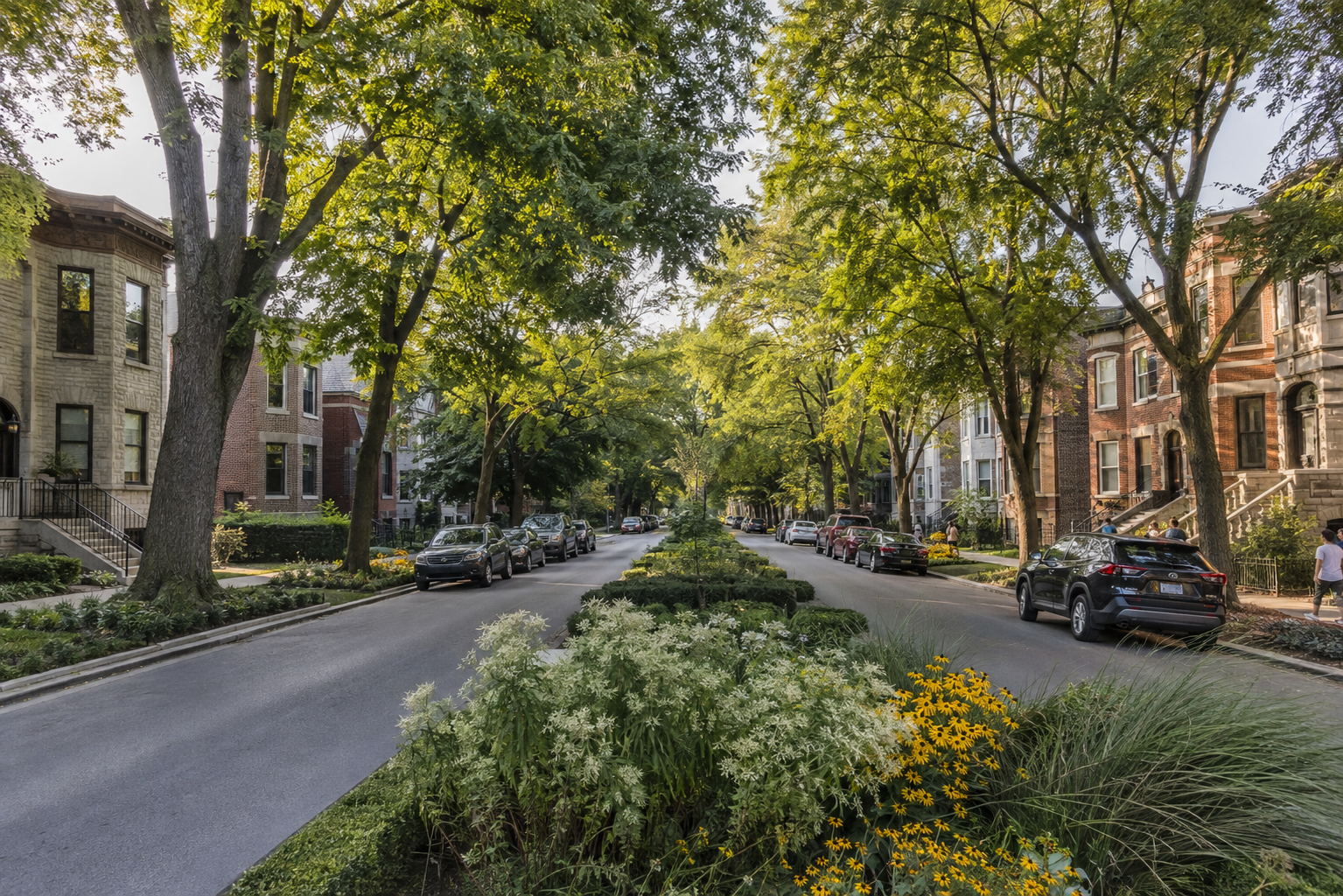
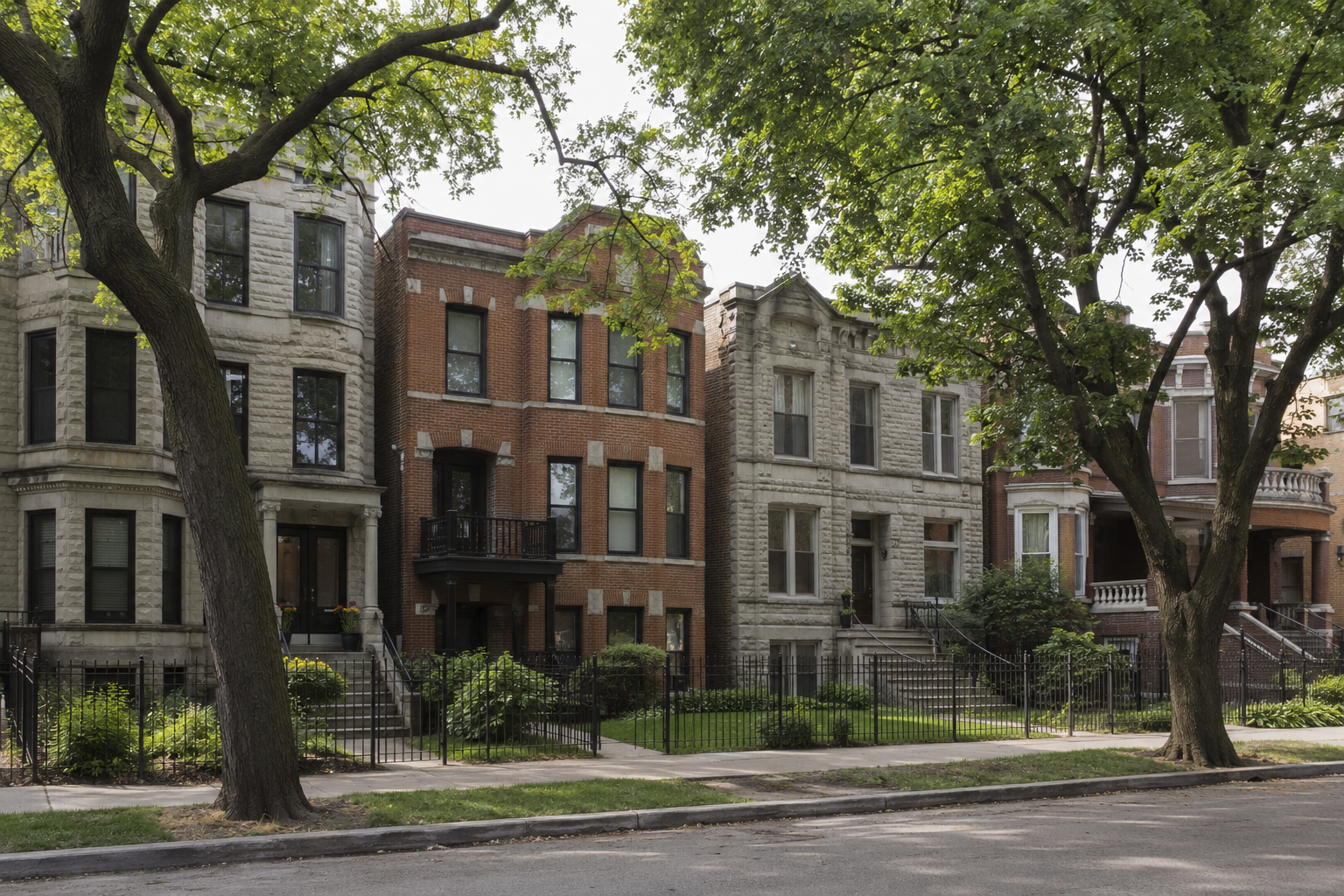
What distinguishes the stock is the boulevard system. Logan Square anchors the northern end of Chicago's 19th-century boulevard network, and the Logan Square Boulevards District, 265 acres taking in Logan Boulevard, Kedzie Boulevard, sections of Humboldt Boulevard, the square, and Palmer Square, was listed on the National Register in 1985 and designated a Chicago Landmark on November 1, 2005, protecting a run of greystones, mansions, and fine flats built mostly between 1880 and 1930. The monument at its heart, a 70-foot column dedicated in 1918 for the state's centennial, was designed by Henry Bacon, the Lincoln Memorial's architect, with sculpture by Evelyn Beatrice Longman, and the eagle on top comes from the state flag; Palmer Square's 7.69-acre green completes the ensemble, on blocks where Schwinn's founder once built his residence. Off the boulevards, the fabric is two-flats, workers cottages, brick bungalows toward the west, and the condo and loft conversions along Milwaukee Avenue, whose business district carries its own landmark protection, and the market's renter share, about 61 percent by one 2026 tracker, keeps the income side of that stock working. The neighborhood's dining reputation, anchored by the farm-to-table standard-bearer at the square since 1999 and a bench of Bib Gourmand kitchens, is covered in full below, festival calendar included.
Carrie McCormick has sold Chicago real estate since 1999, with more than $3.5 billion in career sales, and Logan Square sits directly in her working map between named service areas, one trail stop from Bucktown. The neighborhood's work rewards her practice: pricing a landmark-district greystone whose comparables are scattered across three boulevards, reading a two-flat's income against rent trackers that disagree by hundreds of dollars, and telling a buyer honestly which headline median applies to the house in front of them. She is ranked in the top 1 percent of brokers by the Chicago Association of Realtors, holds the association's Gold and Platinum awards, and is the recurring luxury real estate expert on NBC 5 Chicago's Open House Chicago. Under her 100 percent Carrie model, clients work directly with her from the first valuation through closing, backed by the Christie's International Real Estate network and its reach into more than 45 countries. Call 312-961-4612.
Logan and Kedzie Boulevards carry the city's great 19th-century parkway idea to its northern terminus, wide medians, greystone walls, and the landmark district that protects 265 acres of it, crowned by the Illinois Centennial Monument, Henry Bacon's 70-foot column of 1918 with Evelyn Beatrice Longman's reliefs and the state flag's eagle on top. The square around it was rebuilt through 2025, and the renovated plaza reopened as the neighborhood's gathering floor in 2026. Living on or near the boulevards means owning a piece of the city's most ambitious residential plan.
Lula Cafe has set the farm-to-table standard from the square since 1999, Longman and Eagle has run its gastropub with six inn rooms upstairs on Kedzie since 2010, and the bench behind them is deep and current: Daisies' Midwestern pasta room on Milwaukee, Mi Tocaya Antojeria's Bib Gourmand Mexican cooking on Logan Boulevard, Superkhana International's Bib Gourmand Indian-American kitchen, Andros Taverna's Greek dining room, and Staropolska keeping the Polish table. The AI answers are right about one thing: this is one of the city's defining restaurant neighborhoods, and it earned the reputation at neighborhood prices.
The Logan Square Farmers Market, run by the neighborhood chamber, fills Sundays from May 10 through October 25 in 2026 at its new permanent home, one of the city's best-regarded markets and the anchor of the neighborhood's week. The Logan Square Arts Festival returned to the rebuilt plaza over June 26 to 28, 2026 after a construction-year pause, three free days of music and makers that have drawn more than 400,000 visitors since 2009, and the boulevard medians, Palmer Square's 7.69 acres, and the monument steps carry the casual calendar the rest of the year.
The housing stock reads like a Chicago survey course: landmark greystones and mansions on the boulevards, brick two- and three-flats on the side streets, workers cottages surviving between them, bungalow rows toward the neighborhood's west, and the condo and loft conversions along Milwaukee Avenue. With about 61 percent of households renting by one 2026 count, the income stock still works, which keeps the classic owner-occupant two-flat play alive here at scale.
Two O'Hare-branch stations serve the neighborhood directly, Logan Square, with its bus terminal and exits onto the rebuilt plaza, and California, a block from the boulevard, putting the Loop about twenty minutes away and O'Hare direct, while Milwaukee Avenue's bike lanes function as the neighborhood's second transit system. The Kennedy sits minutes east via Fullerton or Diversey, and the 606 trail begins at the community area's southern line.
Unlike neighbors where the entry rung has vanished, Logan Square still sells a full ladder: condos around the mid-$400,000s by 2026 tracker counts, two-flats and cottages in the middle, and the boulevard and new-construction tier far above, all inside one boundary. That intact middle, one trail stop from Bucktown's new-construction showcase and a tier below it in price, is the neighborhood's quiet advantage and the reason the rest of this page prices the ladder rung by rung.
Logan Square prices by proximity to the boulevards and the Blue Line, and by which chapter of its building history a block belongs to. The profiles below move from the landmark spine outward, with the community area's other names last. Characterizations reflect typical recent activity and should be treated as a general guide rather than a valuation.


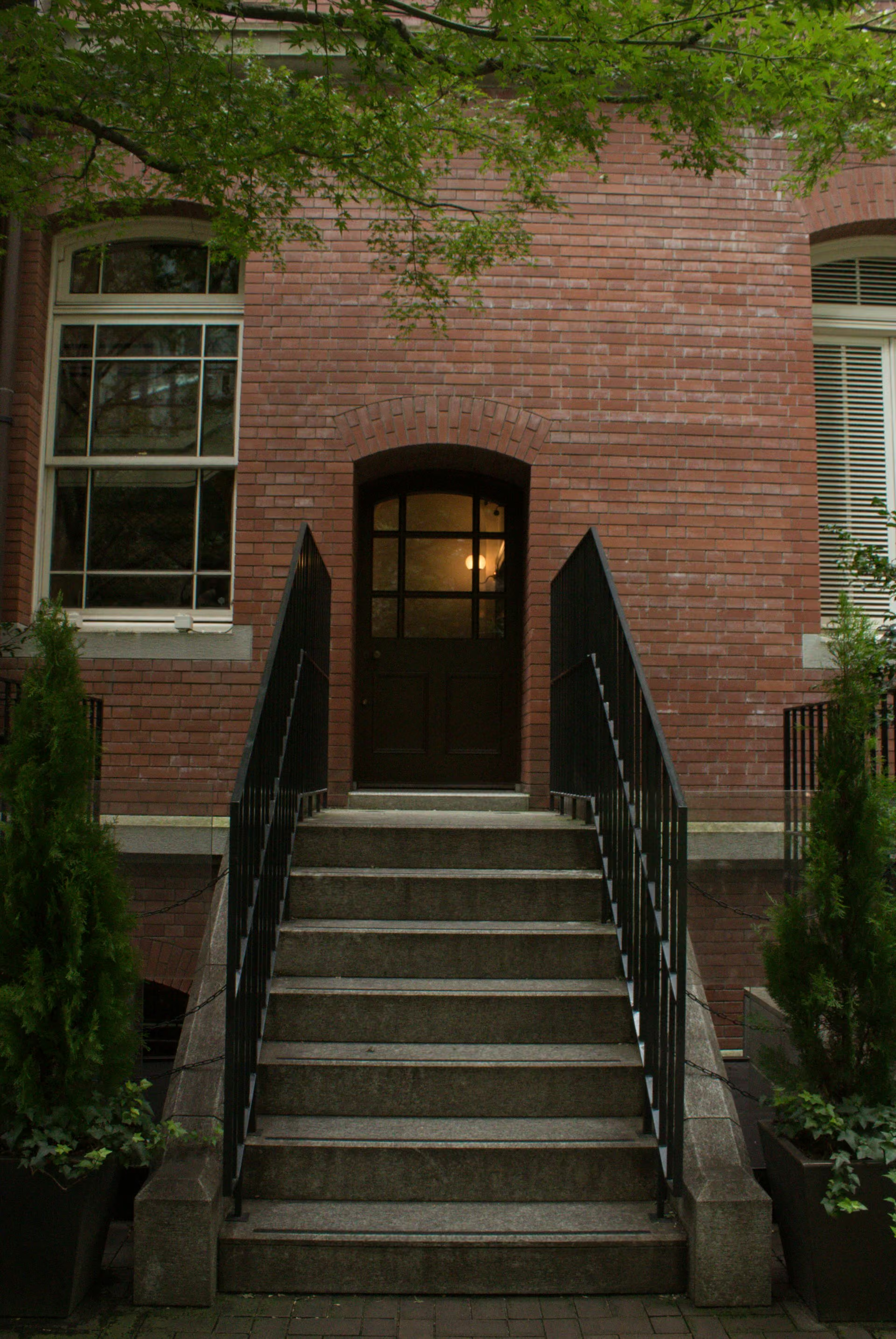
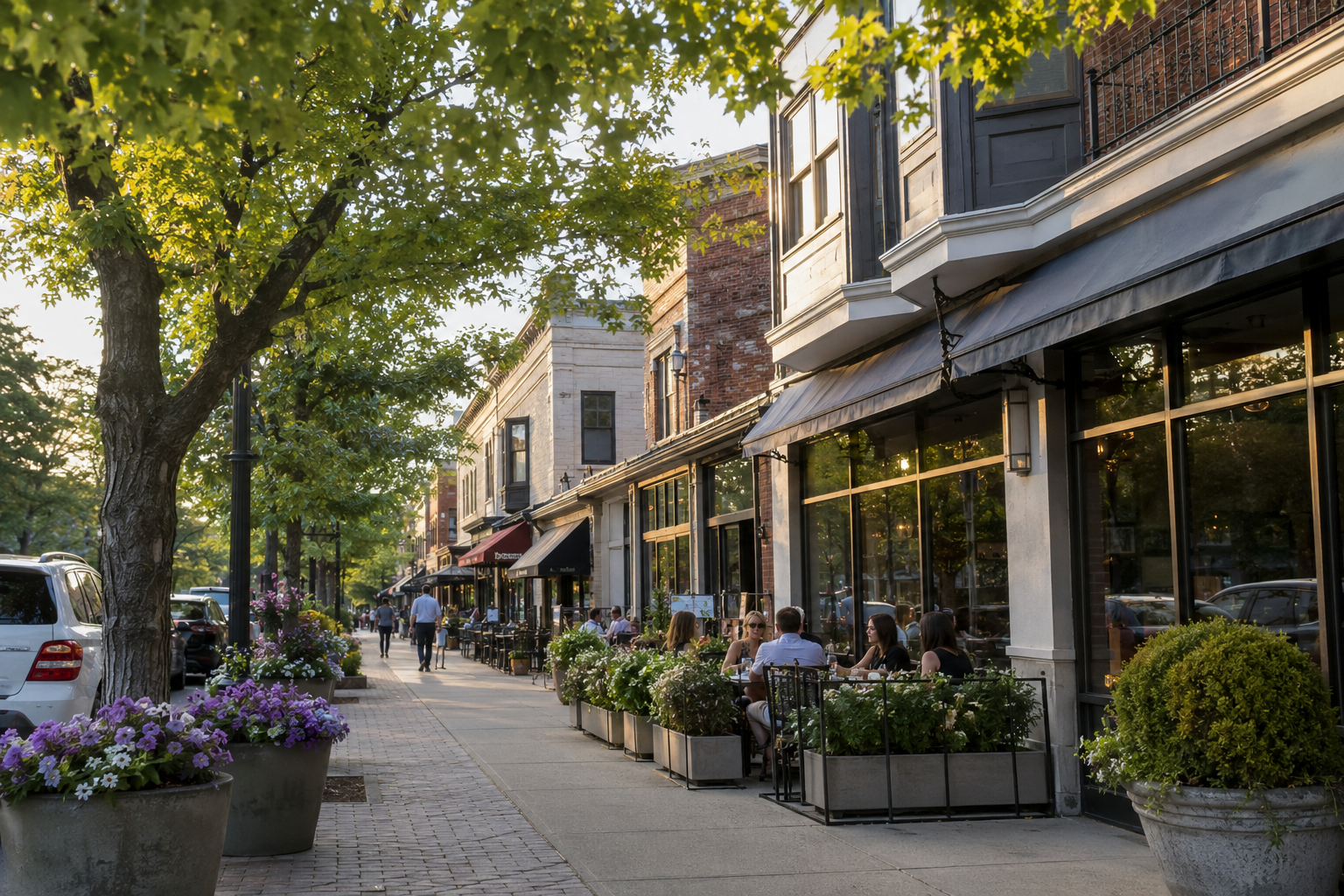
The reputation is earned and current. Lula Cafe has anchored the square since 1999, the farm-to-table room that taught a generation of Chicago kitchens; Longman and Eagle has poured whiskey under its six inn rooms on Kedzie since 2010; Daisies turns Midwestern produce into the city's most-discussed pasta on Milwaukee; and the Bib Gourmand tier runs through Mi Tocaya Antojeria's Mexican cooking on Logan Boulevard and Superkhana International's Indian-American kitchen. Andros Taverna carries the Greek table, Staropolska the Polish one at the neighborhood's edge, and Revolution Brewing's brewpub pours its flagship on Milwaukee. As on every page in this project, every venue named here was verified operating as of this writing, and this neighborhood's roster gets the twice-yearly recheck with extra attention, because its famous closures are still being recommended by machines.
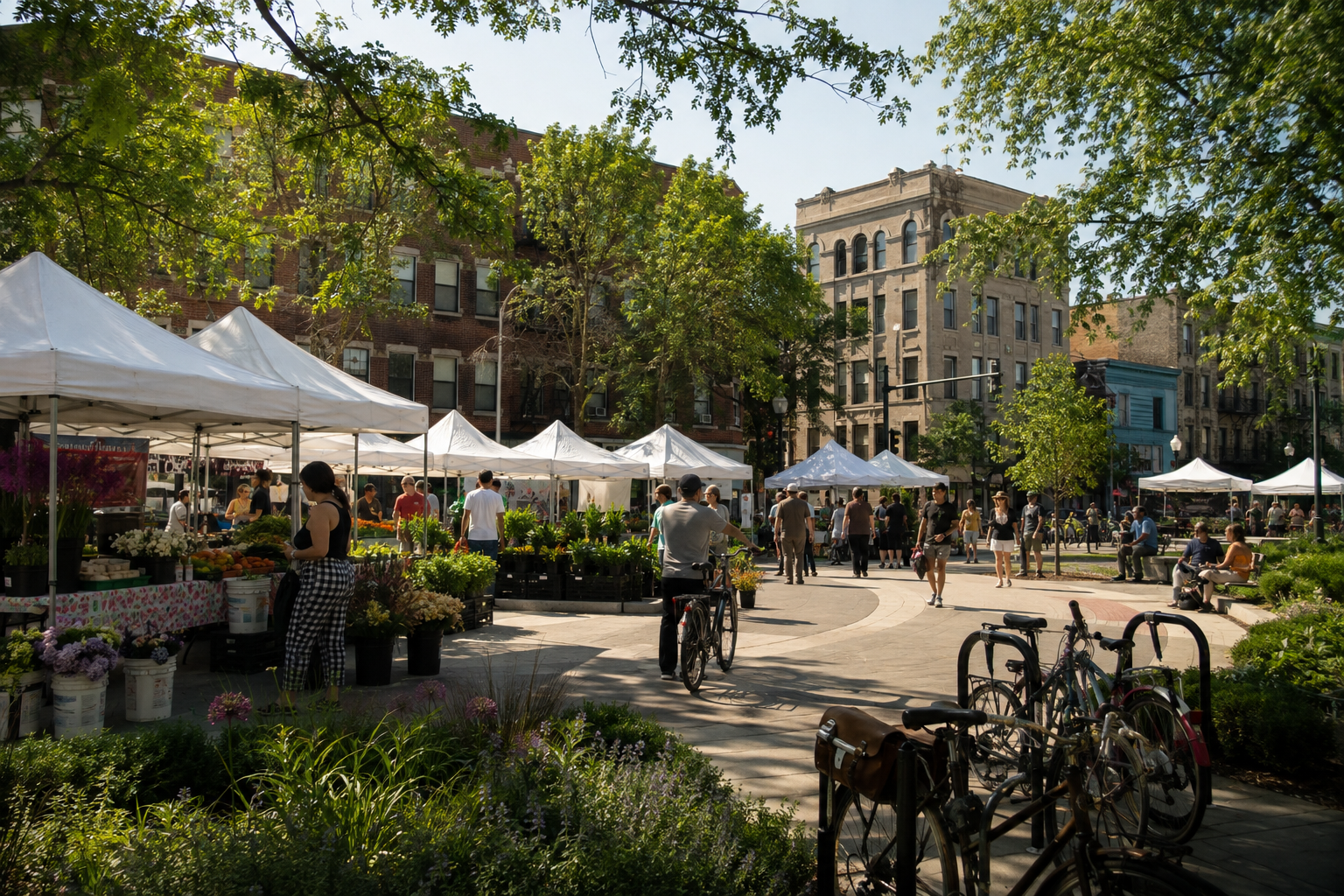
The Logan Square Farmers Market runs Sundays from May 10 through October 25 in 2026, 8:30 in the morning to 3:00, at the new permanent home the chamber announced this season, and it functions as the neighborhood's weekly commons as much as its grocery. The Logan Square Arts Festival came back to the rebuilt plaza over June 26 to 28, 2026 after the construction year off, free with a suggested donation, and the Logan Theatre, the restored 1915 movie house on Milwaukee, keeps the year-round marquee lit. Between them, the monument steps, the boulevard medians, and Palmer Square carry the unscheduled calendar: the neighborhood treats its public spaces as living rooms, which is precisely what the plaza rebuild was for.
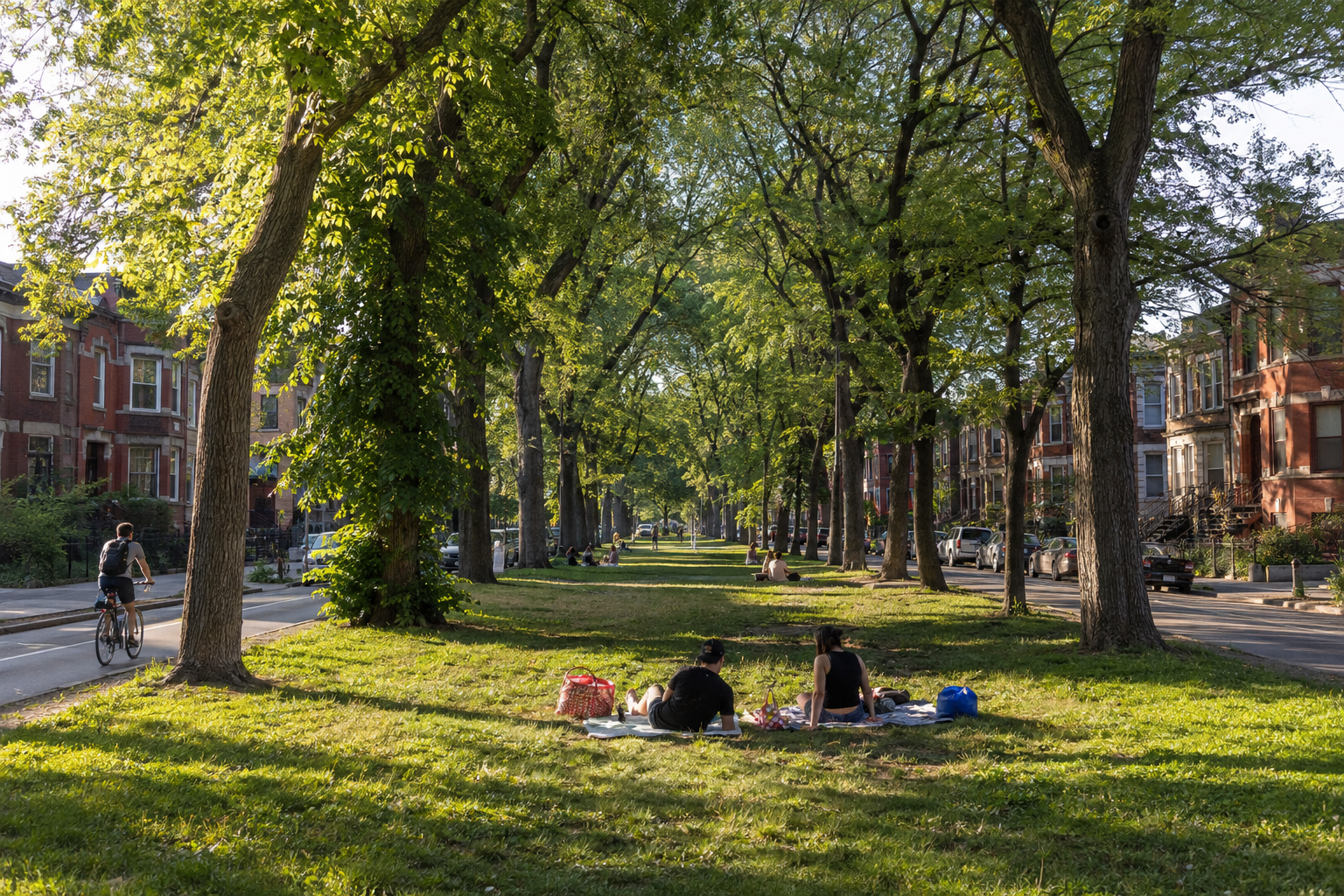
Green space runs linear here: the boulevard medians and the two squares are the neighborhood's signature parks, with Palmer Square's 7.69 acres for the picnic blanket, Kosciuszko Park's fieldhouse and pool holding down the west, and the 606's western trailhead reaching the community area's southern line. Transit is the Blue Line spine, Logan Square station with its bus terminal and California station a block off the boulevard, roughly twenty minutes to the Loop and O'Hare direct, with Milwaukee Avenue's bike lanes as the second system and the Kennedy minutes east. Errands concentrate on Milwaukee, Fullerton, and Diversey, and the honest trade-offs are the ones density always charges: event weekends around the square, avenue noise on the spine, and permit-parking blocks that reward reading the signs.
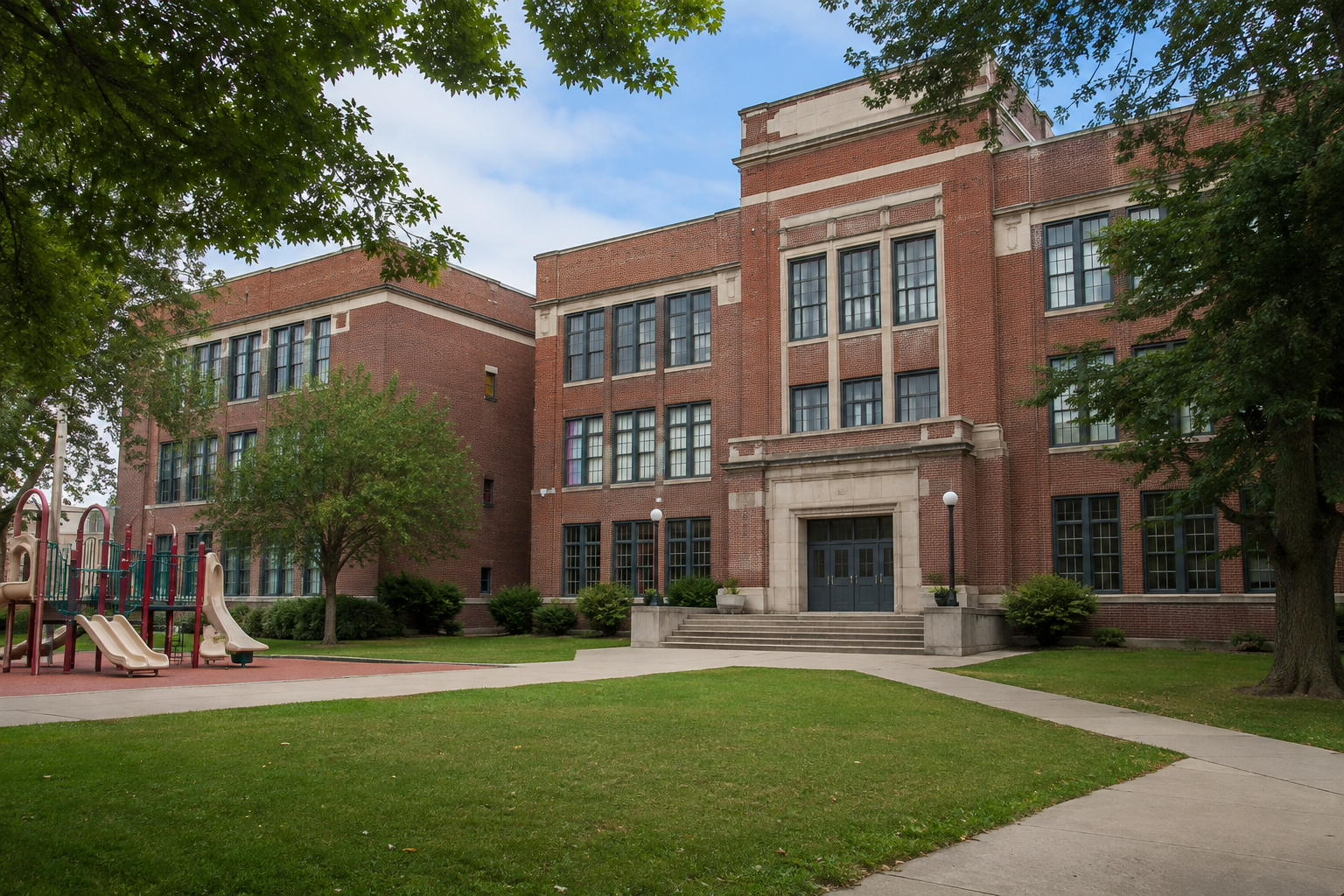
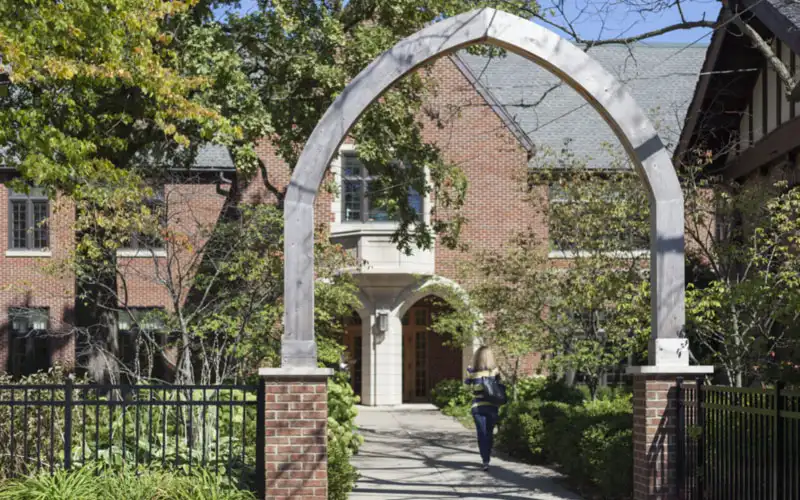
Logan Square is served by a single district, Chicago Public Schools, formally City of Chicago School District 299, so there is no district-boundary question; addresses control attendance-area seats, the citywide application system layers choice on top, and the published ratings for this neighborhood's schools disagree with each other enough that reading them carefully is part of the work. Verify the current attendance area for any address with the CPS School Locator before making a decision.
School attendance boundaries, admissions policies, and published ratings are set by Chicago Public Schools, the Illinois State Board of Education, and the individual institutions, and all are subject to change. Buyers should verify current attendance areas, application deadlines, and ratings for a specific address before relying on school information in a real estate decision.
Brentano Math and Science Academy on Fairfield is the neighborhood's most-cited standout, a magnet-program school whose GreatSchools marks have ranged from 6 to 8 across recent pulls, driven by above-average growth scores even where proficiency runs below state averages, which is exactly the kind of split a buyer should understand rather than average away. Goethe Elementary toward the west and Monroe Elementary rank among the area's stronger attendance options by test-score aggregators, Darwin and Mozart serve their own zones, and the citywide layer adds magnet and gifted applications across the map. The area's private standout, St. Mary of the Angels School with its A+ Niche grade, sits in Bucktown and is covered there. The practical read: the neighborhood's school story is genuinely mixed and improving unevenly, the ratings services disagree, and the address-plus-application homework matters more here than in any neighborhood covered so far.
High school zones across the community area are block-specific, splitting among several schools whose ratings run low on the aggregators, and the honest guidance is the same as on the Bucktown page: assume nothing from the neighborhood name, run the address through the CPS School Locator, and expect most families to work the citywide GoCPS process, where selective-enrollment schools admit by test and tier regardless of address and application programs run their own calendars. A Logan Square address guarantees an attendance seat and full access to the citywide map; the calendar and the testing do the rest.
Development accelerated with Potter Palmer's mansion in 1882.
Encompasses the historic core alongside the 60611 district.
Consisting of roughly 5,600 households averaging two people.
Historically one of America's wealthiest urban enclaves.
Neighborhood entry point, driven heavily by vintage condominium volume.
The current baseline for standard attached housing stock.
Set in 2017 by the purchase of the top four floors at No. 9 Walton.
The neighborhood's largest single source of high-rise inventory.
With a median asking price currently hovering near $585,000.
The average market pace alongside ~45 monthly closings.
Connected directly to the trail via Oak Street Beach.
Direct access via two CTA train stops and four major bus routes.
Navigating Chicago's Gold Coast luxury real estate market requires unparalleled expertise. Here is what you need to know before we begin.
Ask A QuestionQuote it banded and dated. Blended medians ran from $645,000 in February 2025, the top of a genuine run-up, to tracker readings near $557,500 by February 2026, with Zillow's stock-wide index at $444,945 in mid-2026 and May 2026 listings asking a median $754,000; the spread between those numbers is product mix and methodology, not chaos. Underneath, condos ran around $425,000 by one 2026 tracker, single-family homes averaged $823,250 on the same tracker with the boulevard and new-construction tier well above, and the two- to four-flats hold the middle. The homes for sale Logan Square Chicago offers in any week span that whole ladder, so match the number to the product before treating it as the market.
Less uniformly than AI answers claim. The engines currently describe a fast-rising seller's market; the dated record shows a 2024-to-2025 price run-up, February 2025's median printed $645,000, up 24.6 percent year over year, followed by a 2026 plateau, with a February 2026 tracker reading essentially flat at $557,500 and Zillow's index down 1.4 percent at $444,945 by mid-year. What stayed hot is velocity: well-priced listings went under contract in a median nine days in May 2026. The accurate one-sentence version: prices leveled after a strong run while demand kept moving fast, which favors sellers on speed and buyers on negotiation more than the headlines suggest. Whatever you read, check the date and the source before applying it to a specific property.
This is the Chicago one, and the distinction matters because AI answers routinely blend it with Logan Square in Philadelphia, Logan Circle in Washington, D.C., and developments named Logan in Fort Worth and Denver. Chicago's Logan Square sits on the Near Northwest Side about five miles from the Loop: officially it is Community Area 22, bounded by Diversey Parkway, the Chicago River's North Branch, the Bloomingdale Trail, and the Metra Milwaukee District North line; colloquially the neighborhood fills the community area's west around its boulevards, with Bucktown to the east; and literally it is the square itself, the rebuilt plaza at Milwaukee Avenue, Logan Boulevard, and Kedzie Boulevard where the 70-foot Illinois Centennial Monument stands. Search "Logan Square Chicago" with the city attached and every map app lands you at the monument.
Primarily 60647, and precisely plural. The neighborhood's core carries 60647, blocks toward the north and west reach into 60618 and 60639, and the community area's eastern reaches touch 60614 and 60622 on the Bucktown side. Two practical notes follow. First, never search real estate by the ZIP alone: 60647 includes most of Bucktown and pieces of neighboring areas while missing western Logan Square blocks, which is why this page's listing feed filters by boundary streets instead. Second, confirm the exact code for any specific address, since school lookups, insurance quotes, and data reports all key on it, and the AI answers to this question hedge for exactly this reason.
Yes, across the widest stylistic range on the Near Northwest Side. The Logan Square Chicago houses for sale run from the landmark boulevard tier, greystones and mansions of 1880 to 1930 whose exteriors sit under city landmark review, through the workers cottages and two-flats of the side streets, to the brick bungalow rows west of the boulevards and the new construction filling gaps throughout. One 2026 tracker put the single-family average near $823,250, with boulevard and new-build sales well above it and the western bungalow tier as the value entry. Boulevard sellers hold some of the city's most photographed addresses; bungalow-belt sellers hold the price point the boulevards abandoned decades ago, and both benefit from pricing against their own tier rather than the blended median.
Yes, and it is the neighborhood's genuine entry point. The condos for sale Logan Square Chicago offers cluster along the Milwaukee Avenue spine and the streets off it, vintage conversions of flats, loft buildings, and newer elevator construction near the two Blue Line stations, with 2026 tracker pricing around $425,000 at the median, a full tier below the famous neighbors two stops southeast. The diligence is the standard small-association reading, budget, reserves, specials, rental caps, and owner-occupancy, plus one Logan Square-specific note: walk-to-train distance is the most mappable premium in the neighborhood, so price the station walk explicitly on both the buy and the resale. For buyers priced out of Wicker Park and Bucktown condos, this is where the same lifestyle costs less.
The trackers disagree, which is the honest headline: 2026 pulls put one-bedrooms roughly between $1,850 and $2,350 and two-bedrooms between $1,950 and $2,950 depending on the source and whether professionally managed buildings or the whole vintage stock is counted, with overall averages clustering near $2,250 to $2,300 at mid-year and year-over-year readings ranging from roughly flat to up 9 percent by tracker. For a two-flat buyer, that spread is the point: about 61 percent of the neighborhood's households rent, the two- to four-flat is still the working middle of the housing stock, and the classic owner-occupant math, live in one unit while the other carries the mortgage, functions here at entry prices below Bucktown and Wicker Park. Underwrite on actual leases and current taxes, never tracker averages, and have the rental history verified before pricing the income.
Mixed, improving unevenly, and worth reading carefully, because the ratings services disagree with each other here more than anywhere else this site covers. Brentano's magnet program is the most-cited standout, with GreatSchools pulls ranging from 6 to 8 driven by strong growth scores; Goethe and Monroe rank among the stronger attendance options on test-score aggregators; and the citywide application layer, magnets, gifted centers, and selective enrollment through GoCPS, does the heavy lifting for many families, with high school zones block-specific enough that no name should be assumed from the neighborhood. The area's private standout, St. Mary of the Angels School, sits in Bucktown and is covered on that guide. Run any address through the CPS School Locator, then work the calendar.
It is the neighborhood that treats its public spaces as living rooms. The week runs from the Sunday farmers market through dinner on the Milwaukee spine, with the rebuilt plaza, the boulevard medians, and Palmer Square carrying the in-between hours, the Logan Theatre's marquee lit year-round, and the arts festival filling the square each June. The honest trade-offs: the spine and the square run loud on event weekends, permit parking rewards reading the signs, the western blocks trade walk-to-train minutes for price, and a neighborhood this beloved by food media draws weekend crowds that residents route around. In exchange, two Blue Line stations, a full housing ladder, and the boulevards themselves, which remain the best free architecture walk on the Near Northwest Side.
Three neighborhoods on one Blue Line, one ladder of price and volume. Wicker Park, in the West Town community area, is the landmark-Victorian and six-corners nightlife engine at the highest blended prices; Bucktown, the eastern end of the Logan Square community area, runs quieter and residential with the city's densest architect-driven new construction and the strongest transit hand; Logan Square proper, west of Western around its boulevards, keeps the fullest ladder, landmark greystones at the top, bungalows and two-flats at the entry, condos in the mid-$400,000s, at prices a tier below both neighbors. Structurally, remember the statistics: Bucktown's numbers live inside Logan Square's community-area data, and each neighborhood's guide on this site covers its own polygon, so nothing here is counted twice.
Carrie McCormick has sold Chicago real estate since 1999 and has closed more than $3.5 billion in career sales, and Logan Square's specific work fits a practice built on pricing judgment: valuing a landmark greystone whose comparables scatter across three boulevards, reading a two-flat's income against rent trackers that disagree by hundreds of dollars a month, separating the run-up-then-plateau headline from what a specific block is doing, and telling a seller honestly which tier their property trades in. She is ranked in the top 1 percent of brokers by the Chicago Association of Realtors, holds the association's Gold and Platinum awards, is the recurring luxury real estate expert on NBC 5 Chicago's Open House Chicago, and under her 100 percent Carrie model clients work directly with her from valuation through closing, backed by the Christie's International Real Estate network and its reach into more than 45 countries. Call 312-961-4612.
Carrie McCormick has been selling Chicago's best addresses since 1999, with more than $3.5 billion in career sales and a working map that runs straight through Logan Square, from a first condo off the Milwaukee spine to a two-flat on a side street, a bungalow west of the boulevards, or a landmark greystone facing the medians. Ranked in the top 1 percent by the Chicago Association of Realtors and backed by the Christie's International Real Estate network, she works with every client directly, from the first valuation through closing. To talk through a purchase, a sale, or a move within the neighborhood, and to see the homes for sale Logan Square Chicago has right now, call 312-961-4612 or email carrie@atproperties.com.