
Homes for Sale in Lincoln Park Chicago | Greystones and Condos
Chicago's benchmark North Side neighborhood: 70,000 people across three square miles, seven Chicago Landmark districts, the city's largest park and its free zoo on its eastern edge, and one of the few downtown-adjacent markets where you can still buy a house.
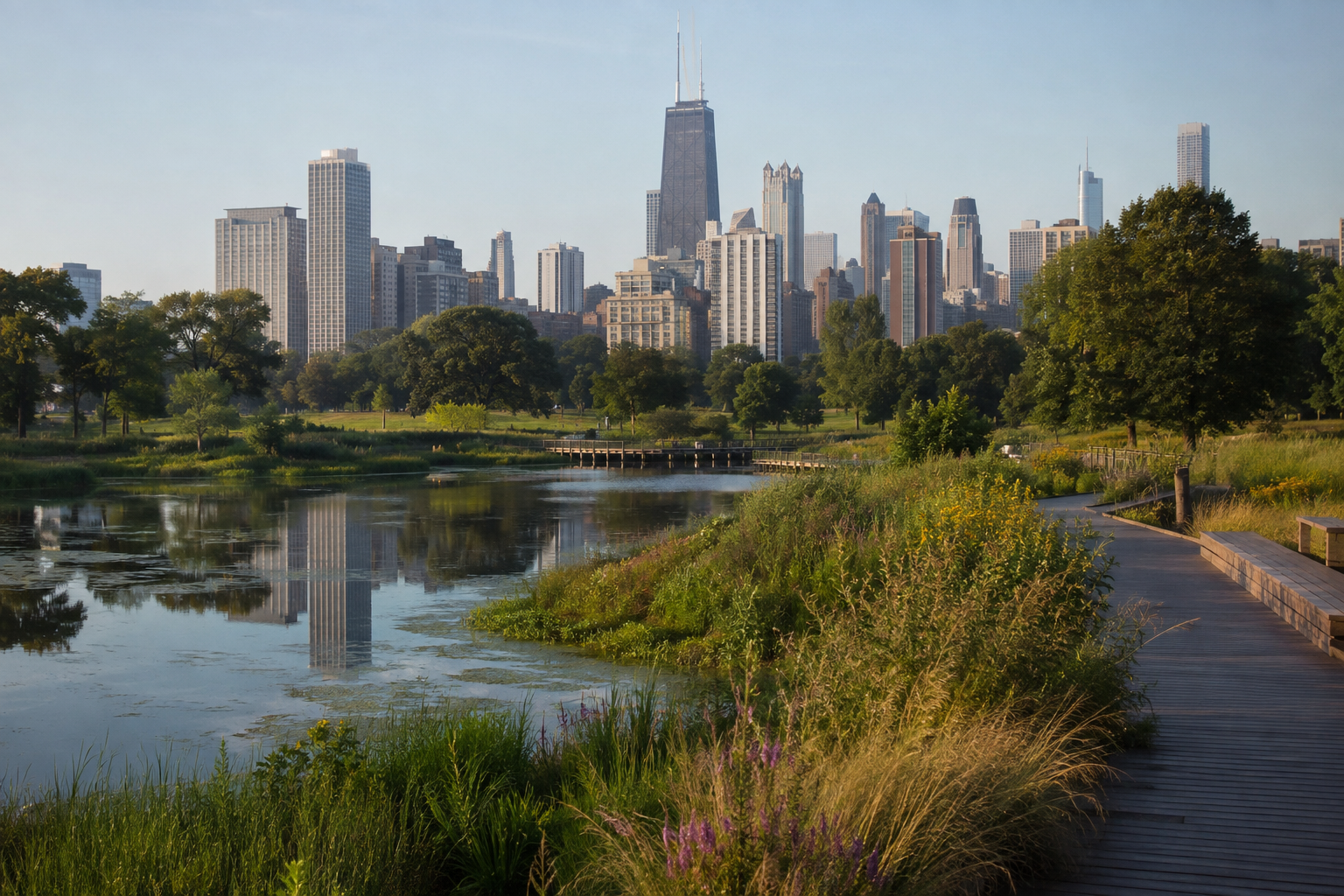
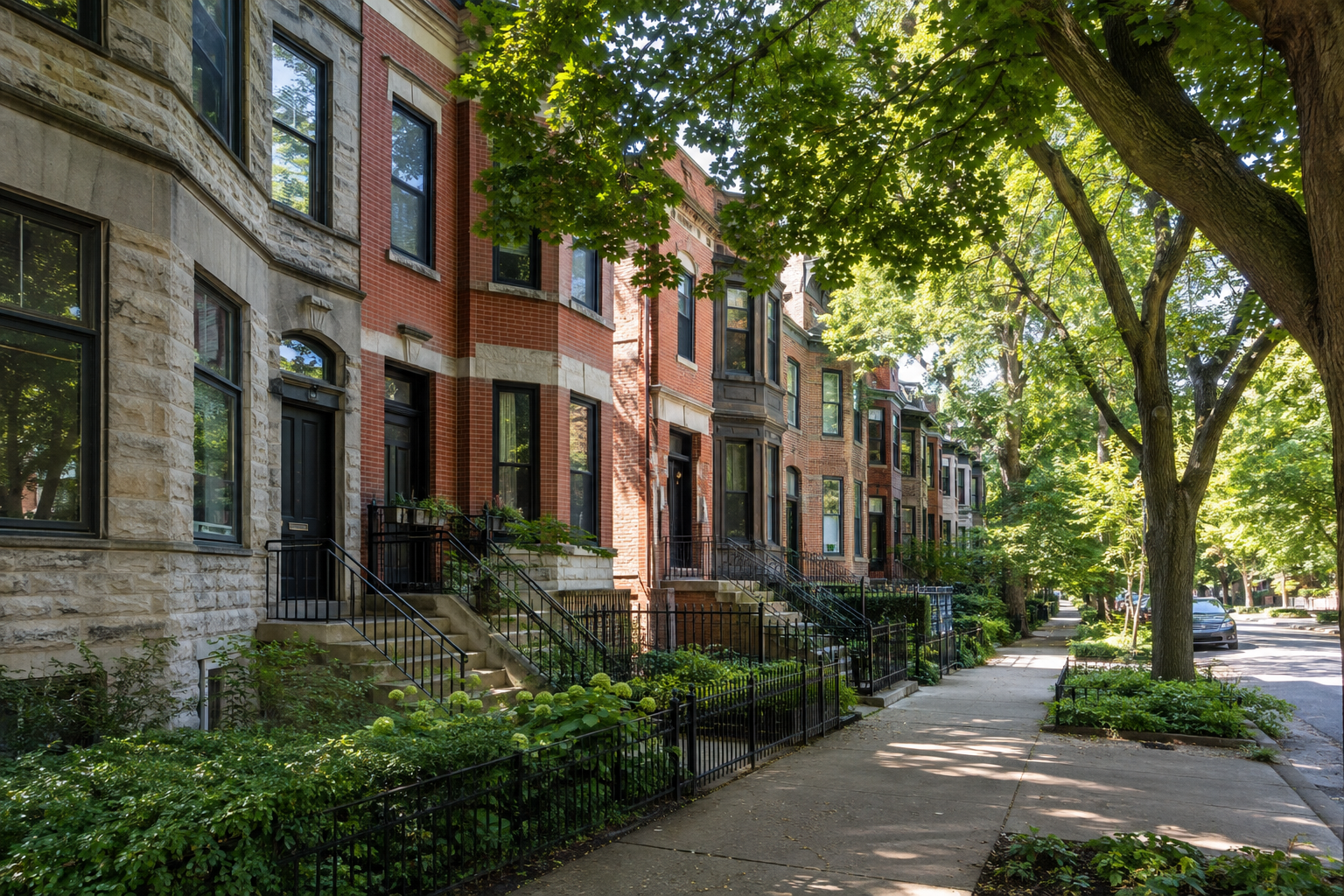
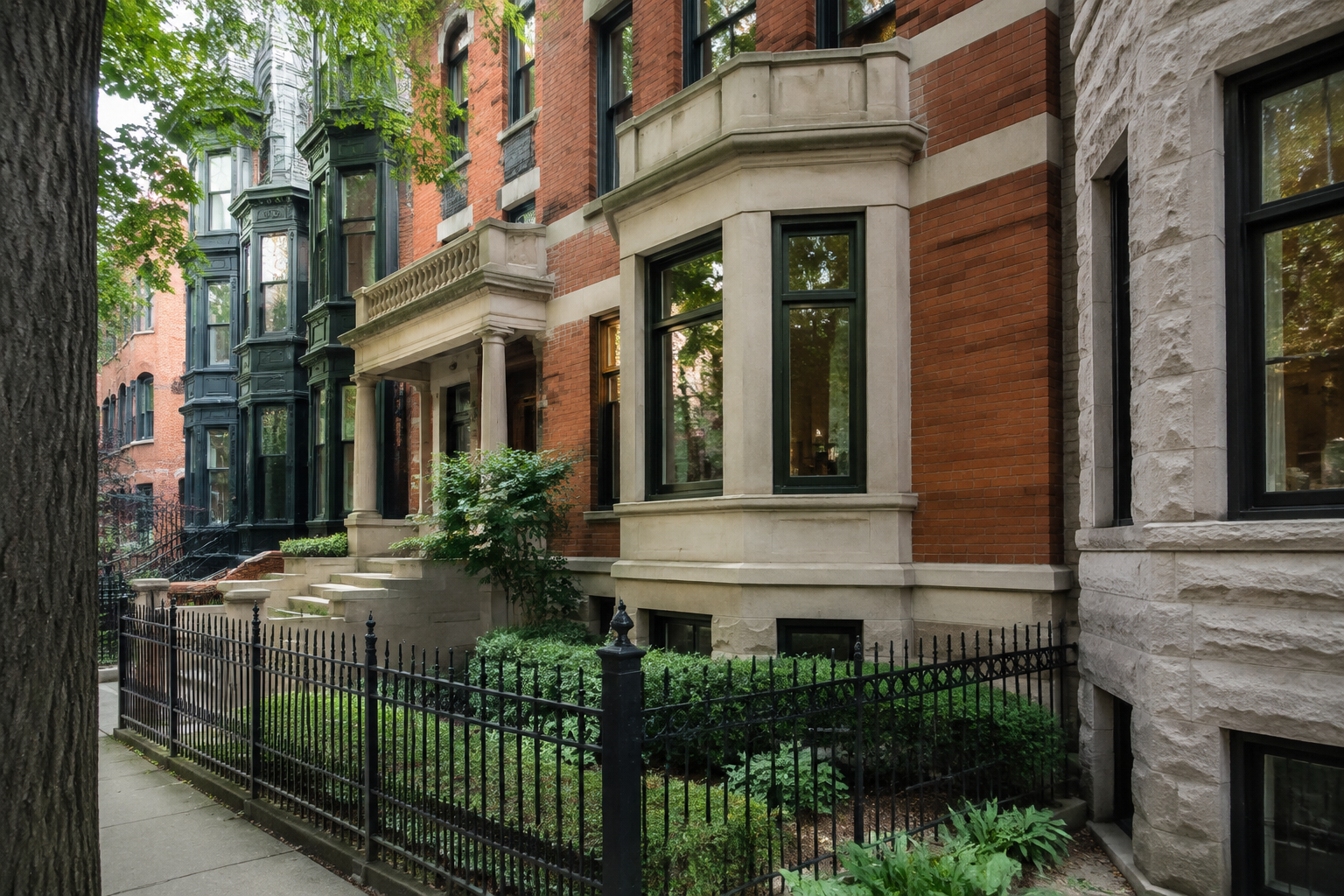
Lincoln Park is Chicago's largest affluent North Side neighborhood, officially Community Area 7, bounded by North Avenue on the south, Diversey Parkway on the north, Lake Michigan on the east, and the North Branch of the Chicago River and Clybourn Avenue on the west. It covers about 3.17 square miles and held 70,425 residents at the 2020 Census, with a median household income in the $123,000 to $140,000 range and roughly 86 percent of adults holding a bachelor's degree or higher. The neighborhood takes its name from the park on its eastern edge, and the two are routinely confused. Lincoln Park the park is Chicago's largest, running about 1,208 acres and roughly seven miles of lakefront from Ohio Street Beach in Streeterville north to Ardmore Avenue in Edgewater, so most of it is not in the neighborhood at all. The neighborhood grew after the Great Chicago Fire of 1871 pushed masonry construction north of the old fire limits, and was largely built out in row houses, greystones, and small apartment buildings between 1875 and 1910.
The single most important thing to understand about Lincoln Park pricing is that the neighborhood median describes two different markets averaged together, and the published figures disagree sharply. Redfin reported a median sale price of $849,714 for May 2026, up 9.6 percent year on year, with about 33 days on market and a sale-to-list ratio near 104.7 percent. Other trackers put the March 2026 median closer to $703,000, one national portal put it near $925,000 in mid-2026, and Zillow's typical home value for the neighborhood sat at $486,934. All of those are defensible outputs of different methods over different windows, and none of them tells a buyer what to expect. The useful split is by property type. Vintage condominiums in walk-ups and boutique buildings generally trade from roughly $400,000 to $850,000, new construction condominiums near Armitage and Halsted regularly clear $1 million, and single-family houses generally run from about $1.2 million to $3 million, with lakefront and Old Town Triangle houses topping $4 million. Recent public sales in the neighborhood have ranged from a two-bedroom condominium on North Mildred at $502,125 to a six-bedroom house on West Chalmers at $5.76 million. Ask which market you are in before you look at any median.
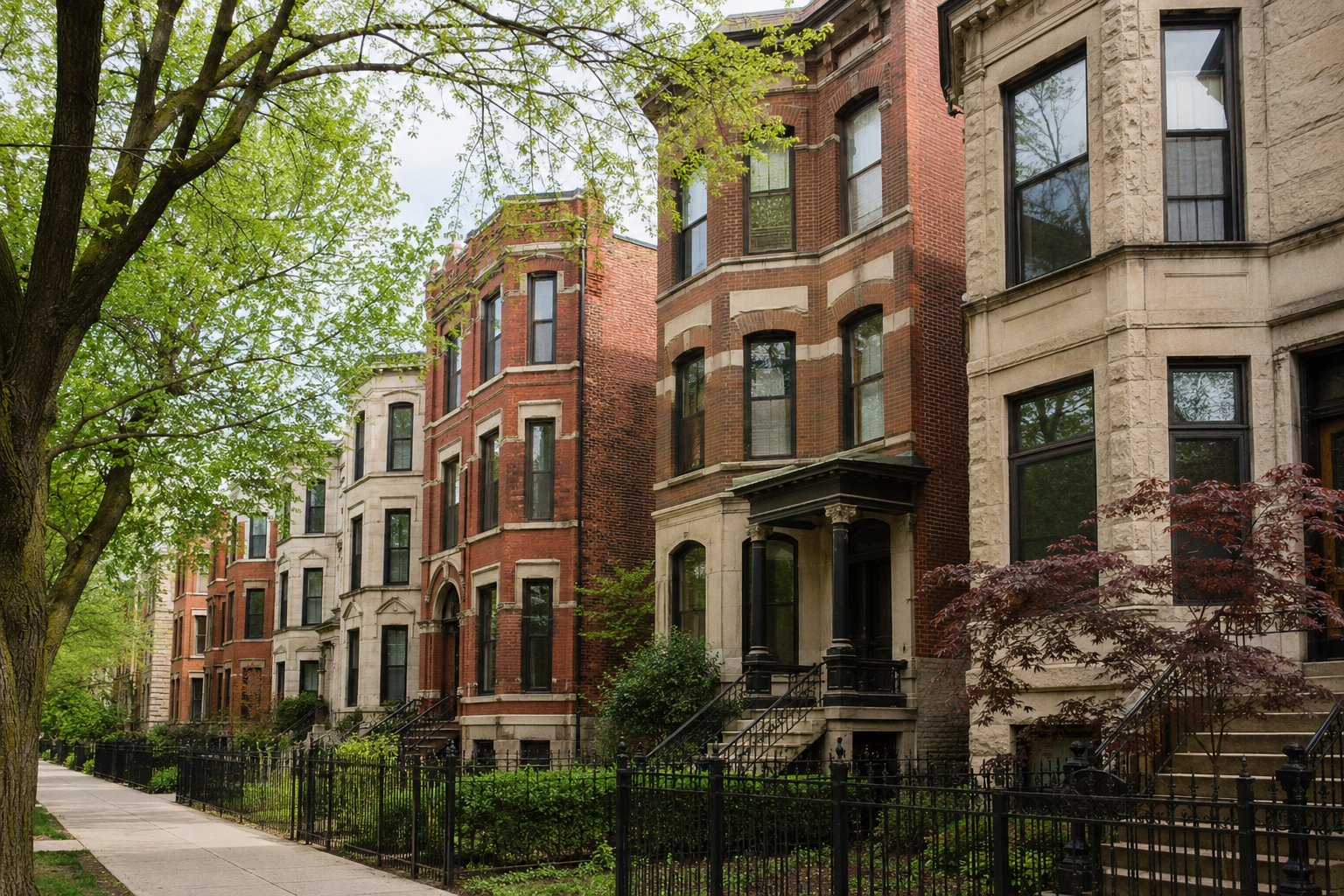
What sets Lincoln Park apart from every comparable Chicago neighborhood is that it has genuine depth of single-family housing four miles from the Loop, and that most of it sits inside protected historic fabric. There are at least seven Chicago Landmark districts here, the McCormick Row House District designated in 1971, Mid-North and Old Town Triangle in 1977, Arlington and Roslyn Place in 1989, Burling Row House in 2000, Armitage-Halsted in 2003, and Bissell Street in 2007, plus the 530-acre Sheffield Historic District listed on the National Register in 1976. That combination is why the housing stock cannot be replaced and why values here have been the steadiest in the city for four decades. The Gold Coast has more prestige per square foot but almost no houses. Lakeview has more inventory at lower prices but far less landmark protection and no comparable park frontage. River North and the West Loop are tower markets. Lincoln Park is the only one that offers row houses, greystones, mansions, vintage condominiums, new construction, and a top-rated attendance-area elementary school inside the same boundary.
Carrie McCormick has sold Chicago real estate since 1999, has closed more than $3.5 billion in career sales, and works out of the @properties office at 548 W. Webster Avenue, inside Lincoln Park. She is ranked in the top 1 percent of brokers by the Chicago Association of Realtors, holds the association's Gold and Platinum awards, and is the recurring luxury real estate expert on NBC 5 Chicago's Emmy-nominated series Open House Chicago. Lincoln Park rewards block-level knowledge more than almost any market in the city. Whether a house sits inside a landmark district determines what an owner can change and how long approvals take. Which side of an attendance boundary an address falls on changes its buyer pool. A condominium three blocks from the DePaul campus prices differently from an identical unit three blocks east, because the rental comparables behind it are different. Whether you are buying your first Lincoln Park condominium, trading up to a greystone, or selling a house that needs to be priced against five real comparables rather than a neighborhood average that spans $500,000 to $5.7 million, call 312-961-4612.
Lincoln Park holds more protected historic residential fabric than any Chicago neighborhood outside the Gold Coast, and unlike the Gold Coast most of it is houses. The McCormick Row House District, designated in 1971, is a private lane of Queen Anne row houses built for a theological seminary between 1884 and 1889, now individually owned under exterior covenants. Mid-North, Armitage-Halsted, Burling Row House, Bissell Street, Arlington and Roslyn Place, and the Old Town Triangle complete the set.
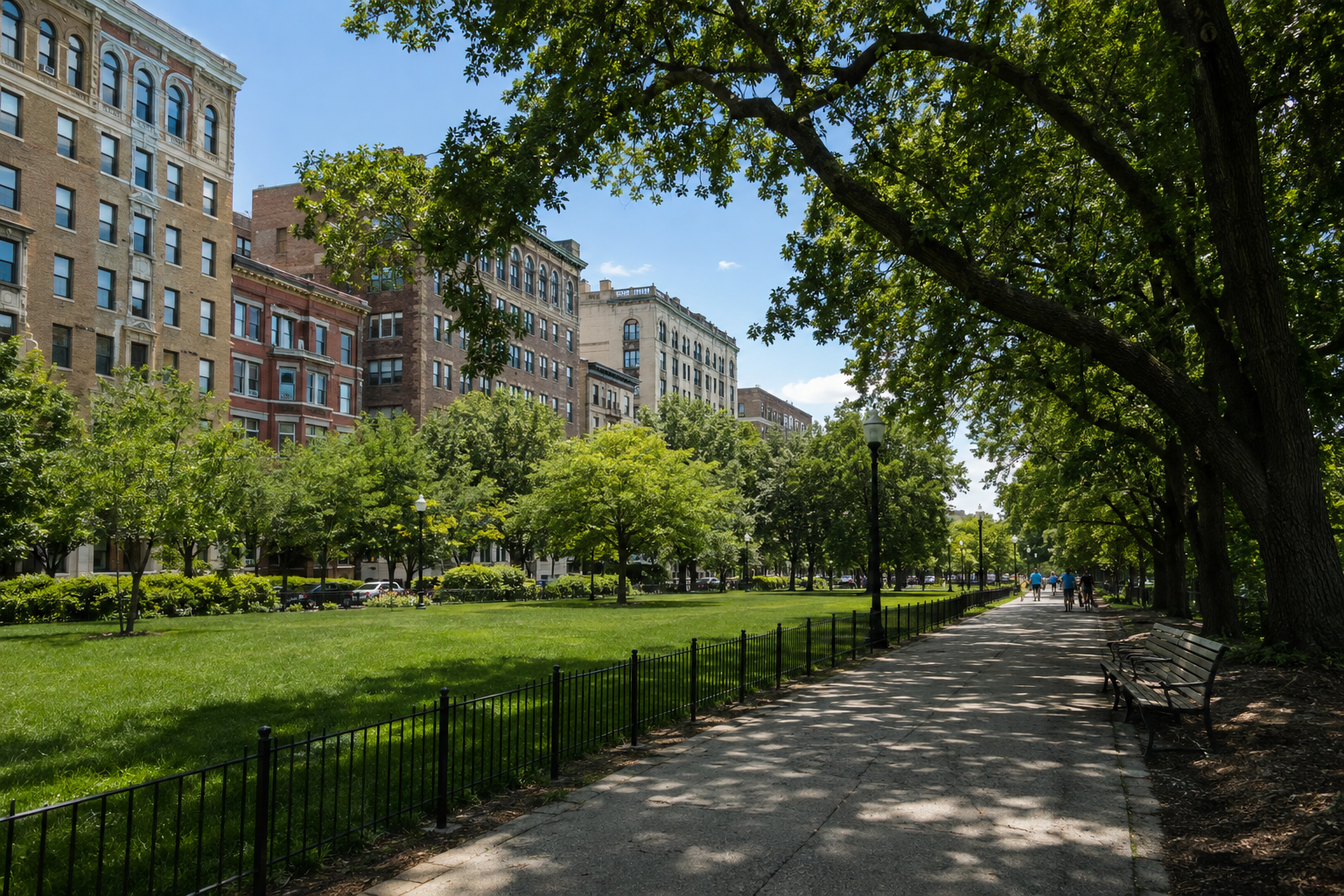
Lincoln Park is Chicago's largest park at roughly 1,208 acres, and the neighborhood sits against its busiest stretch. Lincoln Park Zoo, founded in 1868, is one of the oldest zoos in North America and one of the last free zoos in the country, charging no admission on any day. The free Lincoln Park Conservatory, the 2.7-acre Alfred Caldwell Lily Pool, North Pond Nature Sanctuary, and the Nature Boardwalk over South Pond are all within walking distance of most of the neighborhood.
Abraham Lincoln Elementary at 615 W. Kemper Place is an attendance-area school, not a lottery or test-in programme, and U.S. News ranks it 16th among Illinois elementary schools, with an A from Niche and a 9 out of 10 from GreatSchools. Few large American cities offer a top-twenty state elementary school attached to an address rather than an application, and it is a measurable component of house prices on the blocks it serves.
The current guide, announced in November 2025, starred four Lincoln Park restaurants holding five stars between them: Alinea at two, and Boka, Esme, and Galit at one each, with Nadu added as a Bib Gourmand. Alinea and Boka sit two doors apart on the 1700 block of North Halsted. Almost no residential neighborhood in North America carries this concentration of starred kitchens, and not one of them sits in a hotel or a downtown district.
The Armitage-Halsted District, a Chicago Landmark since 2003, is one of the finest surviving nineteenth-century commercial streetscapes in the city, with pressed-metal bays, cornices, and corner turrets above the storefronts. It holds the neighborhood's boutique retail corridor, so the shopping district and the architecture are the same asset. The Clybourn Corridor west of it covers the big-format end.
Lincoln Park has real depth in detached and attached single-family housing four miles from the Loop, from two-flat conversions and 25-foot row houses to full greystones and lakefront mansions. That is genuinely unusual this close to downtown Chicago, and it is the reason families who would otherwise leave for Wilmette or Hinsdale stay in the city.
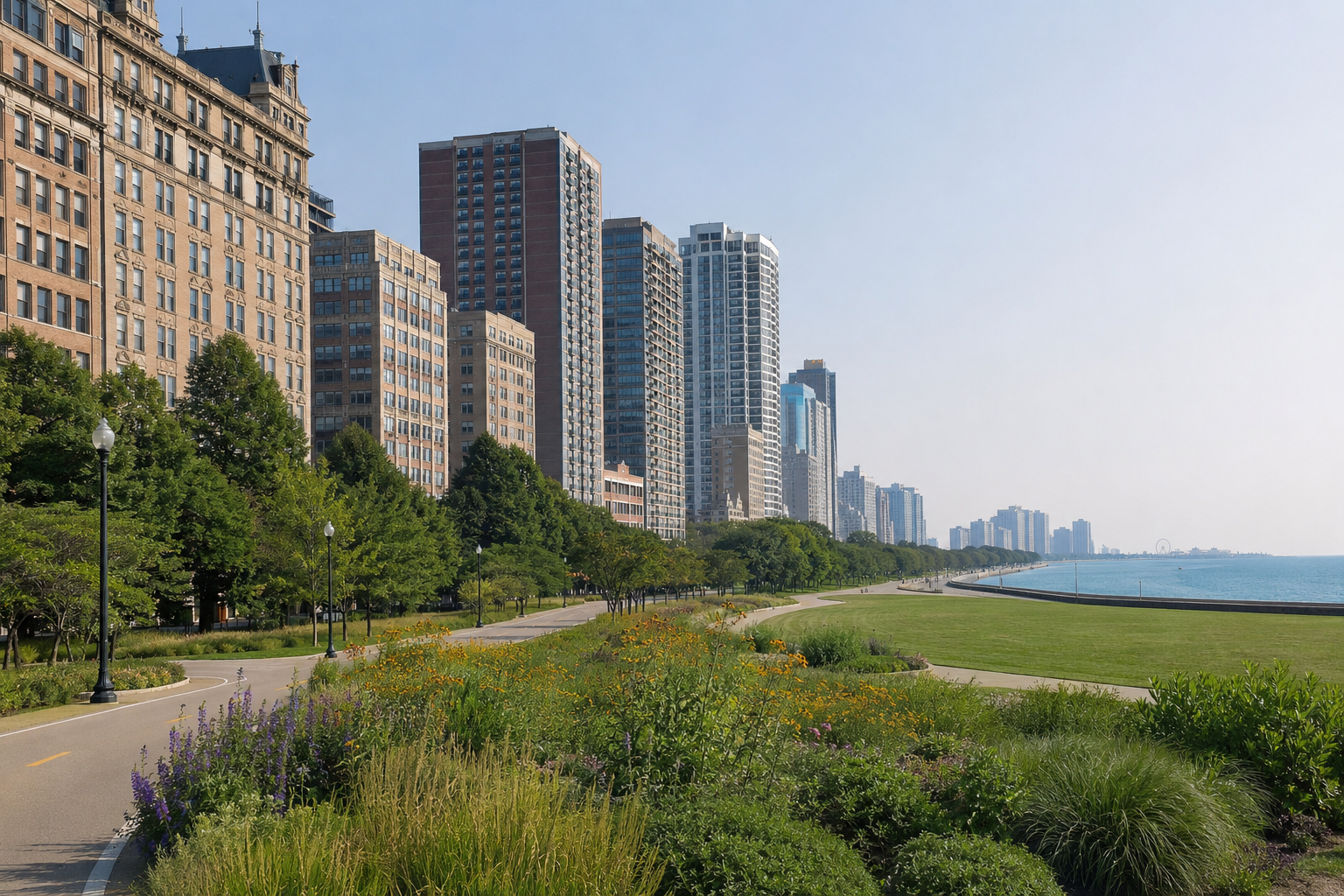
Lincoln Park is large enough that residents navigate it by sub-neighborhood rather than by the neighborhood name, and most of those sub-areas have their own community association. The pattern runs roughly like this: the landmark row-house districts sit in the middle and south, the lakefront high-rises line the eastern edge along Lakeview Avenue and Lincoln Park West, the DePaul campus and its rental belt occupy the west centre, and the quietest family blocks sit north of Fullerton. Ranges below reflect typical recent activity and should be treated as a general guide rather than a valuation.




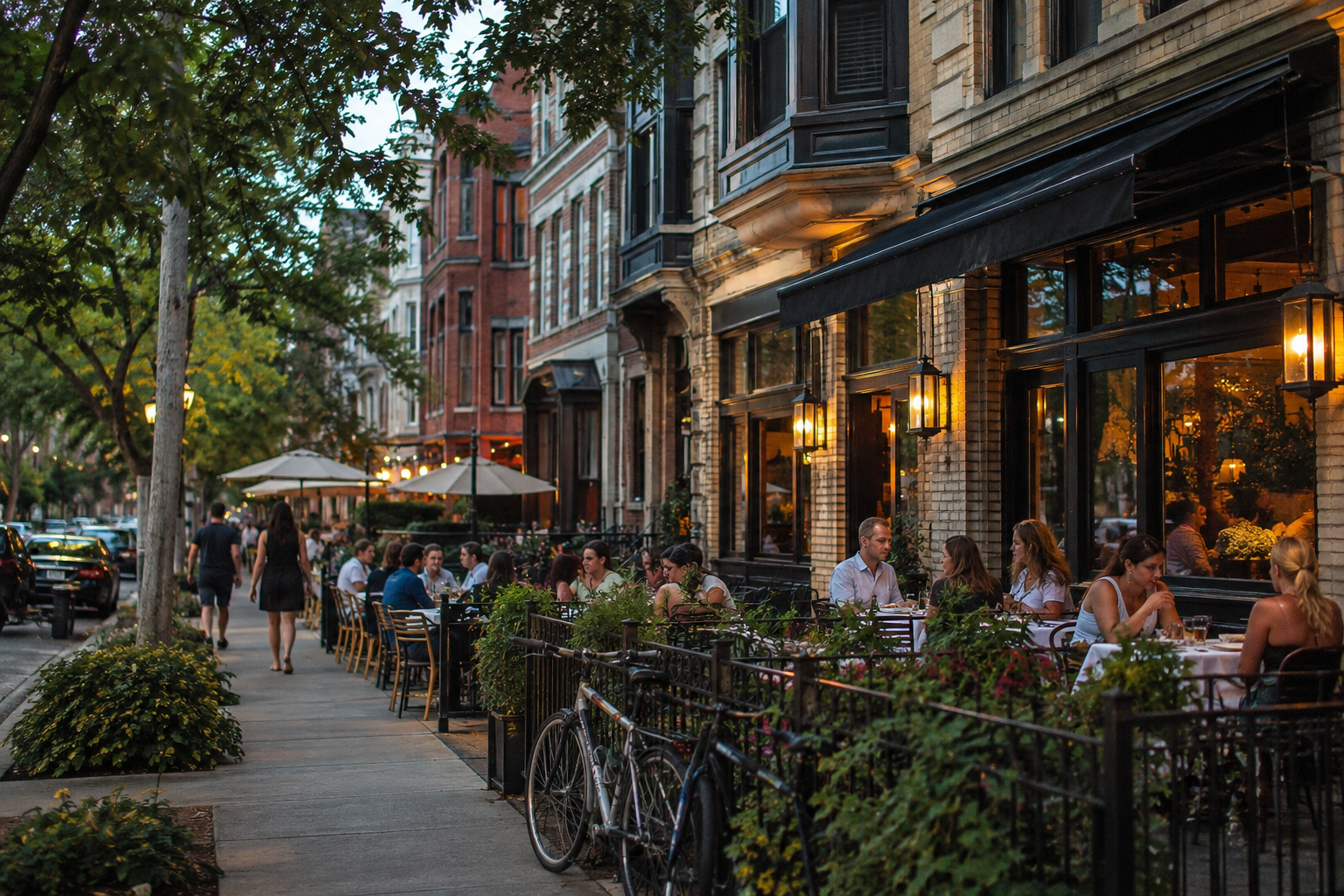
Lincoln Park carries four of Chicago's Michelin-starred restaurants, holding five stars between them, alongside a deep bench of neighborhood institutions, and the two ends of that range often sit on the same block.
Alinea at 1723 N. Halsted Street holds two Michelin stars after fourteen years at three, where Grant Achatz serves a modernist tasting menu that remains as much performance as dinner.
Boka at 1729 N. Halsted Street, two doors north, was the first restaurant from the Boka Restaurant Group and holds a Michelin star for Lee Wolen's seasonal contemporary American cooking, with a seven-course tasting option alongside the a la carte menu.
Esme at 2200 N. Clark Street holds a Michelin star for a tasting menu that changes every twelve weeks around a new artist collaboration, with custom plateware by the collaborating artists and a 16-seat bar for a shorter version.
Galit at 2429 N. Lincoln Avenue is the liveliest of the four, a Michelin-starred modern Middle Eastern room from James Beard Award winner Zachary Engel, built around wood-fired pita, salatim spreads, and a choose-your-own four-course format.
North Pond at 2610 N. Cannon Drive sits inside the park itself, in an Arts and Crafts building facing the pond, and is the most romantic dining room in Chicago on the strength of the setting alone.
Mon Ami Gabi has occupied the ground floor of the Belden-Stratford at 2300 N. Lincoln Park West since 1998, serving Lettuce Entertain You's French bistro standards, steak frites above all, across from the zoo and conservatory.
Geja's Cafe at 340 W. Armitage Avenue has served fondue by candlelight with live flamenco guitar for more than sixty years, and remains the neighborhood's default anniversary room.
Cafe Ba-Ba-Reeba on North Halsted brought Spanish tapas to Chicago in 1985, and R.J. Grunts at 2056 N. Lincoln Park West was the first Lettuce Entertain You restaurant when it opened in 1971. At the casual end, Pequod's Pizza on North Clybourn is the definitive Chicago pan pizza with a caramelised cheese crust, and The Wiener's Circle on North Clark is a late-night hot dog stand as famous for the staff's scripted abuse as for the char dogs.
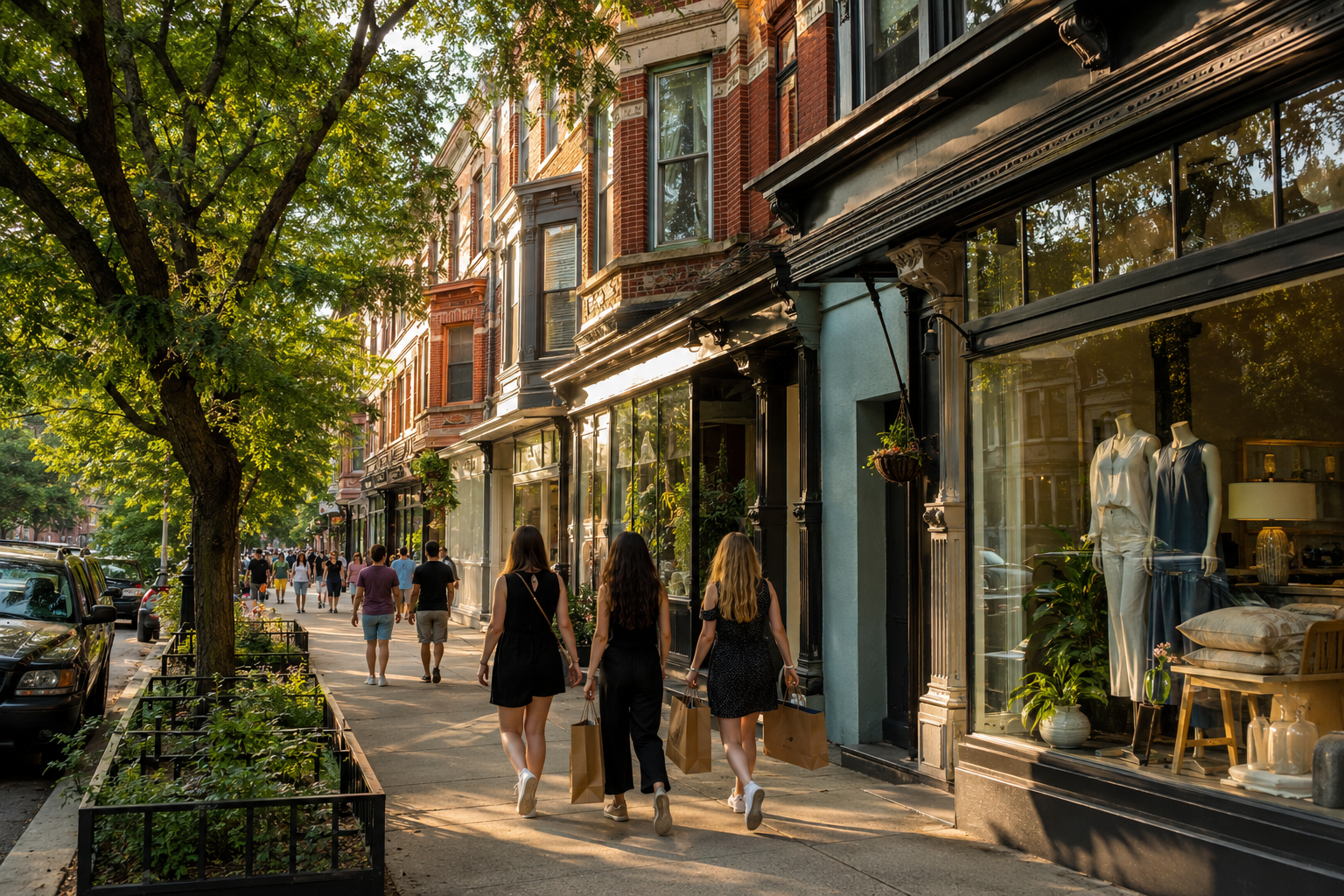
Lincoln Park shops in three distinct places. The Armitage, Halsted, and Webster corridor is the boutique district, running through the Armitage-Halsted landmark streetscape, and it is where independent and designer apparel, home, children's, and gift retail concentrate, in nineteenth-century storefronts under pressed-metal cornices. The Clybourn Corridor to the west covers the big-format end, historically Chicago's home-goods and furniture destination, along with the NEWCITY complex at North and Halsted, which holds Saks Off 5th, a large Mariano's grocery, and a run of casual restaurants. That corridor is in transition: the owner of the Clybourn Place centre at 1800 N. Clybourn Avenue began a redevelopment in 2026 that will deliver about 43,900 square feet of new retail after the departure of several long-standing tenants, so expect the mix there to look different within two years. Third, Lincoln Common at 2345 N. Lincoln Avenue, built on the six-acre former Children's Memorial Hospital site, added roughly 100,000 square feet of retail at Lincoln, Fullerton, and Halsted, anchored by Equinox and the only Kohler Waters Spa in Chicago. For everyday needs, Green City Market at 1817 N. Clark Street runs Wednesdays and Saturdays from 7am to 1pm, outdoors May through October and indoors at the Peggy Notebaert Nature Museum from November through April.
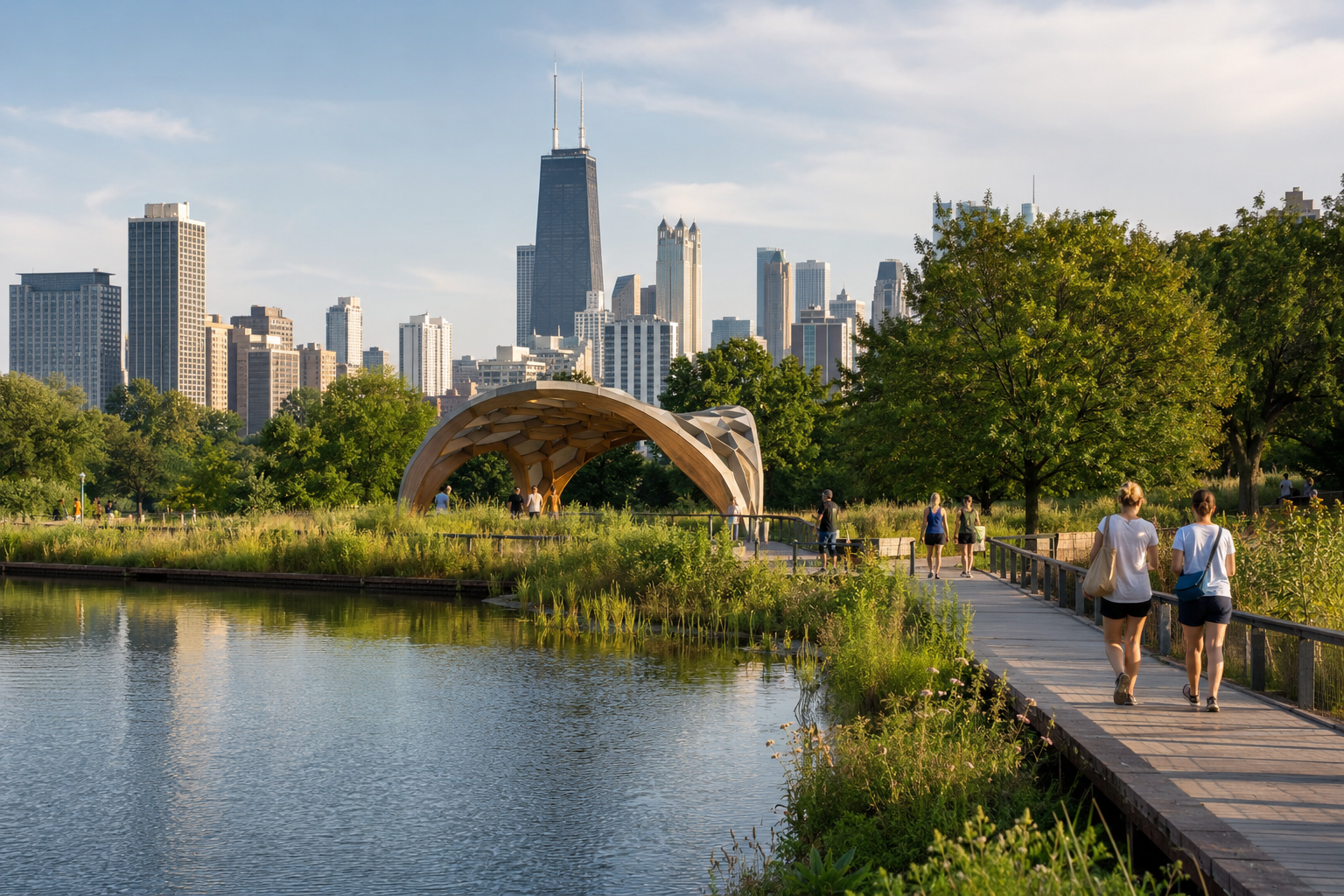
The park is the reason the neighborhood exists and it remains its largest amenity. Lincoln Park Zoo, founded in 1868 and one of the last free zoos in the country, sits at the neighborhood's eastern edge with the Farm-in-the-Zoo, Cafe Brauer, the Studio Gang-designed Nature Boardwalk pavilion over South Pond, and ZooLights in winter. The free Lincoln Park Conservatory at 2001 N. Clark Street holds four greenhouses, the 2.7-acre Alfred Caldwell Lily Pool at 125 W. Fullerton Parkway is a National Historic Landmark and the quietest place in the neighborhood, and the North Pond Nature Sanctuary sits further north on Stockton Drive. The Chicago History Museum anchors the southern end at 1601 N. Clark Street and the Peggy Notebaert Nature Museum, with its butterfly haven, sits at Fullerton and Cannon. On the culture side, Steppenwolf Theatre Company has been at 1650 N. Halsted Street since 1991, runs three stages, and originated Purpose, which won the 2025 Tony Award for Best Play. The landmark Biograph Theater at 2433 N. Lincoln Avenue, where John Dillinger was shot in 1934, has stood largely dormant since 2022 and is in the early stages of a relaunch, and Lincoln Avenue also carries the Apollo Theater, the Greenhouse Theater Center, the music venue Lincoln Hall, and the blues clubs Kingston Mines and B.L.U.E.S. facing each other on North Halsted. The neighborhood's signature annual event is the Old Town Art Fair, held in the Old Town Triangle on the second weekend of June. The 2026 edition ran on 13 and 14 June and drew more than 200 juried artists and around 35,000 visitors, with 2027 dates expected from the Old Town Triangle Association.
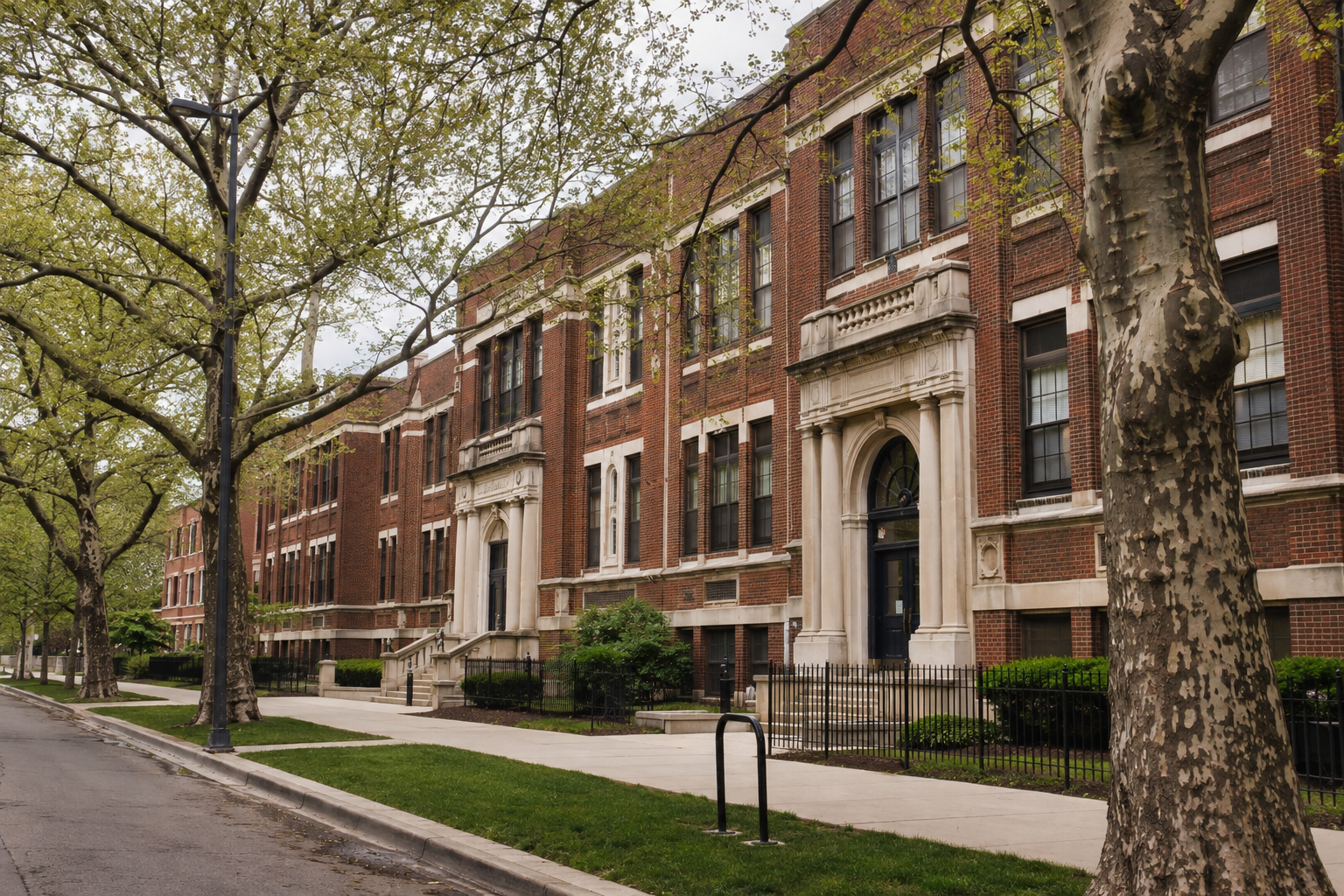
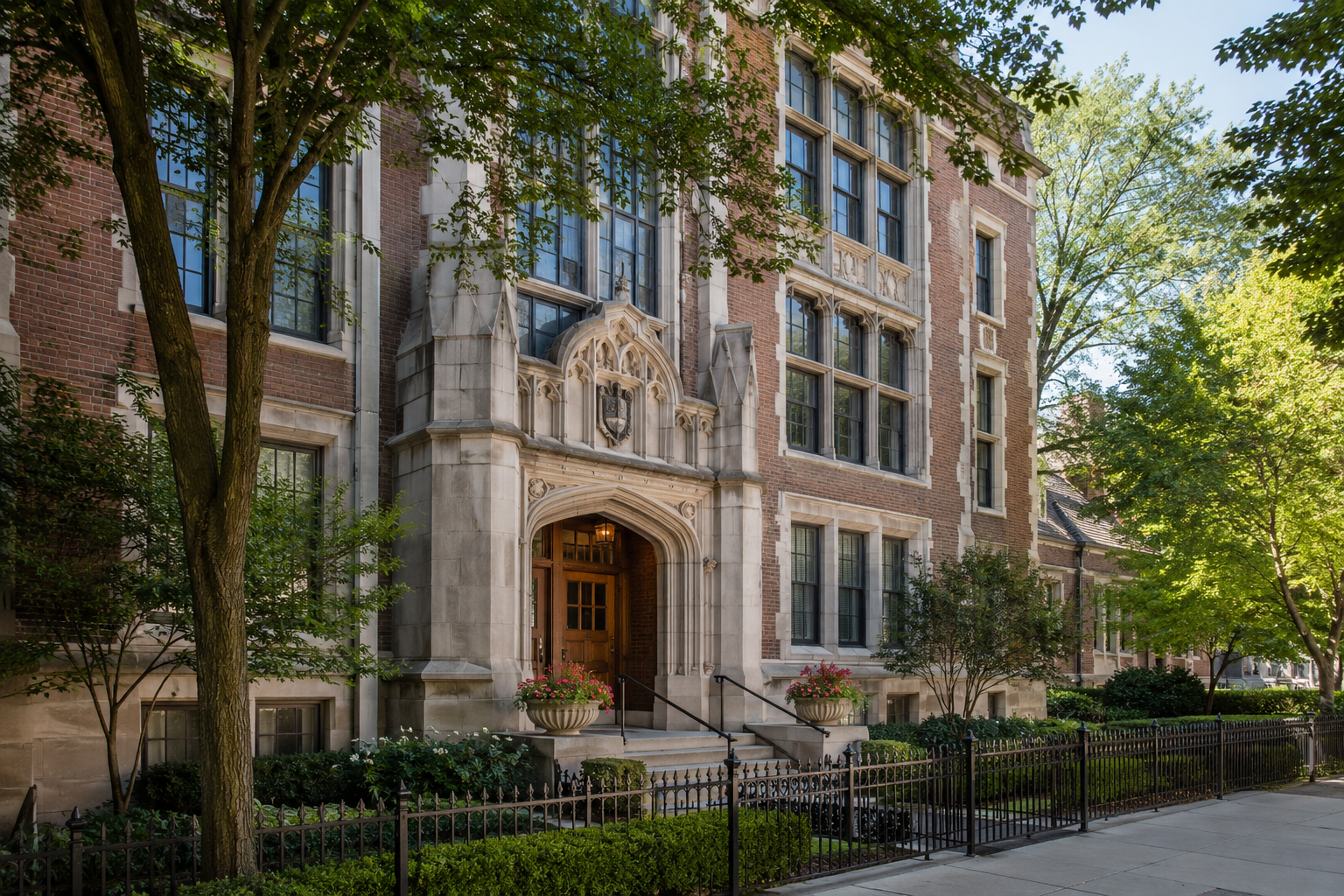
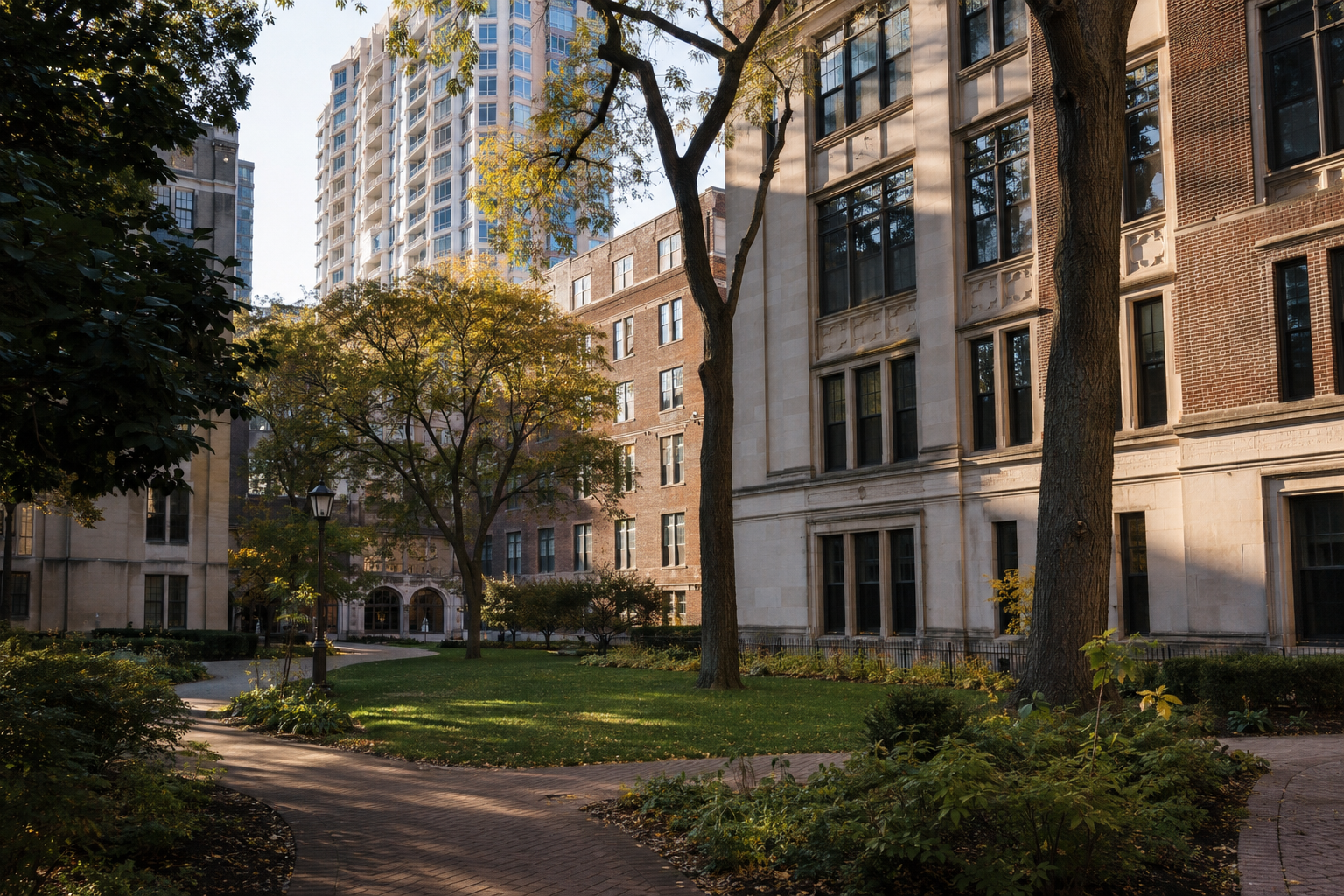
Lincoln Park is served by a single school district, Chicago Public Schools, formally City of Chicago School District 299, so there is no district-boundary question here. What matters instead is the difference between three kinds of Chicago school: attendance-area schools that come with an address, selective-enrollment and magnet programmes that admit by application or test regardless of address, and the independent schools that a large share of neighborhood families use. Lincoln Park is unusual in that its attendance-area elementary school is one of the strongest in the state.
Lincoln Elementary at 615 W. Kemper Place serves kindergarten through grade 8 and is the attendance-area school for much of the neighborhood's eastern and central blocks. It enrols roughly 850 students at about a 16 to 1 student-teacher ratio, holds an A from Niche and a 9 out of 10 from GreatSchools, and is ranked 16th among Illinois elementary schools and 14th among Illinois middle schools by U.S. News. Reported proficiency runs high, in the 70 to 86 percent range for math and reading depending on the source and year. The practical point for buyers is that this performance attaches to an address rather than to an application, which is why the Lincoln attendance boundary is one of the few school lines in Chicago that measurably affects house prices. Confirm the boundary for a specific address before relying on it, because CPS redraws attendance areas periodically and the line does not follow sub-neighborhood edges.
Oscar Mayer Magnet School at 2250 N. Clifton Avenue and Alcott Elementary are the other well-regarded public elementary options serving parts of the neighborhood. Mayer is unusual among Chicago magnets in having kept an attendance boundary alongside its citywide lottery, so an address can matter here in a way it does not at most magnet schools, and it runs Montessori in the younger grades and the International Baccalaureate Middle Years Programme in grades 6 through 8. For high school, Lincoln Park High School at 2001 N. Orchard Street is the attendance-area school, enrolling roughly 2,100 to 2,200 students since it opened in 1900, with an A from Niche, a 7 out of 10 from GreatSchools, an 88 percent graduation rate, and both Advanced Placement and International Baccalaureate tracks. Its IB Diploma Programme and honours programmes admit selectively by application, so a Lincoln Park address gives access to the school but not automatically to those tracks. Walter Payton College Prep, ranked 54th nationally by U.S. News, sits just south of the neighborhood on North Wells Street and admits city-wide by test and tier rather than by address.
Francis W. Parker School at 330 W. Webster Avenue is the neighborhood's flagship independent school, founded in 1901 on the progressive education principles of John Dewey and Colonel Francis Wayland Parker. It serves roughly 940 students from pre-kindergarten through grade 12 at about a 6 to 1 student-teacher ratio, with 2025 to 2026 tuition of about $45,570 for pre-kindergarten through grade 5 and about $49,900 for grades 6 through 12. The British International School of Chicago, Lincoln Park offers an IGCSE and IB pathway and draws heavily on relocating and international families. St. Clement School, Immaculate Conception and St. Joseph School, and St. James Lutheran School provide parochial options within or immediately adjacent to the neighborhood, and the Latin School of Chicago is a short distance south in the Gold Coast.
DePaul University's Lincoln Park campus occupies a substantial footprint in the west centre of the neighborhood and shapes it in ways buyers should understand as more than a lifestyle note. The campus brings the DePaul Art Museum at 935 W. Fullerton Avenue, The Theatre School, and the School of Music, along with year-round activity on Fullerton and Sheffield and a large student rental market that supports the two- to four-unit and condominium stock in that part of the neighborhood. For families, the practical effect is a neighborhood with a genuine university presence and the amenity base that comes with it.
Development accelerated with Potter Palmer's mansion in 1882.
Encompasses the historic core alongside the 60611 district.
Consisting of roughly 5,600 households averaging two people.
Historically one of America's wealthiest urban enclaves.
Neighborhood entry point, driven heavily by vintage condominium volume.
The current baseline for standard attached housing stock.
Set in 2017 by the purchase of the top four floors at No. 9 Walton.
The neighborhood's largest single source of high-rise inventory.
With a median asking price currently hovering near $585,000.
The average market pace alongside ~45 monthly closings.
Connected directly to the trail via Oak Street Beach.
Direct access via two CTA train stops and four major bus routes.
Navigating Chicago's Gold Coast luxury real estate market requires unparalleled expertise. Here is what you need to know before we begin.
Ask A QuestionThere is no single useful answer, because Lincoln Park contains two different markets and the published medians disagree with each other by more than $400,000. Redfin reported a median sale price of $849,714 for May 2026, other trackers reported about $703,000 for March 2026 and about $925,000 in mid-2026, and Zillow's typical home value for the neighborhood was $486,934. The split that actually helps is by property type: vintage condominiums generally run about $400,000 to $850,000, new construction condominiums frequently exceed $1 million, and single-family houses generally run about $1.2 million to $3 million, rising above $4 million for lakefront and Old Town Triangle addresses. Decide which of those markets you are in before you read any neighborhood average.
No, and the park is far larger. The neighborhood is Chicago's Community Area 7, about 3.17 square miles bounded by North Avenue, Diversey Parkway, Lake Michigan, and the North Branch of the Chicago River. The park is Chicago's largest at roughly 1,208 acres and runs about seven miles of lakefront from Ohio Street Beach in Streeterville north to Ardmore Avenue in Edgewater, so most of it sits alongside other neighborhoods entirely. What the neighborhood has is the park's busiest and most amenity-dense stretch on its eastern edge, including the zoo, the conservatory, the Lily Pool, North Pond, and the Nature Boardwalk.
Yes, in real volume, and that is the main thing separating Lincoln Park from every other neighborhood this close to downtown Chicago. The stock runs from 25-foot brick row houses and two-flat conversions through full greystones to lakefront mansions, concentrated in the Mid-North District, the Old Town Triangle, Park West, Sheffield, and Wrightwood. Typical renovated houses run about $1.2 million to $3 million, with the top of the market above $4 million and recent public sales reaching $5.76 million. The important diligence point is that a large share of these houses sit inside one of the neighborhood's seven Chicago Landmark districts, which governs exterior alterations and affects renovation timelines.
Wrightwood Neighbors and the blocks inside the Abraham Lincoln Elementary attendance area are the two answers most Lincoln Park families arrive at, for different reasons. Wrightwood, north of DePaul between Fullerton and Diversey, is the quietest and most residential pocket, with single-family and small vintage buildings, limited through traffic, and an active neighbors association. The Lincoln Elementary attendance area matters because that school ranks 16th among Illinois elementary schools and admits by address rather than application. Park West adds park frontage and the largest houses, Mid-North adds landmark row houses and walkability, and Sheffield offers strong housing with more collegiate energy from the DePaul campus. Families who want nightlife at the doorstep choose RANCH Triangle; families who want quiet do not.
Lincoln Park is served by one district, Chicago Public Schools District 299, and it is one of the few Chicago neighborhoods where the attendance-area school is a genuine draw rather than a fallback. Abraham Lincoln Elementary at 615 W. Kemper Place serves K through 8, holds an A from Niche and a 9 out of 10 from GreatSchools, and ranks 16th among Illinois elementary schools by U.S. News, all attached to an address rather than an application. Lincoln Park High School at 2001 N. Orchard Street is the attendance-area high school, with an A from Niche and both AP and IB tracks, although the IB Diploma Programme admits selectively by application. Walter Payton College Prep, ranked 54th nationally, sits just south and admits city-wide by test. On the independent side, Francis W. Parker School has been here since 1901 and the British International School of Chicago, Lincoln Park serves relocating families. Verify current attendance areas for a specific address before relying on any of it.
They overlap, which is why listings disagree about them. Old Town is a neighborhood name rather than an official community area, and it spans two of them: the Old Town Triangle sits inside the Lincoln Park community area, while the blocks south of North Avenue along Wells Street sit in the Near North Side. So a house in the Triangle is accurately described as both Old Town and Lincoln Park, and a condominium on Wells south of North Avenue is Old Town but not Lincoln Park. The consequences are real: the community area governs some city data reporting, the Old Town Triangle carries Chicago Landmark protection dating to 1977, and school lookups follow the address rather than the label. Always check the cross streets.
They are the two premium North Side markets and they suit different buyers. The Gold Coast is denser, smaller, and almost entirely attached housing, with roughly a dozen single-family listings at any time and a market driven by vintage co-operatives, luxury condominium towers, and Oak Street retail. Lincoln Park is roughly five times the population across a much larger area, with genuine depth in row houses, greystones, and detached houses, seven landmark districts, a top-ranked attendance-area elementary school, and Chicago's largest park on its edge. Broadly, buyers who want a full-service building, a short walk to Michigan Avenue, and no yard choose the Gold Coast; buyers who want a house, a school catchment, and park access choose Lincoln Park. Carrie McCormick works both, which matters when a buyer is undecided.
Nearly every consumer site draws from the same source, so the differences are in filtering rather than inventory. Chicago listings originate in Midwest Real Estate Data, the regional MLS, and flow from there to brokerage sites and national portals including Zillow, Redfin, and Realtor.com, which is why the same homes appear almost everywhere. Two Lincoln Park-specific problems are worth knowing. First, ZIP code filtering does not work here, because essentially the entire neighborhood is 60614, so a ZIP search cannot separate an Old Town Triangle house from a student two-flat near DePaul. Second, portal neighborhood tags are loose, and Lincoln Park searches routinely return Lakeview addresses north of Diversey Parkway and Old Town addresses south of North Avenue. The reliable approach is to search by street range, sub-neighborhood, or attendance area, and to confirm which side of a boundary an address actually falls on.
Carrie McCormick has sold Chicago real estate since 1999, has closed more than $3.5 billion in career sales, and works from the @properties office at 548 W. Webster Avenue, inside Lincoln Park rather than near it. Under her "100 percent Carrie" model clients work directly with her from the first valuation through closing. In this market that matters because value turns on details a generalist misses: whether a house sits inside one of seven landmark districts and what that does to a renovation, which side of the Lincoln Elementary attendance line an address falls on, how the rental comparables behind a DePaul-area condominium change its pricing, whether a Lakeview Avenue building is a co-operative and whether its assessment includes taxes, and how to price a greystone against five real comparables rather than a neighborhood median that spans $500,000 to $5.7 million. She is ranked in the top 1 percent of brokers by the Chicago Association of Realtors, holds the association's Gold and Platinum awards, is the recurring luxury real estate expert on NBC 5 Chicago's Open House Chicago, and works within the Christie's International Real Estate network, which reaches buyers across more than 45 countries. Call 312-961-4612.
Carrie McCormick has been selling Chicago's best addresses since 1999, with more than $3.5 billion in career sales, and she works from the @properties office at 548 W. Webster Avenue, inside Lincoln Park. Her practice spans the whole neighborhood, from vintage condominiums and DePaul-area investment buildings to landmark row houses in Mid-North, park-facing residences on Lakeview Avenue, and houses in the Old Town Triangle. Ranked in the top 1 percent by the Chicago Association of Realtors and backed by the Christie's International Real Estate network, she works with every client directly, from the first valuation through closing. To talk through a purchase, a sale, or a relocation, call 312-961-4612 or email carrie@atproperties.com.