
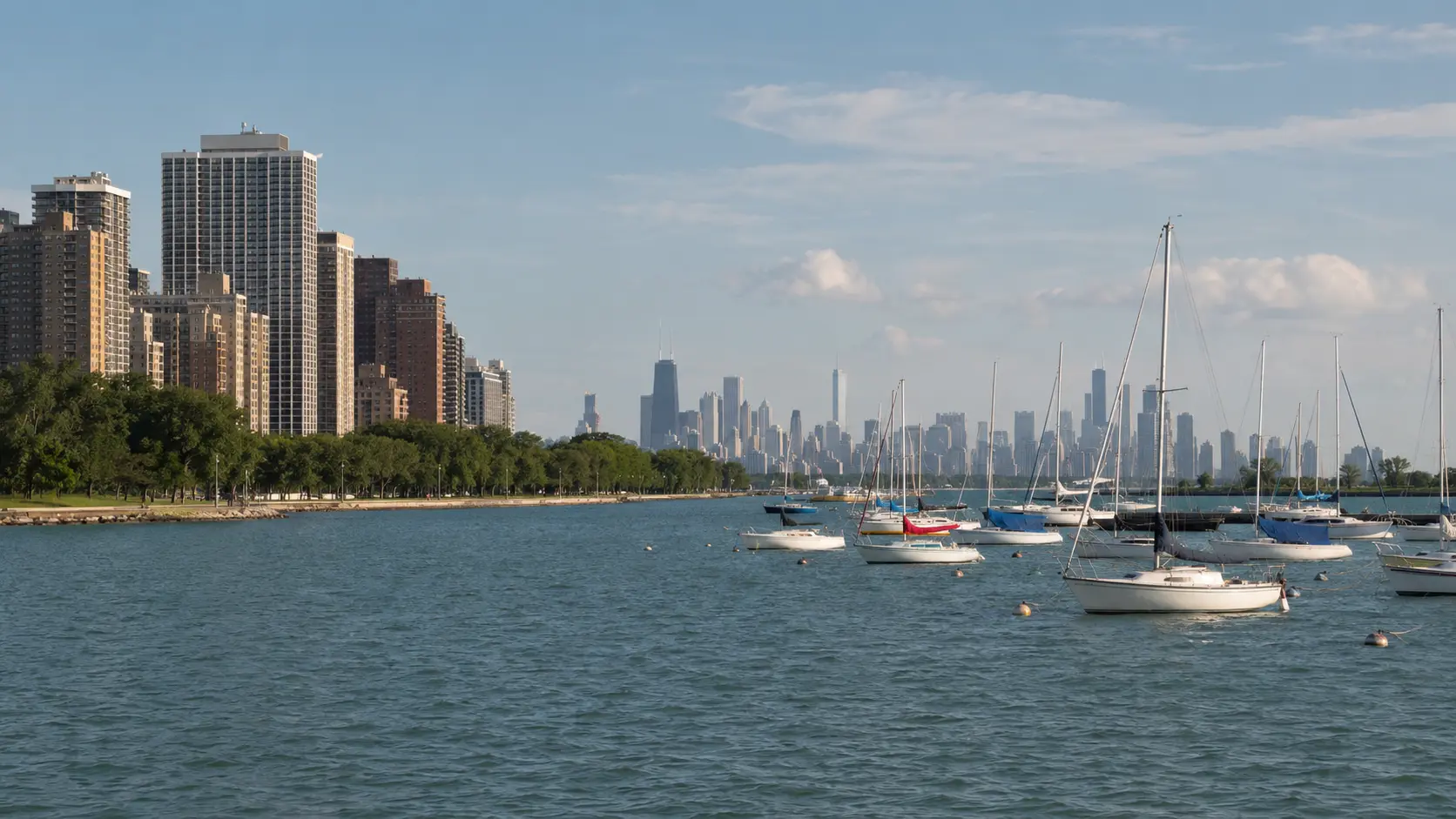
Lakeview Chicago Homes for Sale | Condos and Houses
Chicago's second-largest community area and its most varied North Side market: more than 100,000 residents across three square miles, six distinct neighborhoods, Wrigley Field, Belmont Harbor, and prices that range from the low $300,000s to well over $2 million depending entirely on which part you are standing in.
Lakeview is Community Area 6, on Chicago's North Side about four miles from the Loop, bounded by Diversey Parkway on the south, Irving Park Road and Montrose Avenue on the north, Ravenswood Avenue on the west, and Lake Michigan on the east. It covers roughly 3.1 square miles and held 103,050 residents at the 2020 Census, making it the second-largest community area in the city, with a 2023 estimate around 101,163 and a median household income near $95,000. Its ZIP codes are 60613 and 60657. What matters more than any of those numbers is that Lakeview is not experienced as one place. Residents navigate it by sub-neighborhood, and there are at least six: Lakeview East along the lake, Wrigleyville around the ballpark, Northalsted along the Halsted Street corridor, West Lakeview toward Ravenswood, the Southport Corridor, and Graceland West at the northern edge. Each has its own commercial street, its own housing stock, and its own price level.
That variety is why a single Lakeview median is close to useless, and the numbers make the point better than any description. Redfin reported a March 2026 median sale price of about $520,000 across the whole community area, down slightly year on year, with 46 days on market and 306 sales in the month. Break that apart and it dissolves. Lakeview East, the lakefront high-rise district, posted a median around $327,000 over the same period. West Lakeview posted about $675,000, more than double, and did so while its median fell 11.7 percent year on year and its price per square foot rose 23.9 percent, which is a change in what is selling rather than a fall in value. Single-family houses across Lakeview have been reported at a median near $755,000 over a trailing twelve months, with typical detached homes in good condition running roughly $800,000 to $1.5 million and renovated or new-construction houses on desirable blocks reaching $1.8 million to $2.5 million. Condominium medians sit far below that, reported around $375,000. Ask which Lakeview before you ask what it costs.
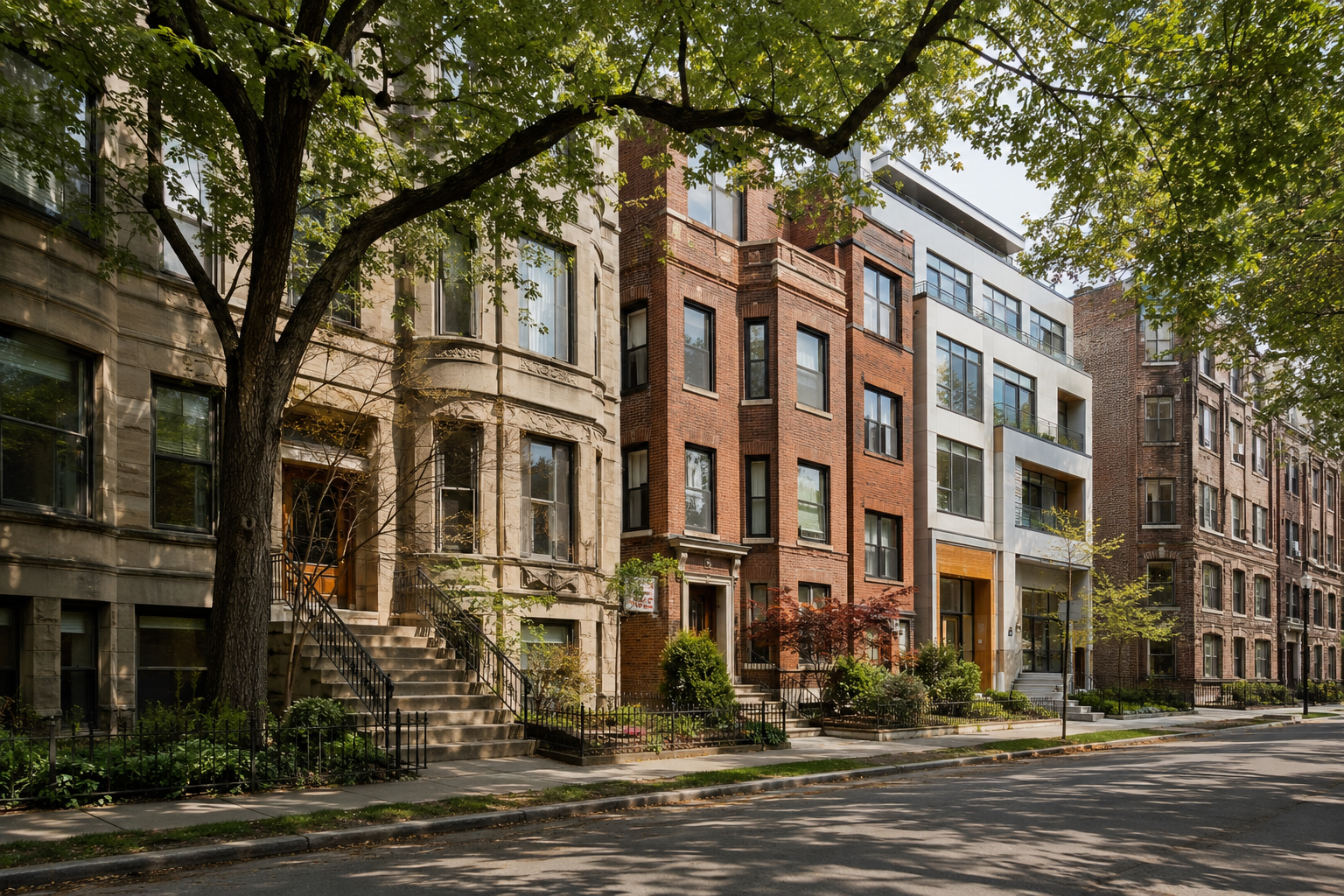
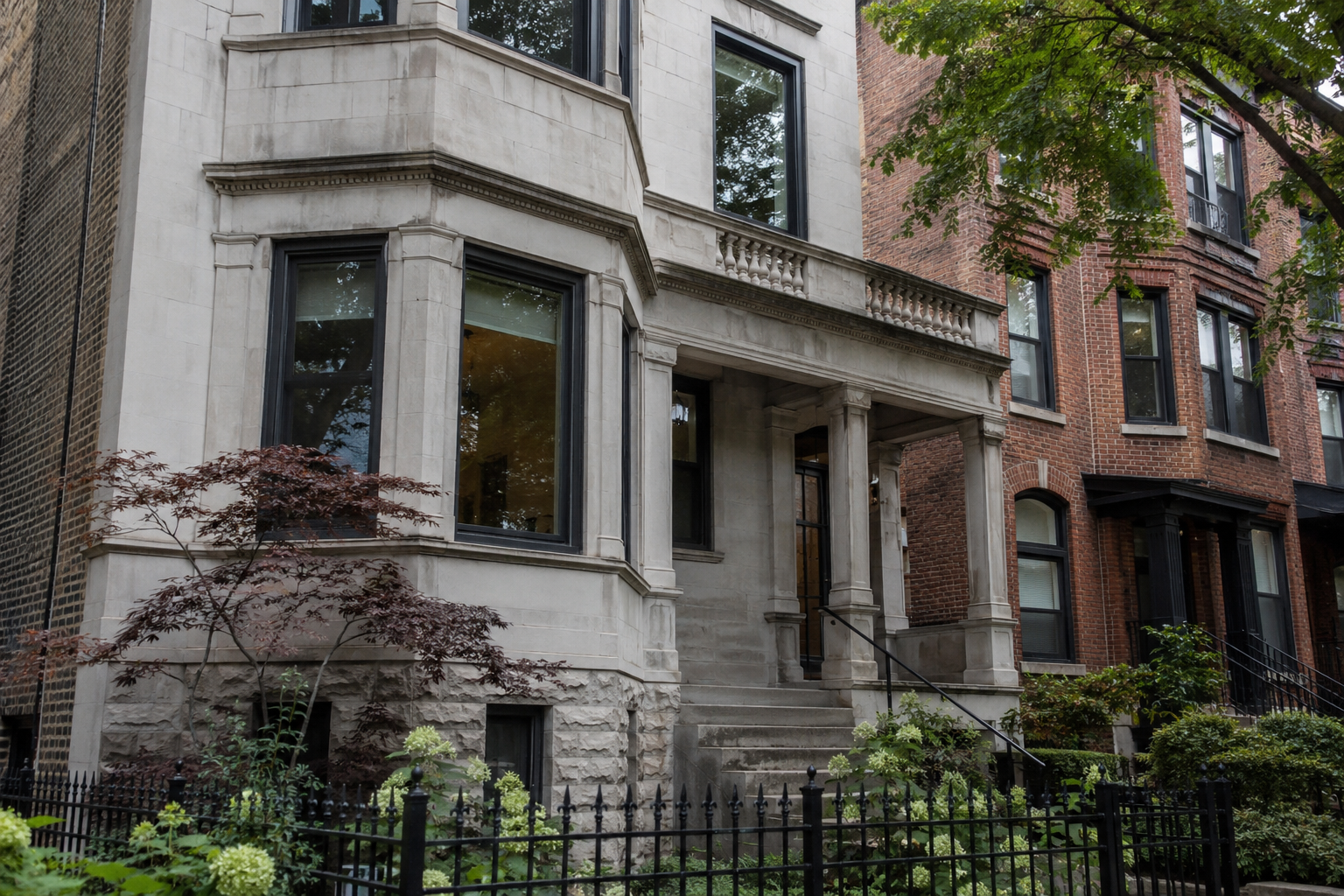
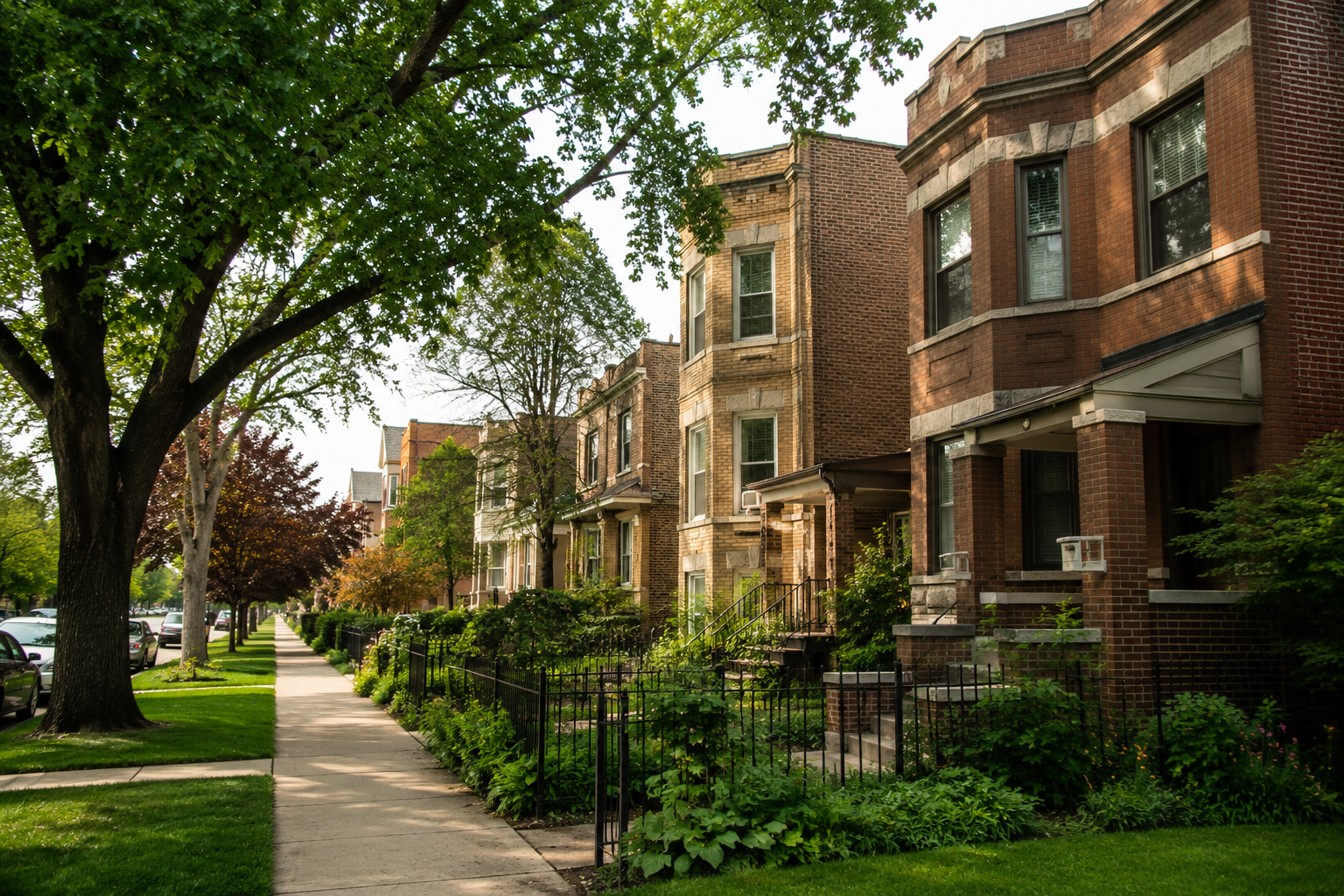
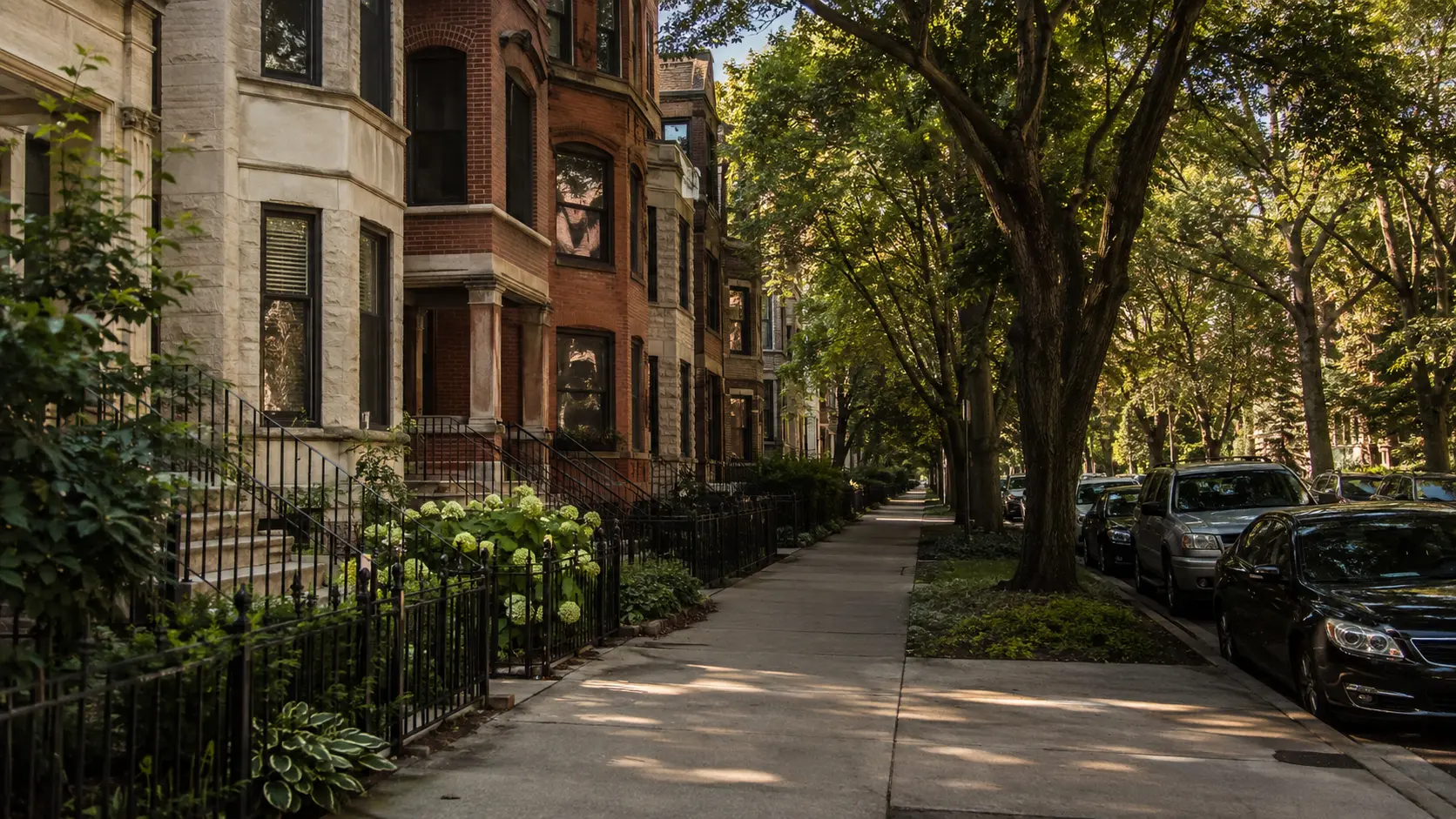
The housing stock here is unusually wide. Lakeview East holds full-service lakefront high-rises and rehabilitated vintage courtyard buildings. Wrigleyville and the western pockets hold classic greystones and brick two-flats and three-flats, many with yard space and most within a short walk of the ballpark. West Lakeview and the Southport Corridor carry small-lot single-family homes, restored two-flats, and new-construction townhouses on tree-lined blocks. Northalsted mixes mid-rise condominiums with vintage buildings above one of the country's oldest LGBTQ+ business districts. That range is genuinely unusual, and it is the main reason buyers priced out of Lincoln Park move north: a solid detached house here costs materially less than the equivalent one mile south, while the transit, the lakefront, and the commercial infrastructure are comparable.
Carrie McCormick has sold Chicago real estate since 1999, has closed more than $3.5 billion in career sales, and lists Lakeview among her core markets alongside Lincoln Park, the Gold Coast, and the Southport Corridor. She is ranked in the top 1 percent of brokers by the Chicago Association of Realtors, holds the association's Gold and Platinum awards, and is the recurring luxury real estate expert on NBC 5 Chicago's Emmy-nominated series Open House Chicago. In a market this internally varied, the job is knowing which Lakeview a client actually wants and then pricing within it rather than across it. A lakefront condominium in a full-service building and a two-flat conversion four blocks west are not comparable properties. A block north of Addison and a block south of it behave differently on game days. And a seller working from the neighborhood median rather than the sub-market one will either sit or leave money behind. Whether you are buying a first condominium, a greystone, or a new-construction house, call 312-961-4612.
Lakeview East, Wrigleyville, Northalsted, West Lakeview, the Southport Corridor, and Graceland West all sit inside one community area, each with its own commercial street, housing stock, and price level. A buyer can compare a lakefront high-rise, a greystone two-flat, and a new-construction house without leaving the neighborhood, which is not true of anywhere else on the North Side.
Wrigley Field has stood at Clark and Addison since 1914 and the surrounding blocks now include Gallagher Way, a year-round public plaza, alongside hotels, restaurants, and bars built out over the past decade. Whether that is an asset or a trade-off depends entirely on your block, which is a question worth asking before you buy rather than after.
The Halsted Street corridor is one of the oldest LGBTQ+ business districts in the United States, represented since 1980 by the Northalsted Business Alliance and home to more than 100 small businesses. It hosts Chicago Pride Fest in June and Northalsted Market Days in August, the largest street festival in the Midwest, drawing crowds to a half-mile of Halsted between Belmont and Addison.
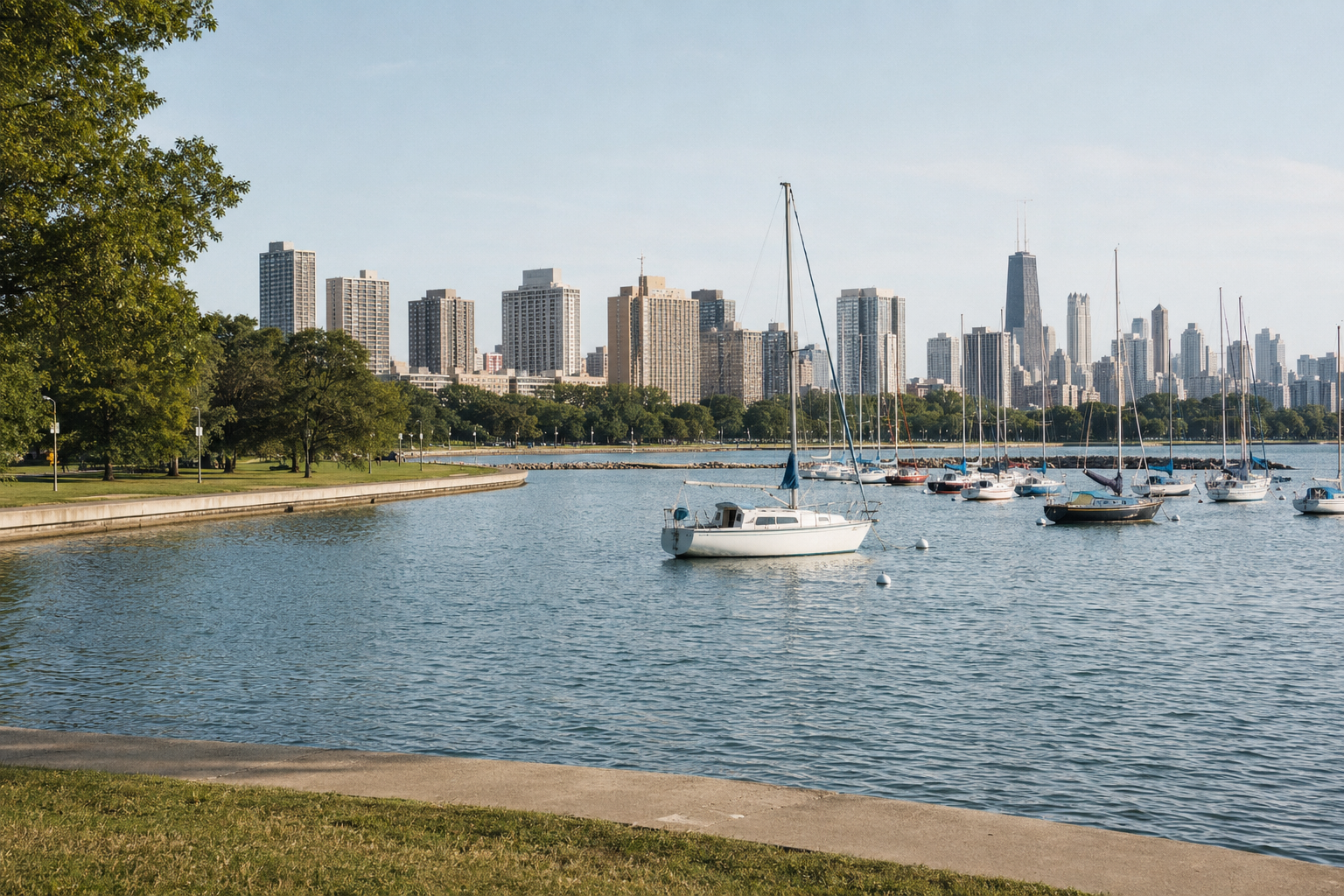
Belmont Harbor, the Lakefront Trail, the Sydney R. Marovitz golf course, and the lakefront beaches all sit along the eastern edge, and Lakeview East puts full-service condominium buildings within a block or two of the water at prices well below the equivalent in Streeterville or the Gold Coast.
Belmont is one of the busiest transfer stations in the CTA system, serving the Red, Brown, and Purple lines, with further stops at Diversey, Wellington, Southport, Paulina, Addison, and Sheridan. Add the 8 Halsted, 9 Ashland, 22 Clark, 36 Broadway, and 77 Belmont bus routes and most of the neighborhood is within a short walk of frequent service in several directions.
Single-family homes in Lakeview are considerably more attainable than in Lincoln Park a mile south, with solid detached houses in good condition typically running $800,000 to $1.5 million. That gap is the main driver of buyer migration north along the lakefront corridor and it is the most practical argument for the neighborhood.
Lakeview is large enough that residents name their sub-neighborhood before they name Lakeview, and the differences between them are the single most important thing a buyer here needs to understand. Six areas behave differently on price, housing type, noise, and buyer pool. Ranges below reflect typical recent activity and are a general guide rather than a valuation.
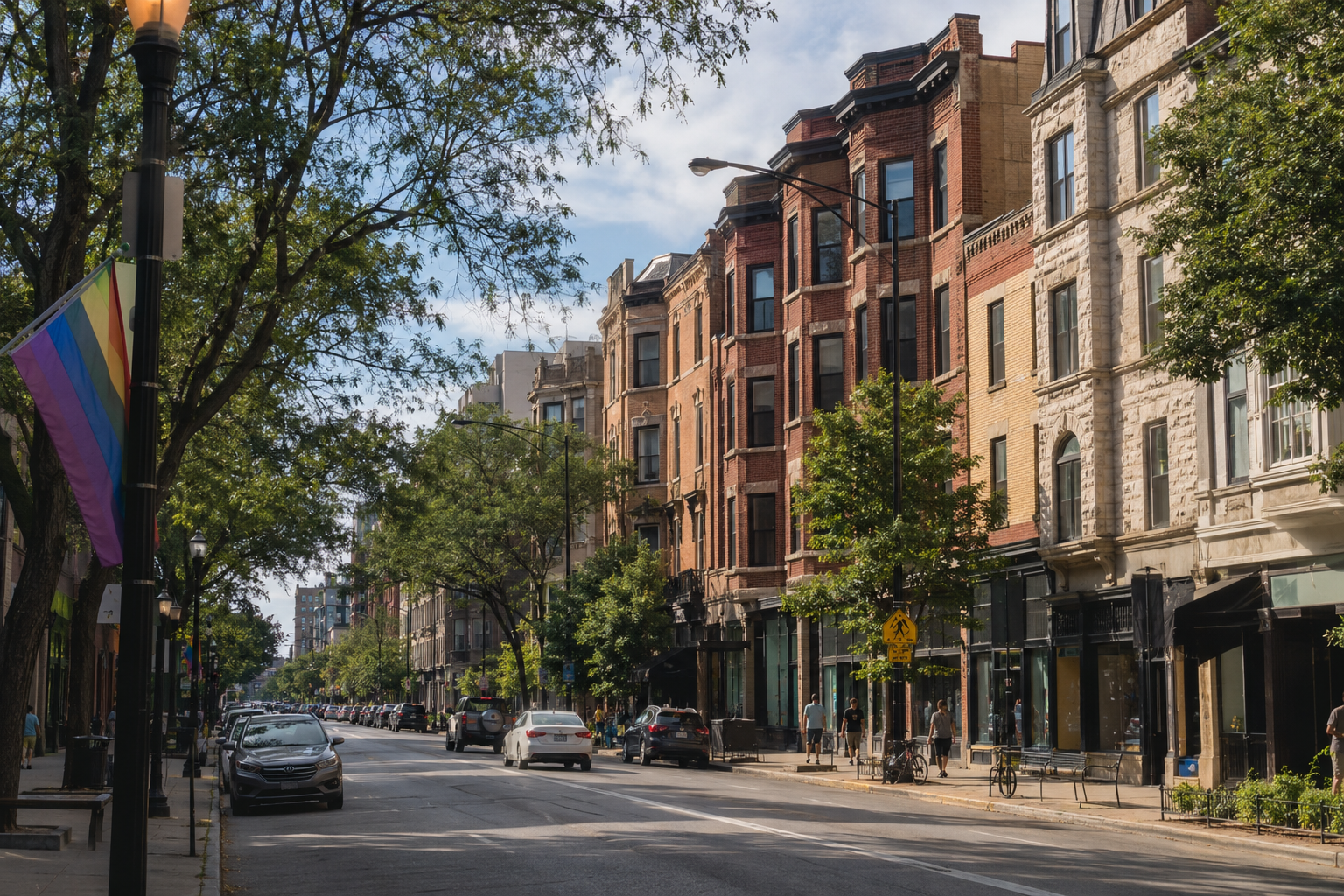
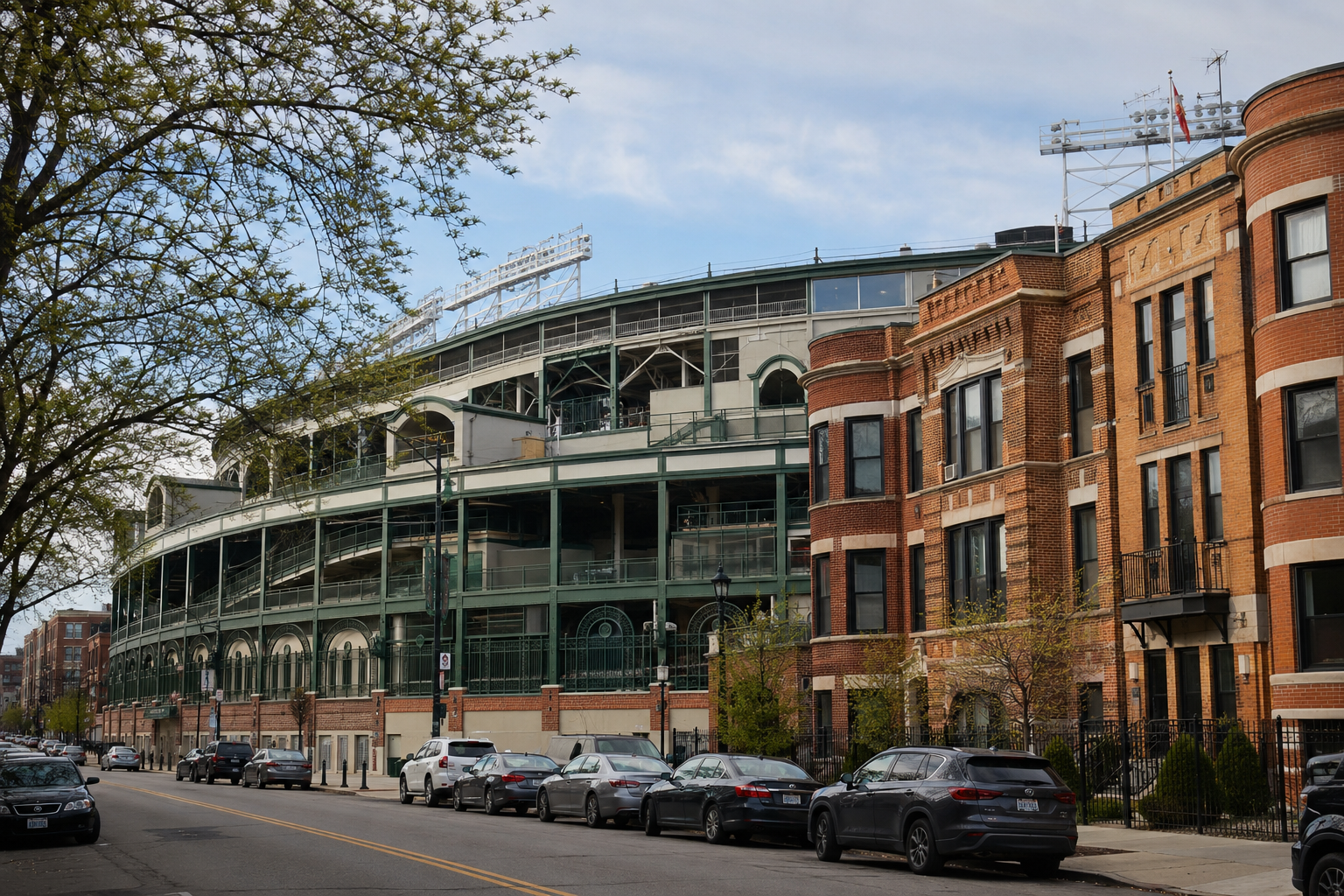
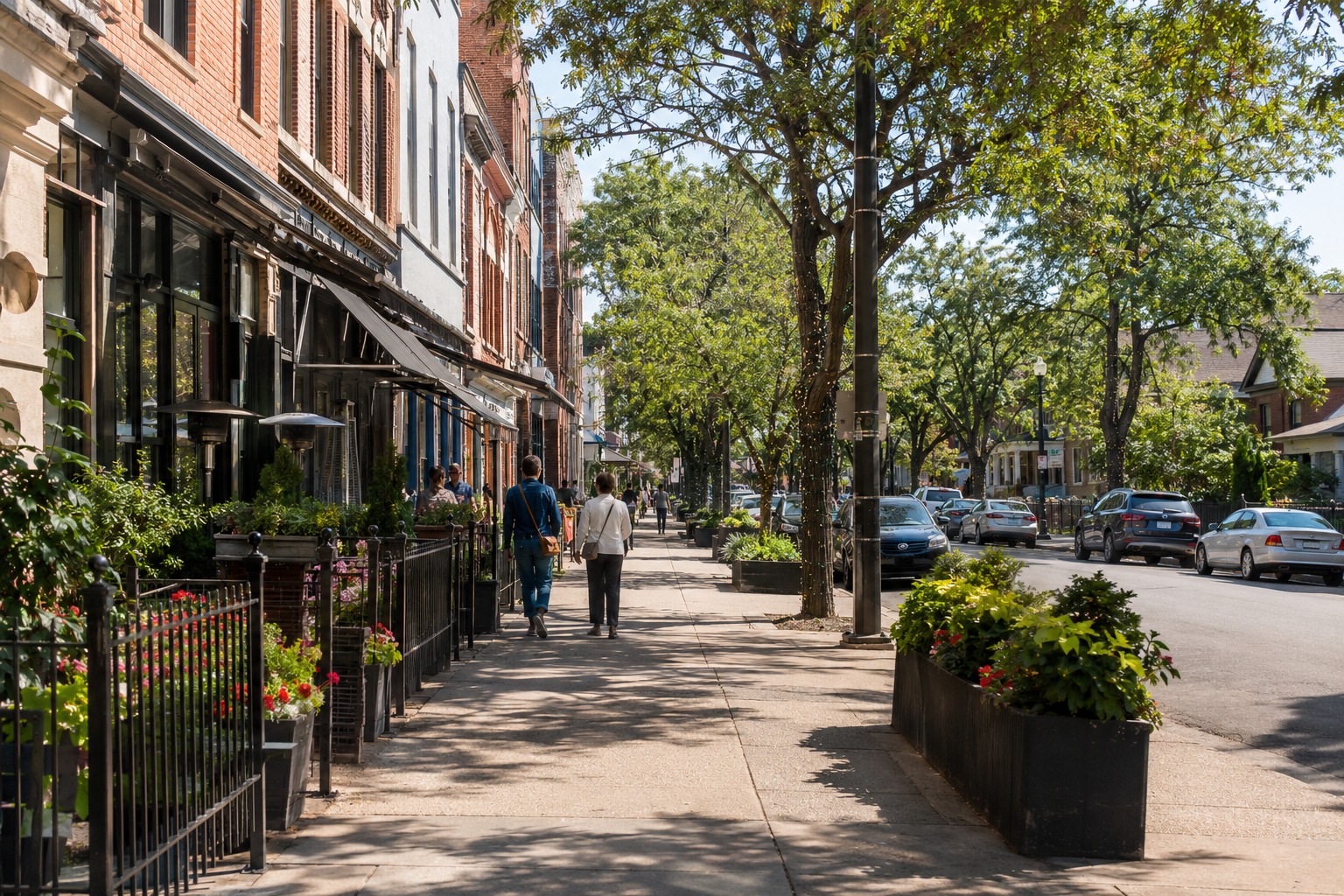
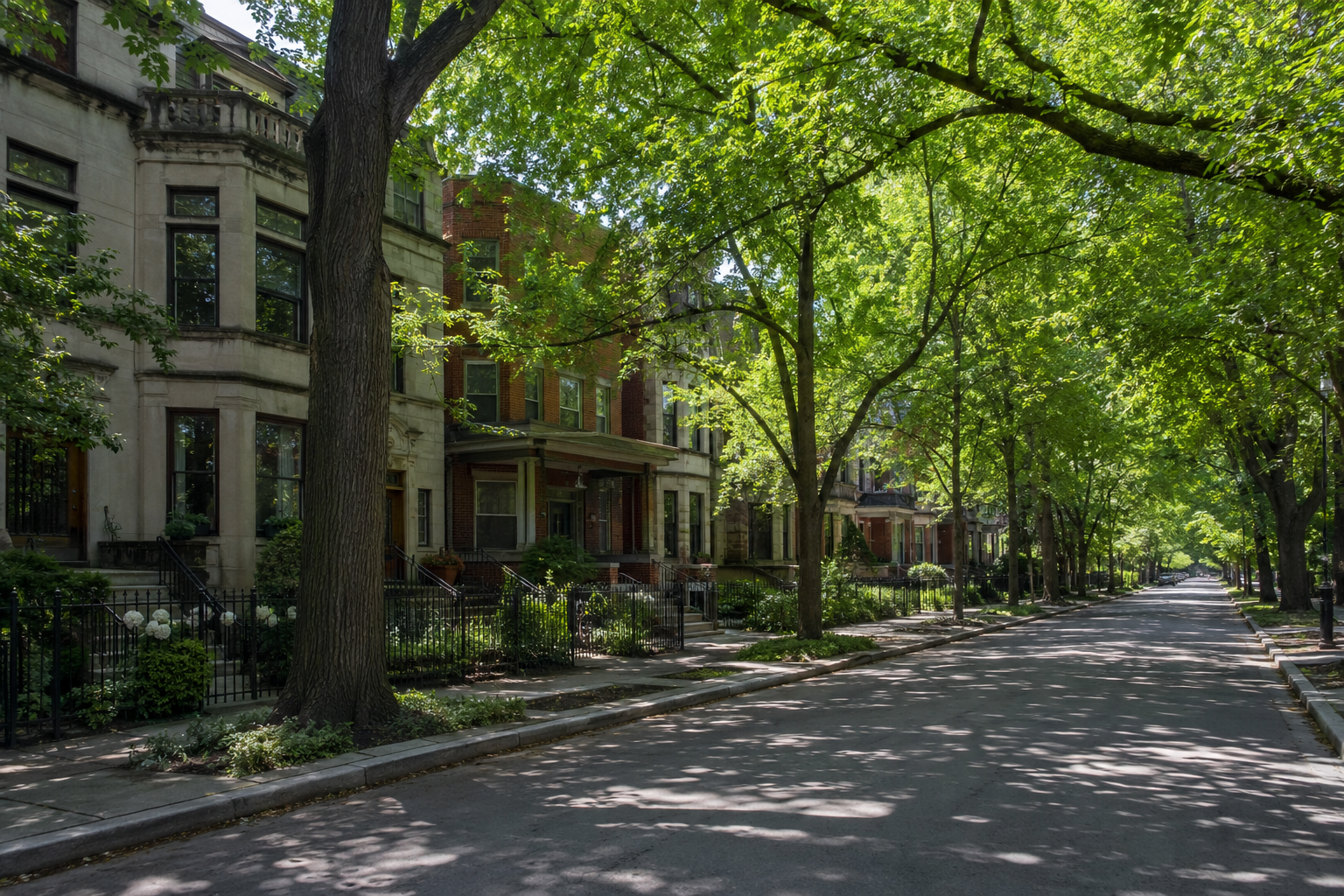
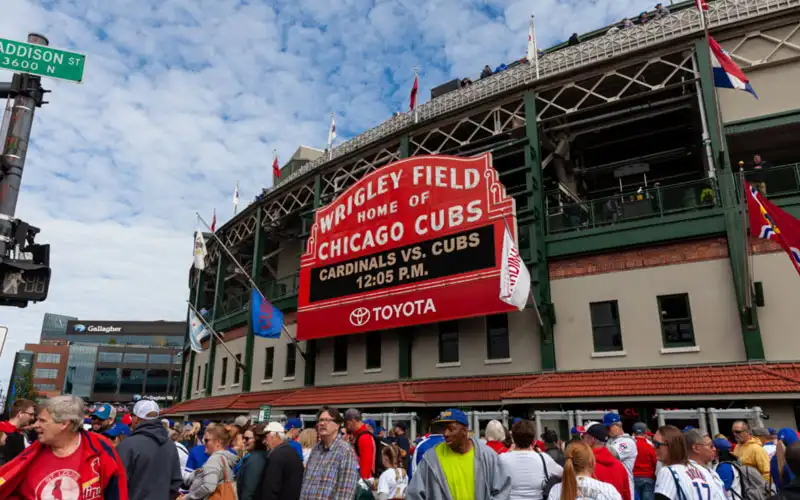
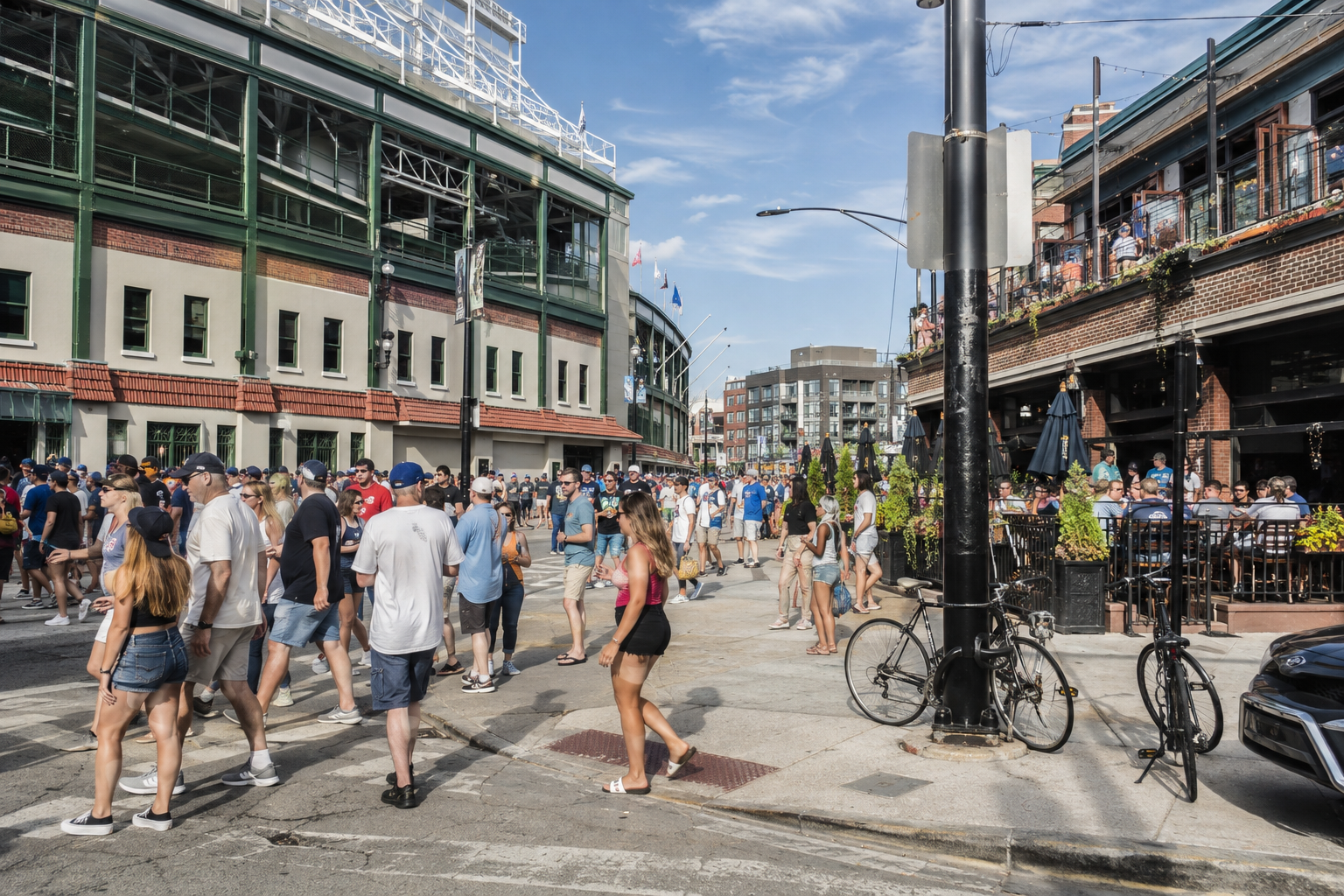
Wrigley Field has stood at Clark and Addison since 1914 and is the second-oldest ballpark in Major League Baseball. The past decade transformed the blocks around it: Gallagher Way opened as a year-round public plaza hosting films, markets, and concerts, and hotels, restaurants, and bars filled in the surrounding lots. For residents this cuts both ways and the honest framing matters. Eighty-one home games plus a summer concert season bring energy, foot traffic, and business to the neighborhood, and they also bring crowds, street closures, and permit parking restrictions to the blocks nearest the ballpark. Two streets can feel completely different on a Saturday afternoon in July, which is why buyers should visit a specific block on a game day rather than relying on a weekday viewing.
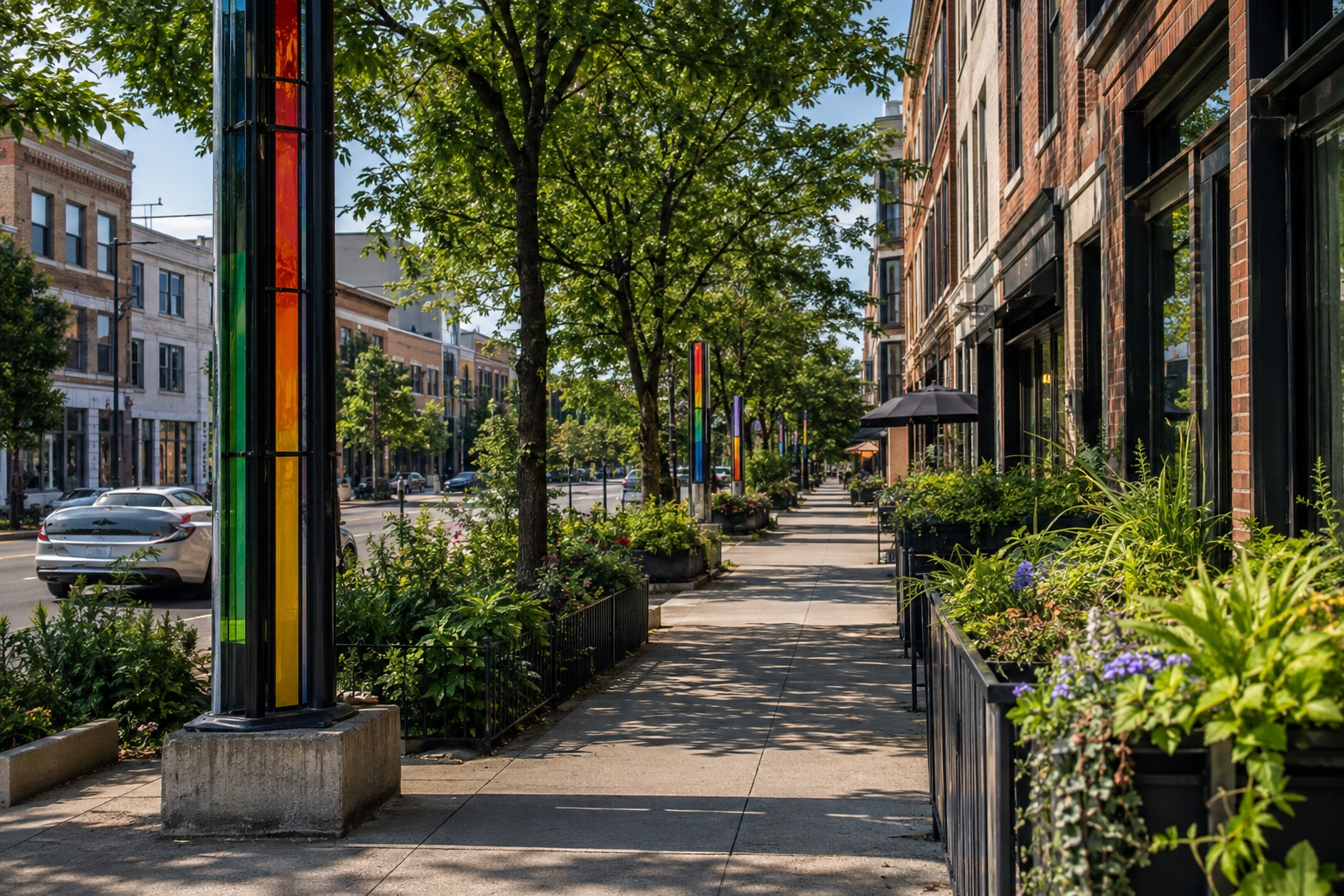
The Halsted Street corridor between Belmont and Irving Park is one of the oldest LGBTQ+ business districts in the United States, represented since 1980 by the Northalsted Business Alliance, which today speaks for more than 100 small businesses. The name Northalsted was adopted by the business alliance and many local organisations in 2020 in place of the longstanding informal name Boystown, with the intention of being more inclusive; both names remain in use and the change was not universally welcomed, with some residents concerned it obscured the district's history. The corridor hosts Chicago Pride Fest in June and Northalsted Market Days across a weekend in August, the latter widely described as the largest street festival in the Midwest, closing a half-mile of Halsted for live music across multiple stages and more than 250 vendors. The Chicago Pride Parade follows Pride Fest the next weekend and runs through the neighborhood.
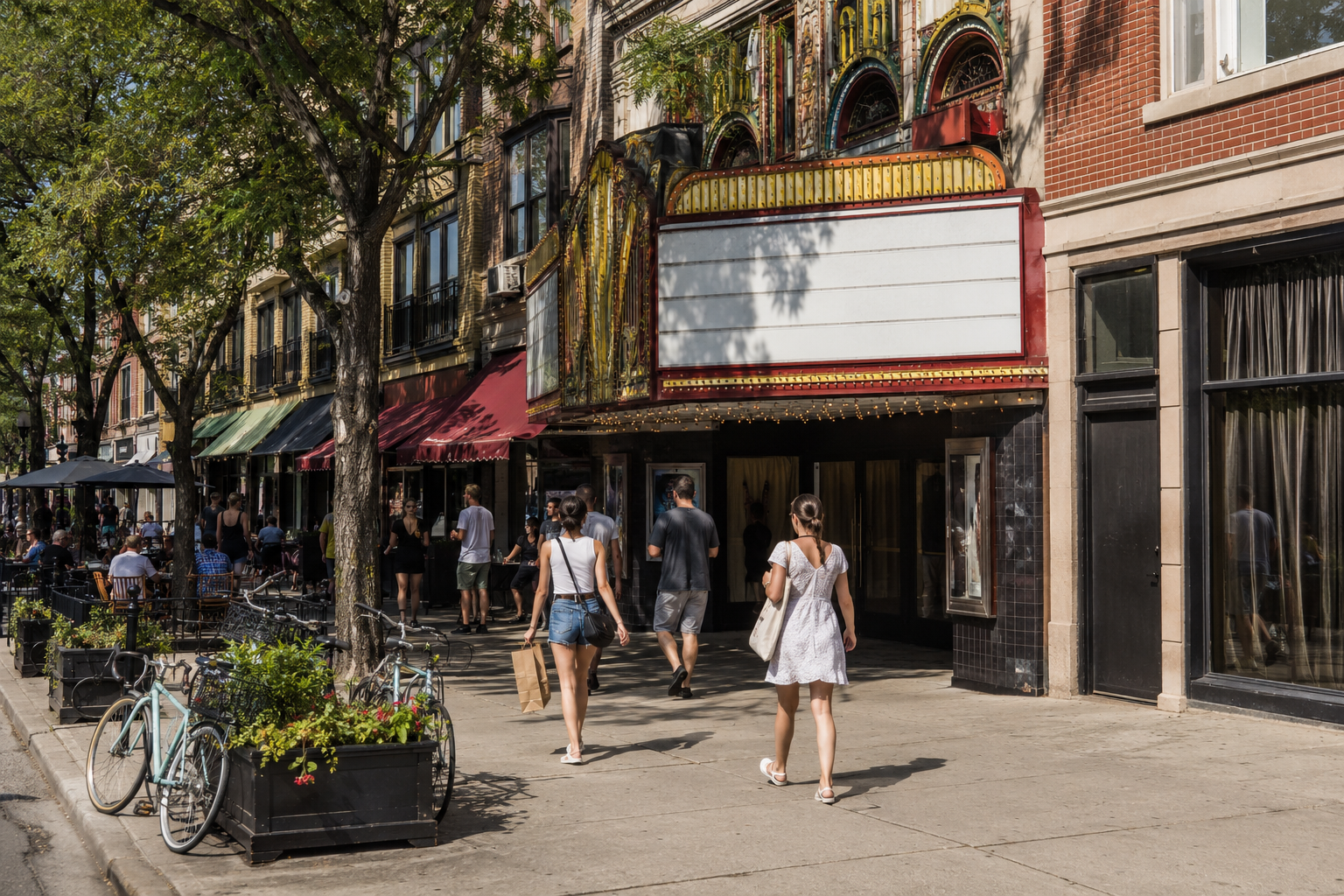
Lakeview's commercial life is spread across several streets rather than concentrated on one, which is consistent with everything else about the neighborhood. Broadway, Clark, Halsted, Belmont, Lincoln, and Southport each carry their own mix of restaurants, bars, and independent retail, and the density is high enough that most residents have a usable commercial street within a few blocks. On the culture side, the Music Box Theatre on Southport opened in 1929 and has run as an art-house cinema since 1983, the Vic Theatre on Sheffield and Metro on Clark are long-standing live music venues, and the Athenaeum Center on Southport programmes theatre and performance. Everyday needs are well covered by full-service grocery stores along Broadway, Clark, and Ashland, and Advocate Illinois Masonic Medical Center sits on Wellington Avenue inside the neighborhood.
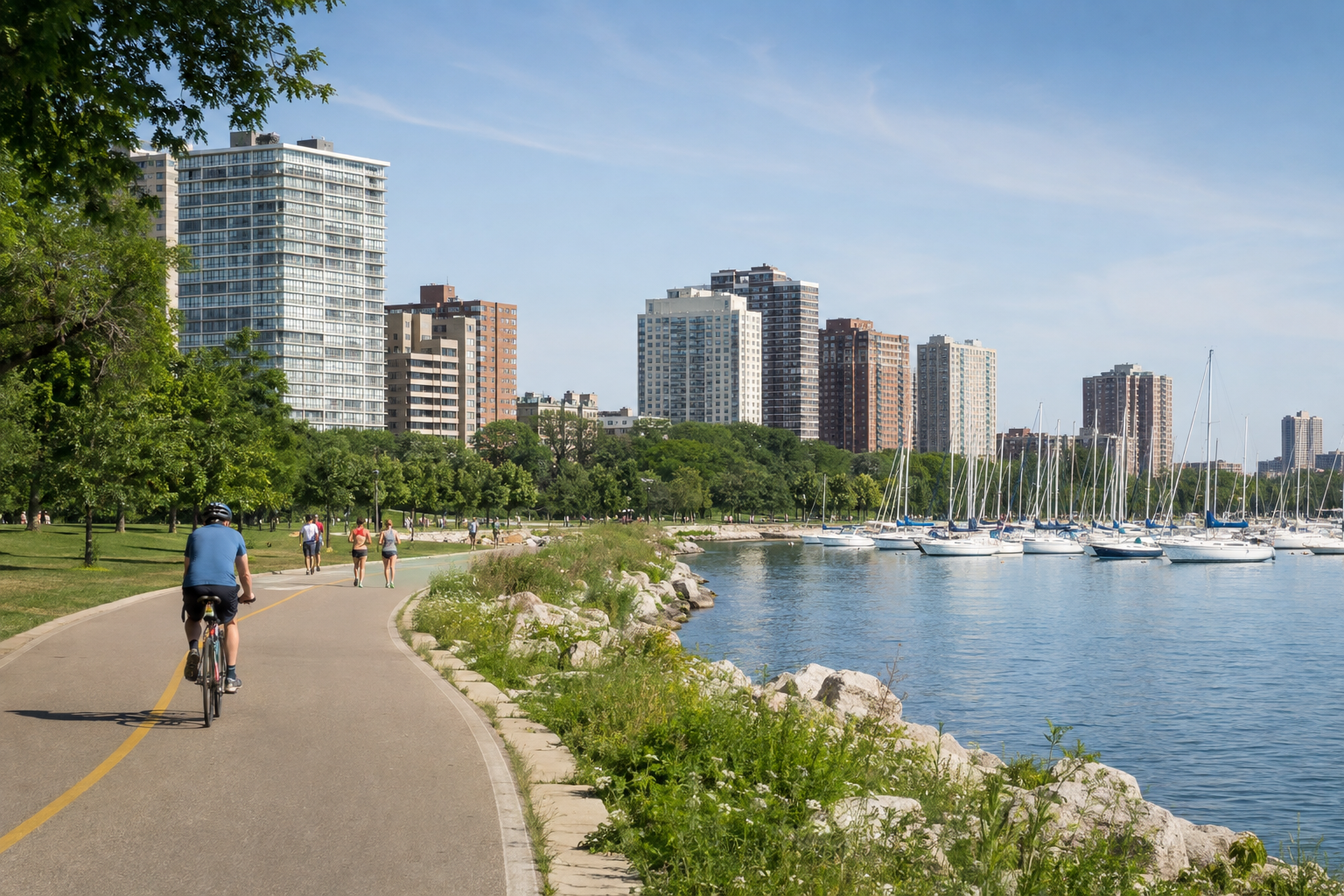
Lakeview's eastern edge is entirely lakefront. Belmont Harbor sits at the centre of it, with mooring, a bird sanctuary on its northern edge, and one of the better stretches of the Lakefront Trail running past it. The Sydney R. Marovitz golf course occupies the shoreline further north, and the trail connects south to Lincoln Park and North Avenue Beach and north toward Uptown. Lakeview East puts full-service condominium buildings within a block or two of all of it, which is the neighborhood's clearest value proposition against downtown lakefront pricing: comparable water access at a materially lower price per square foot than Streeterville or the Gold Coast.
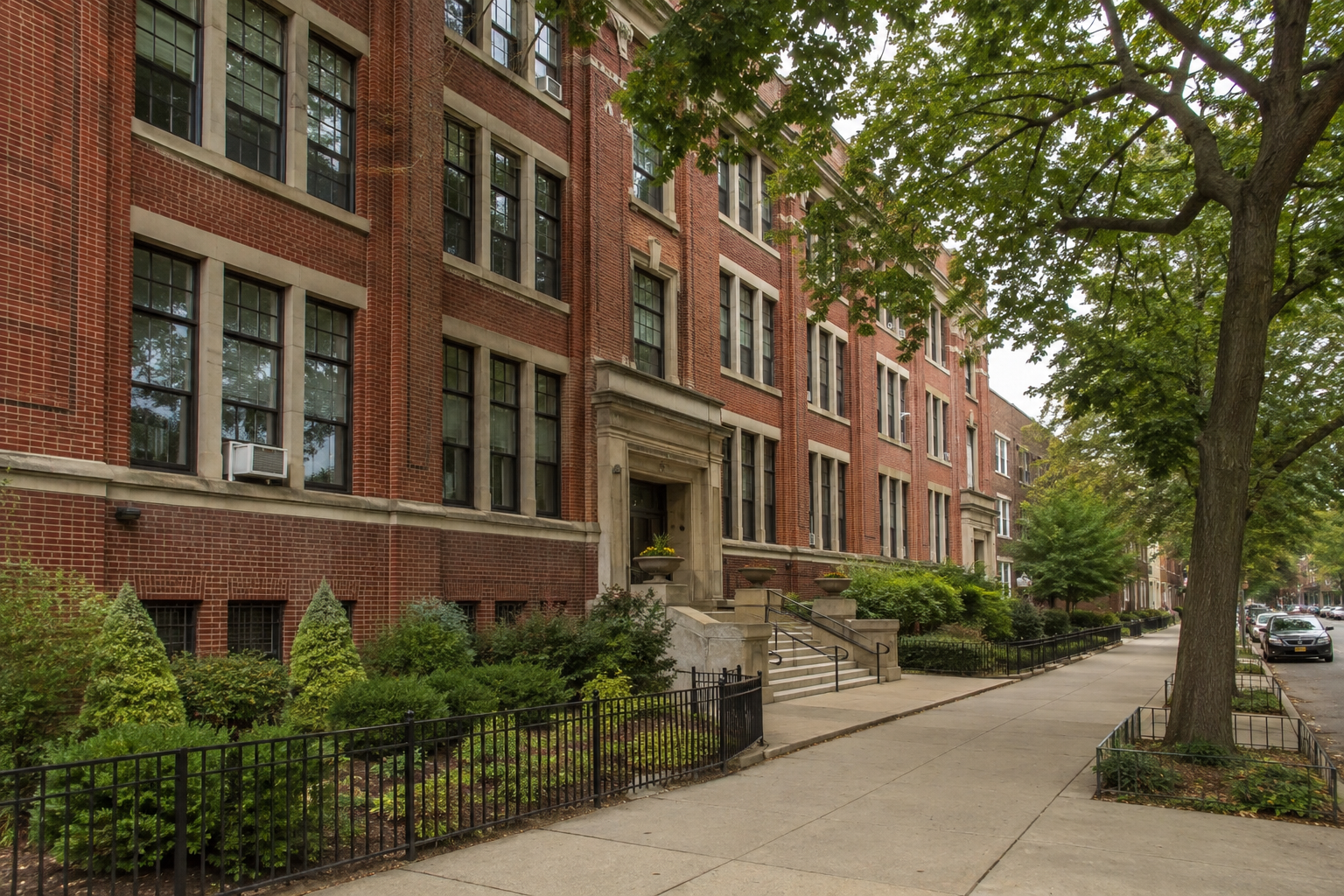
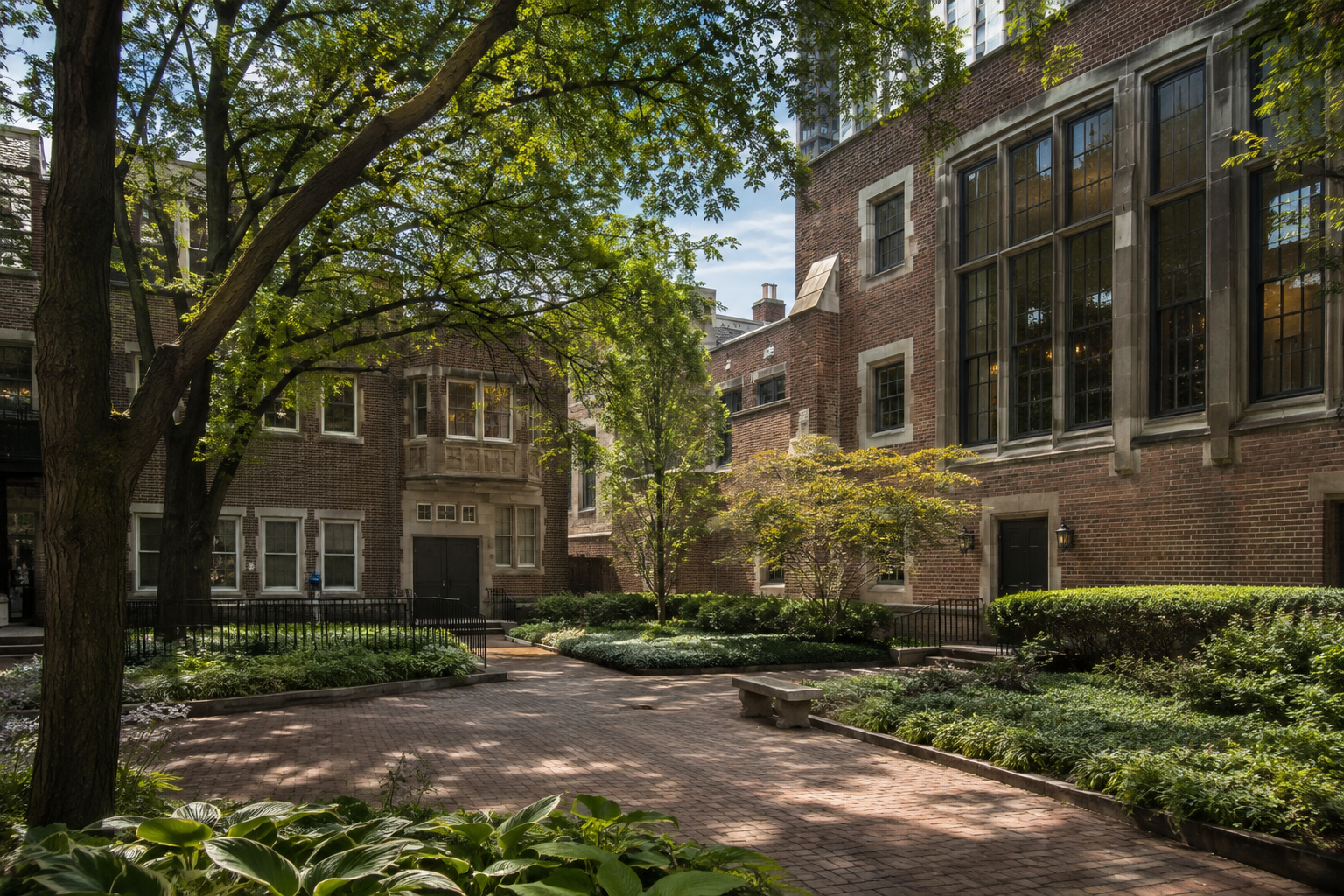

Lakeview is served by a single school district, Chicago Public Schools, formally City of Chicago School District 299. Because the community area is large and contains six distinct sub-neighborhoods, it also contains several different elementary attendance areas, and the boundaries between them do not follow the sub-neighborhood lines. Two homes a few blocks apart can sit in different catchments, which makes address-level verification unusually important here.
Several Chicago Public Schools elementary schools serve parts of Lakeview by address. Nettelhorst School on North Broadway serves much of Lakeview East and is well known locally for a parent-led turnaround that began in the early 2000s. Blaine Elementary on West Grace Street is the attendance-area school for much of the Southport Corridor. Harriet Tubman IB World School on North Seminary Avenue, renamed from Agassiz Elementary in 2021, and Greeley Elementary serve other portions of the community area. Because the catchments are fragmented, the practical advice is the same for every buyer: confirm the attendance area for the specific address with the Chicago Public Schools locator before it factors into your decision, and do not rely on a neighborhood-level answer.
Hawthorne Scholastic Academy on North Clifton Avenue is a magnet school drawing from across the city, and it was named a National Blue Ribbon School in 2024. Admission is by lottery through GoCPS with no testing, and there is no neighborhood boundary that guarantees a place, so living nearby does not secure admission. Inter-American Magnet School offers dual-language instruction and admits by application. For high school, Lake View High School on North Ashland Avenue is the neighborhood attendance-area school. It is a designated STEM school offering AP Capstone, Advanced Placement, and dual-credit courses through its Early College programme. Families here also compete for the city-wide selective-enrollment high schools, including Walter Payton College Prep and Northside College Prep, all of which admit by test score and the district's tier system rather than by address.
Chicago City Day School on West Hawthorne Place is the principal independent option inside Lakeview, serving junior kindergarten through grade 8. Families also look south to Francis W. Parker School in Lincoln Park and the Latin School of Chicago in the Gold Coast, and west to St. Benedict Preparatory School in North Center, all within a short distance. Between the attendance-area schools, the magnet and selective programmes, and the independent options nearby, Lakeview offers more school paths than most Chicago neighborhoods, which is part of why it retains families that might otherwise leave the city.
Development accelerated with Potter Palmer's mansion in 1882.
Encompasses the historic core alongside the 60611 district.
Consisting of roughly 5,600 households averaging two people.
Historically one of America's wealthiest urban enclaves.
Neighborhood entry point, driven heavily by vintage condominium volume.
The current baseline for standard attached housing stock.
Set in 2017 by the purchase of the top four floors at No. 9 Walton.
The neighborhood's largest single source of high-rise inventory.
With a median asking price currently hovering near $585,000.
The average market pace alongside ~45 monthly closings.
Connected directly to the trail via Oak Street Beach.
Direct access via two CTA train stops and four major bus routes.
Navigating Chicago's Gold Coast luxury real estate market requires unparalleled expertise. Here is what you need to know before we begin.
Ask A QuestionLakeview is Chicago's Community Area 6, on the North Side about four miles from the Loop, bounded by Diversey Parkway on the south, Irving Park Road and Montrose Avenue on the north, Ravenswood Avenue on the west, and Lake Michigan on the east. It covers roughly 3.1 square miles, held 103,050 residents at the 2020 Census, and uses ZIP codes 60613 and 60657. Inside it sit at least six recognised sub-neighborhoods: Lakeview East along the lake, Wrigleyville around the ballpark, Northalsted along the Halsted corridor, West Lakeview toward Ravenswood, the Southport Corridor, and Graceland West at the northern edge, plus smaller pockets including Belmont Harbor and South East Ravenswood. Most residents identify with their sub-neighborhood first, which is why asking about Lakeview as a single place rarely produces a useful answer.
No, and this catches people out regularly. North Lakeview Avenue is a street in Lincoln Park, running along the western edge of the park roughly between Fullerton Parkway and Diversey Parkway. The Lakeview neighborhood begins at Diversey and extends north from there, so a Lakeview Avenue address sits just south of that boundary, within about a quarter of a mile of the neighborhood that shares its name. The two are close enough that the confusion is easy to make and easy to miss. Buildings frequently searched by address, including 2550 North Lakeview Avenue and 2626 North Lakeview Avenue, are Lincoln Park properties. If you are searching by street name, check the neighborhood; if you are searching by neighborhood, check the cross streets. The two markets price very differently.
It depends more on which part of Lakeview than on anything else, and the spread is more than two to one. Redfin reported a March 2026 median of about $520,000 across the whole community area, but that blends six different markets. Lakeview East, the lakefront high-rise district, posted a median around $327,000 over the same period. West Lakeview posted about $675,000. Single-family houses across the neighborhood have been reported at a median near $755,000 over a trailing twelve months, with solid detached homes typically running $800,000 to $1.5 million and renovated or new-construction houses on strong blocks reaching $1.8 million to $2.5 million, while condominium medians sit around $375,000. Before you use any Lakeview number, establish whether it describes the sub-neighborhood and the property type you are actually shopping in.
They are the two ends of the same community area and they behave like different neighborhoods. Lakeview East runs from the lake west to about Racine and is dominated by full-service condominium high-rises along Sheridan Road and the inner drive, plus vintage courtyard buildings on the side streets. It offers lakefront access, elevators, doormen, and the lowest median in the community area, because the stock skews toward smaller units in larger buildings. West Lakeview sits between Southport and Ravenswood and is the most residential part of the neighborhood, with small-lot single-family homes, restored two-flats, and new-construction townhouses on quiet tree-lined blocks, and it carries roughly double the median. The choice is essentially between a full-service building near the water and a house on a quiet street, at very different price points.
Both names are in use, and the shift is recent enough to be worth explaining. In 2020 the Northalsted Business Alliance and a number of local organisations adopted Northalsted as the district's name in place of the longstanding informal name Boystown, with the stated intention of being more inclusive. The change was not universally welcomed, and some residents expressed concern that it would obscure the history of what is one of the oldest LGBTQ+ business districts in the country, established along Halsted Street and represented by the alliance since 1980. In practice you will hear both names, official communications and signage generally use Northalsted, and the district continues to host Chicago Pride Fest in June and Northalsted Market Days in August.
Lakeview is served by one district, Chicago Public Schools District 299, and because the community area is large it contains several elementary attendance areas whose boundaries do not follow the sub-neighborhood lines. Nettelhorst School on North Broadway serves much of Lakeview East, Blaine Elementary serves much of the Southport Corridor, and Harriet Tubman IB World School and Greeley Elementary serve other portions. Hawthorne Scholastic Academy is a magnet school admitting from across the city by lottery rather than by test, and Lake View High School on North Ashland is the neighborhood high school, a designated STEM school offering AP Capstone, Advanced Placement, and dual-credit courses. City-wide selective high schools including Walter Payton College Prep admit by test and tier rather than address. Because catchments here change block by block, verify the attendance area for a specific address with the CPS locator rather than relying on a neighborhood answer.
It depends on your block, and the difference between two streets can be substantial. Wrigley Field hosts eighty-one home games plus a summer concert season, and the blocks nearest Clark and Addison see crowds, street closures, and permit parking restrictions on game days. Move a few streets west of Racine, or north to Grace and Waveland, and the effect drops sharply. Many buyers genuinely want the energy and choose Wrigleyville for it, and the redevelopment around the ballpark over the past decade has added year-round amenities including Gallagher Way. The practical advice is the same one that applies to Rush Street in the Gold Coast and Hubbard Street in River North: visit the specific address on a busy day before you make an offer, not on a quiet Tuesday.
Ask about the sub-neighborhood, not the neighborhood. Lakeview is three square miles containing six distinct markets whose medians differ by more than two to one, so an agent with recent closings in Lakeview East may have limited useful insight into West Lakeview pricing, and vice versa. Four questions are worth asking any agent here. First, how many transactions have they closed in the past twelve months in the specific sub-neighborhood you are shopping in, not in Lakeview generally. Second, can they explain the current price per square foot in that sub-market and how it has moved, since the neighborhood median hides a great deal. Third, for a condominium, will they read the association's reserve study and assessment history before you write an offer. Fourth, near Wrigley Field, can they tell you block by block what game days actually do to a specific address. An agent who answers those precisely is doing the job; one who talks about Lakeview as a single market is not.
Carrie McCormick has sold Chicago real estate since 1999, has closed more than $3.5 billion in career sales, and lists Lakeview among her core markets alongside Lincoln Park, the Gold Coast, and the Southport Corridor. Under her "100 percent Carrie" model clients work directly with her from the first valuation through closing, which matters in a market this internally varied because the judgement cannot be delegated. Measured against the questions in the previous answer, the work here is sub-market specific: pricing a West Lakeview house against West Lakeview comparables rather than a community-area median, reading a Lakeview East association's reserves and assessment history before an offer, knowing which lines in a Sheridan Road building keep a permanent lake view, and telling a buyer honestly what a Saturday game day does to a particular Wrigleyville block. She is ranked in the top 1 percent of brokers by the Chicago Association of Realtors, holds the association's Gold and Platinum awards, is the recurring luxury real estate expert on NBC 5 Chicago's Open House Chicago, and works within the Christie's International Real Estate network. Call 312-961-4612.
Carrie McCormick has been selling Chicago real estate since 1999, with more than $3.5 billion in career sales and Lakeview among her core markets. Her practice covers the whole community area, from lakefront condominiums in Lakeview East and greystone two-flats in Wrigleyville to new-construction houses in West Lakeview and the tightly held blocks of the Southport Corridor. Ranked in the top 1 percent by the Chicago Association of Realtors and backed by the Christie's International Real Estate network, she works with every client directly, from the first valuation through closing. To talk through a purchase, a sale, or an investment purchase, call 312-961-4612 or email carrie@atproperties.com.