

Homes for Sale Clarendon Hills IL | The Village of Curved Streets
Clarendon Hills, Illinois, the DuPage County village of 8,702 on 1.82 square miles, was platted in 1873 with Olmsted-inspired curving streets by the railroad's own president, and it still runs on the design: a walkable Prospect Avenue downtown at the BNSF station, District 181 headquartered in town, Hinsdale Central as the diploma, and a market that sells over ask on 1.2 months of supply. Carrie McCormick brings 25 plus years and more than $3.5 billion in career sales to the Clarendon Hills Illinois homes for sale market, curved-street classics to new downtown rowhomes.
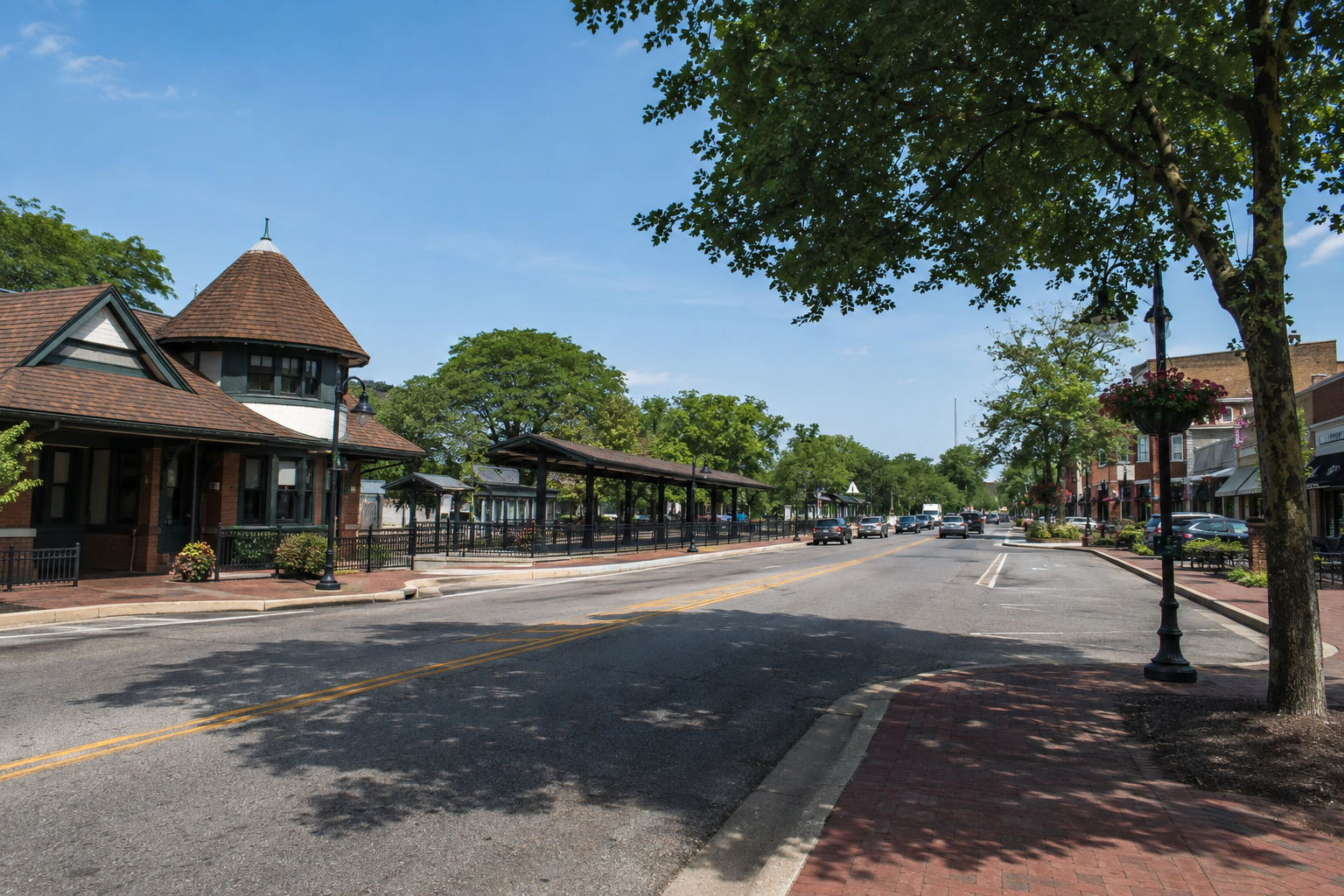
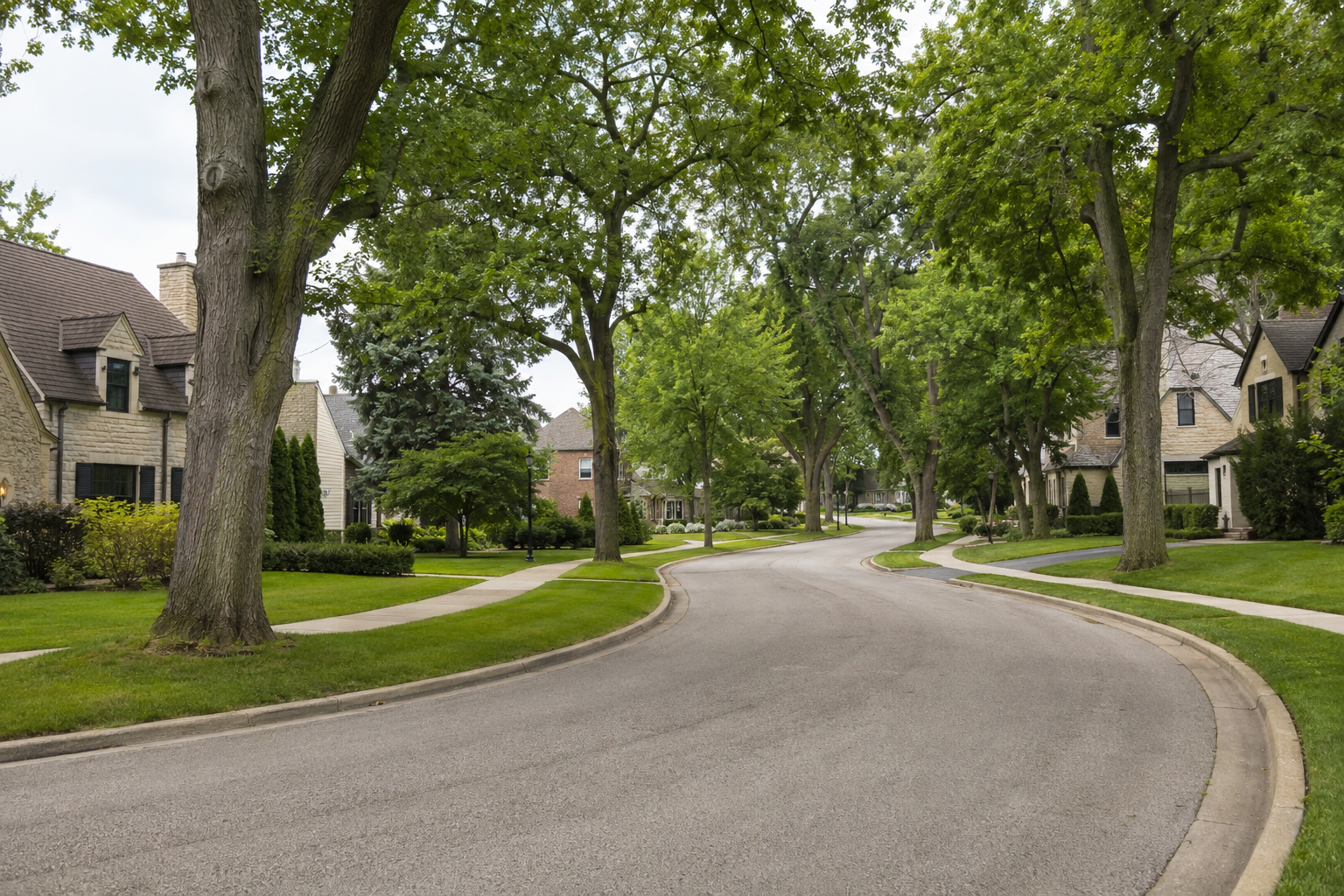
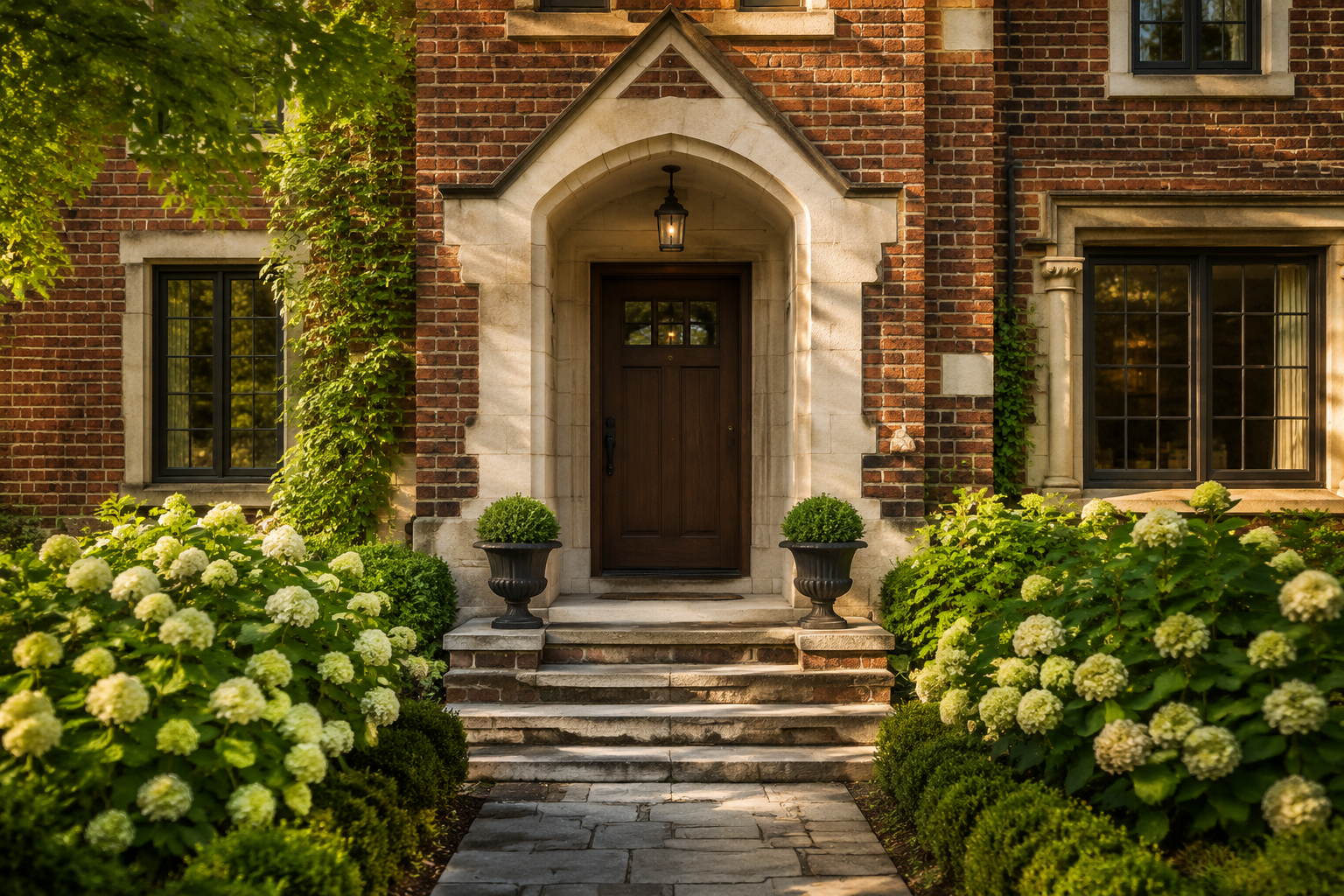
Clarendon Hills, Illinois was designed to be small, and it took the assignment seriously. The Chicago, Burlington and Quincy opened its line through the rolling prairie in 1864, the stop began as a milk pickup for the local farms, 18.3 rail miles from Union Station, and the land drew two men who set the village's character: Henry C. Middaugh, the Chicago banker and lumber executive who bought 270 acres north of the tracks in 1869 and farmed it as a gentleman's estate, and James M. Walker, then president of the railroad itself, who led the speculators that platted a commuter suburb here in 1873, its design inspired by the principles of Frederick Law Olmsted as built at nearby Riverside, long curving streets that follow the land's natural contours instead of fighting them into a grid. The design outlived everything else: Middaugh's Queen Anne mansion made the National Register in 1978 and was demolished anyway after a 2002 sale, its recovered artifacts now kept at the Historical Society's Heritage Hall in the village's old waterworks hub, the village did not incorporate until January 22, 1924, celebrating its centennial in 2024, and by local account even the daisies of the signature Daisy Days festival trace to seed Middaugh spread across his farm. The streets still curve, the village still measures 1.82 square miles, and both facts remain, visibly, on purpose.
Clarendon Hills IL real estate runs tight, fast, and over ask, and one December taught the whole lesson: for the same month and the same $750,000 median, one index printed the market up 106.2 percent year over year while another printed it up 1.06 percent, because an 11-sale month measured against a 4-sale month makes percentages meaningless, which is why the market should be read by levels and structure, never single-month swings, in a village this size. The structure: recent medians ran $750,000 with list medians of $699,000 to $767,000 at roughly $305 to $352 per square foot, the sale-to-list ratio printed 101.26 percent, over ask on average, with 36 percent of homes selling above asking, supply sat at 1.2 months, Redfin scores the village 73, very competitive, with multiple offers and some waived contingencies in its compilation, averages sold in 41 to 43 days while hot homes pended in 19, and roughly 15 to 32 listings stood active depending on the filter, about a month's worth of market at a time. The ladder runs from downtown condominiums and vintage cottages through the postwar family blocks to the teardown-and-rebuild current, proposed new construction on park-like half-acre lots at the top, and a distinctly Clarendon Hills addition at the center: new brick rowhomes and duplexes rising in and around the downtown itself, elevator-equipped luxury attached a block from the platform.
What the market is buying is the design. The Prospect Avenue downtown at the station, the quaint, walkable hub recent market summaries describe accurately, carries the village's restaurant and shop rows, its calendar, Daisy Days, Dancin' in the Street, the Christmas Walk and tree lighting, and the commute, with the Ogden Avenue and 55th Street corridors handling the big-format errands so the core never has to. The schools compound it: District 181 is headquartered in Clarendon Hills, three of its nine schools stand in the village, Prospect and Walker elementaries and Clarendon Hills Middle School, the district's 84 percent math and 89 percent reading proficiency is exceptionally strong, and the western edge's Maercker District 60 pocket, whose Holmes Elementary also stands in the village, joins the same destination, because both pipelines finish at Hinsdale Central, ninth among Illinois public high schools, a mile east. Add the Hinsdale Golf Club, chartered 1898 and, despite the name, located in Clarendon Hills, and the village's proposition completes: Hinsdale's schools and station-town design at a friendlier median, one stop west.
Carrie McCormick has sold Chicago's luxury market since 1999, with more than $3.5 billion in career sales, a top 1 percent ranking from the Chicago Association of Realtors, and a practice built for exactly this village's tempo: buyer representation where preparation, alerts, and offer discipline decide over-ask outcomes in 19-day windows, and seller valuation where a 1.82-square-mile market prices street by street and the teardown, renovation, and rowhome currents each carry their own comparables. Through @properties Christie's International Real Estate, with the Christie's network reaching buyers in more than 45 countries, she works every tier under her "100 percent Carrie" model, one broker, every client. Explore the village's four settings, current homes for sale Clarendon Hills IL wide, the two-district, one-diploma school system, and daily life on the curved streets.
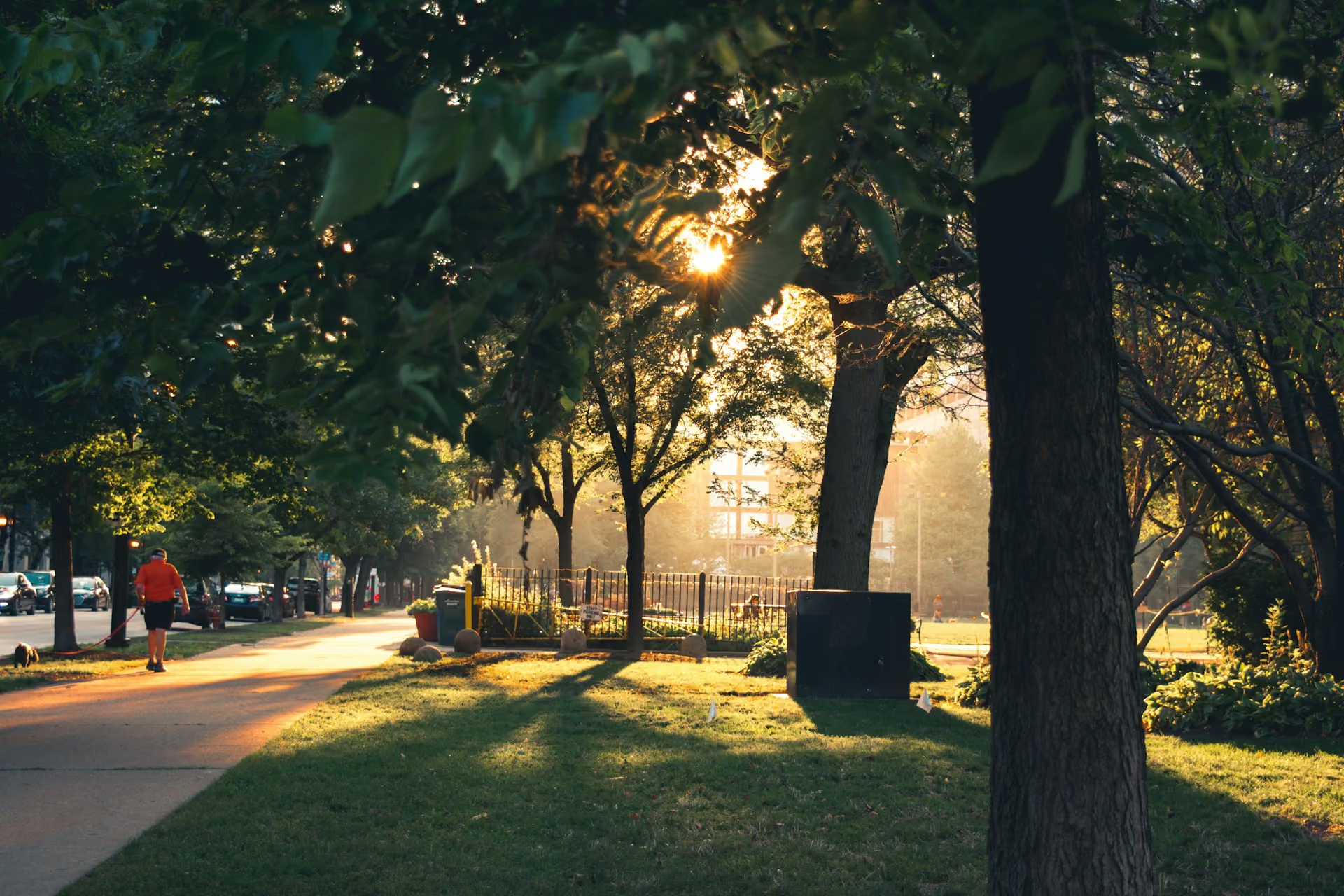
The 1873 plat, led by the railroad's own president and inspired by Olmsted's principles as built at nearby Riverside, bent the streets to the land's contours instead of forcing a grid, and a century and a half later the curves are still the village's signature, canopy following pavement following prairie roll. Few suburbs anywhere kept their founding design this intact; Clarendon Hills never stopped living in its.
One December, one $750,000 median, two headlines: up 106.2 percent by one index, up 1.06 percent by another, because 11 sales measured against 4 makes percentages meaningless. That is the whole small-market rule in one pairing, and the real numbers underneath are the point: over ask on average at 101.26 percent, 1.2 months of supply, and hot homes pending in 19 days. Read levels, not swings.
With published proficiency of 84 percent in math and 89 percent in reading, the district keeps its headquarters in Clarendon Hills, and three of its nine schools stand in the village: Prospect, Walker, and Clarendon Hills Middle. The finish line is Hinsdale Central, ninth in Illinois, one stop east, which is the entire value thesis in a sentence.
The Prospect Avenue blocks at the station run the calendar a small town should: Daisy Days each summer, whose namesake flowers trace, by local account, to seed Henry Middaugh spread across his farm 150 years ago, Dancin' in the Street, and the Christmas Walk's tree lighting, all inside a downtown walkable from most of the village. The festival is the founder's daisies still blooming; the downtown is the plat still working.
The Hinsdale Golf Club, chartered October 15, 1898, sits, despite its name, in Clarendon Hills, which residents have enjoyed correcting for 127 years. The village keeps the fairways, the name traffic goes next door, and the streets around the club's green edge carry some of the village's loveliest addresses.
As published market summaries correctly note, a village of 8,702 on 1.82 square miles does not have sharply defined neighborhoods, it has one identity with four settings, and that is the design's final feature: everything, the downtown, the station, the schools, the parks, sits within a walk or a two-minute drive of everything else. Clarendon Hills was platted small, incorporated patient, and stayed both.
published market summaries say it correctly: a village this compact does not divide into sharply defined neighborhoods, so the market divides into four settings instead, the downtown core, the curved streets north, the school blocks south, and the working western edge. Price characterizations reflect recent activity and should be treated as a general guide rather than a valuation.
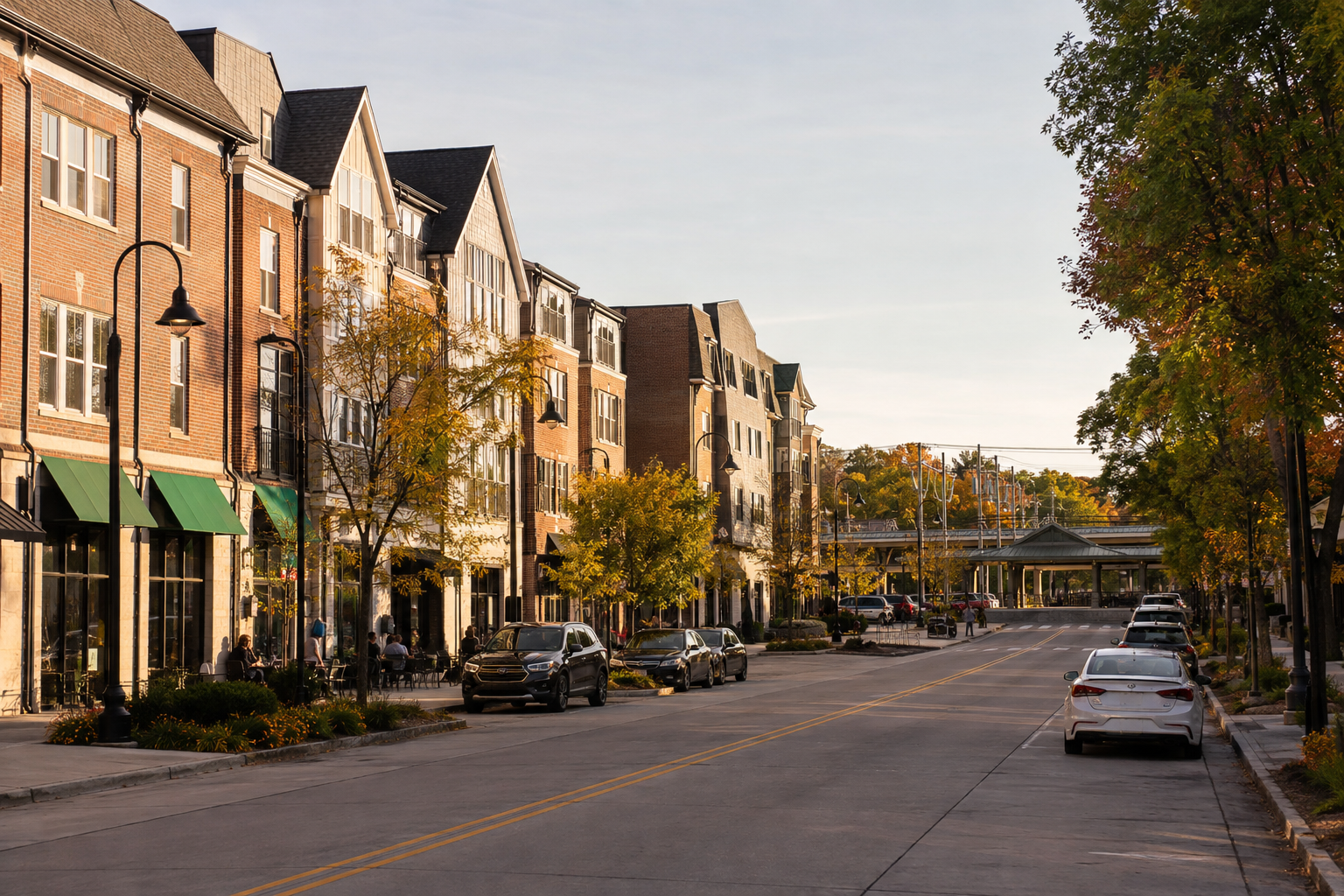



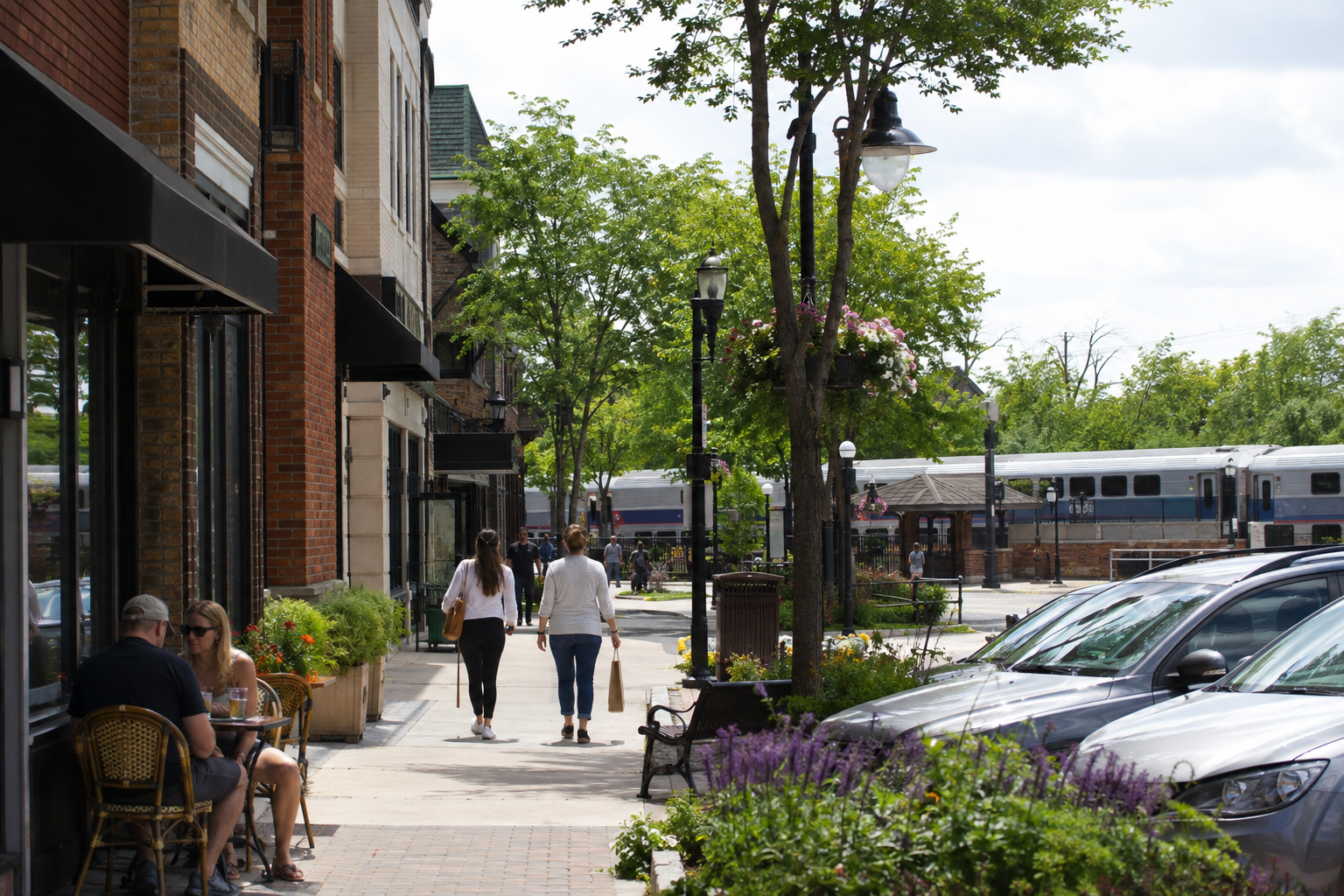
Daily life runs the plat's original loop: the Prospect Avenue downtown at the station carries the morning coffee, the restaurant rows, the shops, the library, and the evening trains, quaint, affluent, and highly walkable, exactly as published market summaries describe it, while the Ogden Avenue and 55th Street corridors take the groceries, hardware, and big-format errands so the core keeps its scale. The commute is the design's original product, the BNSF platform 18.3 rail miles from Union Station with Hinsdale one stop east and Westmont one west, and the drives are the corridors' gift, Route 83, I-294, I-88, and I-55 all minutes out, both airports between them.

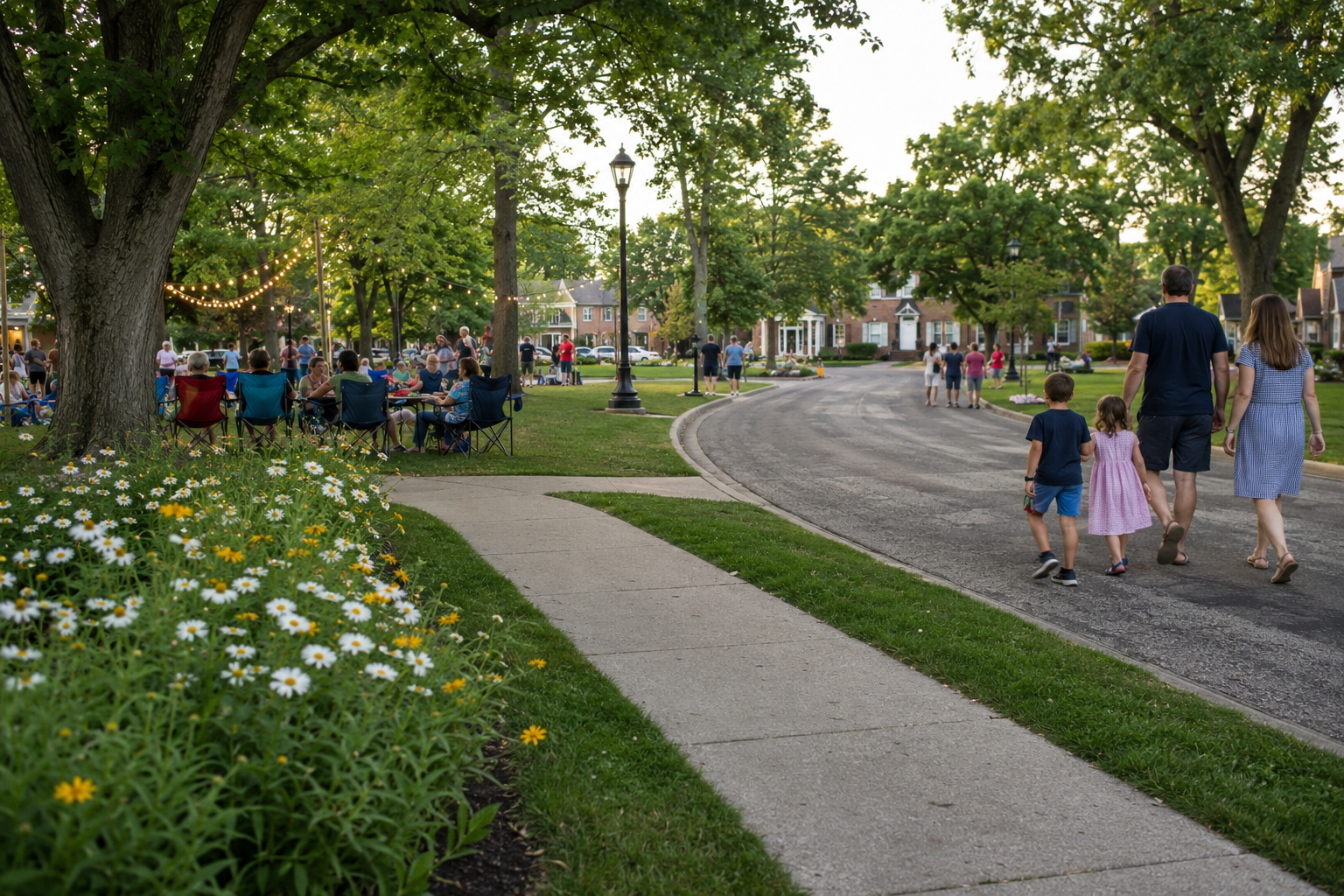
The calendar is the village's love language: Daisy Days each summer, the festival whose namesake flowers trace, by local account, to Henry Middaugh's own seeding a century and a half ago, Dancin' in the Street filling the downtown on summer evenings, and the Christmas Walk and tree lighting closing the year, all staged on the Prospect blocks and all walkable from most of the village. Between festivals, the Park District's greens, courts, pool, and programs carry the after-school and weekend hours, the curved streets themselves do daily duty as the village's favorite walking loop, and the Hinsdale Golf Club's fairways green the northeast edge for members and the streetscape for everyone. The honest note for buyers wanting nightlife: the village keeps small-town hours on purpose, Hinsdale and the corridors are minutes away when the evening wants more, and residents consider that division of labor the design working as intended.
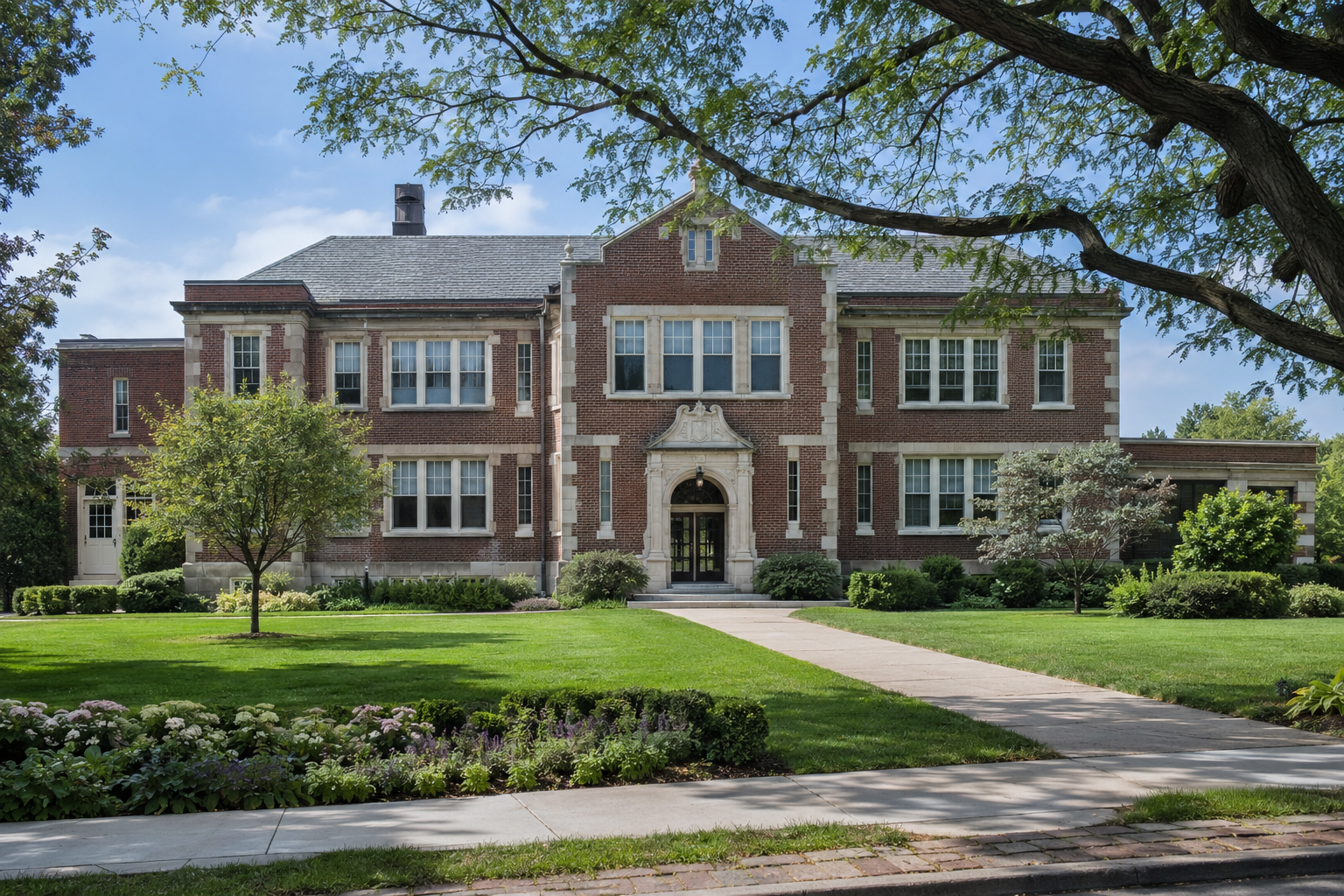
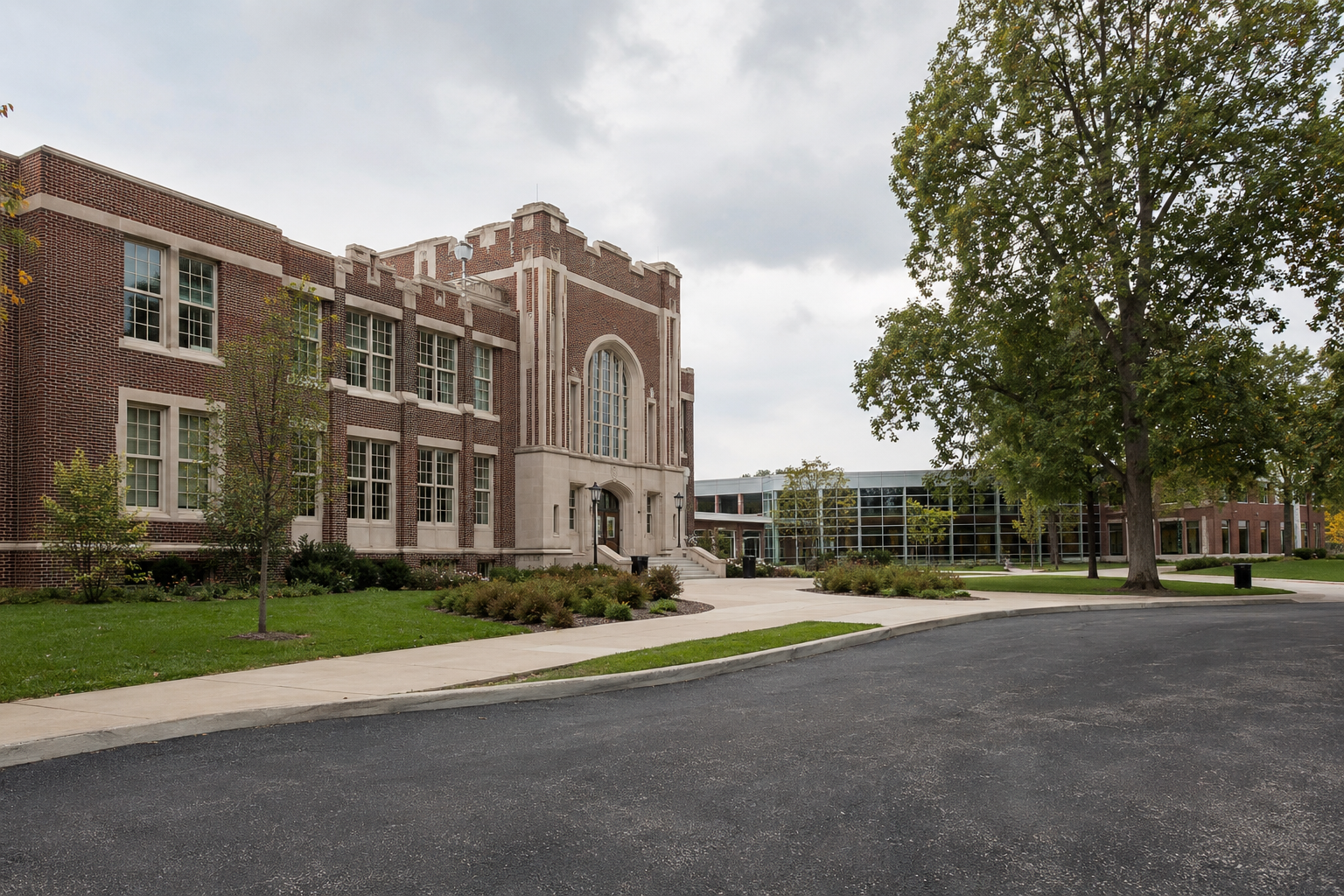
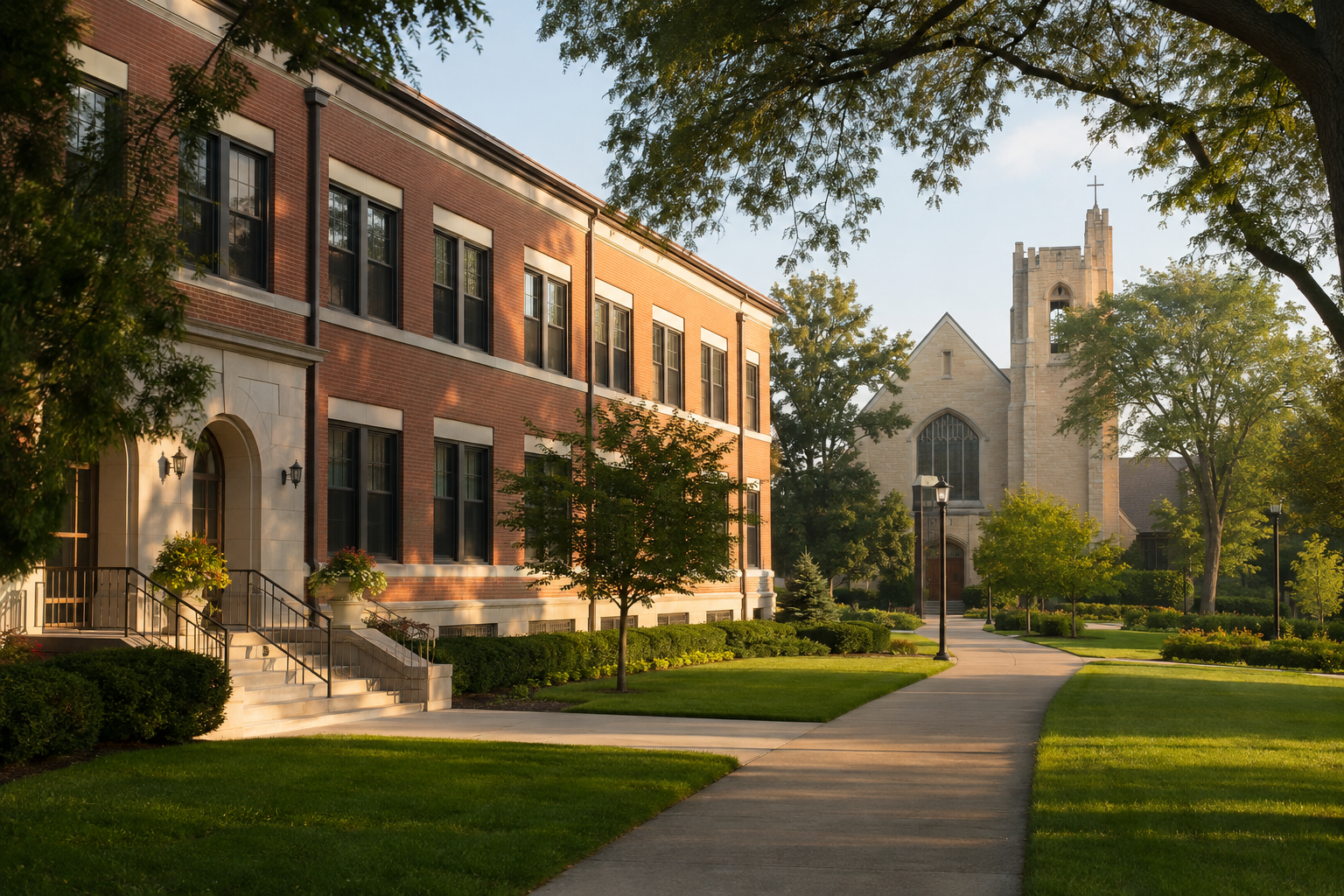
Clarendon Hills' school story is a rare boundary tale with a happy ending, and it still gets told precisely. Most of the village runs through Community Consolidated School District 181, which is headquartered in Clarendon Hills and operates three of its nine schools in the village, and the western edge runs through Maercker District 60, whose Holmes Elementary also stands in the village, and both pipelines finish at the same place: Hinsdale Central High School, one stop east. The elementary answer changes by address; the diploma does not. The figures below are the most recently published; ratings change annually and should be read directly, and the standing rule applies as always: the assigned district and school get confirmed against the official maps for any specific address before an offer, because precision is free and assumptions are not.
District 181, the Hinsdale-Clarendon Hills system, serves about 3,600 students at 12 to 1 with exceptionally strong elementary proficiency, 84 percent in math and 89 percent in reading, and Clarendon Hills is not its edge but its seat: the district's headquarters sit in the village, Prospect School and Walker School carry the village's kindergarten-through-fifth years, and Clarendon Hills Middle School carries sixth through eighth for the village and its share of the district's map, which also serves Hinsdale and portions of Burr Ridge and Oak Brook, the cross-boundary fact also shapes the neighboring communities. The practical translation: in most of Clarendon Hills, the school question is which of two in-village elementaries, both district maps' answers, and the middle school is a resident, not a commute. Read the current year's figures directly, and confirm the assigned elementary against the map, the one boundary layer families still assume wrong.
The village's western edge runs through Maercker District 60, the Westmont-area system whose Holmes Elementary stands in Clarendon Hills, and the honest map note is also the reassuring one: Maercker's district, like 181's, finishes at Hinsdale Township High School District 86, which for these addresses means Hinsdale Central, so the two-district village graduates to one diploma. Hinsdale Central enrolls about 2,445 students and ranks ninth among Illinois public high schools by U.S. News and eighth on Niche in the current cycles, with the facilities of a voter-approved $140 million referendum behind it, and it sits one BNSF stop from the Clarendon Hills platform, close enough that the village's teenagers commute by bike, ride, and occasionally train. Confirm the district and the high school assignment for any specific address against the official maps before the offer, per the standing rule, and read the current cycle's figures directly.
The independent bench serves the village at village scale: Clarendon Hills' own parish and early-childhood options, the Hinsdale and Westmont corridors' parochial elementaries minutes away, and the western suburbs' Montessori, independent, and Catholic secondary options along the corridors, all reachable inside the errand map. The honest summary follows the numbers: with an exceptionally strong elementary district headquartered in town and a top-ten state high school one stop east, private tuition in Clarendon Hills is a preference rather than a rescue, and the buyer's real school homework is modest but mandatory, which of the two districts, and which of the in-village elementaries, the exact address joins, confirmed against the official maps before the offer.
School enrollment figures, ratings, and boundaries are published by Community Consolidated School District 181, Maercker District 60, Hinsdale Township High School District 86, NCES, Niche, U.S. News, and the schools themselves, and all are subject to change. Buyers should verify current attendance boundaries, enrollment policies, programs, and ratings for a specific address directly with the districts before relying on school information in a real estate decision.
Development accelerated with Potter Palmer's mansion in 1882.
Encompasses the historic core alongside the 60611 district.
Consisting of roughly 5,600 households averaging two people.
Historically one of America's wealthiest urban enclaves.
Neighborhood entry point, driven heavily by vintage condominium volume.
The current baseline for standard attached housing stock.
Set in 2017 by the purchase of the top four floors at No. 9 Walton.
The neighborhood's largest single source of high-rise inventory.
With a median asking price currently hovering near $585,000.
The average market pace alongside ~45 monthly closings.
Connected directly to the trail via Oak Street Beach.
Direct access via two CTA train stops and four major bus routes.
Navigating Chicago's Gold Coast luxury real estate market requires unparalleled expertise. Here is what you need to know before we begin.
Ask A QuestionAround $750,000 at the median, over ask on average, and best read with this village's own cautionary tale in hand: for the same December month and the same $750,000 median, one index printed the market up 106.2 percent year over year while another printed it up 1.06 percent, because an 11-sale month measured against a 4-sale month makes percentages meaningless, so in a 1.82-square-mile village, read levels and structure, never single-month swings. The levels: recent medians near $750,000, list medians of $699,000 to $767,000 at roughly $305 to $352 per square foot, a 101.26 percent sale-to-list ratio with about 36 percent of homes selling above asking, and a ladder that runs from downtown condominiums and vintage cottages through the postwar family blocks to teardown rebuilds and the new downtown rowhomes. Price any specific home against trailing-year, same-segment comparables on its own streets, which in a village that prices by the curve is precisely a broker's job.
Genuinely competitive, with the receipts: Redfin scores the village 73, very competitive, its compilation describes multiple offers with some waived contingencies, the sale-to-list ratio runs 101.26 percent, over ask on average, supply sits near 1.2 months, and while average sales take 41 to 43 days, the hot homes pend in about 19, which is the number that should set a buyer's clock. The tempo has a structure: the family blocks near Prospect and Walker schools and anything well-priced within a walk of the downtown draw the fastest competition, the teardown and estate-lot segment moves on builder and buyer timelines of its own, and the new rowhomes trade on delivery calendars. Buyers should arrive prepared, financing set, alerts running, offer strategy decided, because 19-day windows do not wait for second visits; sellers should price to the trailing comparables and let the over-ask market do what it demonstrably does.
Two districts, one diploma, and the published numbers stand out. Most of the village runs through District 181, which is headquartered in Clarendon Hills and operates three of its nine schools in town, Prospect and Walker elementaries and Clarendon Hills Middle School, with the district's 84 percent math and 89 percent reading proficiency an exceptionally strong elementary showing. The western edge runs through Maercker District 60, whose Holmes Elementary also stands in the village, and both pipelines finish at Hinsdale Central High School, one BNSF stop east, ranked ninth among Illinois public high schools by U.S. News and eighth on Niche in the current cycles. So the elementary answer changes by address while the diploma does not, which is the rare boundary story that ends well, and the standing rule still applies: confirm the assigned district and school for any specific address against the official maps before offering, and read every school's current-year figures directly.
Different places entirely, and the search results genuinely mix them. Clarendon Hills, Illinois is the DuPage County village of 8,702 on the BNSF line, 18.3 rail miles from Union Station, one stop west of Hinsdale and one east of Westmont, ZIP 60514, with Route 83, I-294, I-88, and I-55 minutes out. It is not Clarendon, Vermont; Clarendon, Pennsylvania; Clarendon County, South Carolina; Clarendon Street in Boston's Back Bay; or the Clarendon Hills neighborhood of Fort Collins, Colorado, all of which surface in the same search results, and despite the shared Hills it is not Vernon Hills, Illinois, a separate suburb 30-plus miles north. Anchor any research with Illinois, DuPage County, or 60514. Getting here is the founding product: the Clarendon Hills Metra station sits at the downtown's heart, the corridors carry the drives, and both airports sit within a half hour on a clear run.
It began as a milk stop and became a design statement. The Chicago, Burlington and Quincy opened through the rolling prairie in 1864, farmers loaded milk at the stop 18.3 rail miles from Union Station, and in 1869 Chicago banker Henry C. Middaugh bought 270 acres north of the tracks for a gentleman's farm, then in 1873 speculators led by James M. Walker, the railroad's own president, platted a commuter suburb whose design followed Frederick Law Olmsted's principles as built at nearby Riverside, long curving streets tracing the land's contours instead of a grid, a design the village still lives in. The village incorporated on January 22, 1924, celebrated its centennial in 2024, and keeps its memory deliberately: the Historical Society's Heritage Hall, in the old waterworks hub, holds artifacts recovered from Middaugh's Queen Anne mansion, which made the National Register in 1978 and was demolished after a 2002 sale, and by local account even Daisy Days' namesake flowers trace to seed Middaugh spread across his farm. The Hinsdale Golf Club, chartered October 15, 1898, completes the story from inside the village limits, name notwithstanding.
The honest answer matches what published market summaries already say: a village of 8,702 on 1.82 square miles does not divide into sharply defined neighborhoods, it offers one identity with four settings, so the useful question is which setting fits the life. The downtown blocks put the station, the shops, and the calendar at the door, with condominiums, cottages, and the new rowhomes carrying walk-to-everything living; the curved streets north hold the oldest canopy, the golf club edge, and the strongest rebuild current; the blocks south of the tracks organize around Prospect and Walker schools with the middle school completing the trio, postwar homes, rebuilds, and the parks grid; and the western edge trades a corridor adjacency for the village's friendliest entries, in the Maercker District 60 pocket whose pipeline still finishes at Hinsdale Central. Every setting shares the same downtown, districts, and diploma within a walk or a two-minute drive, so choose by housing type, school assignment confirmed on the map, and commute, and any Clarendon Hills IL houses for sale search can filter from there.
Quaint, affluent, and highly walkable, as published market summaries put it, and structurally it is the 1873 plat still doing its job: the blocks around Prospect Avenue and the Burlington corridor hold the restaurant and shop rows, the library and village services, and the BNSF station that built the town, with the festival calendar, Daisy Days, Dancin' in the Street, the Christmas Walk and tree lighting, staged on the same pavement. The newest chapter is residential: brick rowhomes and duplexes, architect-designed, some elevator-equipped, rising in and around the core, which means downtown Clarendon Hills is now an address, not just an errand, and its walk-to-platform premium is the market's most durable line item. The corridors, Ogden and 55th, carry the big-format retail so downtown never has to, Hinsdale's larger downtown sits one stop east when the evening wants more, and the roster of specific venues turns at small-town speed, so tour it on foot, ideally on a festival night, which is the village showing its whole design at once.
Yes: the live search above shows every MLS listing in the village the moment it posts, typically about a month's worth of inventory at a time, spanning downtown rowhomes, curved-street vintage, family blocks, and teardown-to-new builds, and the alert matters more than the browse because the hot homes pend in about 19 days. Then add the layer no feed shows: coming-soon listings, quietly marketed homes, and the builder pipeline, a real share of a village this small. Carrie McCormick has worked Chicago's luxury market since 1999, with more than $3.5 billion in career sales, a top 1 percent Chicago Association of Realtors ranking, the association's Gold and Platinum awards, the recurring luxury real estate expert seat on NBC 5 Chicago's Open House Chicago, and the Christie's International Real Estate network reaching buyers in more than 45 countries, and Clarendon Hills rewards her exact practice: over-ask offer discipline for buyers on 19-day clocks, street-by-street valuation for sellers in a village that prices by the curve, and the map fluency, two districts, one diploma, that buyers should keep in focus. Under her "100 percent Carrie" model every client works with her directly, on any homes for sale Clarendon Hills IL question, buying or selling: 312-961-4612 or carrie@atproperties.com.
Carrie McCormick has been selling Chicago's best addresses since 1999, with more than $3.5 billion in career sales, and Clarendon Hills concentrates the work: a curved-street vintage home whose value is the streetscape, a family block listing that will draw multiple offers inside three weeks, a downtown rowhome trading on a delivery calendar, a teardown lot where the house, the land, and the street's direction each carry their own number. Ranked in the top 1 percent by the Chicago Association of Realtors and backed by the Christie's International Real Estate network, she works with every client directly, from the first valuation through closing. To talk through the homes for sale Clarendon Hills IL is showing publicly, the quiet layer a village this small always carries, a sale, or a valuation, call 312-961-4612 or email carrie@atproperties.com.