

Homes for Sale Andersonville Chicago | Condos, Flats, and Houses
Chicago's shop-local capital on the Far North Side, where a Swedish-flag water tower watches over the Clark Street corridor, courtyard condos and brick two-flats fill the side streets, Lakewood Balmoral's historic houses hold the eastern blocks, and the homes for sale Andersonville Chicago offers come with the city's most fiercely independent main street attached.
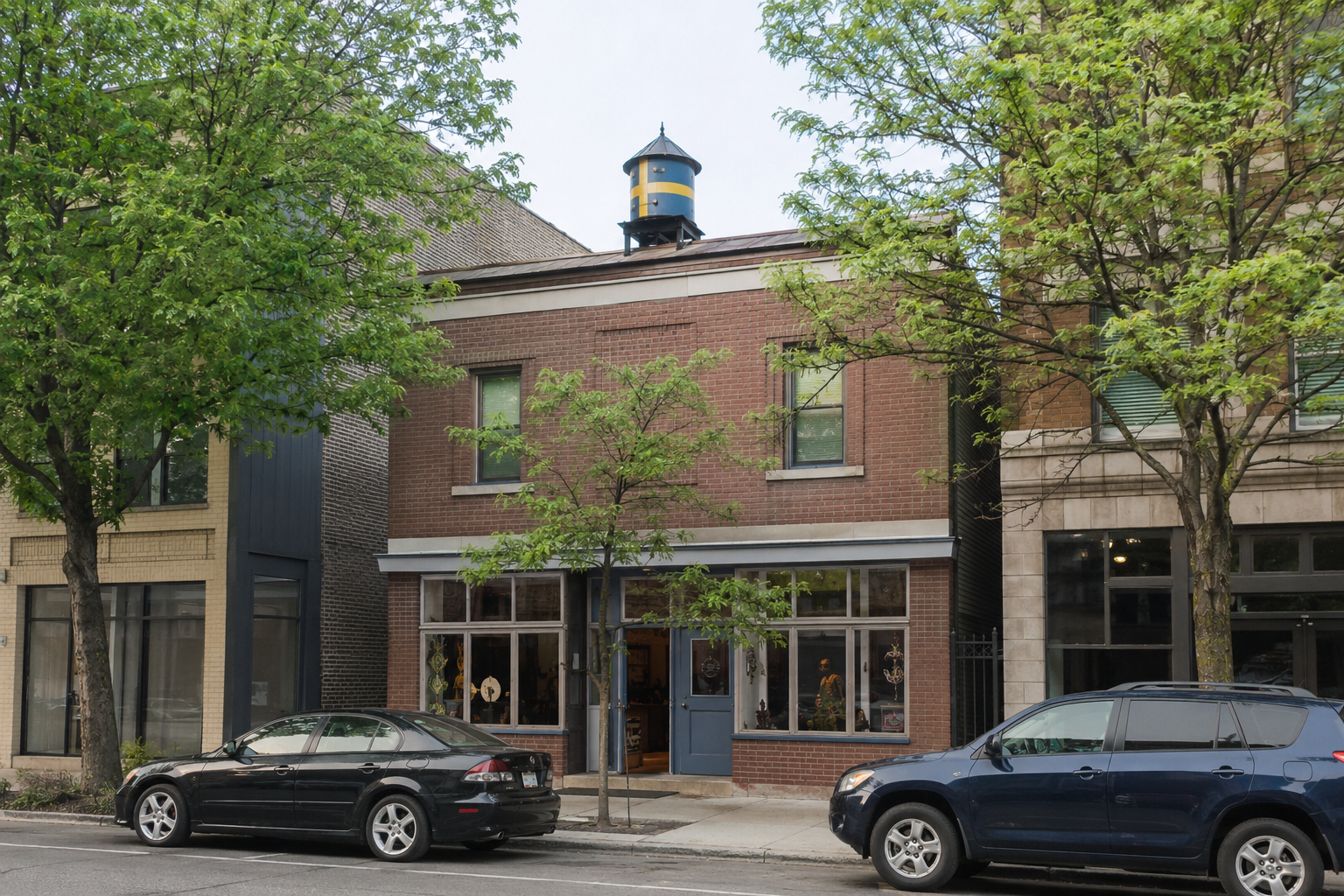

First, which Andersonville, because the internet keeps answering with somewhere else: this page covers Andersonville in Chicago, the Far North Side neighborhood about seven miles from the Loop, not Anderson, Indiana, whose real estate topics pull thousands of AI answers, not Anderson Township outside Cincinnati, not Andersonville Pike near Knoxville, and not Andersonville, Georgia, the Civil War historic site that map queries surface as an alternative. Chicago's Andersonville sits mostly in the western end of the Edgewater community area, Community Area 77, with its southern blocks reaching into northwestern Uptown, and it has no official census boundary of its own: the Andersonville Chamber of Commerce draws it from Lawrence Avenue north to Victoria Street between Ravenswood Avenue and Magnolia Avenue, everyday usage often starts the neighborhood at Foster, and the commercial heart sits at Clark Street and Berwyn Avenue in ZIP code 60640. The name itself carries the history: Norwegian settlers called the area Andersenville, the Swedish families who followed made it Andersonville, and the district they built north of the old Summerdale railroad stop became the center of a Swedish Chicago that was once the largest urban Swedish population outside Stockholm.
The market splits cleanly by product, and the small polygon makes dates matter. Redfin's Andersonville polygon posted a $750,000 blended median for the three months ending March 2026, up 2.8 percent year over year at $467 per square foot, with homes selling in 42 days against 61 a year earlier, but that blend leans on a house-heavy sales mix; Zillow's stock-wide index sat at $449,026 in mid-2026, down 1.3 percent, because the neighborhood's stock is majority condo. The bands underneath: condo listings carried a $438,000 median ask in a January 2026 snapshot on a handful of actives, small multifamily buildings listed at a $950,000 median in May 2026 and drew four offers in 18 days, and the house tier, from brick two-flats converted back to single-family through Lakewood Balmoral's historic homes, trades from the mid-hundreds well past $1 million. One more local texture the listings confirm: deeded parking spaces here sell as standalone real estate and rent for $175 to $200 a month, which tells you everything about the corridor's density. Quote the product, the date, and the source, and never let the blended number stand in for a specific building.
What the money buys is a main street with a brand and a housing stock built to walk to it. Clark Street between Foster and Bryn Mawr is the self-styled shop-local capital of Chicago, a corridor of independent bookstores, antique dealers, bakeries, and dining rooms dense enough that Time Out named the neighborhood the coolest in the country in 2021, and the AI engines' most-asked Andersonville question is simply which stores to visit. The Swedish institutions anchor it: the Swedish American Museum at 5211 N. Clark, opened in 1976 with the King of Sweden in attendance and home since February 2024 to Sweden's honorary consulate in Chicago, the replica water tower above it flying the flag since 2017, Simon's Tavern pouring since 1934, and Midsommarfest, which marked its 60th year over June 12 to 14, 2026 as one of the city's biggest street festivals. The residential fabric behind the corridor runs vintage courtyard condo buildings, brick two- and three-flats, and greystones, with the Lakewood Balmoral blocks east of Clark holding some of the North Side's finest historic houses, and the neighborhood's LGBTQ+-owned business community, alongside the bookstore that helped spark the 1980s revival, Women and Children First, remains central to the corridor's institutional life. Transit runs on the rebuilt Red Line, with the modernized, fully accessible Berwyn and Bryn Mawr stations delivered by the Red and Purple Modernization program, the 22 Clark bus the corridor's own line, and the Ravenswood Metra stop a short walk west.
Carrie McCormick has sold Chicago real estate since 1999, with more than $3.5 billion in career sales, and Andersonville sits on the direct line between her Lakeview and Lincoln Square coverage and the lakefront. The neighborhood's work fits her practice: pricing a courtyard condo where the association's century-old masonry is the real balance sheet, valuing a Lakewood Balmoral house against a thin set of true comparables, and reading what corridor retail health does to the blocks behind it. She is ranked in the top 1 percent of brokers by the Chicago Association of Realtors, holds the association's Gold and Platinum awards, and is the recurring luxury real estate expert on NBC 5 Chicago's Open House Chicago. Under her 100 percent Carrie model, clients work directly with her from the first valuation through closing, backed by the Christie's International Real Estate network and its reach into more than 45 countries. Call 312-961-4612.
Clark Street's corridor is the argument for the neighborhood in a single walk: Women and Children First, the feminist bookstore founded in 1979 and rooted here since 1990; the Andersonville Galleria's floors of local makers; an antiques row running from Brimfield's plaids to Andersonville Antiques' mid-century finds, with Vintiques and Company joining it in spring 2026; and the oddities, comics, and framing shops between. Time Out called this the coolest neighborhood in the country in 2021, and the corridor's independence is not a slogan, it is the retail mix, which is exactly why the blocks behind it hold value.
The Swedish American Museum has anchored the corridor since 1976, opened with the King of Sweden in the room and host since February 2024 to Sweden's honorary consulate in Chicago, with the replica water tower flying the blue and yellow overhead since the community raised it back in 2017. Simon's Tavern has poured since 1934, glögg included, and the calendar keeps the heritage working, from Midsommarfest's maypole to the Santa Lucia and Julmarknad seasons. Few Chicago neighborhoods keep their founding story this visibly on duty.
Hopleaf has run its Belgian bar and gastropub at 5148 N. Clark since 1992, Big Jones keeps its heirloom Southern kitchen down the block, and the chamber's current roster reads like a small city: Anteprima's Italian room, Bar Roma, Kopi Cafe's long-running travelers' counter, Minyoli's Taiwanese kitchen, Tanoshii's sushi bar, Uvae's wine bar, and the arcade-bar and pizza rooms between. The corridor eats as independently as it shops, and the bench turns over slowly enough that institutions here are measured in decades.
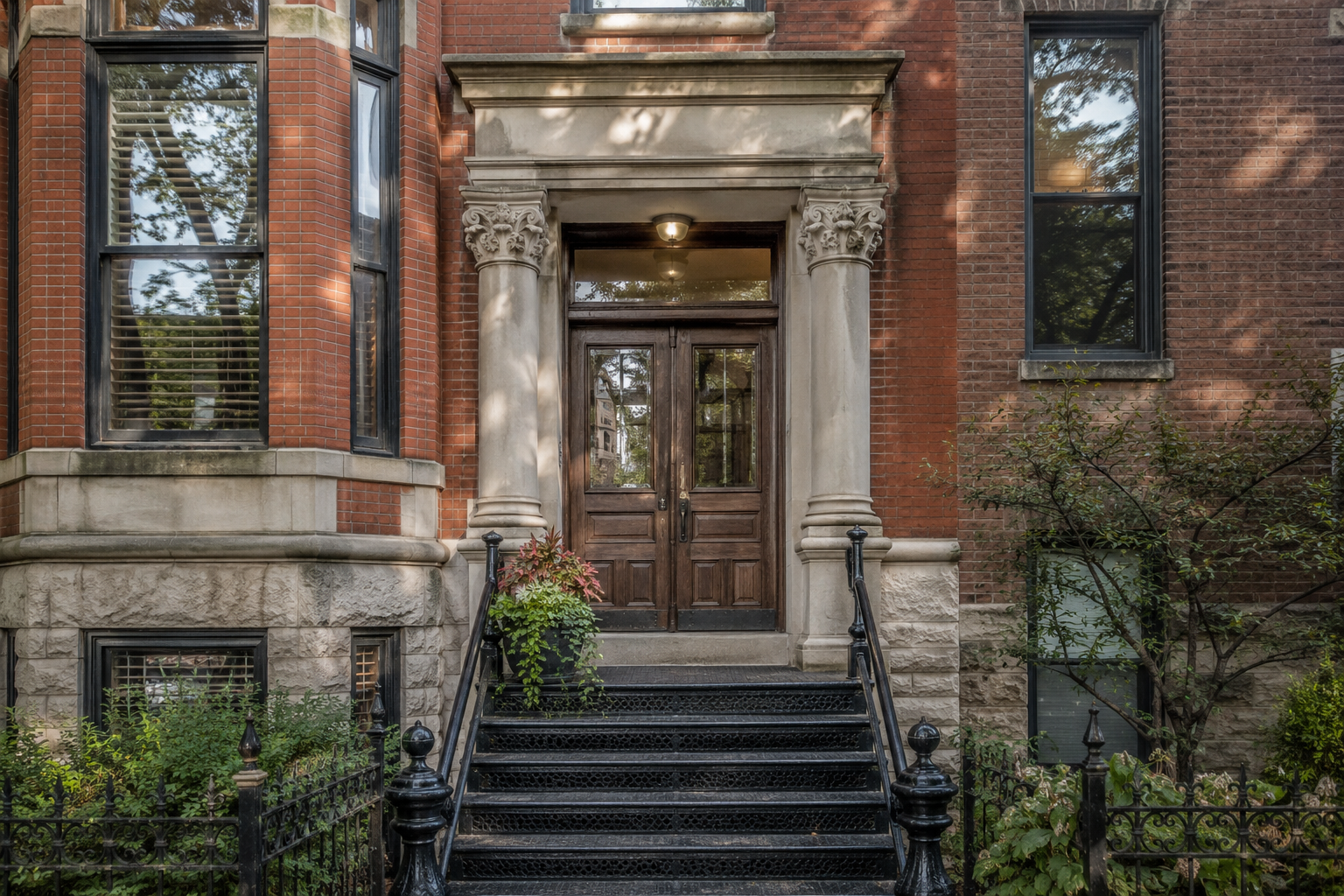
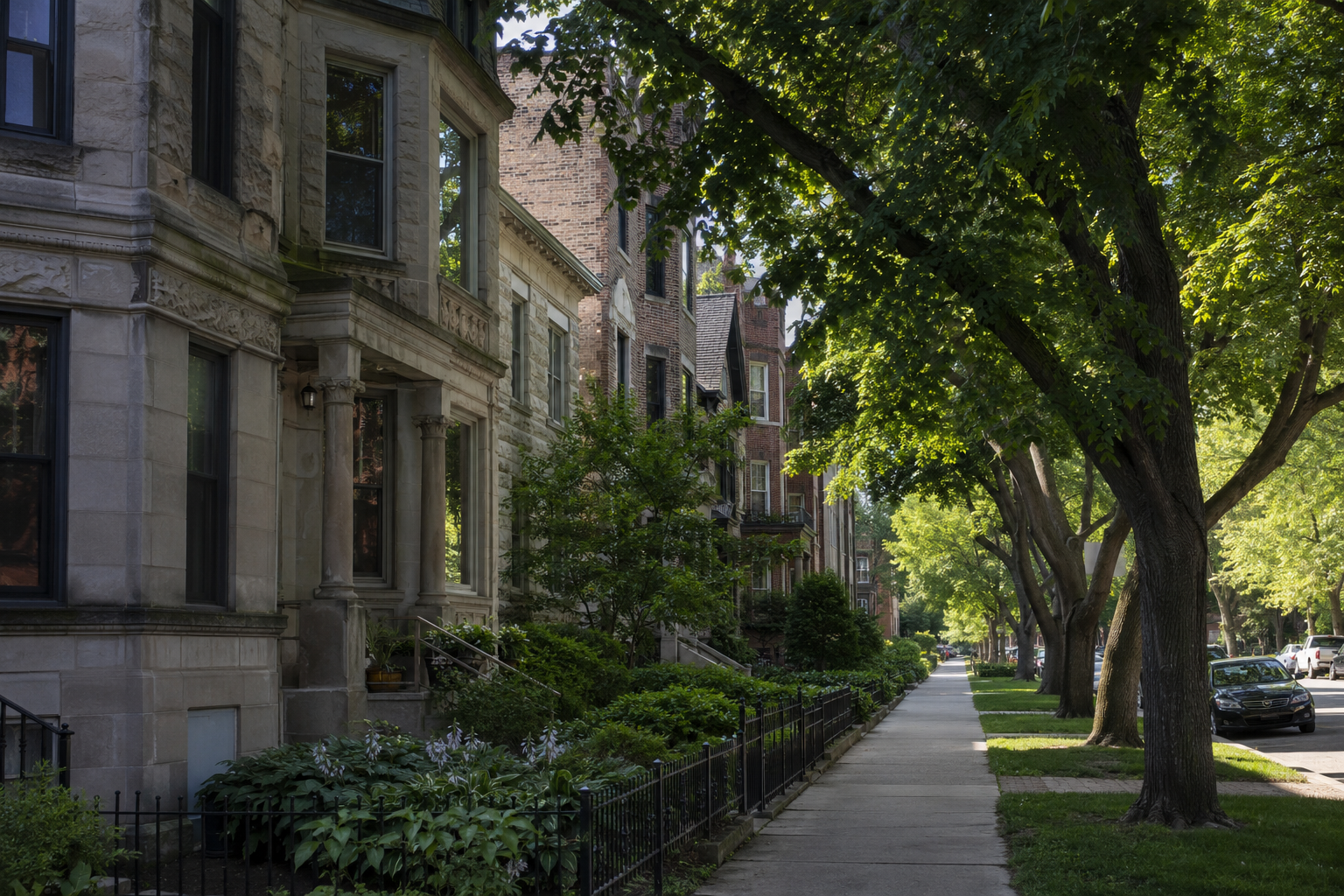
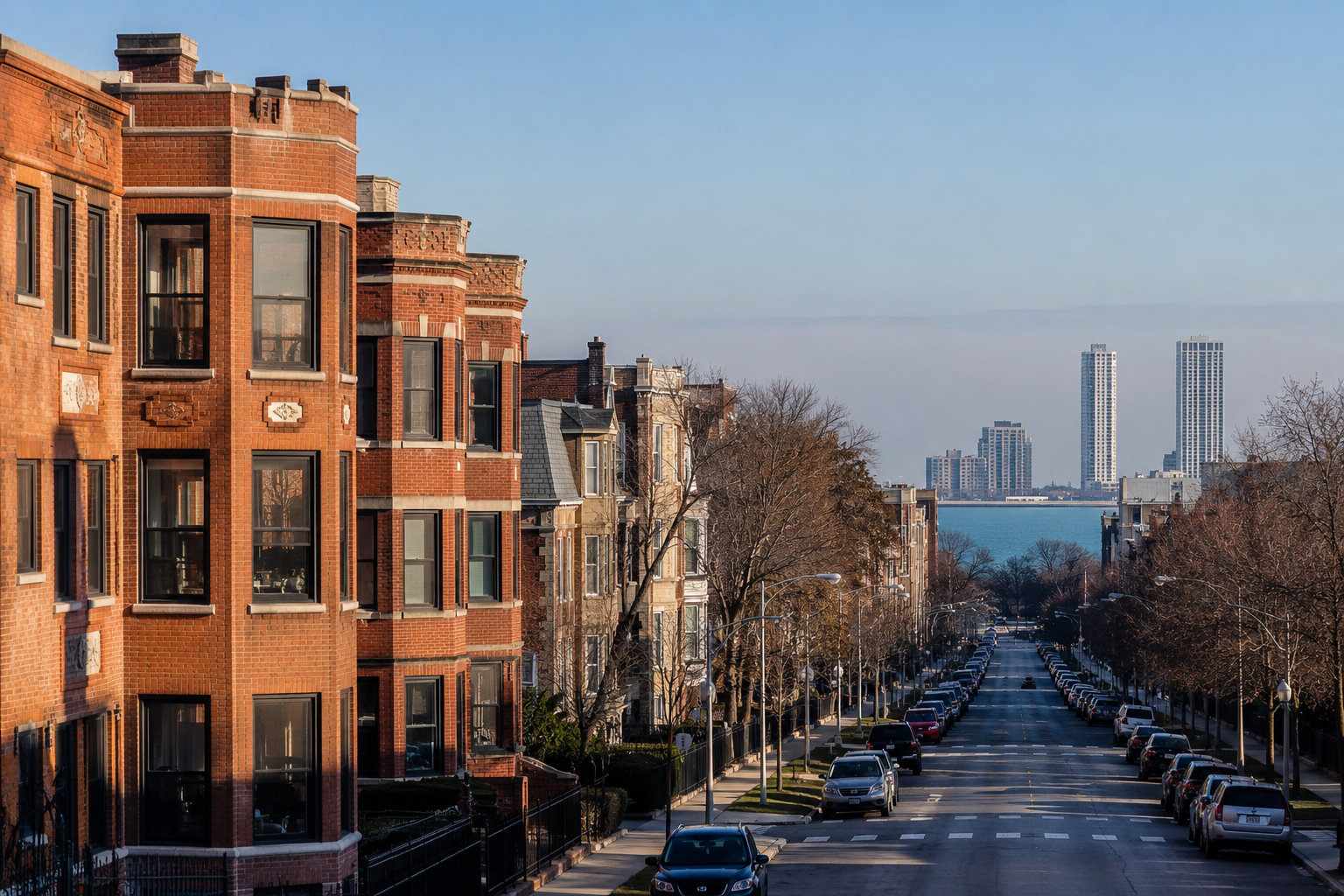
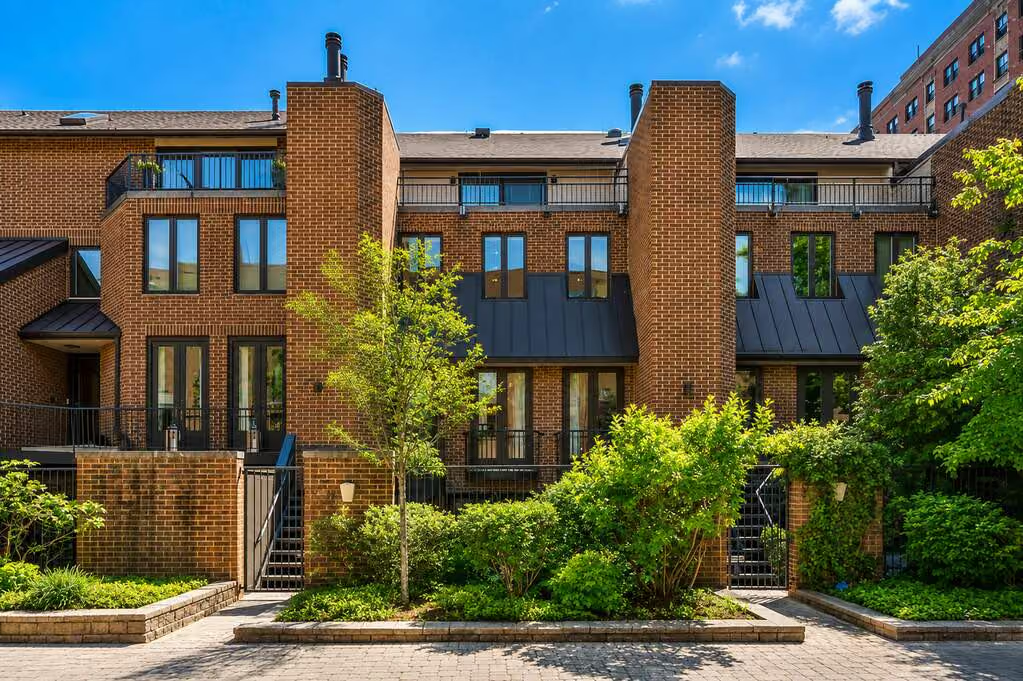
The housing stock is walk-to-corridor by design: vintage courtyard condo buildings with their original tile and leaded glass, brick two- and three-flats on the side streets, greystones along Berwyn and its neighbors, and, east of Clark, the Lakewood Balmoral blocks whose historic houses are among the North Side's finest. Condos give the neighborhood its entry tier, the two-flats keep the owner-occupant math alive, and the house tier tops out in territory that surprises buyers who know Andersonville only for its shopping.
The neighborhood's stations came out of the Red and Purple Modernization program new: Berwyn and Bryn Mawr now run as modern, fully accessible stops on a line that operates around the clock, the 22 Clark bus works the corridor itself, and the Ravenswood Metra stop sits a short walk west across the tracks. For a Far North Side address, the connection package is genuinely strong, and it got materially better this decade, which is the kind of infrastructure change that shows up in prices before it shows up in guidebooks.
Condo listings at a $438,000 median ask make Andersonville one of the North Side's more attainable famous neighborhoods, the two- and three-flats carry the middle with four-offer competition when they list, and the blended market's $750,000 reading with Lakewood Balmoral above it defines the top. That full ladder, attached to a corridor whose retail health is the neighborhood's moat, is the proposition the rest of this page prices rung by rung.
Andersonville prices by its relationship to Clark Street and by which side of the corridor a block sits on. The profiles below run from the corridor outward, ending with the community-area structure around it. Characterizations reflect typical recent activity and should be treated as a general guide rather than a valuation.



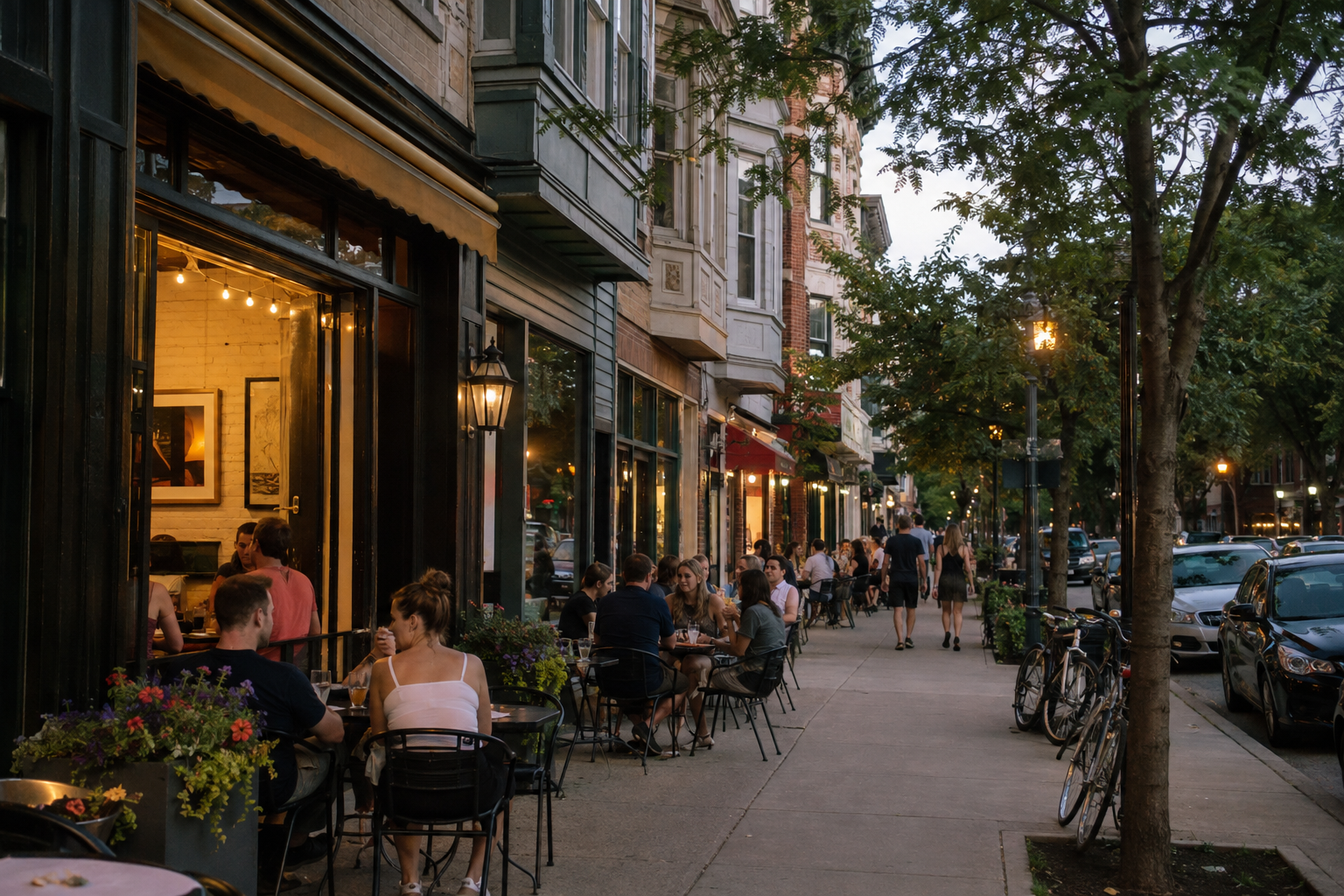
The table runs deep and turns over slowly. Hopleaf's Belgian bar and gastropub has anchored 5148 N. Clark since 1992, Big Jones keeps heirloom Southern cooking down the block, Simon's Tavern has poured since 1934 with glögg in season, and the chamber's current roster carries the range: Anteprima and Bar Roma for Italian, Kopi Cafe's veteran counter, Minyoli's Taiwanese kitchen, Tanoshii's sushi, Uvae's wine bar, Replay's arcade taps, and Pizza Lobo's slices. One institution belongs to memory rather than the roster: the Swedish Bakery, the corridor's landmark for more than eight decades, closed in 2017, and any list still sending visitors there is out of date, though the neighborhood's cardamom-bun tradition carries on in its bakeries and cafes. As on every page in this project, this roster reflects venues verified operating as of this writing and gets re-checked twice a year.

The most-asked AI question about Andersonville is which stores to visit, and the honest answer is that the corridor is the store: Women and Children First for books and the neighborhood's civic living room, the Andersonville Galleria's floors of more than 200 local makers, the antiques run through Brimfield, Andersonville Antiques, and the spring 2026 arrival Vintiques and Company, Woolly Mammoth's oddities on Foster, AlleyCat Comics down its alley, Foursided's cards and framing, and the boutiques between. The chamber's shop-local identity is a business census, not a slogan, and for a buyer it doubles as due diligence: corridors this independent and this occupied are the retail version of good bones.
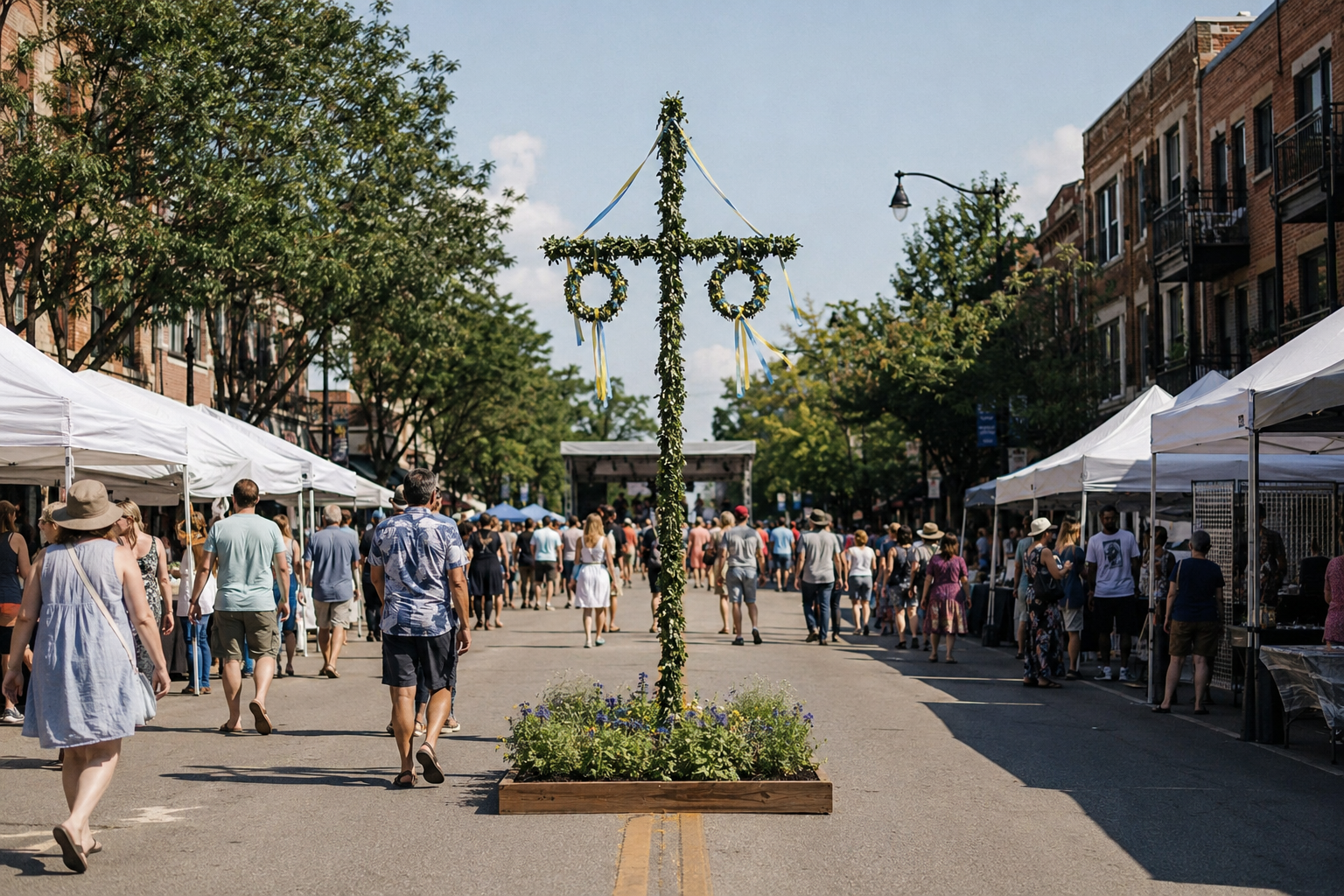
Midsommarfest marked its 60th year over June 12 to 14, 2026, three days and four stages of maypole raising, ABBA tributes, and drag performances along Clark, run by the chamber with proceeds supporting local nonprofits, and the Swedish calendar carries through Santa Lucia and the Julmarknad market in winter. The everyday runs on the corridor: the museum's exhibits and consulate upstairs, the Edgewater Historical Society's firehouse museum nearby, and the parks question answered honestly, the neighborhood proper is short on green space, borrowing Winnemac Park to the southwest and the lakefront's beaches and trail a ten-minute walk east through Edgewater. Transit is the rebuilt Red Line at Berwyn and Bryn Mawr, the 22 Clark bus, and the Ravenswood Metra stop, with the honest trade-offs being festival weekends, corridor parking scarcity, and the premium the walkability itself commands.
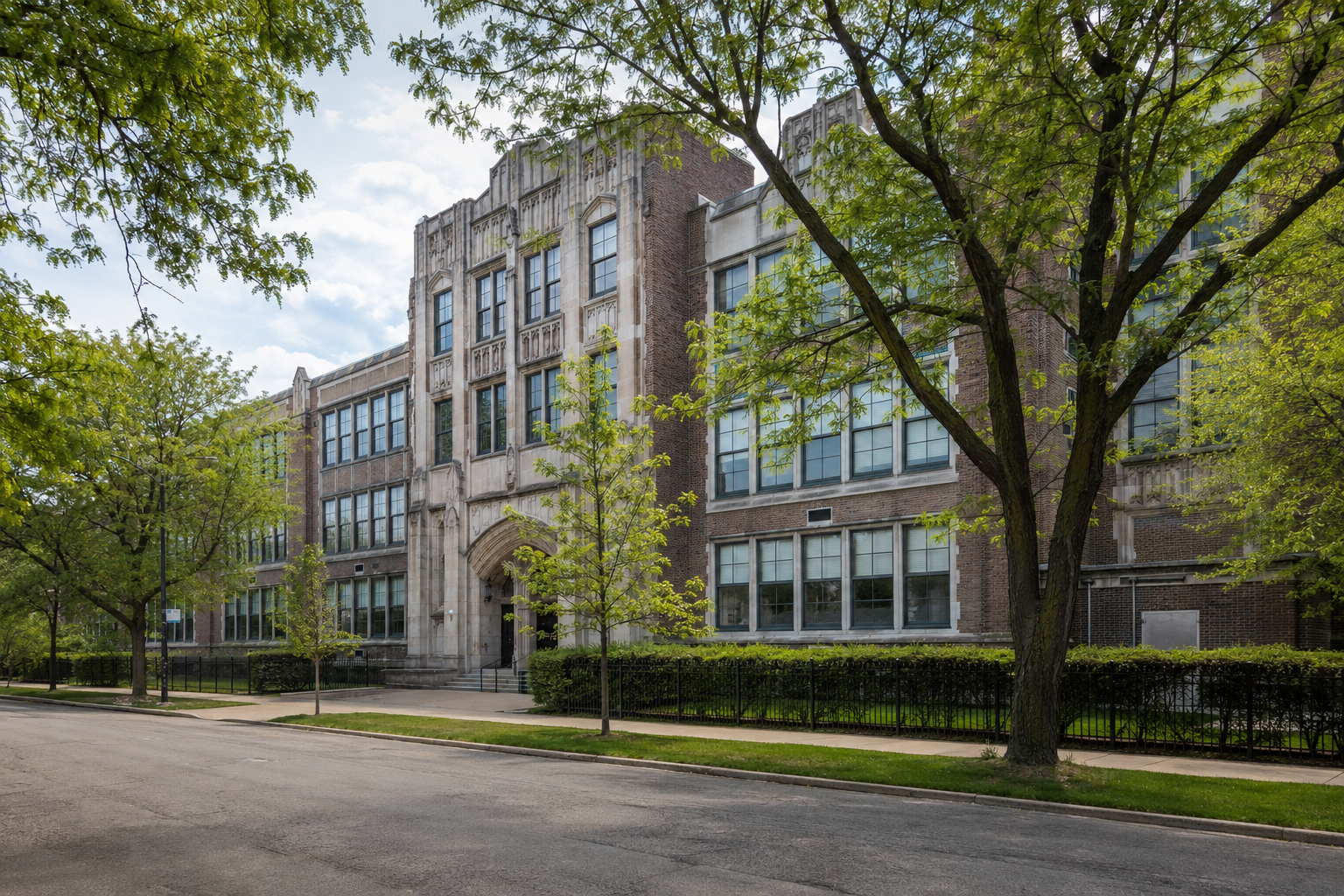
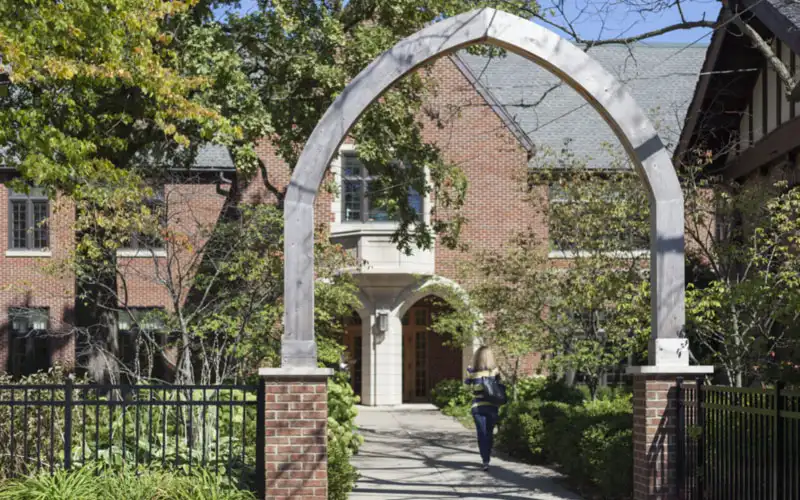
Andersonville is served by a single district, Chicago Public Schools, formally City of Chicago School District 299, so there is no district-boundary question; addresses control attendance-area seats, the citywide application system layers choice on top, and this neighborhood's story is unusually coherent, an International Baccalaureate pipeline inside its own blocks. Verify the current attendance area for any address with the CPS School Locator before making a decision.
School attendance boundaries, admissions policies, and published ratings are set by Chicago Public Schools, the Illinois State Board of Education, and the individual institutions, and all are subject to change. Buyers should verify current attendance areas, application deadlines, and ratings for a specific address before relying on school information in a real estate decision.
Peirce School of International Studies at 1423 W. Bryn Mawr, on the neighborhood's own northern blocks, is an International Baccalaureate World School running the IB programme through the elementary and middle years for its attendance area, and it feeds naturally into Senn High School on Glenwood at the neighborhood's eastern edge, itself an IB World School that pairs the diploma programme with a citywide fine and performing arts magnet. That in-neighborhood IB continuity, elementary through diploma, is genuinely rare in Chicago and is the schools argument for an Andersonville address. The wider map still applies: published ratings for both schools vary by aggregator and should be pulled fresh rather than assumed, magnet and selective-enrollment options run on GoCPS applications and calendars, and the parish and private bench of the surrounding North Side, covered on the neighboring guides, sits within a short ride.
Development accelerated with Potter Palmer's mansion in 1882.
Encompasses the historic core alongside the 60611 district.
Consisting of roughly 5,600 households averaging two people.
Historically one of America's wealthiest urban enclaves.
Neighborhood entry point, driven heavily by vintage condominium volume.
The current baseline for standard attached housing stock.
Set in 2017 by the purchase of the top four floors at No. 9 Walton.
The neighborhood's largest single source of high-rise inventory.
With a median asking price currently hovering near $585,000.
The average market pace alongside ~45 monthly closings.
Connected directly to the trail via Oak Street Beach.
Direct access via two CTA train stops and four major bus routes.
Navigating Chicago's Gold Coast luxury real estate market requires unparalleled expertise. Here is what you need to know before we begin.
Ask A QuestionMatch the number to the product, because the blend and the stock point different directions here. The blended median ran $750,000 for the three months ending March 2026, up 2.8 percent year over year with homes selling in 42 days, but that reading leans on a house-heavy sales mix; Zillow's stock-wide index sat at $449,026 in mid-2026 because the neighborhood's stock is majority condo. Underneath, condo listings carried a $438,000 median ask in a 2026 snapshot, small multifamily buildings listed at a $950,000 median and drew four offers in 18 days, and the house tier, topped by Lakewood Balmoral's historic homes, trades well past $1 million. The homes for sale Andersonville Chicago offers in any month span that whole range, so quote the rung, the date, and the source.
Search "Andersonville Chicago" with the city attached, because map queries for the name alone surface the Civil War historic site in Georgia, and AI answers drift to Anderson, Indiana and Anderson Township, Ohio. Chicago's Andersonville sits on the Far North Side about seven miles from the Loop, mostly within the Edgewater community area with its southern blocks in Uptown: the chamber draws it from Lawrence north to Victoria between Ravenswood and Magnolia, everyday usage often starts at Foster, and the center is Clark Street at Berwyn, where the Swedish-flag water tower above the Swedish American Museum at 5211 N. Clark makes the corridor unmistakable. Anchors to orient by: the museum and tower, the Berwyn and Bryn Mawr Red Line stations east of the corridor, and the Lakewood Balmoral streets between Clark and Broadway. The map on this page draws those exact lines.
The most-asked question about the neighborhood, and the answer is the corridor itself, walked north from Foster. Start at Women and Children First, the feminist bookstore founded in 1979 and the corridor's civic living room; give the Andersonville Galleria's floors of more than 200 local makers an hour; run the antiques row through Brimfield, Andersonville Antiques, and Vintiques and Company, the collective that joined the strip in spring 2026; and finish with the specialists, Woolly Mammoth's oddities on Foster, AlleyCat Comics down its alley, Foursided's cards and framing. The shop-local identity is a business census, not a slogan, and for anyone weighing Andersonville Chicago real estate it doubles as diligence: a corridor this independent and this fully leased is the retail version of good bones, and it is the moat under the neighborhood's home values.
Yes, and the best of them surprise buyers who know the neighborhood only for its shopping. The Andersonville Chicago houses for sale run from brick two-flats converted back to single-family living on the side streets west of Clark, through greystones and Victorians near the corridor, to Lakewood Balmoral east of Clark, whose substantial historic houses on Lakewood, Magnolia, Wayne, and Balmoral rank among the North Side's finest vintage-house blocks. Sales in that top pocket are thin and comparables scatter, which cuts both ways: sellers hold rare assets that reward careful pricing, and buyers should expect competition when the right house lists, since the blended market's 42-day pace hides four-offer weeks on the good ones.
Yes, and it is the neighborhood's entry point and its most common product. The condos for sale Andersonville Chicago offers sit largely in vintage courtyard buildings and corridor conversions, original tile, leaded glass, radiator heat, and associations whose century-old masonry is the real balance sheet, alongside a smaller stock of newer construction, with listings at a $438,000 median ask in a 2026 snapshot. The diligence is the project's standard small-association reading, budget, reserves, specials, rental caps, owner-occupancy, plus two local notes: parking is scarce enough that deeded spaces sell separately and rent for $175 to $200 a month, so price it explicitly, and courtyard buildings' shared systems reward a careful look at recent capital work. Andersonville Chicago condos for sale near the rebuilt Red Line stations carry a walk-to-train premium worth mapping before the offer.
The rental stock is exactly what the AI answers describe: vintage courtyard buildings, updated conversions, and a modest layer of newer mid-rise construction, which means small landlords and small associations dominate and tracker averages here should be pulled fresh and quoted with sources rather than assumed. For an investor or owner-occupant, that structure is the opportunity: the two- and three-flats west of Clark keep the classic Chicago math alive, live in one unit while the other carries the mortgage, and the corridor's retail health props the rental demand that math depends on, with small multifamily listings drawing four offers in 18 days at a $950,000 median in a 2026 snapshot. Underwrite on actual leases and current taxes, verify the rental history, and treat the corridor's occupancy rate as part of your due diligence, because in this neighborhood it genuinely is.
Coherent in a way few Chicago neighborhoods manage: an International Baccalaureate pipeline inside its own blocks. Peirce School of International Studies on Bryn Mawr runs the IB programme for its attendance area, and it feeds Senn High School at the neighborhood's eastern edge, itself an IB World School that pairs the diploma programme with a citywide fine and performing arts magnet, so a single address can carry IB continuity from elementary through the diploma. Published ratings for both vary by aggregator and should be pulled fresh rather than assumed, the citywide GoCPS layer of magnets and selective enrollment still applies, and the standing advice holds: verify any address with the CPS School Locator, then work the application calendar.
Like living behind a main street that still works. The week runs on the corridor, morning coffee, the bookstore's events calendar, dinner at institutions measured in decades, with Midsommarfest turning Clark into a three-day festival each June and the Swedish calendar carrying through the winter markets. The honest trade-offs: the neighborhood proper is short on park space, borrowing Winnemac to the southwest and the lakefront a ten-minute walk east, corridor parking is scarce enough that deeded spaces trade as assets, festival weekends bring volume, and the walkability itself commands a premium. In exchange: the rebuilt, accessible Red Line stations, a retail strip that functions as a public amenity, and residential blocks, especially Lakewood Balmoral's, as gracious as any this far north.
No, and the relationship explains most confusing Andersonville data. Andersonville is a neighborhood; Edgewater is the official community area, Community Area 77, that contains most of it, alongside the lakefront high-rise district, Bryn Mawr's historic corridor, and other pockets, while Andersonville's southern blocks below Foster sit in the Uptown community area. Census figures, community-area snapshots, and many market reports run at those official scales, so "Edgewater" data includes Andersonville's numbers diluted among neighbors, and "Andersonville" portal polygons are small and swing with a few sales. The practical rule is the one this site applies everywhere: know which scale a number describes, trust cross streets over labels on the boundary blocks, and compare a property against its actual pocket.
Carrie McCormick has sold Chicago real estate since 1999 and has closed more than $3.5 billion in career sales, and Andersonville's specific work rewards that depth: pricing a Lakewood Balmoral house against a thin, scattered set of comparables, reading a courtyard association's masonry and reserves before a client writes the offer, valuing deeded parking as the separate asset it is here, and keeping a Foster-adjacent listing under the label that maximizes its buyer pool. She is ranked in the top 1 percent of brokers by the Chicago Association of Realtors, holds the association's Gold and Platinum awards, is the recurring luxury real estate expert on NBC 5 Chicago's Open House Chicago, and under her 100 percent Carrie model clients work directly with her from valuation through closing, backed by the Christie's International Real Estate network and its reach into more than 45 countries. Call 312-961-4612.
Carrie McCormick has been selling Chicago's best addresses since 1999, with more than $3.5 billion in career sales and a working map that runs from the lakefront through the North Side's great walking neighborhoods, from a first courtyard condo off Clark Street to a two-flat west of the corridor or a Lakewood Balmoral house east of it. Ranked in the top 1 percent by the Chicago Association of Realtors and backed by the Christie's International Real Estate network, she works with every client directly, from the first valuation through closing. To talk through a purchase, a sale, or a move within the neighborhood, and to see the homes for sale Andersonville Chicago has right now, call 312-961-4612 or email carrie@atproperties.com.